
Knit Fabric Pilling Test

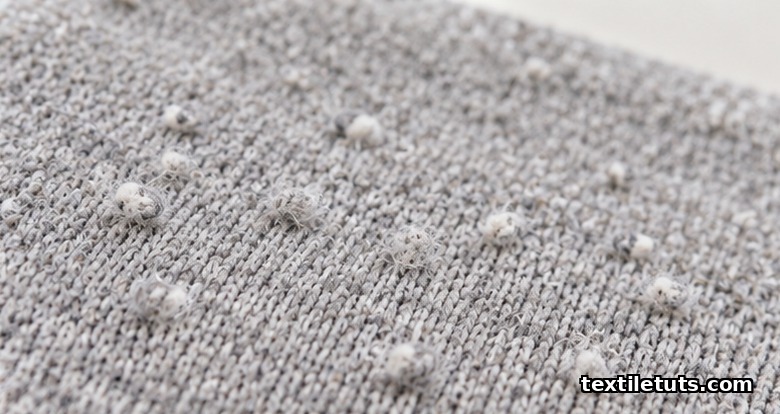
Knit fabric pilling is measured by ISO 12945-2 (modified Martindale) and ASTM D4970, which rate pilling on a 1 to 5 visual scale after the specimen completes 7,000, 14,000, or 28,000 abrasion cycles under a 9 kPa load. Pilling is the formation of small, tangled fiber balls on the fabric surface, and knit constructions pill more readily than woven ones because their looped yarn structure allows loose fiber ends to migrate outward with far less resistance. Picking the right test method, and reading the rating correctly, decides whether a knit passes or fails a buyer’s quality audit.
Most textile mills and buying houses default to one of three methods for knits: the Martindale (ISO 12945-2 or ASTM D4970), the ICI Pilling Box (ISO 12945-1), or the Random Tumble Pilling Tester (ASTM D3512 or ISO 12945-3). Each method stresses the fabric differently, and each produces a number that lands on the same 1 to 5 grading scale. This guide walks through how those tests work, what numbers to look for, and how to use the result on a knit production line.
Why Knit Fabrics Pill More Than Wovens
Pilling starts when loose fiber ends escape the yarn surface and then tangle together through repeated mechanical action, such as rubbing against skin, another garment, or a washing drum. Knitted fabrics are built from interlooped yarn, not interlaced yarns, so a single broken fiber only needs to slip out of one loop to reach the surface. In a plain weave, the same fiber is locked by multiple warp and weft crossings and rarely migrates.
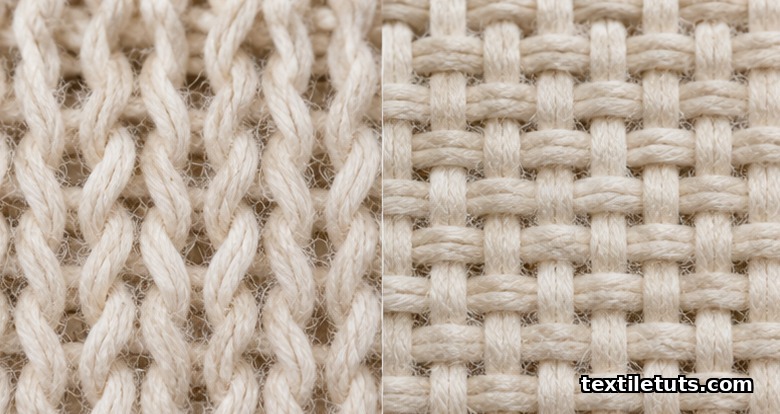
Three construction variables control how badly a knit pills:
- Yarn twist. Lower-twist yarns (typical of soft-spun cotton) release fibers more easily. A yarn with a twist factor below 3.5 (TM) pills noticeably more in wear tests than a yarn at 4.0 to 4.5.
- Stitch length and gauge. Longer stitches expose more yarn per unit area. A 28 gauge single jersey with a 2.8 mm stitch length pills faster than a 24 gauge fabric at 2.4 mm.
- Fiber content. Wool, acrylic, and polyester-cotton blends are the worst offenders. Long-staple combed cotton and fine merino wool with proper yarn twist are the best.
Yarn hairiness is also a leading predictor. A S3 hairiness index above 4.0 (Zweigle or Uster Tester reading) is a strong warning sign that a knit will pill at the 5,000 rub mark.
The Three Standard Pilling Tests for Knits
ISO 12945 describes the three pilling test methods used globally for knitted fabrics. The visual grading scale is identical across all three: 5 = no pilling, 4 = slight, 3 = moderate, 2 = severe, 1 = very severe. The buyer and supplier agree on a target rating (commonly 3 to 4) and a cycle count before testing.
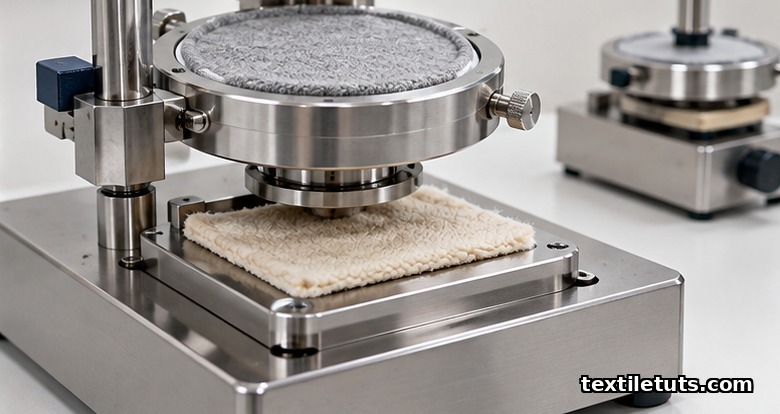
ISO 12945-2 / ASTM D4970, Modified Martindale
The Martindale method is the most widely used for knit fabric pilling testing in apparel sourcing. A circular specimen, 140 mm in diameter, is mounted in a Martindale abrasion tester and rubbed against a reference abrasive fabric (SM 25 worsted wool) under a 9 kPa load for up to 28,000 cycles. For knit fabrics, the most common check points are 7,000 rubs (light wear), 14,000 rubs (medium wear), and 28,000 rubs (heavy wear).
The abraded specimen is then compared against a set of photographic standards under standardized lighting. Two trained graders rate it independently. If their ratings differ by more than 0.5 points, a third grader is called. The reported value is the average.
ISO 12945-1 / BS ISO 12945-1, ICI Pilling Box Method
The ICI Pilling Box is a cork-lined rotating box. Four knit specimens (10 cm by 10 cm, sewn onto polyurethane tubes) tumble together with a defined number of cork cubes for 5 hours for the standard rating, with optional checks at 1, 3, 5, 7, and 10 hours to plot the pilling curve. After tumbling, specimens are removed and visually graded against the same 1 to 5 photographic standards used in the Martindale method.
This method is gentler than the Martindale and is preferred for lightweight single jerseys and fine-gauge knits where aggressive Martindale abrasion can shred the surface before pilling even has a chance to form.
ASTM D3512 / ISO 12945-3, Random Tumble Pilling Tester
The Random Tumble Pilling Tester runs three to six knit specimens (10 cm by 10 cm, edges sealed to prevent unraveling) inside a rotating cork-lined drum with a small amount of cotton sliver. Standard runs are 30 minutes, with checks at 10, 20, and 30 minutes. The drum’s irregular rotation creates random rubbing action that mimics multi-directional wear.
This test is faster than the Martindale and is heavily used in the U.S. market for cotton-rich knit fabrics. It correlates well with actual garment wear for jersey, interlock, and rib constructions.
Pilling Resistance Rating Scale (1 to 5)
| Rating | Visual Description | Typical Buyer Acceptance |
|---|---|---|
| 5 | No pilling. Surface unchanged from original specimen. | Premium, performance wear. |
| 4 | Slight surface fuzzing or isolated pills. No major change in surface appearance. | Most mid-to-high end apparel buyers. |
| 3 | Moderate pilling. Pills cover up to about one third of the specimen surface. | Acceptance threshold for mass-market knit basics. |
| 2 | Severe pilling. Pills cover most of the surface and are clearly visible. | Usually rejected. |
| 1 | Very severe pilling. Dense pill coverage or surface breakdown. | Always rejected. |
How to Read and Report a Pilling Test Result
A complete report on a knit pilling test should include six pieces of information, and missing any one of them makes the result hard to compare between mills:
- The test standard and method (for example, ISO 12945-2 or ASTM D4970).
- The number of cycles or hours at which the rating was taken.
- The applied load (9 kPa for Martindale, fixed tube weight for ICI box).
- The rating, to the nearest 0.5 point, from at least two graders.
- Whether any pills were removed during the test (some labs gently clip loose pills before grading).
- The conditioning atmosphere, typically 20 °C and 65 percent relative humidity per ISO 139.
Pass or fail is set by the buyer. A typical knit T-shirt specification calls for a minimum rating of 3.5 at 7,000 Martindale cycles. A school uniform sweater spec may require 4 at 14,000 cycles. A performance fleece may require 4 to 5 even at 28,000 cycles.
Factors That Influence Knit Pilling Test Results
Even on the same knit fabric, pilling ratings can shift by half a point depending on lab conditions. The biggest variables are:
- Pre-test relaxation. Knits should be conditioned flat for 24 hours before cutting specimens. A knit pulled straight off the knitting machine is still under residual tension and will pill worse than a relaxed sample.
- Specimen edge sealing. Unraveled edges shed loose fibers, which migrate onto the surface and increase the rating. Heat-cut edges or sewn edges with a serged seam are mandatory for the Random Tumble method.
- Reference abrasive condition. A Martindale SM 25 worsted cloth past its recommended use life changes the result. ISO 12945-2 limits each abrasive to a defined number of rubs.
- Grader training. Visual grading remains subjective. Labs that run regular inter-grader calibration maintain tighter rating repeatability, usually within ±0.25 of a point.
Reducing Pilling in Knit Production
Once a knit fails the pilling test, the fix almost always sits upstream of finishing. In order of impact, the steps that most reliably raise a knit’s pilling rating by half a point or more are:
- Increase yarn twist. Moving from a 3.6 twist factor to 4.2 can move a 3-rating knit to a 3.5 to 4 rating at the same cycle count.
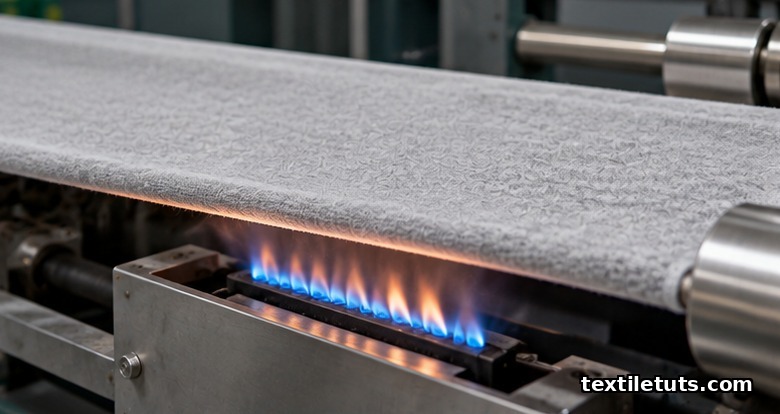
- Singeing the yarn or fabric. A clean gas singe at 1 to 2 cm flame height removes protruding fiber ends. Cellulose knits respond most to this treatment.
- Bio-polishing with cellulase. A controlled cellulase treatment (typically 0.5 to 2 percent on-weight-of-fabric at 50 to 55 °C, pH 4.5 to 5.5) trims loose surface fibers on cotton knits without damaging yarn strength.
- Compacting and heat-setting. A pre-shrunk and compacted knit pills less because the stitch geometry is locked into a relaxed, lower-loft state.
- Choosing longer-staple fiber. Combed cotton (above 28 mm staple length) and longer polyester cut (38 mm vs 32 mm) both improve pilling performance noticeably.
Frequently Asked Questions
What is the difference between ASTM D4970 and ISO 12945-2 for knit pilling?
ASTM D4970 and ISO 12945-2 both use the Martindale tester and grade on the same 1 to 5 scale. The key differences are cycle count checkpoints and reporting format. ISO 12945-2 uses 7,000, 14,000, and 28,000 rub increments; ASTM D4970 specifies fixed endpoint rub counts but lets the buyer set them. Either method is accepted globally, but many European brands explicitly request ISO 12945-2 in their spec sheets.
How many Martindale rubs should a knit fabric pass for apparel?
Most knit apparel specs require a minimum 3 to 3.5 pilling rating at 7,000 Martindale rubs for everyday tops, and 4 at 14,000 rubs for premium knits. Children’s wear and school uniforms typically require 4 at 14,000 rubs because they see more laundering cycles. Performance and outerwear knits often specify 4 to 5 at 28,000 rubs.
Which knit fabric is most resistant to pilling?
Long-staple combed cotton knitted on fine gauges (24 gauge and finer), merino wool knit at 19.5 micron or finer, and tightly twisted filament polyester knits show the best pilling performance, regularly reaching 4 to 5 ratings at 14,000 rubs. Blends of cotton with synthetic fibers generally pill worse than 100 percent natural fibers unless the synthetic is filament and the fabric is tightly knitted.
Does washing a knit fabric before testing change the pilling rating?
Yes. AATCC 135 or ISO 6330 pre-laundering cycles typically remove loose surface fibers and stabilize the surface, so a washed knit usually pills less than an unwashed knit. Some buyer specs require 1, 5, or 10 wash cycles before the pilling test, especially for garments that will be sold pre-washed. Always confirm the pre-treatment with the buyer’s quality protocol before cutting specimens.
Can the Random Tumble Pilling Tester replace the Martindale for knit fabric?
For most cotton-rich knit fabrics (single jersey, interlock, rib, fleece), ASTM D3512 results correlate well with ISO 12945-2. For delicate knits such as fine-gauge merino, lightweight Tencel blends, or any knit where surface fiber migration is minimal, the Martindale method is more discriminating. Many international labs run both methods to cross-check results, especially when buyer specs from different regions conflict.
References
- International Organization for Standardization. ISO 12945-1:2020, Textiles — Determination of fabric propensity to surface pilling, fuzzing or matting — Part 1: ICI Pilling Box method. iso.org — describes the cork-lined box tumbling procedure and grading scale.
- International Organization for Standardization. ISO 12945-2:2020, Textiles — Determination of fabric propensity to surface pilling, fuzzing or matting — Part 2: Modified Martindale method. iso.org — covers the 7,000, 14,000, and 28,000 rub cycle increments for knit fabrics.
- International Organization for Standardization. ISO 12945-3:2020, Textiles — Determination of fabric propensity to surface pilling, fuzzing or matting — Part 3: Random Tumble Pilling method. iso.org — outlines the rotating cork drum and cotton sliver protocol.
- ASTM International. ASTM D4970 / D4970M-20, Standard Test Method for Pilling Resistance and Other Related Surface Changes of Textile Fabrics: Martindale Tester. astm.org — sets the U.S. Martindale procedure and 9 kPa load.
- ASTM International. ASTM D3512 / D3512M-10, Standard Test Method for Pilling Resistance and Other Related Surface Changes of Textile Fabrics: Random Tumble Pilling Tester. astm.org — describes the 30 minute tumbling cycle used on knit fabrics.
- AATCC. AATCC TM 196-2013, Test Method for Spun Yarn Pilling. aatcc.org — covers yarn-level pilling evaluation that complements fabric testing.
- International Organization for Standardization. ISO 139:2005, Textiles — Standard atmospheres for conditioning and testing. iso.org — sets the 20 °C and 65 percent RH condition used before grading.
This article is the working reference for knit fabric pilling testing under ISO 12945 and ASTM D4970 / D3512 protocols. Editorial by Iftay Khairul Alam, TextileTuts. Sources: ISO 12945-1, ISO 12945-2, ISO 12945-3, ASTM D4970, ASTM D3512, AATCC TM 196, and ISO 139 as cited.


