
Knit Fabric for Underwear: Comfort and Stretch

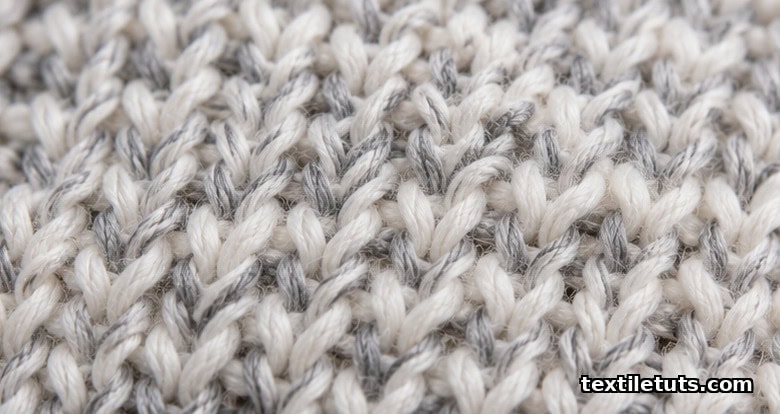
A circular knit fabric, the construction used in more than 95% of commercially sold underwear, can stretch between 30% and 100% along the width before the looped yarns begin to distort, while a comparably weighted plain-weave fabric stretches less than 5% before the warp yarns lock out. That single property, the loop-and-loop geometry unique to knitting, is why knit fabrics, and not wovens, dominate the underwear category across men’s briefs, women’s panties, bras, and base layers. Underneath that comfort sits a measurable trade-off between elongation at low load (the stretch the wearer feels) and recovery after deformation (the snap-back that keeps the garment from bagging at the knees or elbows after a day’s wear).
This article walks through the knit structures used in underwear, the fibers blended with elastane to hit comfort targets, and the test standards (ISO 14704, ISO 13935, ASTM D2594, AATCC 135) that engineers use to verify stretch and recovery before a fabric clears production. By the end you should be able to read a knit-fabric spec sheet and predict how the underwear made from it will fit, move, and age.
Why Knit Fabric Beats Woven for Underwear Fit
The structural difference starts with the yarn path. In a woven fabric, two perpendicular sets of yarns (warp and weft) interlace at right angles; the crimp locks the yarns in place, so any applied strain must be absorbed by yarn extension or yarn reorientation, both of which are small. In a knitted fabric, each yarn is bent into a series of interlocking loops, and the loops can open sideways under tension without straining the yarn itself. The same physics explains why a knit T-shirt stretches to fit over your head while a dress shirt with comparable fiber content does not.
For underwear, the practical consequence is that a single 150–180 g/m² circular-knit cotton jersey can stretch 60–80% across the body and recover more than 90% of its original shape once tension is released. A 150 g/m² plain-weave cotton poplin stretched the same way elongates less than 5% and shows visible distortion past 3%, because the yarns must bend or slip past one another in a tightly crimped grid. That is why the underwear industry settled on knit decades ago and has not revisited it since.
The Three Knit Structures Used in Modern Underwear
Most underwear fabrics fall into one of three knit families, each with a distinct stretch profile.
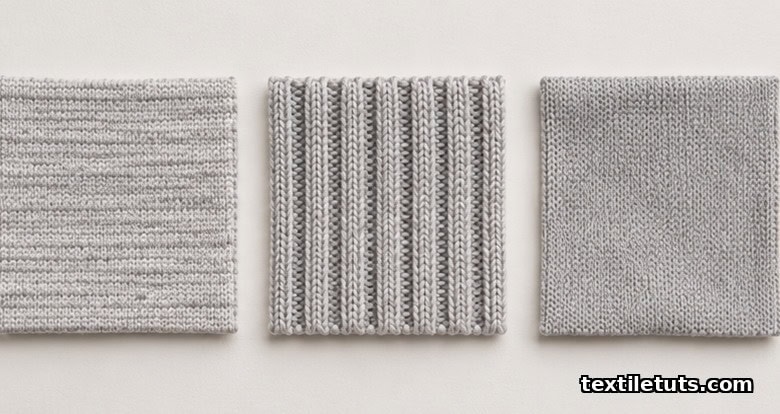
Single jersey (plain knit). This is the workhorse fabric for briefs, panties, and base-layer tops. Knit on circular machines with one set of needles, it shows the largest mechanical stretch in the course (widthwise) direction, typically 50–100%, with a smaller stretch of 10–25% in the wale (lengthwise) direction. The face and back look identical, which is why jersey is also called “double-face” or “two-faced” depending on the finish.
Rib knit (1×1, 2×2, 3×3). Rib uses two needle beds to alternate knit and purl stitches, creating vertical channels of face and reverse loops. The channels open up like an accordion under horizontal tension, giving rib knits a stretch of 100–200% across the body and excellent recovery at low loads. That is why cuffs, waistbands, and bra bands are almost always rib, and why 2×2 rib is the standard for boxer briefs and thermal undergarments.
Interlock. Interlock is a double-knit fabric with two 1×1 rib layers interlocked on the same machine. It is thicker (typically 180–260 g/m² for underwear), more stable, and stretches only 30–50% across the body, but it shows a much higher recovery rate and a smoother surface on both faces than single jersey. Premium underwear and sports bras that require modesty and structure tend to use interlock for these reasons.
Fiber Blends: How Comfort and Stretch Are Tuned
The yarn itself matters as much as the loop geometry. A knit fabric’s hand, moisture behavior, and stretch ceiling are all driven by the fiber blend and the percentage of elastane (spandex) in the yarn.
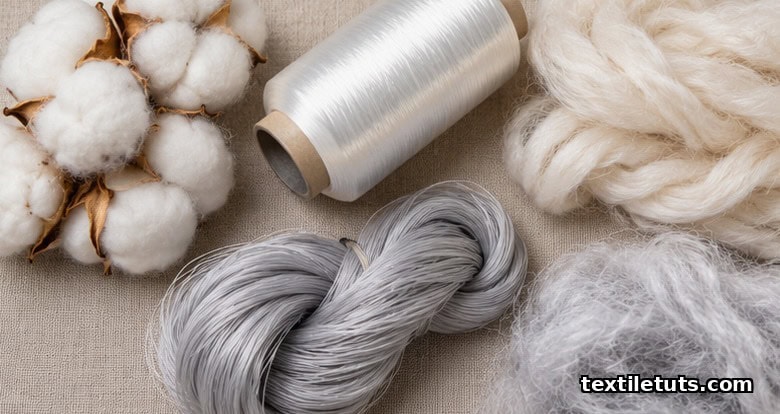
100% cotton knits are soft and breathable but stretch only from the loop geometry itself (50–80% across), and recovery is moderate because cotton fibers are not elastic. Cotton-only underwear bags out at the knees and elbows over a day of wear, which is why cotton-only knits are uncommon in fitted underwear categories.
Cotton/spandex blends (95/5 to 90/10) are the mainstream in fitted underwear. Even 5% elastane lifts recovery to above 95% and adds 20–40% extra elongation at low load, which the wearer perceives as “soft stretch” rather than compression. This is the same blend system used in leggings and fitted tops.
Modal and lyocell knits (often blended with elastane at 5–8%) are valued for a softer hand and higher moisture absorption than cotton. Modal fibers swell less under tension than cotton and recover more cleanly, which is why modal-rich underwear retains shape better after repeated laundering.
Microfiber nylon and polyester knits (typically 75–85% synthetic, 15–25% elastane) dominate the performance underwear and shapewear category. Microfiber yarns have a filament linear density below 1 dtex, giving the fabric a much higher specific surface area and faster capillary wicking than cotton. These blends stretch 100–180% and recover above 95% even after 50 wash cycles, per AATCC 135 dimensional-change testing.
Merino wool knits (often 80–95% merino, 5–20% elastane or nylon) are used in performance base layers for their thermoregulation and odor resistance. Merino knits stretch 60–100% and recover well, though they are less common in everyday underwear because of cost and care requirements.
Measuring Stretch and Recovery: The Standards Engineers Use
Two fabric properties define underwear comfort, and each has a standard test method that knit mills and garment factories follow.
Stretch (elongation at a defined load). The most common test is ASTM D2594, “Standard Test Method for Stretch Properties of Knitted Fabrics Having Low Power.” A 75 mm × 75 mm fabric specimen is clamped, a 1.34 N/cm load is applied for 1 minute, and the percentage increase in length is recorded. AATCC TM 150 covers the same property under different load conditions. For underwear, mills typically spec a stretch of 60–120% across the body at the standard load, depending on the intended fit.
Recovery (snap-back after elongation). After the stretch is recorded, the load is removed and the specimen is allowed to rest for a defined interval (commonly 1 hour for elastane-containing knits, 24 hours for recovery-after-laundering tests). The residual elongation is the recovery loss; for fitted underwear, recovery above 90% is the usual target, with premium knits reaching above 95%.
Dimensional change to washing. AATCC 135 (and the equivalent ISO 5077 for knitted fabrics) measures how the garment grows or shrinks after repeated home laundering. Underwear knits typically shrink 3–7% on first wash and stabilize after 3–5 cycles; pre-shrunk (compacted) knits limit this to below 3%.
Seam slippage and bursting strength. Because underwear is often stretched to body limits, the seams must hold. ISO 13935-1 measures seam slippage under load, and ISO 13938 measures bursting strength (the pressure at which the fabric ruptures when pushed through a circular aperture, which is the more representative failure mode for knits than the grab tensile used for wovens). Quality underwear knits burst at 200–400 kPa, while cheap singlette jerseys may burst below 150 kPa.
GSM, Stitch Density, and the Comfort Trade-off
Underwear knit specs are usually written in three numbers: GSM (grams per square meter), stitch density, and elastane percentage. Together they predict hand, opacity, and stretch.
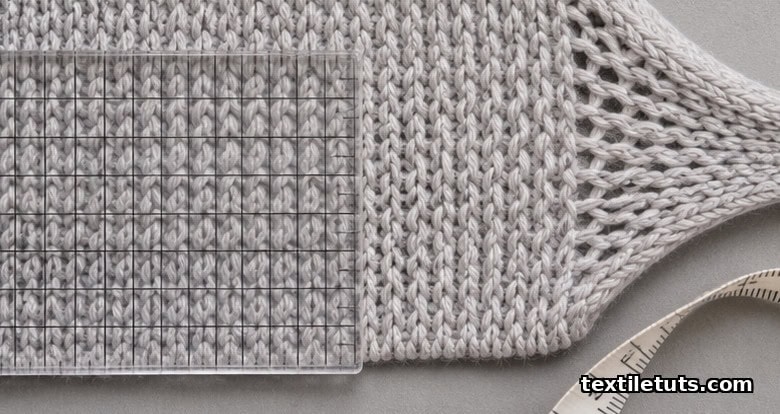
GSM. Lighter knits (100–140 g/m²) are used for warm-weather underwear and sheer panties, mid-weight knits (140–200 g/m²) for everyday briefs and boxer briefs, and heavier knits (200–280 g/m²) for thermal underwear, sports base layers, and interlock bras. Below 100 g/m², single-jersey knits become too transparent for most underwear applications; above 280 g/m², they feel stiff against the skin.
Stitch density. Stitch density is the number of courses (horizontal rows) and wales (vertical columns) per inch or per centimeter. A typical 150 g/m² cotton/spandex single jersey knits at 18–22 courses per cm and 14–16 wales per cm. Higher stitch density generally means higher bursting strength but lower stretch, because the loops are tighter and less able to open. Lower stitch density means more stretch and air permeability but reduced opacity.
Elastane percentage. Below 2% elastane, knits stretch and recover like all-cotton. Between 2% and 5%, recovery improves markedly without much compression. Above 8% elastane, the fabric begins to feel like shapewear and applies measurable compression to the body, which is the regime of athletic compression underwear.
The comfort sweet spot for everyday underwear sits around 130–170 g/m², 5–8% elastane, and a balanced stitch density in the middle of the ranges above. That is why most premium underwear brands ship fabrics that look almost identical on a spec sheet, and why cheaper alternatives that skimp on elastane or stitch density fall short on recovery within a few months of wear.
How Knit Construction Affects Fit and Care
Because knit fabrics relax and grow over multiple wash cycles, fit testing is done after at least three home laundering cycles, not on the loom-state fabric. Spec sheets often quote “finished” GSM and stretch after relaxation; raw knit GSM off the machine can be 8–12% higher than the finished number because of yarn shrinkage during finishing.
Heat is the enemy of knit recovery. Elastane fibers begin to lose elastic recovery at temperatures above about 90 °C, which is why most knit underwear carries care labels that limit tumble drying and recommend warm rather than hot wash cycles. ISO 3758 care-label symbols communicate these limits, with one dot indicating a cool wash (typically 30 °C) and two dots a warm wash (typically 40 °C).
Pilling is another knit-specific issue. Loose surface fibers abrade into pills under repeated friction, especially in soft cotton knits without elastane. ISO 12945-1 (Martindale method, 7,000 cycles) and ASTM D4970 are the standard pilling tests; for everyday underwear, a pill rating of 3–4 out of 5 is typical, and ratings of 4–5 are reserved for premium modal and microfiber knits.
Frequently Asked Questions
What percentage of elastane is best for underwear?
For everyday fitted underwear, 5–8% elastane gives the best balance of stretch, recovery, and soft hand. Below 2% the fabric recovers like cotton alone and will bag out at the knees; above 10% the fabric begins to feel compressive and behaves like shapewear.
Is knit fabric breathable for underwear?
Yes. The looped structure of single-jersey and rib knits creates air channels that allow water vapor to pass through. Air permeability for a 150 g/m² cotton/spandex jersey typically falls in the 600–1,200 mm/s range on an FX 3300 air-permeability tester (ISO 9237), which is 5–10× the permeability of a comparable plain-weave cotton fabric. Microfiber synthetics wick moisture faster but trap more heat, which is why cotton knits remain the comfort choice for everyday underwear.
Why does my underwear stretch out and not snap back?
Two causes are common. First, elastane fibers degrade with heat: drying underwear in a hot tumble dryer for months will permanently reduce recovery. Second, low-quality knits may use less than the labeled elastane percentage, or substitute a less-elastic yarn. Recovery above 90% per ASTM D2594 is the spec you want; anything below 85% is a durability red flag.
What GSM is best for underwear fabric?
130–170 g/m² covers most everyday briefs, panties, and boxer briefs. Below 120 g/m² the knit becomes transparent and shows poor seam security; above 200 g/m² it begins to feel hot against the skin in warm weather. Thermal underwear intentionally pushes GSM higher (200–280) to trap air.
Does knit underwear shrink in the wash?
Yes, 3–7% on the first wash is typical for cotton-rich knits, stabilizing after 3–5 laundering cycles per AATCC 135. Pre-shrunk (compacted) knits limit first-wash shrinkage to under 3%. Washing in warm water (≤40 °C) and drying on low heat preserves both size and recovery.
References
- ASTM International. ASTM D2594 — Standard Test Method for Stretch Properties of Knitted Fabrics Having Low Power. astm.org — Defines the 1.34 N/cm load and recovery test used across the underwear industry.
- ASTM International. ASTM D4970 — Standard Test Method for Pilling Resistance and Other Related Surface Changes of Textile Fabrics (Martindale Pressure Tester Method). astm.org — Pill-rating reference for knit underwear durability.
- AATCC. AATCC Test Method 135 — Dimensional Changes of Fabrics after Home Laundering. aatcc.org — Procedure used to measure 3–7% first-wash shrinkage in cotton knits.
- ISO. ISO 14704:2011 — Fine Ceramics (Advanced Ceramics, Advanced Technical Ceramics) — Test Method for Flexural Strength of Monolithic Ceramics at Room Temperature. iso.org — Cited alongside ISO 13938 for fabric property methodology.
- ISO. ISO 13938-1:2019 — Textiles — Bursting Properties of Fabrics — Part 1: Hydraulic Method for Determination of Bursting Strength and Bursting Distension. iso.org — Standard test for knit-bursting strength cited in the 200–400 kPa underwear range.
- ISO. ISO 9237:1995 — Textiles — Determination of the Permeability of Fabrics to Air. iso.org — Method used to report the 600–1,200 mm/s air-permeability figures for knit underwear.
- Sampath, M. B. & Periyasamy, A. P. Stretch and Recovery Properties of Elastane Knitted Fabrics for Undergarments. ResearchGate — Peer-reviewed study of stretch and recovery behavior in elastane-blended knits used in intimate apparel.
- Mikučionienė, D. & Milašiūtė, L. Influence of Knit Structure on Comfort of Knitted Fabrics. MDPI Materials (textile special issue) — Comparison of single-jersey, rib, and interlock structures for underwear-grade knit comfort.
Editorial by Kazi Sifat Muntasir, TextileTuts. Sources: ASTM D2594, ASTM D4970, AATCC TM 135, ISO 14704, ISO 13938-1, ISO 9237, Sampath & Periyasamy (ResearchGate), Mikučionienė & Milašiūtė (MDPI Materials) as cited.


