
Knit Fabric for Sportswear: Moisture Management

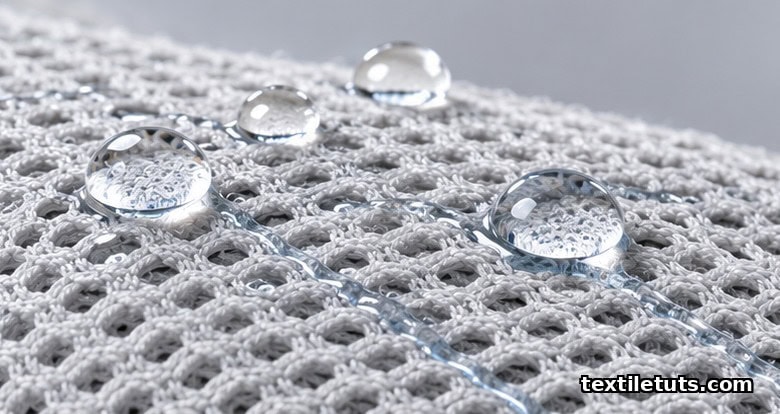
Knit fabric for sportswear must move liquid sweat through capillary channels at a measured rate of at least 100 mm in 30 minutes per AATCC TM79 while reaching an Overall Moisture Management Capacity (OMMC) above 0.4 per AATCC TM195, because the knit loop geometry controls the capillary pressure that pulls water through the fabric and the yarn surface chemistry controls the contact angle that water forms on the fiber.
The combination of synthetic filament yarns (polyester, polypropylene, or nylon) and an engineered knit structure lets sweat travel from skin to the outer face where it can evaporate, which is why a properly built performance knit can drop perceived skin humidity by up to 30% during high-intensity work compared with a cotton knit of the same weight.
The rest of this article walks through the physics of capillary wicking, the fiber choices that make moisture transport possible, the knit structures that move water most efficiently, the surface finishes that tune the contact angle, and the lab tests that verify performance.
Why moisture management matters in knit sportswear
When the body produces more heat than it can shed, sweat moves to the skin surface and either evaporates (cooling the wearer) or soaks into the clothing pressed against the skin. Wet fabric against the skin creates friction, sticks to the body, and pulls heat away faster than the wearer can replace it, which is the chafing-and-chill feedback that drives athlete complaints about cotton tees in cold weather. A knit engineered for moisture management reduces both effects by spreading sweat across a wider area of fabric so it evaporates rather than pooling, and by transporting liquid to the outer face where the surrounding air can carry it off.
The standard scale for this behavior is the Moisture Management Index defined in AATCC TM195, which grades a fabric from 1 (poor) to 5 (excellent) based on how it handles the wetting, spreading, and drying phases on both faces. Sportswear knits with OMMC values between 0.4 and 0.6 sit in the “good” band and dominate training apparel; values above 0.6 are reserved for race-grade knits in high-output sports.
The physics: capillary pressure, contact angle, and yarn spacing
Two physical quantities drive liquid movement through a knit: the contact angle of water on the fiber surface, and the capillary pressure generated by the spacing between adjacent yarns in the loop. Capillary pressure scales with the surface tension of water, the cosine of the contact angle, and the inverse of the gap between yarns, which is why a tightly knit interlock pulls water more strongly than an open mesh even when both use the same yarn.
Hydrophilic fibers like cotton flatten the contact angle (water spreads on the surface) and absorb water into the fiber itself, but they hold that water against the skin rather than moving it through. Hydrophobic fibers like polyester keep the contact angle above 70 degrees, so water does not soak into the fiber and instead rides along the outside of the yarn, slipping through the capillary gaps between loops. That second behavior is what textile engineers exploit when they describe a fabric as moisture-wicking: the liquid is moved, not absorbed.
| Fiber | Moisture regain (%) | Contact angle with water (deg) | Behavior in a knit |
|---|---|---|---|
| Cotton | 7.0-8.0 | ~30 (hydrophilic) | Absorbs and holds water; slow drying |
| Wool (merino) | 14.0-18.0 | ~40 (hydrophilic) | Absorbs vapor; releases heat on drying |
| Polyester filament | 0.4 | ~75 (hydrophobic) | Wicks; dries fast; surface finish tunable |
| Polypropylene filament | 0.05 | ~95 (very hydrophobic) | Strong wicking; lowest water uptake |
| Nylon 6 filament | 4.0-4.5 | ~70 (moderately hydrophobic) | Wicks; softer hand than polyester |
The values in the table come from standard fiber-physics references and ASTM and AATCC test data; the takeaway for a sportswear buyer is that the lowest-moisture-regain fibers give the fastest drying, while higher-regain natural fibers manage sweat vapor rather than liquid sweat.
Fiber and yarn choices for moisture-wicking knits
Most performance knits are made from polyester filament yarns in the 50-150 denier range, with 1.0-2.5 denier per filament, because polyester combines low moisture regain with the ability to be texturized for capillary surface area. Texturizing introduces crimp and side-loops along the yarn, which increases the number of micro-channels water can travel through without changing the loop geometry of the knit itself.
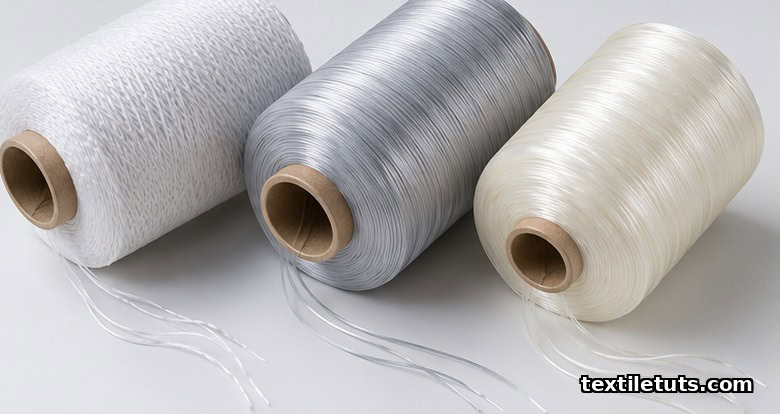
For maximum wicking, polypropylene and nylon filament yarns are common in base layers and compression knits. Polypropylene has the lowest water absorption of any mass-produced fiber (0.05% moisture regain), but it melts at around 165 degrees Celsius, which limits finishing options. Nylon 6 has higher moisture regain than polyester (around 4%) and accepts dyes at lower temperatures, which is why it shows up in dyed compression knits where hand-feel matters.
For blends, a polyester-wool or polyester-cotton mix can combine wicking with the odor-control and aesthetic properties of the natural fiber. ISO 6330 washing protocols are commonly used to compare how these blends perform over multiple wash cycles, because surface finishes on synthetic yarns wash off and the wicking performance can drop 20-30% over 20 laundering cycles if the finish is not durable.
Knit structures that move water
The structure of the knit controls the size and continuity of the capillary channels between yarns, which is the other half of the moisture-management equation. Single jersey, the most common knit for T-shirts, has loops on one face and float arcs on the other; the float arcs create wider channels on the back face, which is one reason moisture tends to move from the inside (technical back) to the outside (technical face) of a single-jersey sportswear fabric.
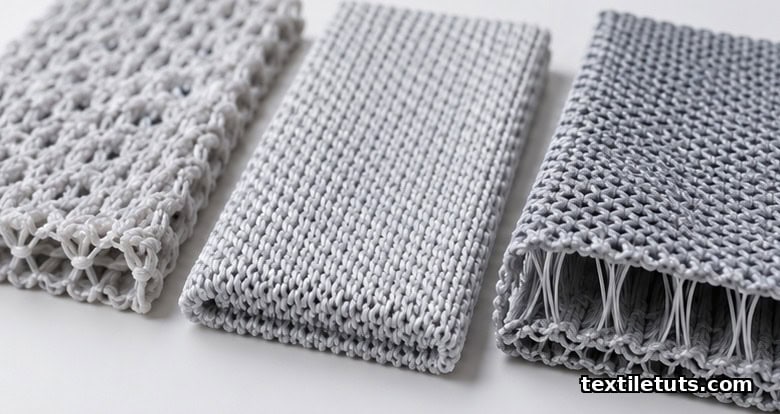
Interlock is a double-jersey with two connected single-jersey layers; it has tighter loops and more uniform capillary spacing, which produces higher capillary pressure but lower air permeability. Mesh knits have engineered holes in the structure (built with tuck stitches or transfer stitches) that increase surface area for evaporation while preserving wicking paths along the remaining yarn network. Spacer fabrics use two separate knit layers connected by monofilament spacer yarns, creating a three-dimensional capillary reservoir that can hold and redistribute sweat during peak exertion.
| Knit structure | Typical areal density (g/m2) | Wicking height, 30 min (mm) | Common sportswear use |
|---|---|---|---|
| Single jersey (textured polyester) | 120-180 | 80-120 | Training tops, running shirts |
| Interlock (polyester/spandex) | 160-240 | 60-90 | Compression base layers |
| Pique (polyester/cotton) | 180-220 | 50-80 | Polo shirts, golf tops |
| Mesh (engineered holes) | 90-140 | 100-150 | Jersey inserts, ventilation panels |
| Spacer 3D knit | 200-350 | 70-110 | Cycling jerseys, protective padding |
Surface finishes and chemical treatments
Yarn finishes are the third lever, after fiber and structure, for tuning moisture transport. Hydrophilic finishes (often based on modified polyester or polyether-amide chemistry) are applied to polyester yarn to lower the contact angle from around 75 degrees to 40-50 degrees, which speeds the initial uptake of sweat into the fabric. The trade-off is that these finishes slow drying, because they hold water in the fabric rather than letting it evaporate.
For one-way moisture transport (inner face absorbs, outer face sheds), factories use plasma treatment or chemical etching on the outer face to raise its contact angle while keeping the inner face hydrophilic. AATCC TM195 grades this one-way transport on a 1-5 scale, and the best performance knits score 4 or 5 on both faces with a strong outer-face spreading area.
Antimicrobial finishes (silver-ion, zinc pyrithione, or quaternary ammonium) are often added to moisture-management knits to control odor, but they do not change the moisture-handling physics and should be evaluated separately from wicking performance.
How moisture-management performance is tested
Three standard tests dominate the laboratory evaluation of moisture-management knits for sportswear. AATCC TM79 measures vertical wicking height: a strip of fabric is suspended with its lower end in water, and the height the water climbs in 30 minutes is recorded. Good performance knits wick at least 80 mm in 30 minutes; top-tier mesh knits exceed 150 mm.
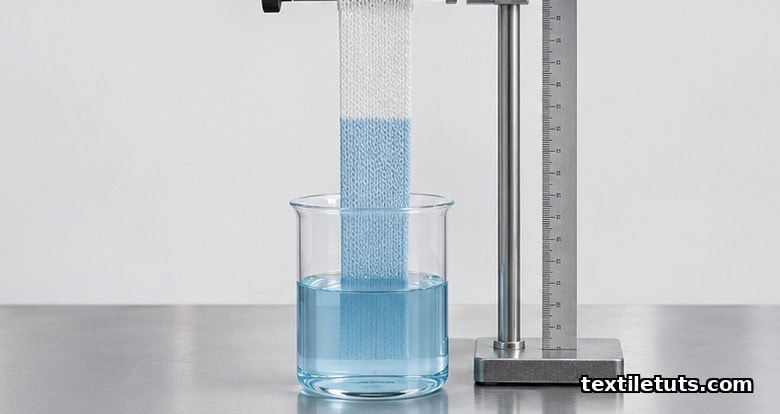
AATCC TM195 measures moisture-management properties on both faces simultaneously, grading wetting time, absorption rate, spreading speed, and one-way transport capacity on a 1-5 scale, then combining these into an Overall Moisture Management Capacity index from 0 to 1. ASTM D737 measures air permeability in cubic centimeters per second per square centimeter, which complements wicking data by showing how fast moisture vapor can leave the fabric. A knit with high wicking height but low air permeability can still feel clammy because the evaporated moisture stays trapped in the microclimate between skin and fabric.
Choosing a knit for a specific sport
For high-aerobic-output sports (running, cycling, soccer), prioritize single-jersey or engineered mesh with OMMC above 0.5, air permeability above 100 cm3/s/cm2, and a wicking height above 100 mm in 30 minutes. For cold-weather base layers, prioritize interlock or spacer knits that trap warm air while still moving liquid sweat outward; weight should fall between 160 and 240 g/m2. For low-output or studio wear, a polyester-cotton pique (50/50 blend) gives moisture performance acceptable for moderate sweat rates with a more natural hand and easier care.
Whatever the end use, insist on the test report. A knit labeled “moisture-wicking” without AATCC TM79 and TM195 numbers is making an unverifiable claim; a knit with documented OMMC above 0.4 and wicking height above 80 mm is performing as advertised.
Frequently Asked Questions
What is the difference between moisture-wicking and moisture-absorbing fabric?
A moisture-wicking fabric moves liquid sweat through capillary channels between fibers and yarns without absorbing it into the fiber itself; a moisture-absorbing fabric (cotton, wool) soaks water into the fiber interior. Wicking fabrics dry faster because the water sits on the surface; absorbing fabrics feel drier at first because they pull sweat off the skin, but stay wet longer once saturated.
What OMMC value should I look for in a sportswear knit?
OMMC above 0.4 is generally accepted as “good” for training wear, and OMMC above 0.6 is “excellent” and typical of race-grade fabrics. Below 0.4, the fabric will feel damp during sustained high-output activity, even if the wicking height looks fine on paper.
Do cotton-polyester blends wick well?
A 50/50 cotton-polyester blend wicks noticeably less than a 100% textured polyester knit because cotton fibers absorb water into the fiber interior and slow capillary transport through the blend. In AATCC TM79 tests, a typical 50/50 single jersey wicks 40-60 mm in 30 minutes compared with 80-120 mm for a 100% textured polyester of the same weight and loop length.
Does fabric weight affect moisture management?
Heavier knits can hold more liquid in their capillary network, which means slower drying and higher retained weight during exercise. For training tops, 120-180 g/m2 is the typical sweet spot; heavier knits (200+ g/m2) are reserved for cold-weather or abrasion-resistant applications where the moisture-management penalty is acceptable.
How long does the wicking finish last on a sportswear knit?
Standard hydrophilic finishes on polyester lose roughly 20-30% of their wicking performance over 20 wash cycles per ISO 6330 protocols. Durable finishes (plasma-treated, cross-linked polymer, or inherent fiber modification) hold 80% or more of their original wicking height past 50 wash cycles and are the better choice for garments washed frequently.
References
- AATCC. Test Method 79: Absorbency of Textiles (Vertical Wicking). AATCC Technical Manual. — vertical wicking height protocol.
- AATCC. Test Method 195: Moisture Management Properties of Textiles as Measured on a Moisture Management Tester. — OMMC grading and one-way transport test.
- ASTM. ASTM D737: Standard Test Method for Air Permeability of Textile Fabrics. — air permeability protocol for knit fabrics.
- ISO. ISO 6330: Domestic washing and drying procedures for textile testing. — wash-cycle protocol for durable-finish evaluation.
- Supuren, G., et al. “Moisture management and thermal absorptivity properties of polyester-based knitted fabrics.” Textile Research Journal. — peer-reviewed study on how fiber blend ratios affect OMMC and drying rate.
- Zhu, L., and Li, J. “Capillary wicking in textile yarns and fabrics: a review.” Journal of the Textile Institute. — peer-reviewed paper on capillary pressure and contact angle in knit loops.
This article is the working reference for moisture-management knit fabrics in sportswear. Editorial by Iftay Khairul Alam, TextileTuts. Sources: AATCC TM79, AATCC TM195, ASTM D737, ISO 6330, Textile Research Journal, and Journal of the Textile Institute as cited.


