
Knit Fabric Dyeing Process

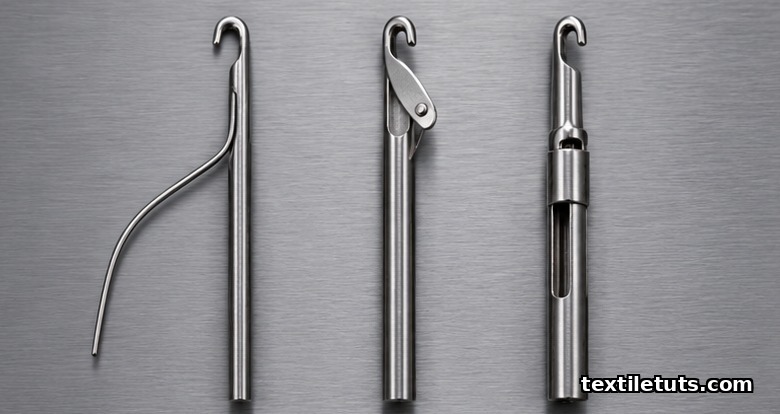
Knit fabric dyeing is a wet-process exhaust application that uses reactive, disperse, or acid dyes at a liquor ratio of 1:6 to 1:10, with cotton knit dyeing typically held at 60 to 80 °C for 60 to 90 minutes to reach a 1 to 4 percent shade depth on weight of fiber. Knits dye under gentler tension than wovens because their looped structure stretches and distorts easily, so the machine geometry, temperature ramp, and cooling rate all have to be tuned to keep GSM, stitch length, and dimensional stability within tolerance. This guide walks through the steps a dyehouse follows for cotton, polyester, and cotton-poly blend knits, the standards that grade the output, and the defects that show up when any of those steps drift.
The fiber chemistry decides everything downstream. Cotton knits (single jersey, rib, interlock, pique, fleece) carry reactive dye sites that bond covalently under alkali. Polyester knits (microfiber interlock, brushed-back fleece, mesh) accept only disperse dyes at 130 °C under pressure, because polyester has no ionic sites. Wool knits (merino jersey, cashmere rib) use acid or metal-complex dyes at a boil at pH 4 to 5. Picking the wrong dye class for the fiber is the single most expensive mistake a dyehouse can make, so the rest of this article assumes the dye class has already been matched to the fiber.
Why knit fabrics need a different dyeing process from wovens
A knit fabric is a series of interlooped yarns, not interlaced ones. The loop geometry makes the fabric extensible in every direction, but it also makes the fabric sensitive to lengthwise and widthwise distortion during wet processing. A plain woven fabric tolerates 5 to 8 percent lengthwise shrinkage in finishing; a single jersey tolerates only 3 to 5 percent before the consumer notices the change in fit.
Three loop properties drive every knit-dyeing decision:
- Loop length controls GSM at a fixed stitch density; heat or agitation that relaxes the yarn drops loop length and pushes GSM up by 4 to 8 percent.
- Stitch density (wales per cm × courses per cm) is the geometric equivalent of yarn count in a weave; it must stay within ±3 percent of the greige value for the finished panel to match the marker.
- Loop distortion (skew, bow, or spirality) sets in when the fabric moves through a jet or winch with uneven tension; high-pressure jets disturb loops far less than low-pressure winches.
Woven dyeing lines run on a jigger or a pad-steam range, both of which apply heavy crosswise and lengthwise tension. Those machines stretch out knit loops and leave the fabric with permanent elongation, so the knit industry standardized on jet, winch, and soft-flow overflow machines, where the rope of fabric floats through the liquor in a slack state.
Pre-treatment: scouring and bleaching
A greige knit arrives at the dyehouse loaded with knitting oils (5 to 8 percent on weight), sizing residues, and natural seed-coat fragments. Reactive dyes will not bond evenly across that contamination, so scouring and bleaching come first.
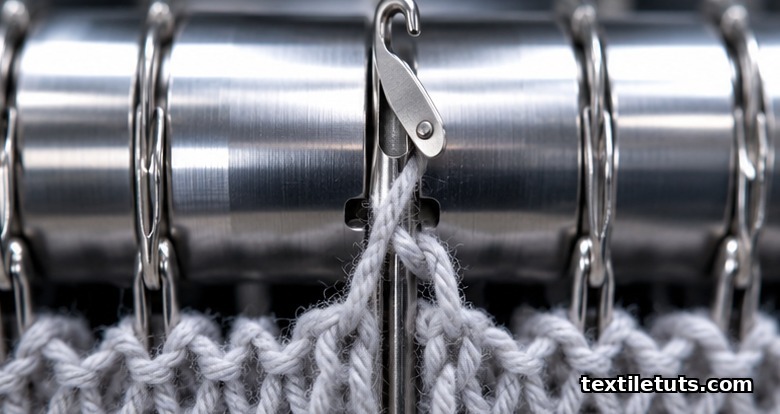
Cotton knits are scoured at 90 to 100 °C for 30 to 45 minutes with 1 to 3 g/L sodium hydroxide and 0.5 to 1 g/L non-ionic wetting agent, then bleached with hydrogen peroxide (2 to 5 g/L) at 95 to 100 °C for 45 to 60 minutes at pH 10.5 to 11. The combined scour-bleach trims the absorbency time from over 120 seconds down to under 5 seconds, which is the standard test for a properly prepared cotton knit.
Polyester knits skip the alkali scour. They are pre-set on a stenter at 180 to 190 °C for 30 to 60 seconds to lock the loop geometry, then scoured at 80 °C with a non-ionic detergent to lift the spin finish. Pre-setting shrinks the polyester loop and pins it, so it cannot deform further during the high-temperature disperse-dye step.
Dye classes used on knit fabrics
The fiber in the loop sets the dye class. The table below covers the four combinations that account for the bulk of commercial knit dyeing.
| Knit fiber | Dye class | Application pH | Application temperature | Fixation rate |
|---|---|---|---|---|
| Cotton (cellulose) | Reactive (vinyl sulfone, monochlorotriazine) | 10.5 to 11.0 | 60 to 80 °C | 60 to 90 % |
| Polyester | Disperse (high-energy azo, anthraquinone) | 4.5 to 5.5 | 130 °C under pressure | 92 to 98 % |
| Wool | Acid (levelling, milling) or 1:1 metal-complex | 4.0 to 5.0 | 98 to 100 °C | 85 to 95 % |
| Cotton-polyester blend (65/35, 50/50) | Reactive + disperse in a one-bath two-step route | 5.0 (disperse) then 10.5 (reactive) | 130 °C then 80 °C | Reactive 60 %, disperse 95 % |
Reactive dyes form a covalent bond between the dye’s reactive group and the hydroxyl group on the cellulose chain. That bond gives cotton knits the wet-fastness needed to survive 30 to 50 home launderings. Disperse dyes are non-ionic and dissolve into the polyester matrix above its glass transition temperature (about 80 °C for amorphous regions), which is why the liquor has to climb to 130 °C for full exhaustion.
The exhaust dyeing cycle for a cotton knit
Most cotton single jersey, rib, and interlock knit fabric passes through a six-step cycle in a jet or soft-flow machine.
- Load and wet-out at 40 °C for 10 minutes. The fabric rope enters the liquor slack, and the wetting agent drives air out of the loops.
- Dose and migrate at 40 to 60 °C for 20 to 30 minutes. Salt (sodium chloride or Glauber’s salt) is added in 3 to 6 portions to push the reactive dye onto the fiber. Without the salt gradient the dye stays in the bath.
- Fix at 60 to 80 °C for 60 to 90 minutes. Alkali (sodium carbonate or sodium hydroxide) raises the pH to 10.5 to 11 and activates the vinyl sulfone group so it bonds to the cellulose.
- Drain and rinse to remove hydrolyzed dye, which no longer has any affinity for the fiber.
- Soaping at boil for 15 to 20 minutes with 1 to 2 g/L non-ionic detergent, which strips the loose dye that sits on the fiber surface.
- Cool down from 80 °C to 40 °C at no more than 2 °C per minute, which keeps loop distortion under 3 percent.
The whole cycle takes 5 to 7 hours. Salt load for a medium shade lands at 50 to 80 g/L, which is why cotton knit dyehouses run effluent treatment for chloride removal before discharge.
Jet dyeing: how the machine handles the loop
A jet dyeing machine is a closed pressurized vessel with a venturi nozzle at one end. The fabric rope is plaited into a moving winch inside the vessel, then pulled through the nozzle by a high-volume liquor flow. The liquor carries the rope, not a mechanical reel, so the loop geometry sees almost zero tension. Jet machines handle cotton knits at 1:6 to 1:8 liquor ratios and polyester knits at 1:5 to 1:7, with fabric speeds of 100 to 300 meters per minute.
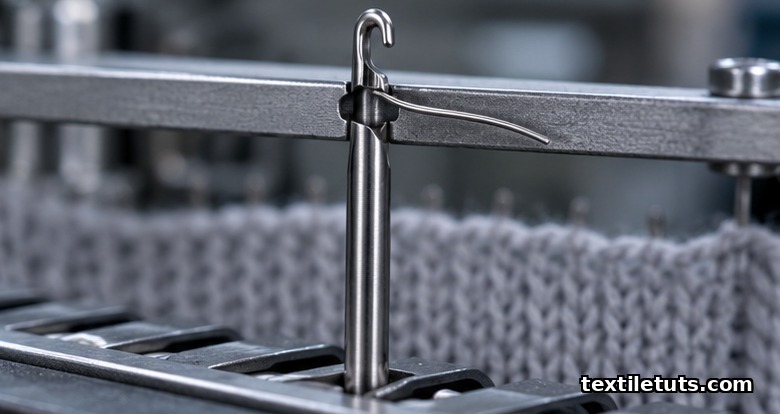
Winch and soft-flow machines operate at atmospheric pressure and rely on gravity-driven fabric movement. They work for cotton at 80 to 100 °C and for wool at 100 °C, but they cannot reach 130 °C, so they cannot dye polyester. Soft-flow overflow machines sit in between: pressurized like a jet but with gentler fabric transport, so they handle delicate knits like cashmere and merino jersey without felting.
Color fastness standards that grade a finished knit
Color fastness is graded against ISO 105 and AATCC test methods. A knit that passes commercial specifications must hold up to five different stress tests.
| Stress | ISO method | AATCC method | Acceptable rating |
|---|---|---|---|
| Washing at 40 or 60 °C | ISO 105-C06 / C10 | AATCC TM 61 | Grade 4 to 5 (shade change), 3 to 4 (stain) |
| Rubbing (dry and wet) | ISO 105-X12 | AATCC TM 8 | Dry 4 to 5, Wet 3 to 4 |
| Light (Xenon arc) | ISO 105-B02 | AATCC TM 16.3 | Grade 4 minimum for fashion, 5 for outdoor |
| Perspiration (acid and alkaline) | ISO 105-E04 | AATCC TM 15 | Grade 4 shade change |
| Water (sea and chlorinated pool) | ISO 105-E01 / E03 | AATCC TM 106 | Grade 4 minimum |
Reactive-dyed cotton knits typically clear ISO 105-C06 at 60 °C with a grade 4 to 5 shade change. Disperse-dyed polyester knits usually clear ISO 105-B02 light fastness at grade 5 to 6, because disperse dyes have inherently better photostability than reactive dyes. The weak spot on a polyester knit is sublimation fastness under hot pressing, which is why ISO 105-P01 is added for any knit going into a heat-sealed garment.
Common knit dyeing defects and their causes
The same loop geometry that makes knits comfortable also makes them sensitive to process drift. These five defects account for the majority of dyehouse rejections.
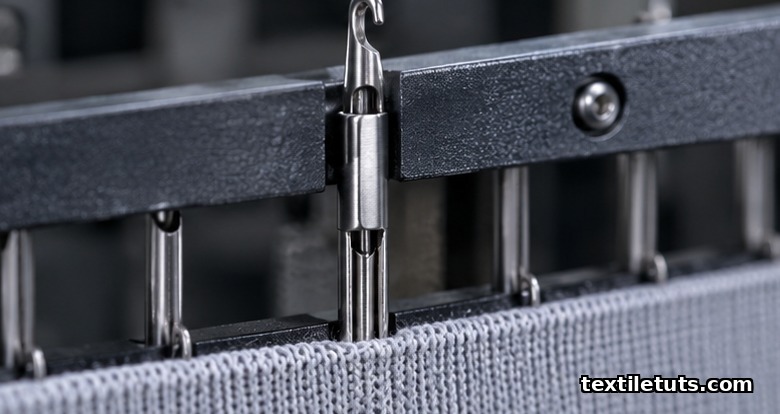
- Skew and spirality: the wales no longer run perpendicular to the courses, usually because the rope left the jet at a 1 to 2 °C per minute cooling ramp that was too aggressive. Fix: cap cooling at 2 °C per minute and add a heat-setting step on a stenter at 150 to 170 °C for 30 seconds.
- Barré or banding: horizontal stripes from uneven dye uptake, typically caused by inconsistent loop length across the greige fabric. Knitting machine variation that holds loop length to within ±2 percent cuts the defect rate.
- Pilling after dyeing: yarn protruding through the surface after a few home launderings. The fix is a bio-polishing step with cellulase (0.5 to 2 percent owf) at 50 to 55 °C for 30 to 60 minutes, which trims the surface fiber.
- Tonal bleeding on dark shades: hydrolyzed reactive dye that was not fully soaped off redyes neighboring fabric in the wash. A second hot soap at 95 °C with 2 g/L detergent removes the residue.
- Yellowing on polyester: oligimer migration to the surface during high-temperature dyeing. A reduction clear with sodium hydroxide and sodium hydrosulfite at 80 °C strips the oligimer film.
Frequently Asked Questions
What is the best dye for cotton knit fabric?
Reactive dyes are the standard for cotton knits because they bond covalently to the cellulose fiber, giving wash-fastness grades of 4 to 5 on the ISO 105-C06 grey scale after a 60 °C wash. Vinyl sulfone reactives (Remazol, Procion H-EXL) handle the bulk of single jersey, rib, and interlock production. Direct dyes are cheaper but only deliver a wash fastness of grade 2 to 3, so they are restricted to fashion shades with short product life cycles.
Can you dye polyester knit at home?
Disperse dyeing of polyester requires 130 °C under 2 to 3 bar pressure, which is impossible on a domestic stove. A home dyeing of a polyester knit will only stain the surface; the shade will fade after two or three home launderings. For a polyester knit, the practical options are a fabric-paint application, a sublimation transfer print, or a commission dyehouse run in a pressurized jet.
How long does knit fabric dyeing take?
A cotton knit exhaust cycle runs 5 to 7 hours from load to unload, including scour-bleach pre-treatment, reactive dyeing, soaping, and cool-down. A polyester knit exhaust cycle runs 4 to 6 hours because pre-treatment is shorter and the dye itself fixes in 30 to 60 minutes once the bath reaches 130 °C. A blended cotton-polyester knit in a one-bath two-step route runs 6 to 8 hours, the longest of the three.
What causes the dye to bleed out of a knit garment in the wash?
Bleeding happens when hydrolyzed reactive dye or unfixed disperse dye stays on the fiber surface after dyeing. Reactive cotton knits bleed when the soaping step at boil was too short, so loose dye washes off onto adjacent garments in the next home cycle. Polyester knits bleed under high-heat ironing when sublimation fastness falls below grade 3 on ISO 105-P01. A 15 to 20 minute post-soaping at 95 °C clears the loose reactive dye; a reduction clear at 80 °C clears the surface oligimer film on polyester.
Is knit fabric dyeing less sustainable than woven dyeing?
Knit dyeing uses a higher salt load per kilogram of fabric than woven dyeing because the loop structure traps more liquor (1:8 vs 1:4 on a pad-steam woven line), and reactive dye chemistry demands 50 to 80 g/L sodium chloride. Cotton knit dyehouses therefore run a higher effluent-treatment load. The mitigation is a salt-free reactive system (Pad-Ox or low-salt bifunctional reactives) and a liquor-ratio drop from 1:8 down to 1:5 via air-dye technology. Polyester knit dyeing uses no salt, so its sustainability profile is dominated by the 2 to 3 kWh per kg of fabric used to heat the bath to 130 °C.
References
- ISO 105-C06:2010. Textiles — Tests for colour fastness — Part C06: Colour fastness to domestic and commercial laundering. International Organization for Standardization. Defines the 40 °C and 60 °C wash protocols used to grade reactive-dyed cotton knit fabric.
- ISO 105-B02:2014. Textiles — Tests for colour fastness — Part B02: Colour fastness to artificial light: Xenon arc fading lamp test. International Organization for Standardization. Standard test for light fastness of disperse-dyed polyester knits.
- AATCC Test Method 61-2013. Colorfastness to Laundering: Accelerated. American Association of Textile Chemists and Colorists. The 45-minute accelerated wash used for QC release of knit panels.
- AATCC Test Method 8-2016. Colorfastness to Crocking: AATCC Crockmeter Method. American Association of Textile Chemists and Colorists. Dry and wet rub fastness test required for reactive-dyed dark shades.
- Shore, J. (2002). Colorants and Auxiliaries: Organic Chemistry and Application Properties. Vol. 1, Colorants. Society of Dyers and Colourists. Reference for reactive dye chemistry on cellulose and disperse dye chemistry on polyester.
- Chattopadhyay, D.P. (2011). Chemistry of Dyeing. In Handbook of Textile and Industrial Dyeing (ed. M. Clark), Woodhead Publishing. Review of pre-treatment, dyeing, and post-dyeing operations for knit substrates.
Editorial by Shahrukh Islam, TextileTuts. Sources: ISO 105-C06, ISO 105-B02, AATCC TM 61, AATCC TM 8, Shore (2002), Chattopadhyay (2011) as cited.


