
Interlining and Lining: When to Use Each

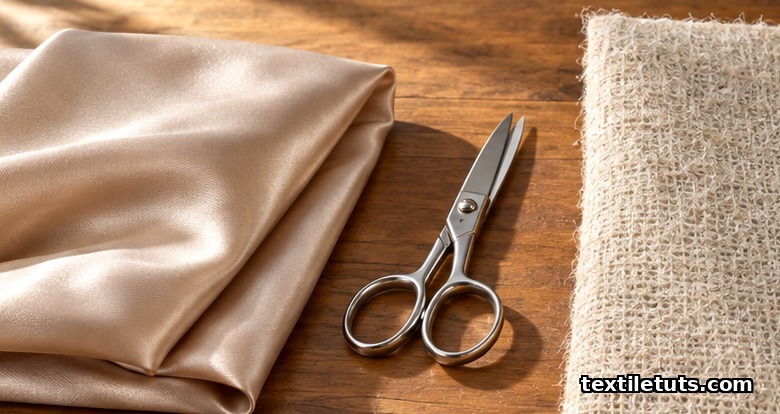
A lining is a complete inner fabric layer sewn inside a garment (typically 60 to 120 gsm) to improve comfort, hide construction, and ease the garment on and off, while an interlining is a partial third layer placed between the outer shell and the lining in selected zones (typically 30 to 150 gsm) to add structure, reinforcement, shape, or thermal insulation.
Use a lining when the goal is comfort, modesty, opacity, or a clean interior surface. Use an interlining when the goal is body, stiffness, recovery, or reinforcement of a stress point. Most tailored jackets and winter coats combine both: an interlining on the chest, lapel, and collar for shape, and a full lining for comfort.
This guide walks through the technical differences between lining and interlining, the garment types where each one is standard practice, how fusible and sewn interlinings behave differently, and how to choose between them for a specific project.
What Is a Lining?
A lining is a complete inner layer cut and sewn as a smaller version of the garment shell. It is attached at seam allowances, hems, facings, and often at the waist or hem with a final tack. The lining becomes the surface that sits against the body or against other clothing, and it is the only inner layer visible when the garment is opened or removed.
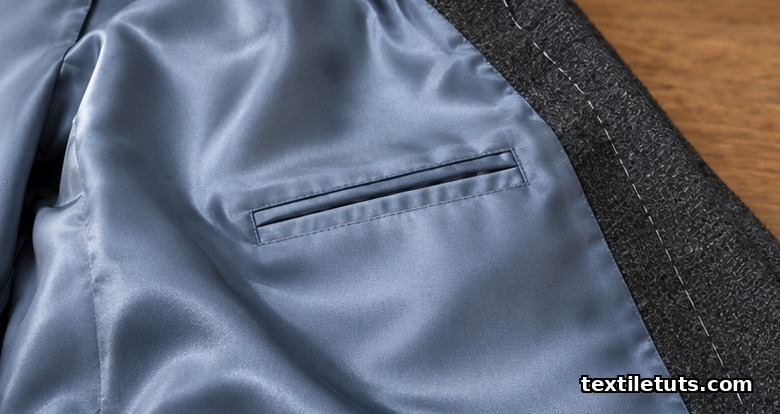
Common lining fabrics include Bemberg rayon cupro, polyester twill, silk habotai, acetate, and lightweight viscose. These fabrics are chosen for a low coefficient of friction against skin and against other layers, and for moisture management that prevents the outer fabric from feeling clammy. Cupro linings are noted for moisture regain of around 11%, comparable to cotton, while remaining smooth enough to slide easily over hosiery or other garments.
The functional roles of a lining are well established in apparel manufacturing:
- Concealing seam allowances, interfacing edges, and raw construction details.
- Reducing friction between the garment and other clothing or skin.
- Adding a thin thermal layer without changing the silhouette of the garment.
- Protecting the inside of the shell fabric from abrasion caused by the body.
- Improving the drape of lightweight or sheer outer fabrics by adding controlled weight.
- Hiding interlinings, shoulder pads, and other internal structural components.
What Is an Interlining?
An interlining is a hidden layer inserted between the outer fabric and the lining in specific zones of a garment, not across the entire interior. The most common zones are the front panels of jackets and coats (chest interlining), the collar and lapel, the cuffs, pocket flaps, waistbands, and the button placket.
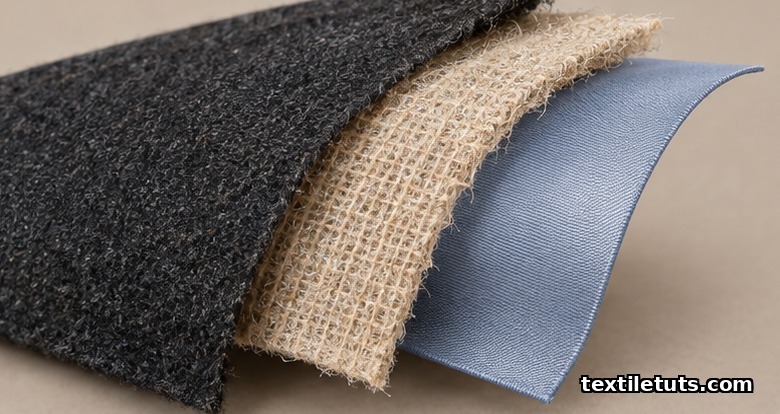
Interlinings fall into three broad families. Woven canvases are made from wool, hair, cotton, or blends and are stitched in place. Nonwoven fusible webs are made from polyester, polyamide, or viscose with a thermoplastic adhesive coating. Knit fusible substrates add controlled stretch to bonded structures. A canvas chest piece in a tailored jacket is the classic example of a sewn interlining. A fusible weft-inserted waistband stabilizer in a pair of trousers is the classic example of a fusible interlining.
The functional roles of an interlining are different from those of a lining:
- Adding body, shape, and recovery to areas that would otherwise drape flat against the body.
- Reinforcing stress points such as collars, cuffs, button plackets, and pocket openings.
- Providing thermal insulation in coats and outerwear when used as batting or wadding.
- Stabilizing fabrics prone to stretch or distortion during sewing and wear.
- Creating or supporting three-dimensional form, as in the lapel roll of a tailored jacket.
- Preventing down or feather migration in insulated garments.
Interlining vs Lining: Direct Comparison
| Property | Lining | Interlining |
|---|---|---|
| Position in garment | Full inner layer, attached at seams | Localized zones between shell and lining |
| Typical weight | 60 to 120 gsm | 30 to 150 gsm depending on function |
| Common fibers | Viscose, cupro, polyester, silk, acetate | Wool, polyester, polyamide, cotton, hair canvas |
| Attachment method | Sewn at construction seams | Fused with heat and pressure, tacked, or pad stitched |
| Coverage | Full garment interior | Selected zones only |
| Visible from outside | No | No |
| Visible from inside | Yes, covers most interior surfaces | Sometimes visible if the garment is unlined |
| Primary function | Comfort, modesty, ease of dressing | Structure, reinforcement, shape, insulation |
| Effect on silhouette | Minor, slight weight addition | Major, defines body and lapel roll |
When to Use a Lining
Reach for a lining whenever the inside of the garment would otherwise be exposed to the wearer, would rub against other clothing, or would look unfinished. Five situations are standard practice across the apparel industry.
- Jackets, blazers, and coats where the inside of the shell would be rough, scratchy, or visually unfinished.
- Skirts and dresses made from lightweight or sheer fabrics that need opacity and a clean back surface.
- Trousers in wool or heavy cotton where a smooth lining reduces friction against the legs and helps the garment slide on over hosiery.
- Garments with significant internal construction, such as bound seam allowances, facings, or Hong Kong finishes, where the lining hides the work and lets the garment hang cleanly.
- Garments worn over other clothing that need to slide on and off easily, such as robe coats or kimono-style outerwear.
A lining is also recommended in any unstructured or partially constructed jacket, such as a casual summer blazer or chore coat, where it absorbs perspiration and extends the life of the shell by reducing body-side abrasion during wear.
When to Use an Interlining
Use an interlining when the garment needs to hold a specific three-dimensional shape, when a stress point needs to resist stretch, or when the garment needs more trapped-air insulation. Six standard applications are listed below.
- Tailored jacket front panels. A chest canvas or fusible interlining creates the three-dimensional roll of the lapel and prevents the front from collapsing flat against the chest.
- Coat collars and lapels. Interlining here gives the collar stand its body and gives the lapel a clean, supported edge.
- Waistbands, cuffs, and button plackets. A strip of fusible interlining prevents stretch during wear and keeps buttonholes stable through repeated laundering.
- Shirt collars and cuffs. Fusible or sewn interlining keeps the collar points sharp and resists curling after washing.
- Pocket openings, pocket flaps, and coat hems. Interlining keeps these areas flat and prevents distortion under load.
- Outerwear and quilted garments. An interlining in the form of batting, wadding, or a thermal nonwoven provides insulation. Down jackets commonly use a lightweight nonwoven interlining around 40 to 60 gsm to prevent feather migration.
ISO 10751 covers size designation and construction principles for interlinings in men’s and women’s outerwear. The standard confirms that interlinings are intended for partial-coverage structural use rather than full-body lining, which matches how the industry uses them in practice.
Fusible vs Sewn Interlinings
Fusible interlinings carry a thermoplastic adhesive coating, usually polyethylene or polyamide based, that melts and bonds to the shell under heat and pressure. Typical bonding parameters for polyester-based fusibles are 130 to 160 °C platen temperature, 10 to 18 seconds of dwell time, and 2 to 4 N/cm² of pressure. Lower temperatures are used for delicate shell fabrics; higher temperatures and longer dwell times are reserved for heavy wool, denim, or canvas shells.
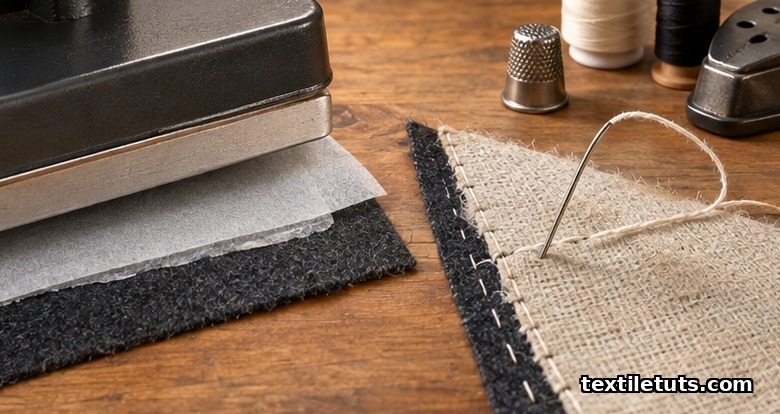
Sewn interlinings, sometimes called canvases, are stitched to the shell using pad stitching, catch stitching, or machine tacks. A traditional tailored jacket uses a horsehair-and-wool canvas chest piece that is hand-pad stitched to the shell, which is what allows the lapel to roll with a soft, three-dimensional curve rather than the flat appearance produced by a full fusible front.
AATCC TM96, the standard test method for bond strength of fusible interlinings to fabric, is the most widely used method for quantifying the bond between a fusible interlining and its shell. A bond strength of at least 8 N per 25 mm width is generally considered adequate for most apparel applications, while tailored outerwear typically specifies 12 N or higher to survive repeated dry-cleaning cycles.
Care, Durability, and Performance Testing
The performance of an interlining is judged against four criteria after multiple care cycles: bond strength, dimensional stability, drape, and surface appearance. AATCC TM135 covers dimensional changes of fabrics after home laundering, and ISO 6330 defines the domestic washing and drying procedures used in this evaluation. A well-bonded fusible interlining should survive at least five wash cycles at 40 °C without delamination, and dry-cleaned garments should pass the procedures in ISO 3175 without bond failure or excessive shrinkage of the bonded assembly.
Lining fabrics are typically tested for color fastness, abrasion resistance, and seam slippage. AATCC TM8 (colorfastness to crocking) is the standard test for color transfer from the lining to adjacent garments, especially important for light-colored linings paired with dark shells, and for dark linings paired with light shells where dye transfer in the opposite direction can stain the outer garment.
Research published in the Textiles journal (MDPI) has shown that the choice of interlining weight and composition changes the bending rigidity of a fabric assembly by a factor of roughly 1.5 to 4 depending on the shell, which directly affects how the finished garment drapes and holds its shape.
Can a Garment Have Both a Lining and an Interlining?
Yes, and most tailored jackets and winter coats use all three layers: the outer shell, one or more interlinings in selected zones, and a full lining that covers the rest of the interior. In a men’s worsted suit jacket, the front panels carry a canvas chest piece plus a fusible interlining for shape and recovery, while the back, sleeves, and inner front are finished with a viscose or cupro lining for comfort and ease of dressing.
This combination is standard in any garment where structure is needed in selected zones and comfort, modesty, or a clean interior is needed across the whole garment.
Frequently Asked Questions
What is the main difference between lining and interlining?
A lining is a full inner layer sewn to the garment for comfort, modesty, and ease of dressing. An interlining is a partial layer placed between the shell and the lining in specific zones to add shape, reinforcement, or warmth. Linings cover the whole interior; interlinings cover selected zones only.
Can you use interlining without a lining?
Yes. In unstructured jackets and casual outerwear the interlining can be applied directly to the shell and the garment left unlined, with raw seam allowances finished using bindings or Hong Kong seams. This construction is common in summer blazers, denim jackets, chore coats, and many shirt-style garments.
What weight of interlining should I use?
Lightweight fusible interlinings of 30 to 50 gsm suit shirt collars and cuffs. Medium weights of 50 to 90 gsm are used for shirt plackets, lightweight jacket fronts, and pocket flaps. Heavy weights of 90 to 150 gsm are reserved for coat fronts, structured jacket chests, and waistbands. The shell fabric weight and the desired final hand should drive the choice rather than a fixed number.
Does interlining make a garment warmer?
Only when it is an insulating interlining such as batting, wadding, or a lofted nonwoven. A standard flat fusible interlining adds structure but minimal thermal value because it is too thin to trap still air. In down jackets a lightweight nonwoven interlining is used mainly to prevent feather migration, with the down itself providing the insulation.
How do you attach interlining to fabric?
Fusible interlinings are bonded by heat and pressure, typically at 130 to 160 °C for 10 to 18 seconds under 2 to 4 N/cm² pressure. Sewn canvases are attached by stitching. Pad stitching is the traditional method for chest canvases in tailored jackets, catch stitching is used for waistband interlinings, and machine tacks hold shoulder canvases in place before the lining is closed.
References
- International Organization for Standardization. ISO 10751:1994, Size designation of clothes, Interlining. Definitions and construction principles for interlinings in men’s and women’s outerwear.
- American Association of Textile Chemists and Colorists. AATCC TM96, Bond Strength of Fusible Interlinings to Fabric. Standard test method for measuring the bond between a fusible interlining and its shell fabric.
- American Association of Textile Chemists and Colorists. AATCC TM135, Dimensional Changes of Fabrics after Home Laundering. Test method used to evaluate interlining and lining performance after repeated wash cycles.
- International Organization for Standardization. ISO 6330:2021, Domestic washing and drying procedures for textile testing. Defines the wash cycles used in performance testing of lined and interlined garments.
- International Organization for Standardization. ISO 3175-1:2018, Dry-cleaning procedures for textile garments. Used to verify bond durability of fusible interlinings after professional cleaning.
- Jevšnik, S., et al. The Influence of Fusible Interlining on the Bending Rigidity of a Fabric Assembly. Textiles (MDPI). Peer reviewed research on how interlining weight and composition change the stiffness of layered fabric systems.
- Tunák, M., and Jan, S. Evaluation of Drapeability of Fusible Interlinings. Textile Research Journal. Peer reviewed study on how interlining choice affects the drape of the finished garment.
This article is the working reference for interlining and lining selection. Editorial by Kazi Sifat Muntasir, TextileTuts. Sources: ISO 10751, AATCC TM96, AATCC TM135, ISO 6330, ISO 3175, MDPI Textiles, Textile Research Journal as cited.


