
How to Remove Turmeric Stains from Clothes

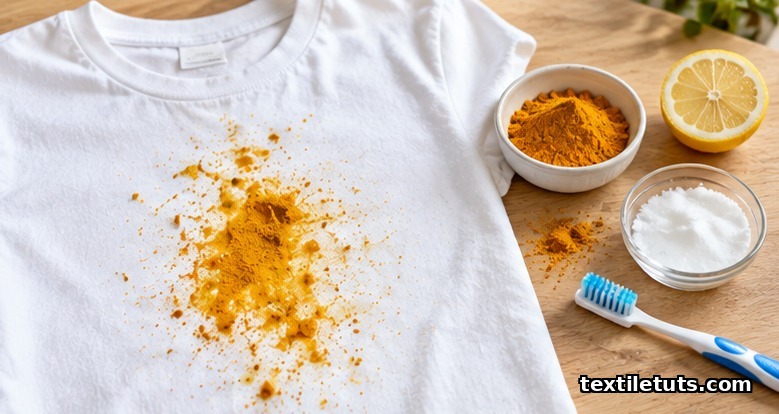
The most powerful household treatment for turmeric stains is direct sunlight — UV light photodegrades curcumin’s chromophore structure and bleaches out the yellow color entirely. Turmeric stains are among the most stubborn stains to remove because curcumin — the active yellow compound in turmeric (E100, chemical formula C₂₁H₂₀O₆) — is a natural polyphenol dye with high substantivity for cellulose fibers like cotton and linen, and moderate substantivity for protein fibers like wool and silk. Standard washing with surfactant detergent alone rarely removes turmeric; the stain sinks deeper into the fibers rather than lifting out.
Why Does Turmeric Stain Fabric Permanently?
Curcumin is not just a spice pigment — it is a deliberately potent natural dye. Its molecular weight of 368.385 g·mol⁻¹ and hydrophobic nature mean it repels water, the primary solvent in ordinary laundry. The diketone structure of curcumin (existing in both enol and keto tautomeric forms depending on solvent) allows it to form strong Van der Waals and hydrogen-bond interactions with cellulose polymer chains in cotton fabric. This is the same chemical reason turmeric has been used historically to dye textiles yellow: once curcumin penetrates the fiber, it resists removal because the bond is physical rather than chemical.
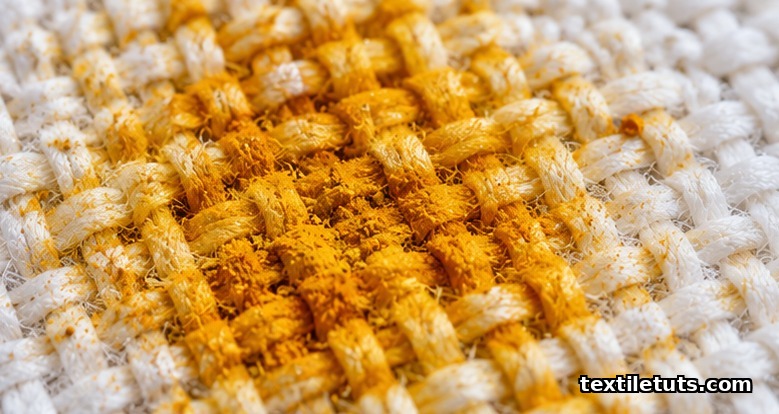
Standard surfactants in dish soap and laundry detergent work by encapsulating oily molecules and suspending them in water — an effective mechanism for grease and food oils. Curcumin, however, is not greasy; it is a crystalline polyphenol that has already bonded to the fiber’s hydroxyl groups. Surfactants alone cannot break that bond. Chlorine bleach (sodium hypochlorite) does remove curcumin — it aggressively oxidizes the chromophore — but it simultaneously destroys many fabric types and strips color from dyed garments (AATCC, 2024). The key insight is that the curcumin-fiber bond must be broken at the molecular level, either through oxidation (OxiClean), acid softening (vinegar, lemon juice), or photodegradation (UV light).
The secret weapon against turmeric stains is UV light. Curcumin’s conjugated double-bond system (its chromophore) absorbs UV radiation at approximately 420 nm (PubChem, 2025). When exposed to direct sunlight, photons at this wavelength break the chemical bonds in the chromophore, irreversibly degrading the pigment’s color-bearing structure. This is why sun-bleaching has been used in textile care for generations — it is a genuine photochemical reaction, not merely a drying effect.
Understanding why curcumin bonds so strongly to fabric explains why each treatment step matters — and why skipping steps or applying heat too early leads to permanent stains that no household treatment can remove.
How to Remove Turmeric Stains Step by Step
Work through these five steps in order. Each step builds on the last — skipping ahead to washing or drying risks heat-setting any remaining curcumin permanently into the fabric.
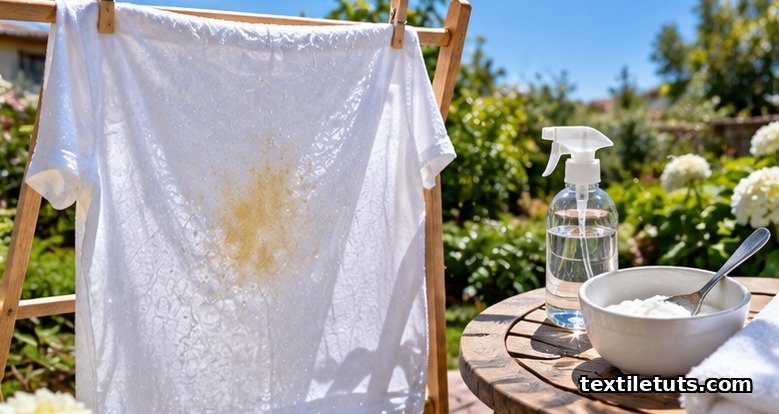
- Remove excess turmeric: Scrape off any solid turmeric paste or powder with a dull knife or spoon. Turn the garment inside out and flush the stain with a strong stream of cold water — flushing from the reverse side pushes loose curcumin out of the fibers rather than driving it deeper.
- Apply dish soap or enzyme detergent: Apply liquid dish soap or an enzyme-based laundry detergent directly to the stained area. Work it into the fabric with your fingers or a soft toothbrush using gentle circular motions. Allow it to sit for 10–15 minutes — enzymes like protease and amylase break down the protein and starch components of food residues that may be holding the curcumin against the fiber.
- Apply OxiClean paste: Mix OxiClean (sodium percarbonate) with just enough water to form a thick paste. Apply generously to the stain. Sodium percarbonate releases hydrogen peroxide when dissolved — the peroxide oxidizes the curcumin chromophore, beginning the color-breaking process. On cotton and linen, allow 30–60 minutes of contact time. Rinse thoroughly with cool water.
- Wash at the highest safe temperature: Wash the garment at the highest temperature recommended on the fabric care label. For white cotton, a hot wash (60°C / 140°F or above) is appropriate and improves enzyme and OxiClean activity. For colored, synthetic, or delicate fabrics, use warm water (30–40°C). Never use a warm wash on a stained item before confirming the stain is gone — heat sets curcumin permanently.
- Sunlight UV treatment — the most important step: If any yellow tint remains after washing, do NOT place the garment in a tumble dryer. Heat will polymerize the remaining curcumin and lock it into the fiber permanently. Instead, rewet the fabric, lay it flat or hang it in direct outdoor sunlight, and allow 1–4 hours of UV exposure. Re-wet the stain area every 30–45 minutes as it dries — wet fabric absorbs more UV radiation than dry fabric. The yellow curcumin color will fade visibly with each hour of exposure.
Also Read:
- How to Remove Stains from White Clothes (All Stain Types)
- How to Remove Tomato Sauce Stains from Clothes
- How to Remove Sweat Stains from White Shirts
What Are the Alternative Methods for Removing Turmeric Stains?
Three alternative treatments can supplement or substitute for the main method: glycerin pre-treatment for aged or dried-in stains, hydrogen peroxide for white fabrics only, and baking soda paste with lemon for combined chemical and UV action.
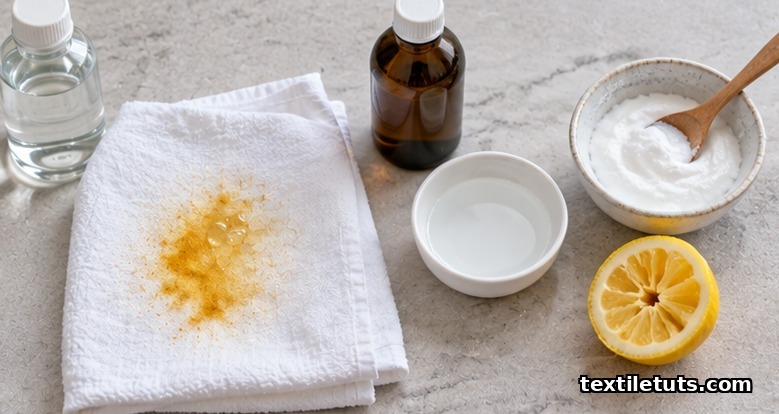
Glycerin Pre-Treatment
Glycerin (glycerol) acts as a plasticizer and swelling agent for cellulose fibers. When applied to a turmeric stain, it penetrates the fiber structure and swells the cellulose matrix, physically loosening curcumin molecules that have bonded to the fiber. Apply full-strength glycerin to the stain, allow 30 minutes to penetrate, then follow with dish soap and a gentle scrub. Rinse thoroughly. This method is particularly useful for aged or dried-in turmeric stains on cotton and linen where OxiClean alone has not fully worked.
Hydrogen Peroxide (White Fabrics Only)
3% hydrogen peroxide solution is a mild oxidizing bleach effective against curcumin on white cotton and linen. Apply directly to the stain, allow 30 minutes of contact time, then wash normally. Hydrogen peroxide breaks down into water and oxygen, leaving no harmful residues. Do not use on colored fabrics — it will bleach the fabric’s dye alongside the turmeric, causing uneven fading. For delicate white fabrics like silk or wool, hydrogen peroxide is safer than chlorine bleach but should still be tested on an inconspicuous area first.
Baking Soda Paste with Lemon
Mix baking soda (sodium bicarbonate) with just enough lemon juice to form a thick paste. The citric acid in lemon juice lowers the pH at the fiber surface, partially disrupting the curcumin-fiber bond, while the mild alkalinity of baking soda provides mechanical abrasion via the paste’s texture. Apply to the stain and set the garment in direct sunlight for 30–60 minutes. The combination of acidic chemical action and UV photodegradation is particularly effective on white fabrics. Rinse thoroughly before washing.
How Do You Remove Turmeric Stains from Colored Fabrics?
Colored fabrics require more caution than white ones. The same properties that make turmeric a durable dye — its substantivity and resistance to removal — mean it will fight back against any treatment you apply, and aggressive methods risk taking your fabric’s dye along with it.
- Avoid hydrogen peroxide: Even at 3%, hydrogen peroxide poses a bleaching risk on colored fabrics. The oxygen radicals it releases will bleach the fabric’s own dye alongside the curcumin. Test on an unseen area or skip this method entirely on colored garments.
- OxiClean is generally color-safe: Sodium percarbonate is an oxygen-based bleaches rather than a chlorine-based one — it is significantly milder and generally color-safe for most colored fabrics when used as directed. Use the paste method (mixing with minimal water) rather than adding OxiClean to a full wash load, which gives you better control over concentration and contact time.
- Sunlight bleaching carries a fading risk: Extended UV exposure does not discriminate between curcumin and your fabric’s dye. On colored fabrics, limit sun exposure to 30–60 minutes maximum, check every 15 minutes, and discontinue if you notice the fabric’s color lightening unevenly. Consider UV treatment only for isolated stain spots, not whole garments.
- Glycerin is the safest first step: For colored fabrics, start with glycerin pre-treatment (30 minutes, no heat) before moving to any soap or OxiClean. It is unlikely to affect fabric dye and may lift enough curcumin to make further treatment unnecessary.
For colored items made from protein fibers such as wool or silk — where curcumin has moderate substantivity — the fiber itself can be damaged by alkaline treatments like strong dish soap or OxiClean paste. Use cold water, a small amount of gentle detergent specifically formulated for woolens, and limit OxiClean contact to 15 minutes maximum.
Frequently Asked Questions About Turmeric Stains
Three questions arise repeatedly about turmeric stain removal: whether turmeric stains permanently, what the most effective removal method is, and whether lemon juice works as a natural alternative.
Does turmeric stain permanently?
Turmeric can be very difficult to fully remove once dried or heat-set. Fresh stains treated with OxiClean and sunlight rarely leave permanent marks. However, dried turmeric stains that have gone through a hot dryer cycle may be permanent — the combination of heat polymerization and mechanical agitation drives curcumin deep into the fiber matrix where oxidation and UV treatment struggle to reach it.
What is the best way to remove turmeric stains?
The most effective combination is an enzyme detergent pre-soak followed by an OxiClean paste application, then 1–4 hours of direct sunlight exposure on the wet fabric. The enzyme detergent breaks down food residues holding the curcumin against the fiber; the OxiClean (sodium percarbonate) oxidizes the chromophore’s conjugated double-bond system; and the UV light photo-degrades any remaining curcumin molecules that survived the first two steps.
Does lemon juice remove turmeric stains?
Lemon juice provides meaningful but limited help. The citric acid (approximately 5–6% concentration in fresh lemon juice) lowers the pH at the fiber surface and partially disrupts the hydrogen bonds between curcumin and cellulose. It works best on fresh stains and is most effective when combined with direct sunlight — the acid weakens the chromophore structure, making it more susceptible to UV photodegradation. On its own, without sunlight, lemon juice will not fully remove a set-in turmeric stain.
References
- National Center for Biotechnology Information, PubChem. (2025). Curcumin Compound Summary (CID 839564). U.S. National Library of Medicine.
- American Association of Textile Chemists and Colorists (AATCC). (2024). AATCC Technical Manual. AATCC.
- Rd.com Editors. (2024). How to Remove Turmeric Stains from Clothes and Fabric. Reader’s Digest.
- WikiHow Contributors. (2025). How to Remove Turmeric Stains. WikiHow.
- U.S. Food and Drug Administration. (2024). Everything Added to Food in the United States (EAFUS) — Curcumin (E100). FDA.


