
How to Remove Sweat Stains from White Shirts

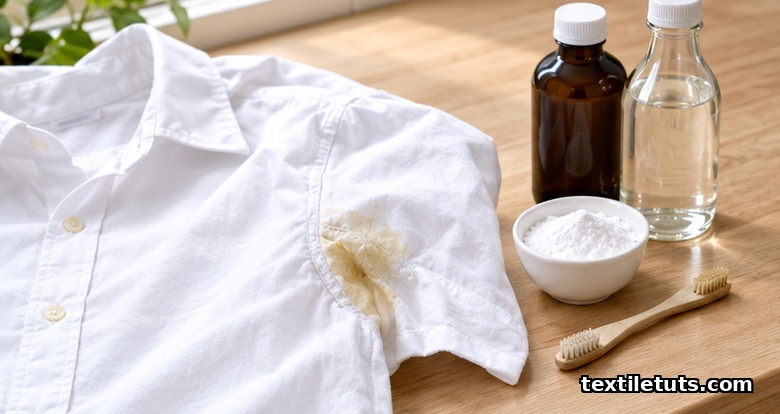
The yellow stains that develop in the underarms of white shirts are not caused by sweat alone — they result from a chemical reaction between aluminum compounds in antiperspirant deodorant and proteins in sweat. This reaction creates a waxy, yellow compound that bonds to cotton fibers. The treatment targets both the protein component (with enzyme detergent) and the aluminum compound (with acid treatments like hydrogen peroxide or white vinegar).
Why Sweat Stains Turn Yellow
Yellow sweat stains form when aluminum compounds in antiperspirant react with proteins in sweat, creating a waxy aluminum-protein complex that bonds to cotton fibers and oxidizes to a yellow color with repeated washing above 40°C (104°F). The aluminum-protein complex penetrates deeply between fabric fibers and becomes increasingly set with each warm washing cycle, making established stains difficult to remove with standard detergent alone.
Sweat itself is colorless. The yellow color that appears in underarm areas of white shirts develops from a specific chemical reaction between three components:
- Aluminum salts in antiperspirant (aluminum chloride, aluminum zirconium) — the primary aluminum compounds used in commercial antiperspirants
- Proteins in human sweat
- Fatty acids from skin oils
According to Mary Johnson, principal scientist at Tide, sweat is composed of water, salt, fats, and proteins. When clothes are not washed properly, these substances “build up over time, become deeply embedded between the fabric fibers and bind to the fabric fibers to cause yellowing.” The aluminum and zirconium compounds in antiperspirants combine with perspiration to form an aluminum-protein complex that is waxy and yellow in color.
Cotton fibers are particularly susceptible to this type of staining because their natural porosity and hydrophilic structure allow the aluminum-protein complex to penetrate deeply between fibers and bond at the molecular level. Repeated warm washing and drying cycles (above 40°C / 104°F) cause these compounds to form persistent yellow, waxy deposits that become increasingly set into the fabric. This explains why standard detergent washing alone often fails to remove established protein stains — the aluminum component requires acid-based treatment, not just surfactant action.
Baking Soda + Hydrogen Peroxide: The Most Effective Treatment for White Cotton Sweat Stains
Baking soda (sodium bicarbonate, an alkaline compound) combined with hydrogen peroxide provides the most effective treatment for yellow underarm stains on white cotton shirts. Sodium bicarbonate provides alkaline pH that breaks down the waxy aluminum complex, while 3% hydrogen peroxide acts as a gentle oxidizing bleach that lifts yellow discoloration without damaging cotton cellulose fibers.
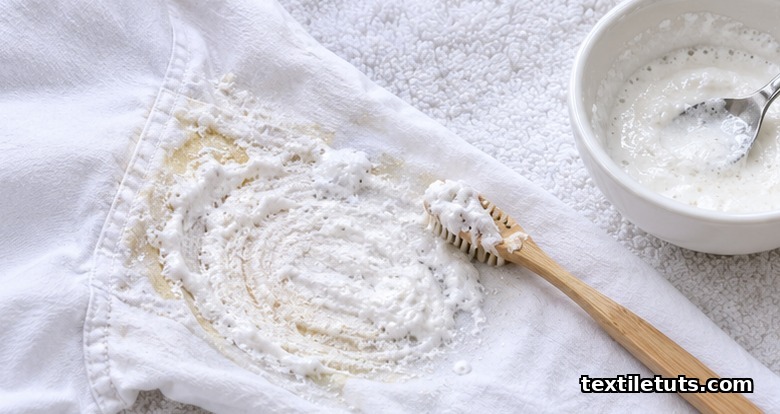
- Mix the paste: Combine 1 tablespoon baking soda + 1 tablespoon 3% hydrogen peroxide + 1 teaspoon dish soap in a small bowl. The dish soap helps the paste adhere to fabric fibers.
- Apply directly: Using an old toothbrush or your fingers, work the paste into the yellow stain, ensuring full coverage of the affected area.
- Let penetrate: Allow the paste to sit for 30–60 minutes. For severe set-in stains, 60 minutes produces noticeably better results.
- Scrub gently: Use an old toothbrush with soft bristles to work the paste into fabric fibers with gentle circular motions.
- Launder: Wash in warm water (30–40°C / 86–104°F). Check the stain before transferring to the dryer — heat sets stains permanently.
- Repeat if needed: For heavy yellow build-up, repeat the treatment 2–3 times until the stain is fully removed.
Household hydrogen peroxide is sold at 3% concentration, which is the optimal strength for textile stain removal. It acts as a color-safe bleach that oxidizes the yellow chromophores without degrading cotton cellulose at this concentration.
White Vinegar Pre-Soak: Acid Treatment Dissolves the Aluminum-Protein Complex
White vinegar (acetic acid, typically 5–8% concentration) chemically dissolves the aluminum-protein complex responsible for yellow stains. Acetic acid breaks down the waxy aluminum compound, allowing it to be rinsed away in subsequent washing. This method works particularly well as a pre-treatment before machine washing for mild-to-moderate sweat stains.
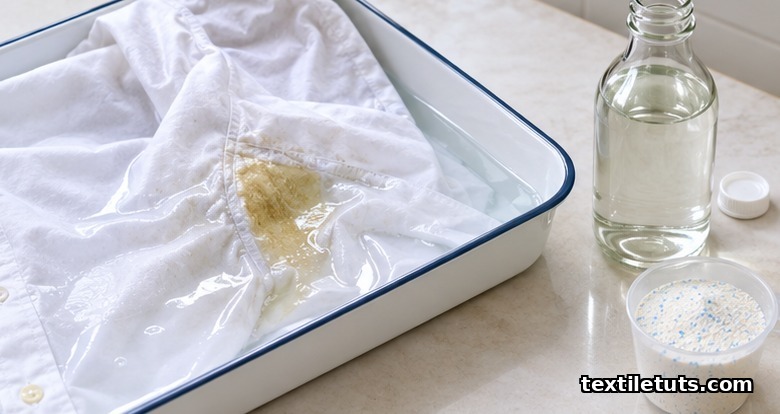
- Apply vinegar: Pour undiluted white vinegar directly onto the yellow stain, saturating the fabric completely.
- Wait: Allow the vinegar to penetrate for 1 hour. The acetic acid will begin breaking down the aluminum compound.
- Apply enzyme detergent: Before washing, work a small amount of enzyme detergent into the stained area with your fingers.
- Machine wash: Launder in warm water (30–40°C / 86–104°F) with an enzyme-based laundry detergent.
For severe stains, combine the vinegar pre-soak (Method 2) with the baking soda + hydrogen peroxide paste (Method 1) for maximum effectiveness. The acid treatment softens the waxy build-up, allowing the alkaline paste to penetrate more deeply into set-in stains.
Enzyme Detergent Soak: Hydrolyzes the Protein Component
Enzyme detergents contain proteases — biological catalysts that specifically hydrolyze protein molecules into smaller fragments that surfactants can wash away. Protease enzymes were first introduced to commercial laundry products in 1913 by Otto Rohm, and modern thermally robust bacterial proteases effectively break down protein stains like sweat. Water temperature above 50°C (122°F) denatures protease enzymes, reducing cleaning effectiveness — use warm water (30–40°C / 86–104°F) instead.
- Prepare solution: Fill a basin or bucket with warm water (30–40°C / 86–104°F). Water above 50°C (122°F) denatures protease enzymes, reducing cleaning effectiveness.
- Add enzyme detergent: Use a high-quality enzyme-based laundry detergent according to package directions for heavy soil treatment.
- Soak: Submerge the stained shirts and soak for 1–4 hours. Fresh sweat stains (within 24–48 hours) respond after 1–2 hours. Older set-in stains require the full 4 hours.
- Launder: Without rinsing, transfer directly to the washing machine and wash in warm water (30–40°C / 86–104°F).
Enzyme detergent soaking works best on fresh sweat stains where the protein component has not yet fully bonded with the aluminum compound. Once the waxy aluminum-protein complex has formed and set with heat, the enzyme approach alone is insufficient — acid treatment (vinegar or hydrogen peroxide) is required to dissolve the aluminum component.
OxiClean Soak: Sodium Percarbonate Brightens and Removes Oxidized Discoloration
OxiClean is a household stain remover whose active ingredient is sodium percarbonate, a compound that releases hydrogen peroxide when dissolved in water. Sodium percarbonate provides sustained oxidizing action that lifts both the protein component and the yellow discoloration from fabric fibers through oxygenation. OxiClean soaking is particularly effective for restoring the overall brightness of white shirts that have developed a general yellow cast from repeated sweat exposure and age.
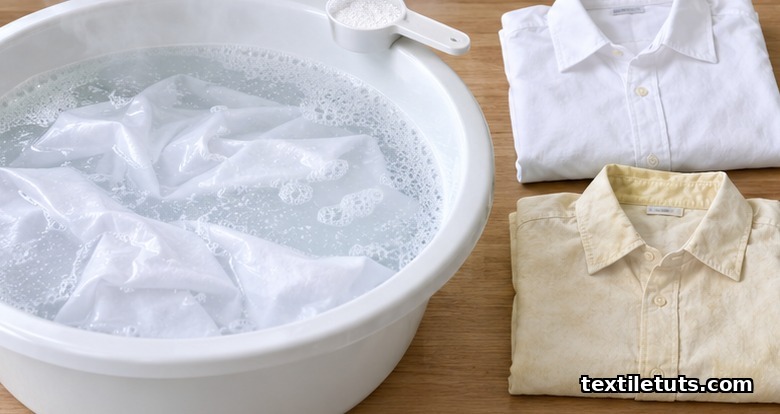
- Prepare solution: Mix OxiClean powder with warm water (not hot) according to package directions. Typically, 1 scoop per gallon of water is recommended.
- Soak: Submerge white shirts and soak for 4–6 hours. For heavily yellowed shirts, overnight soaking (up to 8 hours) is necessary for maximum brightening.
- Inspect: Check stain removal before transferring to the dryer. Yellowing from oxidized proteins responds well to this treatment.
- Combine with Method 1: For severe underarm build-up, apply the baking soda + hydrogen peroxide paste after soaking and before a final wash cycle.
OxiClean soaking works through sustained oxygenation of fabric fibers, breaking down both organic residues and oxidized discoloration. For heavily yellowed shirts that have lost their bright white appearance, this method restores fabric brightness by removing accumulated sweat and antiperspirant residues.
Prevention: How to Avoid Sweat Stains on White Shirts
Preventing sweat stains is significantly easier than removing established yellow discoloration. The primary cause of yellow underarm stains is the aluminum compound in antiperspirant — not sweat itself — so prevention strategies focus on minimizing this chemical reaction at the source and reducing the conditions that allow it to bond with fabric fibers.
- Switch to aluminum-free deodorant: Aluminum compounds are the primary driver of yellow stain formation. Aluminum-free deodorants eliminate the root cause of the staining reaction entirely by removing the aluminum salts that react with sweat proteins.
- Allow antiperspirant to dry completely: Wet antiperspirant transfers more readily to fabric. Allow antiperspirant to fully dry — typically 2–3 minutes in cool, dry conditions, longer in humid weather — before dressing.
- Wash shirts after every wear: Do not allow sweat and antiperspirant residues to build up across multiple wearings. Each warm wash cycle can cause further set of the aluminum-protein complex into cotton fibers.
- Pre-treat underarm areas: Before every wash, apply a small amount of enzyme detergent directly to the underarm area and gently work it in. Let it sit for 10–15 minutes before machine washing to hydrolyze protein residues before they bond.
- Wash in warm (not hot) water: Heat above 40°C (104°F) accelerates the bonding of aluminum compounds to cotton fibers and sets existing stains. Use the warmest water that is comfortable for the fabric, but avoid hot cycles above 40°C.
These prevention strategies address the root cause of sweat stains — the aluminum-protein complex — rather than just treating the symptoms. Implementing even two or three of these practices significantly extends the life of white shirts and reduces the frequency of deep cleaning treatments.
Frequently Asked Questions
These common questions address the science behind sweat stain formation and the most frequently asked concerns about removal effectiveness on white cotton fabrics.
Why do my white shirts turn yellow under the arms?
The yellow color is caused by a chemical reaction between aluminum compounds in antiperspirant and proteins in sweat. The aluminum-protein complex is waxy and yellow, and it binds to cotton fibers — becoming more set with each warm washing cycle. Cotton’s porous structure allows this complex to penetrate deeply between fibers, making removal progressively more difficult over time.
Does vinegar remove sweat stains?
White vinegar (acetic acid, 5–8% concentration) dissolves the aluminum-protein complex that causes yellow sweat stains. Acetic acid breaks down the waxy aluminum compound at the molecular level, allowing it to be rinsed away. Pre-soak for 1 hour before washing. For severe stains, combine with a hydrogen peroxide paste treatment for maximum effectiveness.
How do I remove old set-in sweat stains?
Soak in hydrogen peroxide + baking soda paste for 60 minutes, scrub with a toothbrush, and wash in warm water (30–40°C). For severe yellow build-up, repeat the treatment 2–3 times until the stain is fully removed. OxiClean soaking (4–6 hours) is also effective for heavily oxidized yellow stains that have set into the fabric over multiple washing cycles.
Can sweat stains be prevented on white shirts?
Switching to aluminum-free deodorant eliminates the root cause of yellow stains by removing the aluminum compounds that react with sweat proteins. Allowing antiperspirant to dry completely before dressing, washing shirts after every wear, pre-treating underarm areas with enzyme detergent, and using warm (not hot) water all prevent the aluminum-protein complex from bonding to cotton fibers in the first place.
References
- Johnson, M. (n.d.). The Science of Stains: Understanding Sweat Stains. Procter & Gamble / Tide. Retrieved from https://www.proctergamble.com/
- Laundry Detergent. (n.d.). In Wikipedia. Retrieved from https://en.wikipedia.org/wiki/Laundry_detergent
- Hydrogen Peroxide. (n.d.). In Encyclopaedia Britannica. Retrieved from https://www.britannica.com/science/hydrogen-peroxide
- AATCC. (n.d.). Textile Standards and Test Methods. American Association of Textile Chemists and Colorists. Retrieved from https://www.aatcc.org/standards/
- How to Remove Sweat Stains. (n.d.). Reader’s Digest / Better Homes and Gardens. Retrieved from https://www.rd.com/article/how-to-remove-sweat-stains/


