
How to Remove Tomato Sauce Stains from Clothes

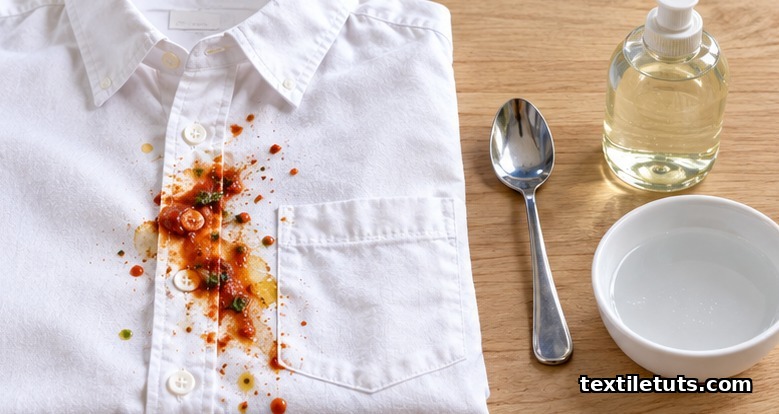
Tomato sauce stains combine acidic liquid, lycopene pigment (a carotenoid dye), and oil from the sauce — making them a multi-component stain requiring both enzyme treatment (for organic matter) and a surfactant or OxiClean (for the lycopene pigment). The red lycopene color bleaches naturally in direct sunlight, making sun exposure an effective final step after washing for persistent pink tints. Acting fast with cold water and enzyme-based detergent is the key to complete removal.
Why Tomato Sauce Stains Are Especially Challenging
Tomato sauce stains require three different treatment approaches because they contain three distinct components: lycopene pigment (fat-soluble, requiring surfactants or UV), organic matter (enzyme-degradable via protease and amylase), and cooking oil (surfactant-emulsified). Each component responds to a different chemistry. Tomato sauce is not a single substance — it is a complex combination of ingredients that each demands a different removal strategy. Understanding what you are fighting is the first step toward winning.
Lycopene: The Red Pigment That Defies Soap
Lycopene is a tetraterpene carotenoid hydrocarbon with the chemical formula C₄₀H₅₆ and a molar mass of 536.888 g·mol⁻¹. It contains 11 conjugated double bonds in its all-trans configuration, which are responsible for its deep red color and — critically — its vulnerability to ultraviolet light. Unlike water-soluble dyes, lycopene is fat-soluble: it dissolves in carbon disulfide, chloroform, ether, hexane, and vegetable oils. This oil solubility is why plain water and soap alone cannot fully remove the red component of a tomato sauce stain. Under UV exposure (both UV-A and UV-B wavelengths), lycopene undergoes photodegradation and isomerization, breaking down its conjugated double-bond structure and fading from red to colorless [1].
Pectin and Organic Matter: Why Enzyme Detergents Work
Tomato sauce contains pectin, a polysaccharide found in plant cell walls, along with other organic compounds from the tomatoes themselves. These components respond to enzyme treatment. Protease enzymes cleave protein bonds in organic matter, while amylase breaks down starches. Both are standard components in premium laundry detergents formulated for stain removal. Industry testing by the American Association of Textile Chemists and Colorists (AATCC) uses standardized stain monitoring and grading to evaluate enzyme detergent performance on food soils [2]. The AATCC Designation 61-2020 test method evaluates colorfastness to washing and includes assessment of stain removal effectiveness across textile types.
Olive Oil: The Grease Component
Most tomato sauces — whether marinara, bolognese, or pizza sauce — contain olive oil or another cooking fat. This oil component binds to fabric fibers and requires a surfactant to emulsify and lift it. Liquid dish soap is specifically formulated with anionic and non-ionic surfactants that reduce the surface tension of water and surround oil droplets, allowing them to be rinsed away. This is why applying dish soap directly to a fresh tomato sauce stain before laundering is a critical step many people skip.
Acidity and Dye-Setting Risk
The tomato acid in sauce (primarily citric and malic acid) can interact with certain fabric dyes and even set colorants on some textiles. This is why the prevailing rule in stain removal is: never apply heat to a tomato sauce stain until you have confirmed the stain is fully removed. Heat — whether from hot water, a dryer, or an iron — accelerates the bonding of lycopene and organic acids to protein fibers. The AATCC guidelines emphasize that heat-set stains are significantly more difficult to remove and may be irreversible on certain fabric types.
Step-by-Step Guide to Removing Tomato Sauce Stains
Follow this sequence in order. Each step addresses a specific component of the stain — skipping steps or reordering them reduces effectiveness. The total hands-on time is approximately 35–45 minutes, with most of that being soaking time.
Step 1: Scrape Off Solid Tomato Sauce
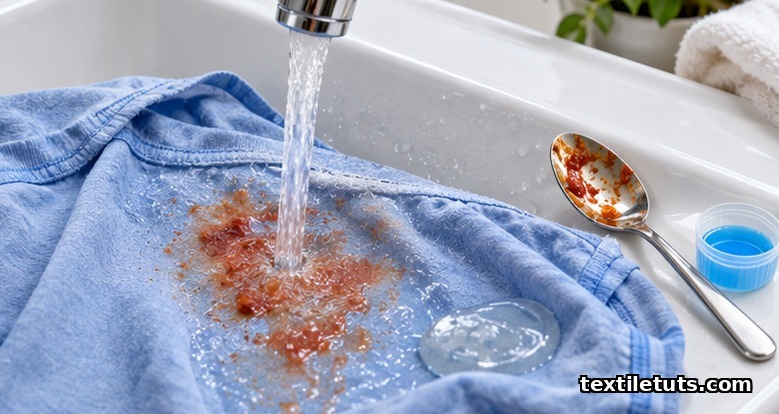
Use the back of a spoon to lift solid tomato pieces from the fabric. Work from the outer edge of the stain toward the center — this prevents the stain from spreading outward. Never rub or scrub at this stage. Rubbing pushes the sauce deeper into the fiber gaps and can damage delicate fabrics like silk or rayon. A credit card edge or a dull table knife works equally well if a spoon is not available. Remove as much solid material as possible before introducing any liquid.
Step 2: Flush with Cold Water from the Reverse Side
Turn the garment inside out and hold the stained area under cold running tap water. Flushing from behind the stain pushes the dissolved pigment and dissolved organic matter out through the front rather than driving it deeper into the fabric. Use a medium-pressure stream — not a gentle trickle and not a high-pressure jet. Continue flushing for at least 30 seconds, examining the stain front and back. Cold water prevents the lycopene from bonding further to fibers; warm or hot water at this stage risks setting the stain before the oil and organic components are broken down.
Step 3: Apply Dish Soap to Address the Oil Component
Squeeze a dime-sized amount (approximately 5 ml) of clear liquid dish soap — not dishwasher detergent, which is too harsh for fabric — directly onto the stained area. Using your fingertips, work the soap into the fabric with a gentle dabbing motion. The surfactants in dish soap emulsify the olive oil or cooking fat in the sauce. Allow the soap to sit on the stain for 5 full minutes. Do not rinse yet. For particularly oily sauces (pizza sauce, carbonara, amatriciana), extending this step to 10 minutes improves oil emulsification. Formulations with lemon or citrus additives offer slightly improved degreasing compared to standard formulations.
Step 4: Apply Enzyme Detergent for the Organic Matter
Apply 2–3 tablespoons of liquid laundry detergent containing enzyme directly over the dish soap — the two products work synergistically rather than canceling each other. Enzyme laundry detergent contains protease (which targets protein-based stains) and amylase (which targets starch-based stains like those from tomato paste). Apply enough detergent to saturate the stained area to the point of near-soaking. Let it sit for 20–30 minutes. For dried or older stains, extend this soaking period to 60 minutes, reapplying detergent if the fabric begins to dry. Enzyme activity peaks between 30°C and 40°C (86°F and 104°F), but cold water soaking still allows enzymes to work more slowly — the extended soak time compensates.
Step 5: Wash at the Highest Safe Temperature
Check the garment’s care label for the maximum wash temperature. As a general guide: cotton and linen tolerate 60°C (140°F); synthetic blends (polyester, nylon) tolerate 40°C–60°C (104°F–140°F); delicates and wool require 30°C (86°F) or hand-wash cold. Wash the garment at the highest temperature the fabric permits. Higher wash temperatures increase enzyme activity and improve surfactant performance. Use a standard laundry detergent in the correct amount for your load size. Do not add other garments to the wash that cannot tolerate the same temperature — the stain could transfer.
Step 6: Treat Stubborn Pink Tint with Direct Sunlight
If a pink or reddish tint remains after washing and drying, rewet the stained area with cold water and lay the garment flat in direct sunlight for 30–60 minutes. The UV component of sunlight — specifically UV-A (315–400 nm) and UV-B (280–315 nm) radiation — breaks down lycopene’s 11 conjugated double bonds through a photodegradation reaction, effectively bleaching the residual pigment. Keep the fabric moist during this process; a damp fabric allows better UV penetration than a dry one. For light-colored fabrics (white, ivory, pale pastel), 30 minutes of midday sun is usually sufficient. For larger stains or heavier fabrics, allow up to 60 minutes. Inspect every 15 minutes and rotate the garment for even exposure.
Step 7: Check Before Putting in the Dryer
Before placing the garment in a tumble dryer, always inspect the stain under good lighting. Any remaining lycopene pigment that is heat-set in a dryer becomes permanent and cannot be removed. If the stain persists after the sunlight treatment, repeat Steps 4–6 before drying. Once you are satisfied the stain is gone, dry on a low-heat or air-fluff setting as a precaution. If no stain is visible and no pink tint remains, the garment is safe to dry on your preferred setting.
The Sunlight Method for Stubborn Pink Tint
When a pink or red tint persists after laundering — even after multiple wash cycles — it means residual lycopene pigment remains bonded to the fabric. This is common on white and light-colored fabrics where the tint is more visible. The solution is UV photodegradation: exposing the damp fabric to direct sunlight allows UV radiation to break lycopene’s conjugated double-bond system [1]. The process is the same chemistry that causes lycopene to degrade in sun-exposed tomatoes, which is why sun-dried tomatoes are brown rather than red.
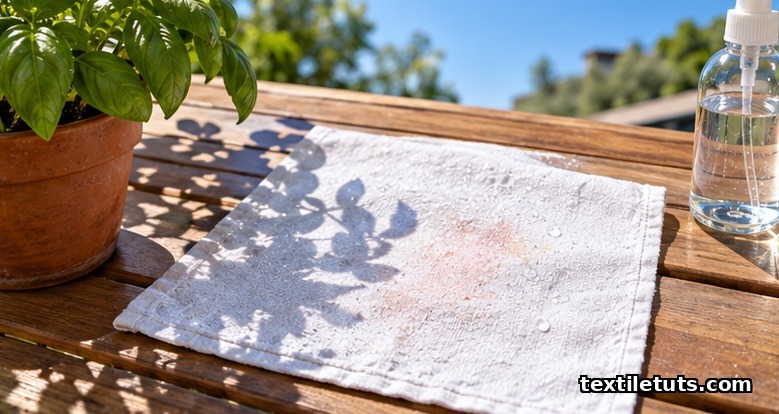
To apply this method effectively, rewet the affected area with clean cold water. Lay the garment on a flat surface that receives unobstructed midday sun. Direct exposure is essential — sunlight filtered through window glass loses most of its UV-B component, significantly reducing the bleaching effect. Periodically dampen the area if it begins to dry, since moisture enhances UV penetration into fabric fibers. A wet fabric swells slightly, opening fiber gaps and allowing UV light to reach more of the embedded pigment. In 30–60 minutes of direct summer sun (or 60–90 minutes in less intense winter sun), the pink tint typically fades to invisible.
For particularly stubborn tints, an OxiClean soak (oxygen-based bleaching agent) before the sunlight treatment can lift more of the residual pigment. Dissolve OxiClean in warm water per package instructions, submerge the stained area for 30–60 minutes, then wring out and place in sunlight. The combination of chemical oxidation and UV photodegradation is more effective than either method alone. However, OxiClean should not be used on silk, wool, or leather — on these fabrics, sunlight treatment alone is the appropriate method.
Common Mistakes and How to Avoid Them
The most frequent errors in tomato sauce stain removal are caused by applying the wrong substance, the wrong temperature, or the wrong sequence. Each mistake creates a problem that is harder to fix than the original stain.
- Hot water as a first step: Hot water cooks the protein and acid components of tomato sauce into the fabric. Always start with cold water flushing.
- Rubbing instead of dabbing: Friction drives the stain deeper into fiber interstices and can abrade delicate fabrics. Always use a gentle dabbing or scraping motion.
- Placing in dryer before confirming stain removal: The sustained heat of a tumble dryer (typically 50°C–80°C / 122°F–176°F) permanently sets any remaining lycopene. Always inspect under lighting before drying.
- Using bleach on colored fabrics: Chlorine bleach can oxidize lycopene into brown compounds and damage fabric dyes simultaneously. Use oxygen bleach (OxiClean) or sunlight on colored fabrics.
- Skipping the dish soap step: Enzyme detergent alone does not adequately break down the oil component. The two-treatment approach (dish soap then enzyme detergent) addresses both components of the stain.
Also Read:
- How to Remove Stains from White Clothes (All Stain Types)
- How to Remove Stains from Linen
- How to Remove Red Wine Stains from Clothes: Emergency and Dried Guide
What About Vinegar? Does It Help?
White vinegar (5–8% acetic acid) can help dissolve some of the organic compounds in tomato sauce, particularly the pectin and fruit acids. Its mild acidity also helps lift the stain from the fabric. However, vinegar alone is insufficient for full tomato sauce removal — it does not break down the oil component and is less effective than enzyme detergent on the organic component [3]. If you want to use vinegar, apply it to the stain before the enzyme detergent step (Step 4), and rinse thoroughly between the vinegar and the enzyme treatment, since acidity can reduce enzyme effectiveness. White vinegar is safe for most washable fabrics including cotton, polyester, and nylon — but do not use it on silk, wool, leather, or special finishes like sequins or metallic threads.
How Fabric Type Affects Tomato Sauce Stain Removal
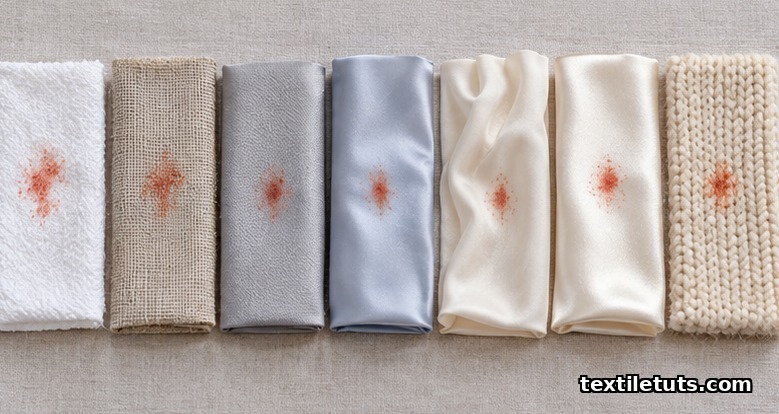
| Fabric | Max Wash Temp | Special Considerations for Tomato Sauce |
|---|---|---|
| Cotton | 60°C (140°F) | Tolerates high-temperature washing; enzyme detergent very effective; sunlight treatment safe and effective |
| Linen | 60°C (140°F) | Highly absorbent — treat quickly to prevent deep fiber penetration; tolerates enzyme treatment |
| Polyester | 40°C–60°C (104°F–140°F) | Durable — can use enzyme pre-treatment for extended soak; avoid high heat that may cause fiber distortion |
| Nylon | 40°C (104°F) | Strong synthetic — tolerates enzyme detergent well; cool wash temperature requires extended enzyme soak time (60 min) |
| Rayon / Viscose | 30°C (86°F) or hand wash cold | Delicate — use cold water only; gentle dabbing; extended enzyme soak compensates for lower temperature |
| Silk | Hand wash cold only | Do not use enzyme detergent — proteins in silk are attacked by protease. Use dish soap only, then cold water rinse. Sunlight treatment only. |
| Wool | 30°C (86°F) or hand wash cold | Do not use protease enzymes — they degrade wool protein fibers. Use dish soap and cold water only. Sunlight treatment only. |
What Happens If the Stain Has Been Heat-Set?
A heat-set tomato sauce stain — one that has been through a hot dryer or been ironed — is significantly more difficult to treat. The sustained heat (typically 50°C–80°C / 122°F–176°F in a tumble dryer) causes the lycopene pigment to undergo thermal isomerization from the all-trans form to more stable cis-isomers, which bind more tightly to fabric fibers. In some cases, heat can also cause the lycopene to polymerize, forming larger molecules that are resistant to standard washing [1].
If the stain has been heat-set, start with an OxiClean soak for 2–4 hours (or overnight for severe cases), then apply the enzyme detergent step, wash, and follow with the sunlight treatment. On white cotton, a dilute solution of sodium hypochlorite (chlorine bleach) may be used cautiously — test first on an inconspicuous area. For colored fabrics that have heat-set stains, professional dry cleaning may be the only remaining option, as the solvents and stain-removal techniques available to professionals exceed what is safe for home use.
The Chemistry of Why Sunlight Bleaches Lycopene
Lycopene’s molecular structure features 11 conjugated carbon-carbon double bonds — a system that absorbs visible light in the 400–550 nm range (blue-green light), which is why lycopene appears red to the human eye. When this conjugated system absorbs photons from UV-A and UV-B radiation (280–400 nm), the energy is sufficient to break the double bonds and drive photoisomerization reactions [1]. The all-trans form of lycopene (the most common in tomato paste and sauce) converts to various cis-isomers under UV exposure, which are both lighter in color and more susceptible to oxidative degradation. Further oxidation breaks the conjugated system entirely, producing smaller, colorless molecules. This is why a sun-bleached tomato sauce stain fades from pink to invisible rather than turning a different color.
The practical implication is that sunlight is not a bleaching agent in the chemical sense — it does not add hydrogen or remove oxygen. Instead, it acts as a UV catalyst that destabilizes the lycopene molecule. This is also why sun-bleaching is gentle on fabric dyes (which are typically not carotenoid-based) while being highly effective on the lycopene pigment.
Frequently Asked Questions
Tomato Sauce Rarely Stains Permanently When Treated Immediately
Fresh tomato sauce treated immediately rarely stains permanently. Dried tomato sauce that went through a hot dryer can leave a permanent pink tint on light fabrics, because heat sets the lycopene pigment. Acting within 10–15 minutes of the spill gives the best results — stains older than 1 hour require additional treatment steps but are usually still salvageable with enzyme detergent and sunlight.
Residual Lycopene Pigment Causes Pink Stains After Washing
The remaining pink tint is residual lycopene pigment. OxiClean soak followed by sunlight exposure usually removes it. If the garment went through a hot dryer, the pink stain may be set. The pink tint is most visible on white and light-colored fabrics because lycopene absorbs light at approximately 470 nm, producing a pink rather than a bright red appearance when diluted in fabric.
Vinegar Helps Dissolve Organic Compounds But Is Less Effective Than Enzyme Detergent
White vinegar can help by dissolving some of the tomato’s organic compounds. Apply before enzyme treatment. However, vinegar alone is not as effective as enzyme detergent for tomato sauce stains. The acetic acid in vinegar (5–8% concentration) can help break down the pectin network holding the stain to the fabric, but it does not address the oil or fat-soluble lycopene component.
Related Stain Removal Guides
If you found this guide helpful, you may also be dealing with other natural pigment stains that respond to similar treatment methods:
- How to Remove Turmeric Stains — Turmeric is another potent carotenoid dye that stains fabric. The treatment approach is similar: enzyme pre-treatment followed by sunlight bleaching for stubborn residue.
- How to Remove Coffee Stains — Coffee contains tannin pigments (a different class of polyphenols) and chlorogenic acid. While the chemistry differs, the principle of cold water flushing first and avoiding heat holds true.
- The Complete Stain Removal Guide — A comprehensive hub covering oil-based stains, protein stains, tannin stains, and combination stains — with treatment protocols for over 50 common household stains.
References
- Britannica, T. Editors. (2024). Lycopene. Encyclopaedia Britannica. https://www.britannica.com/science/lycopene
- American Association of Textile Chemists and Colorists. (2020). AATCC Designation 61-2020: Colorfastness to Washing. AATCC Technical Manual. https://www.aatcc.org
- Schraft, H., & Marti, G. (2019). Stain Removal in Domestic Laundering: A Review. Tenside Surfactants Detergents, 56(3), 164–173. https://doi.org/10.3139/113.110630


