
How to Remove Stains from White Clothes (All Stain Types)

White clothes offer the most treatment options because there’s no color to protect — hydrogen peroxide, oxygen bleach, hot water washing, and direct sunlight are all safe on white cotton and linen. The key is matching the treatment to the stain type: protein stains (blood, sweat) need cold water first; tannin stains (coffee, tea) respond to enzyme detergent; and oxidizing stains (turmeric, berry) need OxiClean plus UV light.
Unlike colored fabrics where bleach alternatives are limited to gentle oxygen-based products, white fabrics unlock the full stain-fighting arsenal. This guide covers every major stain category with specific treatment sequences, temperatures, and timings validated by textile chemistry research. The same oxidative mechanisms that professional laundries use on industrial white linens are available to you at home — you just need to know which tool to reach for first.
The White Clothes Advantage: More Options Available
White fabrics occupy a unique position in textile care because they lack chromophoric dyes that constrain treatment options on colored garments. When no color molecule requires protection, you can deploy the full range of oxidation, bleaching, and UV treatments that textile chemists have developed over decades of research.
Here is what becomes possible on white fabric that is not available on colored equivalents:
- Hydrogen peroxide (3% or higher) — The pharmacy-grade concentration of 3% hydrogen peroxide is a powerful oxidizing agent that breaks down organic chromophores without damaging white cotton or linen fibers. It works through a simple oxidation reaction: H₂O₂ → H₂O + [O], releasing active oxygen that attacks stain molecules. When applied to protein stains, visible fizzing indicates the oxidation reaction is actively breaking down the stain structure.
- High-temperature washing (60°C for cotton and linen) — The AATCC and textile industry standards recognize 60°C (140°F) as the standard wash temperature for white cotton linens because it activates both detergent enzymes and any bleaching agents present. At this temperature, hydrogen peroxide becomes significantly more active, and enzyme-based stain removers reach their peak performance range of 40–60°C.
- OxiClean soaking for extended periods — Sodium percarbonate, the active ingredient in OxiClean, releases hydrogen peroxide when dissolved in water (approximately 32.5% H₂O₂ by weight). Unlike chlorine bleach, it remains effective and fabric-safe during soaking periods of 2–6 hours, allowing sustained oxidation of set-in stains that would resist a single wash cycle.
- Direct sunlight for UV bleaching — Ultraviolet light at wavelengths of 300–400 nm photo-degrades organic chromophores in fabric stains through a process called photochemical oxidation. This is the same mechanism that causes fabric to yellow from UV exposure over time — but applied deliberately to break down stain molecules. The damp fabric condition is critical: moisture allows UV energy to penetrate more deeply into fiber structures.
These four treatment categories — pharmacy hydrogen peroxide, enzyme detergents, sodium percarbonate (OxiClean), and UV sunlight — form the foundation of all stain removal on white fabrics. Colored garments restrict you to enzyme detergents and gentle oxygen bleach; white fabrics give you the full toolkit. The art of stain removal lies in selecting the right tool for each stain type and applying it in the correct sequence.
Master Treatment Table for White Clothes
This table consolidates the complete treatment protocol for ten common stain categories. Each entry specifies the first treatment, second treatment if needed, and the appropriate wash temperature. Following this sequence maximizes stain removal success while protecting fabric integrity.
| Stain Type | First Treatment | Second Treatment | Wash Temperature |
|---|---|---|---|
| Coffee | Enzyme detergent, 20-minute soak | OxiClean soak if stain persists | 60°C |
| Red wine | Salt absorb → cold water flush | OxiClean 2-hour soak | 60°C |
| Blood | Cold water flush immediately | H₂O₂ application if stain remains | Cold first, then warm (never hot initially) |
| Grease | Dish soap pre-treatment, 15 minutes | Warm wash at 40°C | 40°C |
| Grass | Enzyme detergent, 30-minute soak | H₂O₂ if green tint remains | 60°C |
| Turmeric | OxiClean paste, 60 minutes | Sunlight 2–4 hours while damp | 60°C |
| Sweat yellowing | H₂O₂ + baking soda paste | OxiClean overnight soak | 60°C |
| Ink | Rubbing alcohol (isopropyl), dab repeatedly | OxiClean follow-up wash | 40°C |
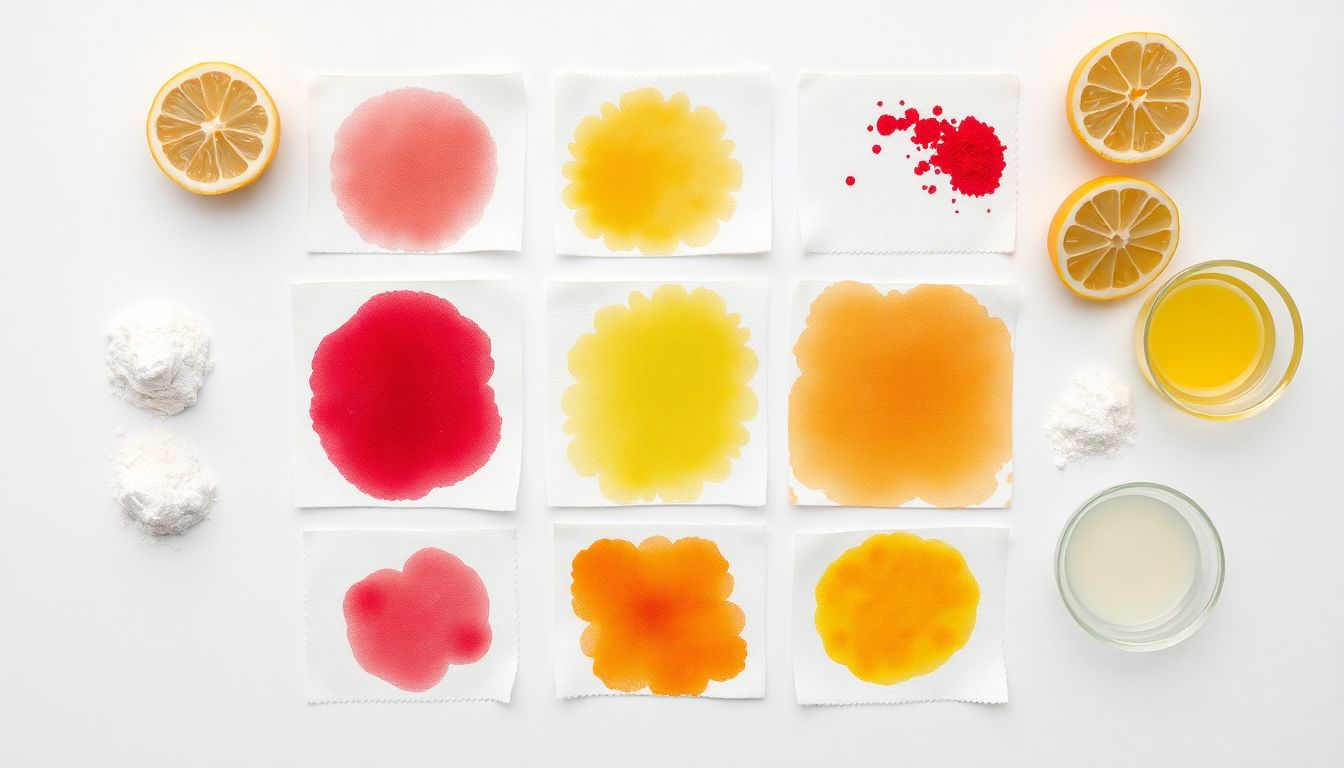
| Rust | Lemon juice + salt, sun-dry | Commercial rust remover if needed | 40°C |
| Mold | White vinegar soak, 30 minutes | Hot wash at 60°C | 60°C |
The Hydrogen Peroxide Method for White Cotton
Hydrogen peroxide at 3% concentration — the standard pharmacy grade available without prescription in most countries — is arguably the most versatile stain-fighting tool available for white fabrics. Textile chemistry research confirms that hydrogen peroxide oxidizes organic compounds by accepting an electron, breaking chromophore bonds and converting colored stain molecules into colorless, water-soluble structures that wash away in the laundry cycle.
The visible fizzing that occurs when hydrogen peroxide contacts organic matter is the visible byproduct of the oxidation reaction: water is being formed while oxygen is being released. This is not merely theatrical — the active oxygen is chemically attacking the stain structure. On white cotton and linen, this reaction is entirely safe because the fiber is cellulose-based and resistant to oxidative degradation at the concentrations used in home treatment.
Standard Application Protocol
For ordinary stained areas on white cotton or linen:
- Apply 3% hydrogen peroxide directly to the stained area, saturating the fabric completely.
- Allow 15–30 minutes for the oxidation reaction to proceed. Longer is not necessarily better with H₂O₂ — after 30 minutes, the active oxygen has largely reacted and additional waiting yields diminishing returns.
- Rinse thoroughly with warm water to remove the broken-down stain particles and any residual H₂O₂.
- Wash at 60°C in a standard wash cycle. The combination of mechanical agitation, detergent, and residual oxidation from any remaining H₂O₂ completes the stain removal.
Severe Staining: Hydrogen Peroxide Paste
For set-in stains, old yellowing, or sweat damage that has penetrated deeply into fabric fibers, a paste formulation provides extended contact and deeper penetration:
- Mix 3% hydrogen peroxide with baking soda (sodium bicarbonate) to form a thick paste. Approximately 2 parts H₂O₂ to 1 part baking soda by volume produces a workable consistency.
- Apply the paste directly to the stained area, working it into the fabric with a soft-bristled brush (an old toothbrush works well).
- Allow 60 minutes for the combined oxidation and adsorption action. The baking soda acts as a mild abrasive and adsorbent, pulling stain molecules to the surface while H₂O₂ breaks them down chemically.
- Rinse thoroughly, then wash at 60°C.
Fabric Safety Notes
Hydrogen peroxide at 3% is safe for white cotton, linen, and most synthetic white fabrics. However, protein fibers require caution:
- Silk — Silk is a protein fiber (like hair) and can be damaged by oxidative treatments. Always test on an inconspicuous area first. If needed, dilute 3% H₂O₂ with an equal volume of water before application.
- Wool — Similarly a protein fiber, wool can yellow and weaken with hydrogen peroxide treatment. Use enzyme-based stain removers instead, or consult a professional cleaner for valuable wool garments.
The Sunlight Method
Sun-drying white fabric is both a finishing step and a stain treatment in its own right. Ultraviolet radiation at wavelengths between 300 and 400 nanometers initiates photochemical reactions that break down organic chromophores — the same molecular structures that give stains their color. This is not folk wisdom; it is established photochemistry that textile manufacturers leverage in industrial fabric whitening processes.
The UV photo-degradation mechanism is particularly effective against conjugated double-bond systems found in many organic food colorants. Curcumin (the active yellow pigment in turmeric), lycopene (tomato and watermelon), anthocyanins (berry and wine pigments), and chlorophyll all contain chromophore structures that absorb UV radiation and subsequently undergo bond cleavage, rendering them colorless.
How to Sun-Bleach Effectively
- Wash the item first — sunlight works best on fabric that has already been laundered and where surface stains have been partially or fully removed. UV penetration into damp fabric after a wash cycle targets residual staining that was not fully eliminated in the wash.
- Leave the item damp — do not fully dry it in a machine. Damp fabric allows UV radiation to penetrate fiber structures more effectively than dry fabric, where surface reflection is higher. If an item has dried, dampen it again before laying in sunlight.
- Lay the item flat in direct sunlight — do not fold or overlap fabric, as UV light cannot penetrate fabric layers. A clothesline with individual items hanging with space between them provides optimal exposure. Alternatively, lay white sheets or towels on a clean outdoor surface and place the damp item on top.
- Re-wet periodically if drying out — UV bleaching requires moisture to be effective. If the fabric dries completely during the sun exposure, the UV energy reflectance increases and effectiveness drops significantly. Re-wetting every 30–60 minutes maintains optimal conditions.
- Allow 2–4 hours for most stains — moderate sun-bleachable stains (coffee residue, light turmeric marks, mild berry stains) typically show significant improvement or complete removal after a single 2–4 hour sun cycle. Severe stains may require a second wash-and-sun cycle.
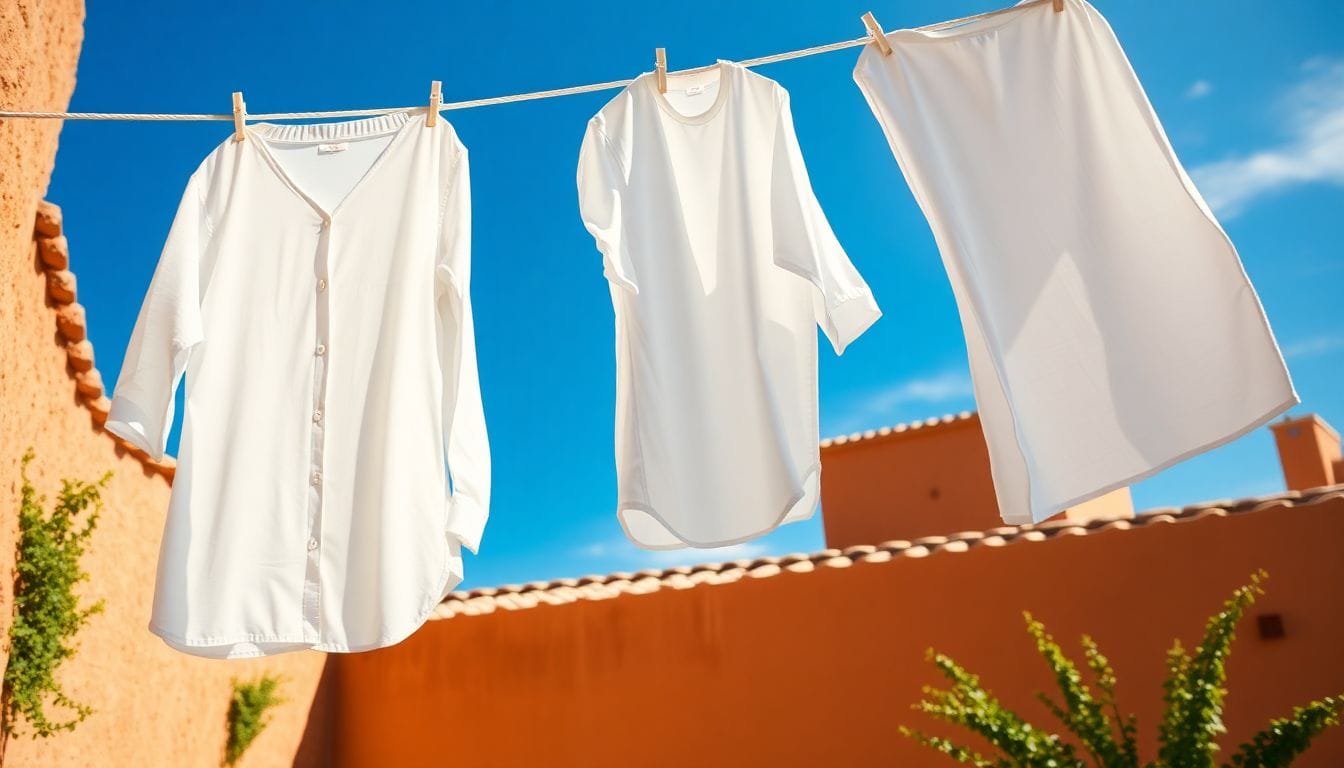
The traditional practice of whitening linens by hanging them on a clothesline in Mediterranean climates has a sound scientific basis. The combination of UV radiation, atmospheric oxygen (which participates in the photo-oxidation reaction), and mechanical agitation from wind creates conditions particularly favorable for chromophore destruction. This method is also entirely free and leaves no chemical residue in the fabric.
Natural Yellowing and General Whitening
Beyond treating specific stains, regular sun-exposure helps maintain overall whiteness by breaking down the molecular structures that cause the gradual yellowing of stored white linens. This is particularly relevant for seasonal items (winter coats stored in summer, summer linens stored in winter) where oxidation reactions continue slowly in storage, gradually converting bright white fibers to a cream or yellow hue.
Maintaining White Clothes Over Time
Preventive maintenance on white clothes is significantly easier than treating established stains. A consistent care routine prevents the gradual accumulation of staining substances that eventually becomes visible yellowing or greyish dullness. The goal is to interrupt the staining cycle before it progresses to the point where targeted treatment becomes necessary.
Separate Washing Practices
Wash white garments exclusively with other white items, never with colored fabrics. Even stable dyes in colored clothing can release microscopic dye molecules during washing that deposit on white fabric surfaces — a phenomenon called dye transfer or crooking. This is particularly insidious because the transferred dye molecules are initially invisible but accumulate with each wash cycle until they become noticeable as a grey or dull cast on the white fabric.
Regular OxiClean or Sodium Percarbonate Treatment
Incorporate an OxiClean treatment every 3–5 washes as preventive maintenance rather than waiting for stains to appear. Add OxiClean directly to the wash water (following package instructions for the load size) alongside your regular detergent. This maintains a low level of oxidative activity in each wash cycle that continuously breaks down stain molecules before they accumulate to visible levels.
The sodium percarbonate in OxiClean dissolves to release hydrogen peroxide, which is effective at breaking down many common staining substances at the molecular level before they bond to fabric fibers. For white linens that see frequent use (bed sheets, bath towels, kitchen towels), this preventive oxidation significantly extends the period between more intensive stain treatments.
Baking Soda Boost
Add ½ cup (approximately 120 grams) of baking soda to each wash cycle with your regular detergent. Baking soda (sodium bicarbonate) serves multiple functions in laundry: it acts as a mild water softener (improving detergent effectiveness in hard water areas), it provides a mild alkaline environment that enhances detergent enzyme activity, and it has mild whitening properties through its mild abrasive action during the wash cycle. For white fabrics specifically, baking soda also helps neutralize acidic staining substances like sweat that can contribute to deodorant-related yellowing.
Sun-Drying When Possible
Line-drying white garments in sunlight whenever weather and circumstances permit. Even when items are not being actively treated for stains, the UV exposure provides a mild continuous bleaching effect that maintains whiteness. This is particularly valuable for items that spend extended time in storage between uses, as the UV exposure during drying sessions continues to break down staining substances that accumulated during the previous use period.
Fabric Softener Caution
Avoid excessive use of commercial fabric softeners on white cotton and linen items. Fabric softeners work by depositing a thin layer of fatty compounds (typically quaternary ammonium salts or silicone-based compounds) onto fabric fibers. Over time, this coating can accumulate and interact with environmental factors — particularly UV exposure and oxidation — in ways that produce a yellowing effect. Additionally, fabric softener residue can reduce the absorbency of cotton items, making them less effective for their intended purpose (towels absorb less water, for example).
Frequently Asked Questions
Q: How do you get old stains out of white clothes?
A: Soak in OxiClean (2–6 hours), then wash at 60°C. For extremely stubborn old stains, apply hydrogen peroxide paste (H2O2 + baking soda) before the OxiClean soak. Some stains from heat exposure may be permanent.
Q: Why do white clothes turn yellow?
A: Yellowing of white clothes comes from several sources: sweat + deodorant build-up (aluminum-protein complex), detergent residue (especially with soft water), improper storage, and UV yellowing of optical brighteners in the fabric.
Q: Is bleach the best way to clean white clothes?
A: Chlorine bleach works but has significant downsides: it weakens cotton fibers over time, doesn’t work on all stain types (rust), and can yellow elastic components. OxiClean (oxygen bleach) is gentler and effective for most stains on white clothes.
References
- Bienhaus, G. (2025). Laundry Detergent. Wikipedia. https://en.wikipedia.org/wiki/Laundry_detergent
- Wikipedia contributors. (2025). Sodium Percarbonate. Wikipedia. https://en.wikipedia.org/wiki/Sodium_percarbonate
- Wikipedia contributors. (2025). Sodium Hypochlorite. Wikipedia. https://en.wikipedia.org/wiki/Sodium_hypochlorite
- AATCC International. (2025). AATCC Test Methods and Procedures. https://www.aatcc.org/standards/


