
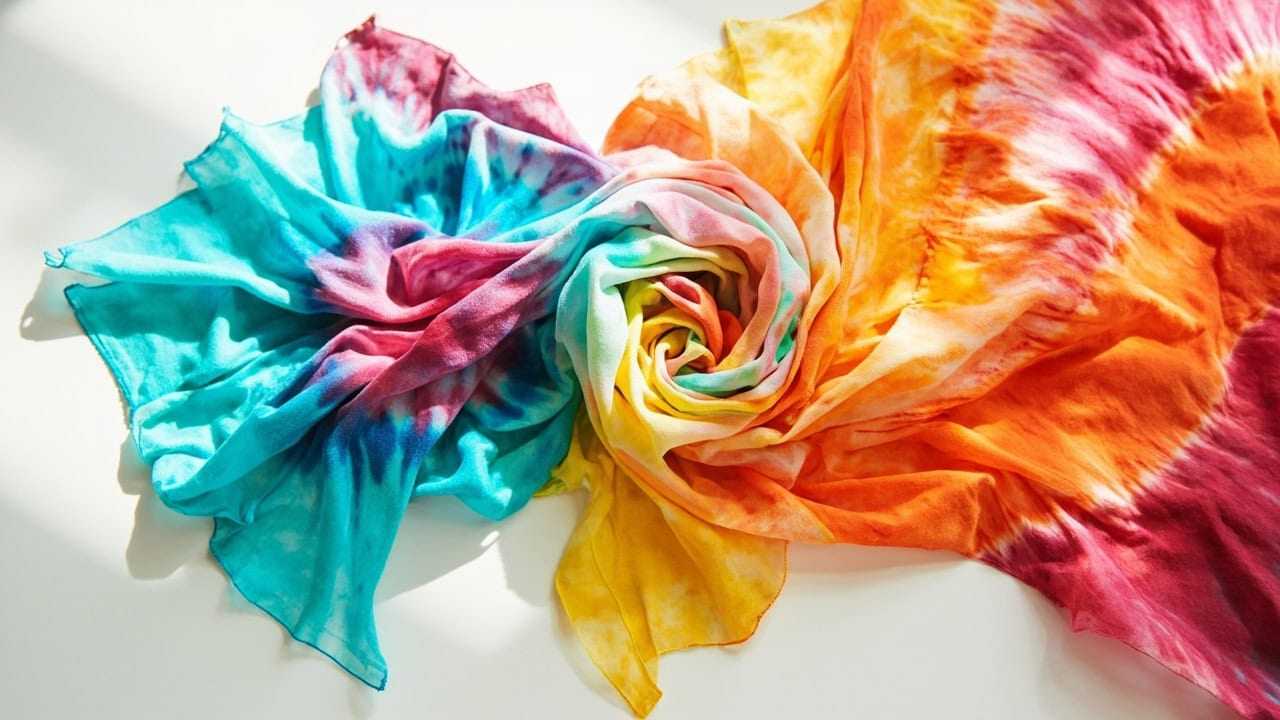
How Long to Let Tie Dye Sit Before Rinsing: Timing Guide

Tie dye made with fiber reactive dyes must sit for 6–24 hours before rinsing to allow the chemical reaction between dye and fabric to complete — insufficient sit time results in washed-out colors that fade quickly, while the dye bonds permanently to cotton fibers during this curing window at room temperature (70–75°F / 21–24°C).
Getting the sit time right is the difference between vibrant, colorfast results and pale, bleeding mess that ruins every subsequent wash. The good news: the timing window is wide, forgiving, and backed by predictable chemistry. Here is exactly what you need to know.
Why Sit Time Matters: The Chemistry of Fiber Reactive Dye
Fiber reactive dyes — the gold standard for cotton tie dye, including Procion MX and Dharma Dribaba — form a covalent bond with cellulose fibers (cotton, rayon, linen). This is not a simple stain — it is a genuine chemical reaction.
During the dye application, the dye molecule is dissolved in an alkaline solution (typically with soda ash as the fixation agent). From there, it physically migrates into the interior of each fiber. The covalent bond then forms between the dye molecule and the hydroxyl groups (-OH) on the cellulose chain. This bond is permanent and irreversible under normal wearing and washing conditions.
The chemical reaction is called exhaustion — dye molecules progressively transfer from the dye bath to the fiber over hours. This is a gradual process that requires three things: moisture to keep the reaction flowing, heat to accelerate the molecular activity, and time for the bond to fully form.
Without adequate sit time, the exhaustion process never completes. The result is that loosely bonded dye molecules wash out during rinsing — producing pale, washed-out colors that continue to bleed in subsequent washes. You lose 40–60% of your color intensity, and the remaining dye lacks colorfastness.
Recommended Sit Time by Dye Type
The optimal sit time depends on the type of dye used. Heat-activated dyes cure faster; cold-water dyes need more time. Here is the full breakdown:
| Dye Type | Minimum Sit Time | Optimal Sit Time | Maximum Sit Time |
|---|---|---|---|
| Fiber Reactive (Procion MX) | 6 hours | 8–12 hours | 24 hours |
| Cold Water Dye | 4 hours | 6–8 hours | 12 hours |
| Warm/Thermal Dye (80–100°F / 27–38°C) | 2 hours | 4–6 hours | 8 hours |
| Dual-Activity Dye | 6 hours | 8–12 hours | 24 hours |
Fiber reactive dyes (Procion MX) are the most common for home tie dyeing. They work at room temperature and require the full 6–24 hour window. Eight hours is the sweet spot for most room-temperature projects.
Cold water dyes (including some Dharma Dribaba formulations) require less time because they are designed for low-temperature application. Four hours is the minimum; anything under that risks significant washout.
Warm or thermal dyes use applied heat (80–100°F / 27–38°C) to accelerate the reaction. Heat dramatically speeds up exhaustion — 2 hours minimum. However, maintaining consistent temperature throughout the curing period is critical for even color.
Dual-activity dyes combine fiber reactive and vat dye chemistry, offering deeper penetration and higher washfastness. They follow the same timing as standard fiber reactive dyes (6–24 hours) but can tolerate the longer end of the range slightly better.
Step-by-Step: The Correct Rinsing Process
Once your sit time is complete, rinsing matters just as much as the dye chemistry itself. Rushing this step undoes everything the sit time built. Follow this sequence exactly:
- Prepare the rinse area. Place dyed fabric on old towels or in a waterproof area — excess unbound dye will run copiously during the first rinse. Do this before you start, not after.
- First rinse — cold water only. Gently squeeze the fabric to release loose dye. Do not unfold the fabric or pull folds apart — this can cause streaks and uneven washout. Keep the fabric bundled.
- Repeat cold water rinses. Continue rinsing with cold water until the runoff is mostly clear. This typically takes 3–5 individual rinses depending on how much unbound dye remains. Be patient — each rinse removes more unreacted dye.
- Final wash with synthrapol. Once the water runs clear, wash the fabric 单独 in warm water with synthrapol or a pH-neutral laundry detergent. Synthrapol is specifically formulated to emulsify and remove excess unreacted dye without disturbing the fixed color. A single wash cycle with synthrapol completes the fixation process.
- Dry the fabric. Air drying is preferred for maximum color preservation. Tumble drying on low heat is also acceptable. The color is set once the initial cold rinses are complete — the synthrapol wash removes any remaining traces of unfixed dye that could cause bleeding later.
Factors That Affect Required Sit Time
The table gives standard guidelines, but your actual sit time needs to account for three environmental and material variables. Each one shifts the optimal window.
Temperature
Temperature is the single most influential factor in dye fixation rate. The fiber reactive dye reaction slows dramatically when cool.
- 70–75°F (21–24°C) — ideal: This is the optimal range for Procion MX dyes at room temperature. The chemical reaction proceeds at a consistent, predictable rate. Eight hours delivers approximately 80–90% fixation; 24 hours approaches 95%+.
- Below 65°F (18°C) — extend sit time: The reaction slows noticeably. Increase sit time to 18–24 hours. In unheated rooms, garages, or air-conditioned spaces in winter, the cooler the environment, the longer the cure. This is the most common cause of disappointing results in cold climates.
- Above 80°F (27°C) — shorter may work: Reaction accelerates. Four to six hours can achieve adequate fixation. However, faster is not always better — the risk is uneven fixation as the surface dries while interior fibers are still curing. Covering with plastic becomes essential at higher temperatures to prevent surface dehydration.
Humidity
The fiber reactive dye reaction requires moisture to proceed. If the fabric dries out during the curing period, the reaction stops and unreacted dye remains in the fiber — destined to wash out during rinsing.
- High humidity (>70%): Slightly speeds up the reaction. Moisture is available to sustain the chemical process. No changes needed to standard sit times.
- Low humidity / dry conditions: The fabric can dry out at the surface, especially at the edges and folds. This halts fixation prematurely. Cover the fabric with plastic wrap or place it in a sealed plastic bag to retain moisture. This single step can make or break a project in a dry climate or during winter when indoor heating reduces humidity.
Fabric Type
Different fabric types absorb and bond with dye at different rates:
- Cotton: Standard 6–24 hours. Cellulose structure provides abundant bonding sites for fiber reactive dyes. This is the ideal fabric for Procion MX.
- Rayon / viscose: Same as cotton. These are also cellulose fibers with similar hydroxyl group availability. Expect comparable results and similar sit times.
- Cotton-polyester blends: Only the cotton portion takes fiber reactive dye. The polyester portion is untouched. Allow 6–8 hours for the cotton component. Results will be lighter overall because the undyed polyester shows through.
- Hemp / linen: Similar to cotton. These bast fibers have excellent absorbency and bond well with fiber reactive dyes. Follow standard cotton timings.
Common Sit Time Mistakes to Avoid
Under-sitting (The Most Common Error)
Rinsing too early is by far the most frequent cause of poor tie dye results. Less than four hours of sit time for cold water dyes, or less than six hours for fiber reactive dyes, produces dramatic washout:
- Colors appear 40–60% paler than intended after just two hours
- Dye continues bleeding in every subsequent wash — ruining other garments
- The colorfastness is permanently compromised — no amount of additional sit time after rinsing will fix it
The fix is simple: resist the urge to check. Set a timer, walk away, and trust the chemistry.
Over-sitting Beyond 24 Hours
There is a practical ceiling on sit time. Beyond 24 hours for fiber reactive dyes:
- No additional fixation benefit — the reaction is essentially complete after 24 hours under normal conditions
- Excess unreacted dye can oxidize and form a hard crust on the fabric surface, making rinsing more difficult
- Not harmful to the final color, but adds unnecessary difficulty to the rinse phase
Twenty-four to 48 hours will not ruin the color. It just makes your post-dye cleanup harder. Eight to 24 hours is the practical sweet spot.
Temperature Mistakes
- Placing in direct sunlight to speed up curing: Does not meaningfully accelerate fixation. The heat concentration is uneven — the surface heats and dries while the interior remains cool. This causes uneven fixation and splotchy results. Indirect room temperature is best.
- Refrigerating to preserve sit time: Slows the reaction significantly. You will get results, but you will need 24+ hours minimum. The refrigerator also introduces condensation and humidity fluctuations. Room temperature is more reliable.
How to Tell If Tie Dye Is Ready to Rinse
The temptation to check by touch is real. Here is how to evaluate readiness accurately:
- Touch test: Gently press the fabric surface. If wet dye transfers to your fingers, the rinse is premature. The fabric surface should feel mostly dry to the touch, even if the interior folds retain moisture.
- Visual cues in folds: Covered fabric (in plastic) should retain visible moisture within folds. If folds appear completely bone-dry, the fabric may have dried out — check the edges and consider re-wetting with a spray bottle before rinsing.
- Condensation on plastic: If you have covered the fabric with plastic wrap or a bag, condensation on the inside surface indicates the fabric is still actively curing. Clear condensation = still working. No condensation after 8+ hours = safe to rinse.
- Time is more reliable than touch: For most dye colors and conditions, a reliable timer beats subjective touch assessment. Ambient temperature, humidity, and fabric thickness all change how the surface feels. When in doubt, set the timer for eight hours and rinse at the mark rather than trying to guess from feel.
For more detail on what happens after the rinse — including that critical first wash — see our guide to how to wash tie dye for the first time.
Frequently Asked Questions
Q: Can you let tie dye sit too long before rinsing?
A: Yes — beyond 24 hours, fiber reactive dye begins to oxidize and can form a hard crust that is difficult to rinse out. While 24–48 hours will not ruin the color, it makes the rinsing process harder. For best results and easiest rinsing, 8–24 hours is the sweet spot.
Q: Does the weather or season affect tie dye curing time?
A: Yes — cold temperatures (below 65°F / 18°C) significantly slow the dye-fiber reaction. In winter or air-conditioned rooms, extend sit time to 18–24 hours. In summer or warm climates, 6–8 hours may be sufficient. Always judge by time rather than touch.
Q: Should tie dye be covered while sitting?
A: Covering tie dye with plastic wrap or a plastic bag is highly recommended — it prevents the fabric from drying out and maintains consistent moisture levels for even dye absorption. Uncovered fabric can dry out at the edges, causing lighter edges and uneven color.
Q: Can you rinse tie dye after just 2 hours?
A: Rinsing after only 2 hours will result in significant dye washout — colors will appear 40–60% paler than they should be and will continue bleeding in future washes. Minimum recommended sit time is 4 hours for cold water dyes and 6 hours for fiber reactive dyes.
References
- Paula Burch. (n.d.). All About Fiber Reactive Dyes. PBurch.net. https://www.pburch.net/dyeingfiberreactivedyes.shtml
- Dharma Trading Co. (n.d.). Procion MX Dye Instructions. Dharma Trading Co. https://www.dharmatrading.com
- Jacquard. (n.d.). Procion MX: Fiber Reactive Dye. Jacquard Products. https://www.jacquard条.com
- Warner, R. (n.d.). Fixation of Fiber Reactive Dyes on Cotton. Textile Exchange. https://www.textileexchange.org


