
How Indigo Dyeing Works on Denim

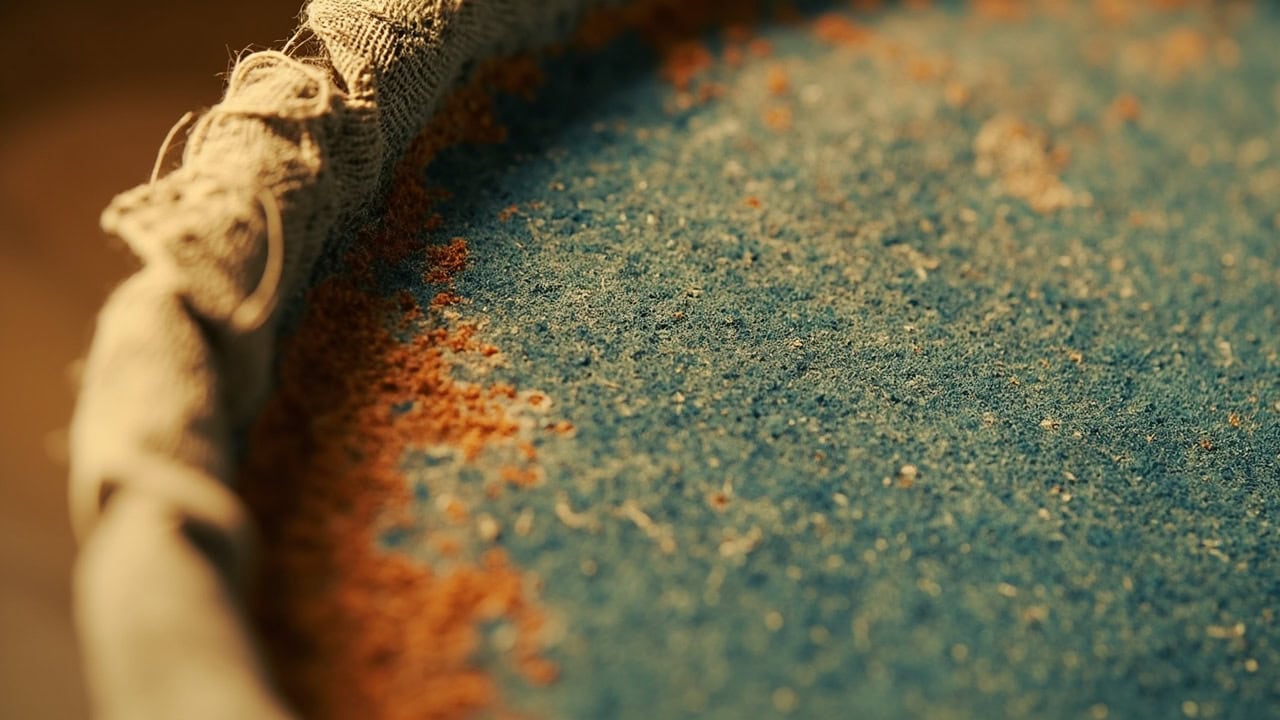
Indigo denim yarn is dyed through a vat process at a pH of 11 to 13, an oxidation-reduction potential of −750 to −800 mV, and a dyebath temperature of 25 to 50 °C, using 4 to 16 successive dips in 4 to 8 g/L reduced indigo to build a surface-only color that fades with abrasion.
That single sentence captures the entire reason your jeans look the way they do: indigo never fully penetrates the cotton fiber, it sits mostly on the outside, and the wash-and-wear cycles that follow slowly reveal the undyed core.
Below, we walk through the chemistry of indigo, the three-stage vat process, the two dominant machine methods mills use today, why denim fades the way it does, the common defects that make indigo dyeing one of the most quality-sensitive processes in any dyehouse, and the sustainability shifts now reshaping the industry.
The Chemistry of Indigo: Why It Is a Vat Dye
Indigo (Color Index Vat Blue 1, C16H10N2O2, molecular weight 262.27 g/mol) is one of the oldest textile dyes still in commercial use, and it is classified as a vat dye because it is applied in a reduced, soluble form (leuco-indigo, or “indigo white”) and then re-oxidized back to its insoluble blue form on the fiber. The reduction step is what makes indigo uniquely tricky: the dye must be chemically converted before it can attach to cotton.
Modern mills use synthetic indigo produced via the Baeyer-Drewson or Heumann-Pflegen routes, and they require a minimum purity of 95% to avoid shade variation and weak reduction. Natural indigo from Indigofera tinctoria leaves contains roughly 20 to 40% indigotin alongside indirubin, flavonoids, and sugars, which gives a slightly redder cast but requires longer extraction and larger bath concentrations.
Both natural and synthetic indigo behave identically in the vat. The chemistry is the same: indigo (blue, insoluble) → leuco-indigo (yellow, soluble) → indigo (blue, insoluble) once exposed to oxygen. AATCC and ISO colorfastness standards report the same grading ranges for both, which is why most mill QC protocols treat them as interchangeable once purity is verified.
The Vat Dyeing Process: Three Stages Mills All Follow
Every indigo dyeing line, regardless of machine type, runs the yarn through three chemical stages. The first stage is reduction. Indigo powder is mixed with a strong alkali (sodium hydroxide at 4 to 6 g/L) and a reducing agent (sodium dithionite, Na2S2O4, at 6 to 10 g/L) inside a sealed stock tank. The solution is heated to 50 to 60 °C and held until the oxidation-reduction potential (ORP) drops to −750 to −800 mV, the range at which more than 95% of the indigo is converted to its leuco form.
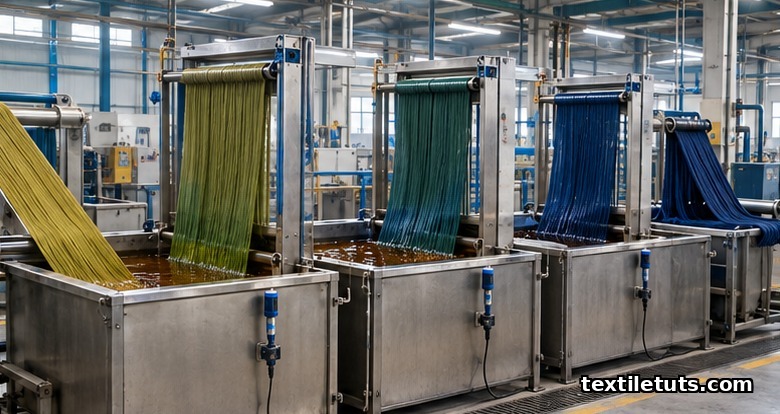
The second stage is dye uptake. Yarn passes through the dyebath in air-free conditions and absorbs the leuco-indigo. Because leuco-indigo has only a low affinity for cotton, the dye sits mostly in the outer fiber layers, leaving the core undyed. This ring-dyeing cross-section is the structural reason denim fades the way it does.
The third stage is oxidation. After leaving the bath, the yarn enters an airing chamber where atmospheric oxygen converts leuco-indigo back to insoluble indigo. Mills typically allow 60 to 90 seconds of oxidation, with most production lines using two or three paired dip-and-air steps before the next vat. A final rinse in dilute acetic acid neutralizes residual alkali before drying and beaming.
Rope Dyeing vs Slasher Dyeing: How Mills Apply the Vat
Two machine families dominate indigo yarn dyeing. Rope dyeing (the classical method) bundles multiple cotton yarns (typically 380 to 420 individual ends) into a continuous rope and dips the rope through a series of dye vats separated by skying (airing) frames. A typical rope line has 6 to 14 vats with ORP meters on each, and the rope travels at 20 to 30 meters per minute. Higher vat counts produce deeper shades; rope-dyed denim uses 8 to 16 dips for a premium look.
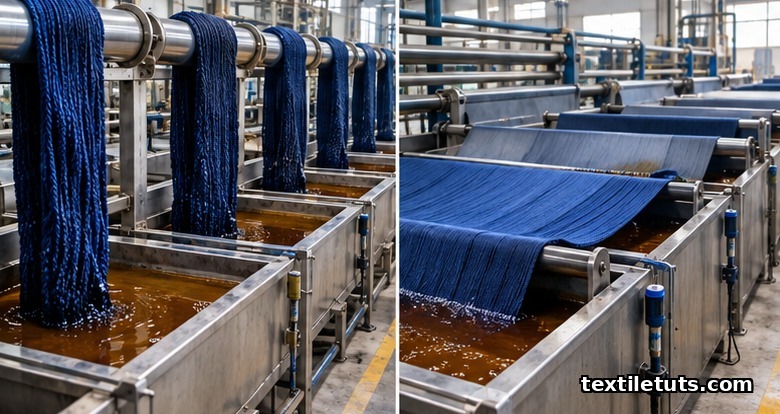
Slasher or sheet dyeing (the dominant high-volume method) runs warp yarns as a flat sheet 1.5 to 2 m wide across a series of boxes, typically 4 to 8 in number. Slasher lines run at 30 to 50 m/min and produce denim with a slightly more uniform shade at lower cost. The trade-off is dye penetration: rope-dyed yarn has a sharper ring-dye effect and a cleaner fade, while slasher-dyed yarn fades more uniformly but less dramatically.
A third method, beam dyeing, packages warp yarn on a perforated beam and circulates the liquor through it. Beam dyeing is reserved for short runs and specialty applications, since it is slower and produces less consistent shade across large lots. Most commodity mills favor slasher lines for throughput; most premium selvedge mills favor rope lines for fade character.
Why Denim Fades: The Ring-Dyeing Cross-Section
Microscopic cross-sections of indigo-dyed yarn show a distinctive white core surrounded by a thin blue shell, typically 5 to 15 µm thick on a 20 to 25 µm cotton fiber. This is the ring-dyeing effect, and it is the entire physical basis for denim’s signature fade patterns.
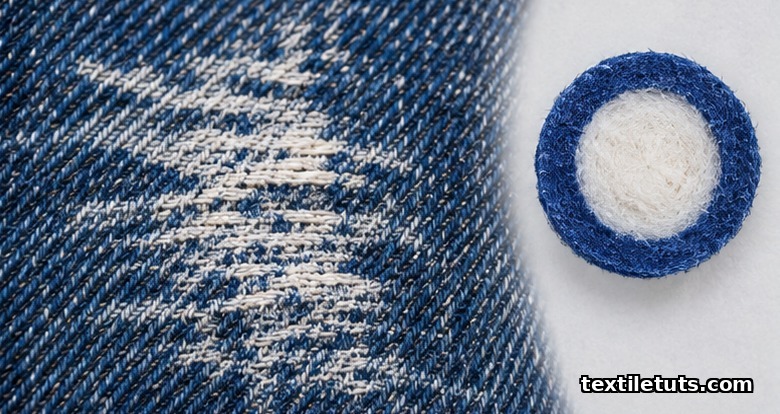
Repeated laundering and abrasion wears away the outer fiber layers, gradually exposing the undyed core. Because indigo molecules are also locked into the fiber by van der Waals forces rather than by covalent bonds, each wash releases a small fraction of surface dye, lightening the overall shade. Cotton fibers with a higher micronaire (4.5 to 5.0) accept more indigo than fine fibers, which is why some yarns fade faster than others.
Designers and mills exploit this effect. Sanforization and mercerization change the dye layer thickness and surface roughness, while desizing, stone-washing, and enzymatic cellulase treatments accelerate the fading process artificially. Every wash cycle, hot or cold, removes a measurable amount of indigo: ISO 105-C06 colorfastness testing typically reports a shade change of grade 3 to 4 after five home launderings for untreated indigo denim.
Common Defects: What Goes Wrong and How Mills Prevent Them
Indigo dyehouses are notoriously quality-sensitive because the ORP, pH, and temperature windows are narrow and the dye chemistry is unforgiving. The most common defect is uneven shade, caused by insufficient reduction (ORP above −700 mV), excessive air ingress into the dyebath, or inconsistent skying time. Mills counter this by fitting each vat with continuous ORP probes and pulling the liquor through air-locked piping.
A second defect is crocking, the transfer of indigo onto adjacent surfaces. Crocking happens when oxidation is incomplete; the dye remains partly in leuco form and rubs off easily. AATCC TM 8 (the standard crockmeter test) reports grade 3 or higher for properly oxidized indigo; grade 2 or below triggers a rework. Crocking failures are almost always traced back to short skying time rather than bath chemistry.
Other recurring defects include white-spot staining from hard-water calcium salts (controlled by ion-exchange softening of makeup water), barre marks from uneven yarn tension at the warper, and frosting, where abrasion during weaving creates a salt-and-pepper look that mimics but exceeds the desired fade pattern. Each of these has a documented root cause in either the dyehouse, the warping room, or the loom.
Sustainability in Modern Indigo Dyeing
Conventional indigo dyeing has a heavy environmental footprint: every kilogram of dyed yarn consumes 70 to 150 L of water, 5 to 10 g of sodium dithionite, and generates effluent with a chemical oxygen demand of 1500 to 3000 mg/L. Modern mills reduce this burden in several ways. Foam dyeing applies the liquor as a thin foam rather than a full bath, cutting water use by up to 80%. Pre-reduced indigo (the so-called “60% paste” form) skips the powder reduction step and reduces dithionite demand by 30 to 50%.
Closed-loop systems recover spent dyebath for re-use after filtration and ORP adjustment, and enzymatic desizing replaces chemical desizing for size removal. Sulfur-free indigo black and indigo blends with natural dyes such as madder and weld are emerging in small-batch production, although they remain a tiny share of total denim output.
Textile engineers expect the next decade to bring stricter effluent limits in major sourcing regions (Bangladesh, China, Turkey, Mexico), pushing wider adoption of pre-reduced indigo and closed-loop water systems across all but the smallest dyehouses. ISO 14001-certified dyehouses already report water reuse rates of 60 to 80%, against 20 to 30% for non-certified mills of comparable size.
Comparison: Rope Dyeing vs Slasher Dyeing at a Glance
| Property | Rope Dyeing | Slasher (Sheet) Dyeing |
|---|---|---|
| Typical vat count | 8 to 14 | 4 to 8 |
| Yarn speed (m/min) | 20 to 30 | 30 to 50 |
| Ring-dyeing sharpness | High | Moderate |
| Shade depth | Deep, premium | Standard, lighter |
| Best suited for | Premium selvedge denim, small-batch runs | High-volume, commodity denim |
| Cost per meter | Higher | Lower |
| Typical end uses | Selvedge jeans, raw denim | Mass-market jeans, casualwear |
Frequently Asked Questions
What is indigo dye made of?
Commercial indigo is C.I. Vat Blue 1 (C16H10N2O2), a synthetic aromatic compound derived from aniline and chloroacetic acid through the Baeyer-Drewson or Heumann-Pflegen synthesis. Natural indigo from Indigofera tinctoria contains 20 to 40% indigotin plus indirubin and other minor components. Both forms reduce to the same leuco-indigo molecule in the vat, so dyehouse performance is essentially identical once purified.
Why does denim fade only on the surface?
Leuco-indigo has a low affinity for cotton, so each dip deposits dye mostly on the outer fiber layers. After 6 to 10 dips, a 5 to 15 µm shell of indigo surrounds an essentially undyed core. Abrasion and laundering then strip this outer layer, producing the fades denim is famous for.
How many times is yarn dipped in indigo dye?
It depends on the machine. Rope-dyed denim typically goes through 8 to 16 dips, while slasher-dyed denim goes through 4 to 8 dips. Each dip adds a small amount of indigo; the ORP and concentration of each vat determine how much.
Is natural indigo different from synthetic indigo?
Chemically no: both reduce to the same leuco-indigo molecule. Practically yes: natural indigo contains indirubin and flavonoids that shift the cast slightly redder and require 30 to 50% more dye to reach an equivalent shade. It is also 5 to 10 times the price per kilogram.
Why is indigo-dyed denim not fully colorfast to washing?
Indigo attaches to cotton by van der Waals forces, not covalent bonds, and is concentrated on the fiber surface. Both factors mean each wash releases a small fraction of dye. ISO 105-C06 reports a typical shade change of grade 3 to 4 after five home launderings, which is why raw denim deepens in shade loss but never truly stabilizes.
References
- ISO. ISO 105-C06:2010, Textiles — Tests for colour fastness — Part C06: Colour fastness to domestic and commercial laundering. International Organization for Standardization. Colorfastness test method cited for shade-change grading.
- AATCC. AATCC Test Method 8: Colorfastness to Crocking (Crockmeter Method). American Association of Textile Chemists and Colorists. Crocking-resistance grading reference.
- Paul, R. (Ed.). (2015). Denim: Manufacture, Finishing and Applications. Woodhead Publishing (Elsevier). Textile engineering reference covering indigo chemistry, dyehouse operations, and ring-dyeing cross-sections.
- Chakraborty, J.N. (2010). Fundamentals and Practices in Colouration of Textiles. Woodhead Publishing India. Chapter on vat dyes, reduction chemistry, and indigo process parameters.
- MDPI. Textiles — Special Issue: Sustainable Dyeing of Cellulosic Fibres. mdpi.com/journal/textiles. Peer-reviewed studies on closed-loop dyebath recovery, pre-reduced indigo, and effluent reduction.
- Bearne, G. (2002). The Story of Indigo. Sari Press. Historical and chemical survey of natural and synthetic indigo synthesis routes.
This article is the working reference for how indigo dyeing works on denim. Editorial by Shahrukh Islam, TextileTuts. Sources: ISO 105-C06, AATCC TM 8, Paul (2015), Chakraborty (2010), MDPI Textiles, Bearne (2002) as cited.


