
High-Density Printing

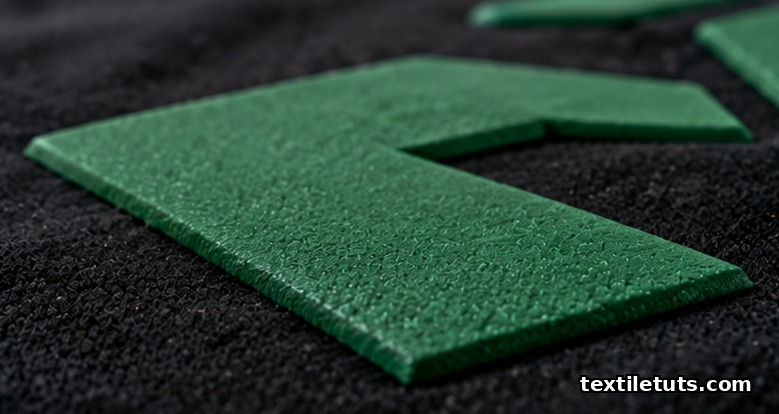
High-density screen printing deposits 0.3 to 1.0 mm of plastisol or silicone ink onto a fabric in a single screen pass, producing a raised, three-dimensional graphic that retains a gray-scale grade 4 to 5 colorfastness after 50 industrial wash cycles per AATCC TM 61 and cures at a belt-dryer surface temperature of 160 to 180 °C.
This thick-ink deposit method, often called HD print in production lines, uses a heavy-build stencil (typically 80 to 200 mesh count, far below the 156 to 200 mesh used for flat prints) and a high-viscosity base that builds texture standing above the fabric surface instead of soaking into it.
Below is a working reference for textile engineers, garment decorators, and apparel students covering how high-density printing works, where it performs best, what standards govern its durability, and the limits to watch when specifying it on stretchy, heat-sensitive, or eco-certified fabric.
What High-Density Printing Actually Is
High-density printing is a screen-printing variant in which the ink film is intentionally thick enough to stand in relief above the fabric. Where a standard plastisol print sits 0.05 to 0.10 mm above the substrate, an HD print typically sits 0.3 to 1.0 mm above it, and extreme HD builds on heavy-gauge screens can exceed 1.5 mm.
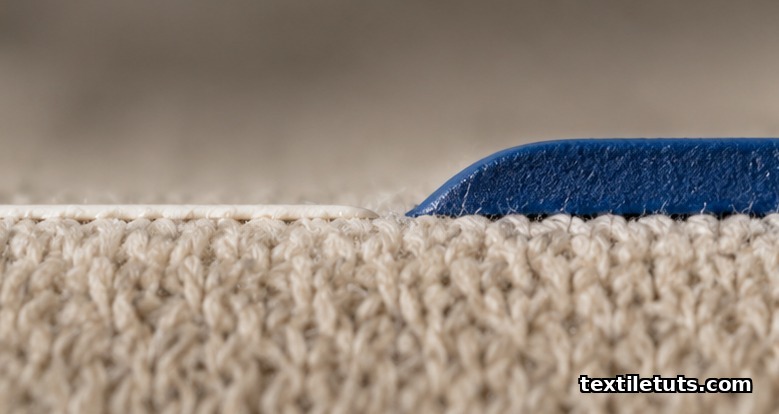
The effect comes from three working ingredients: a thick-build base (often labeled “HD base” or “3D base”), a low-count mesh screen, and a screen emulsion or capillary film thick enough to hold that mesh off the fabric. Some shops use a pre-made silicone HD ink; others blend a regular plastisol with an HD thickener to dial the deposit height per design.
The print is then cured in a conveyor dryer at 160 to 180 °C, the same thermal window used for standard plastisol. The catch is dwell time: a thick deposit needs longer in the heat zone to bring the ink’s interior up to gel and full-cure temperature, so production lines typically drop belt speed from 12 m/min on flat prints to 5 to 8 m/min on HD runs.
HD Print vs Puff Print vs Standard Plastisol
HD print is often confused with puff print. They are related but not the same. A puff ink contains a chemical blowing agent (commonly azodicarbonamide) that expands when heated, so the volume grows during curing. An HD ink does not expand; it deposits as a thick paste and stays that height.
| Property | Standard Plastisol | Puff Print | High-Density Print |
|---|---|---|---|
| Typical deposit height | 0.05 to 0.10 mm | 0.4 to 1.2 mm after expansion | 0.3 to 1.0 mm, no expansion |
| Foaming agent | None | Yes (chemical blowing agent) | None |
| Hand feel | Soft, flexible | Soft, spongy | Firm, rubbery |
| Best substrate | Cotton, cotton-poly blends | Cotton fleece | Cotton, polyester, blends |
| Durability to washing | 50+ wash cycles | 20 to 40 wash cycles | 50+ wash cycles with HD base |
| Typical cure | 160 °C belt dryer | 160 °C belt dryer | 160 to 180 °C, longer dwell |
The practical takeaway: HD prints look like puff prints but feel firmer and survive harsher laundering because there is no foam structure to collapse under agitation.
The High-Density Printing Process Step by Step
Production lines that add HD capability to an existing screen shop typically adjust four variables: screen mesh count, emulsion thickness, squeegee durometer, and ink deposit per stroke.
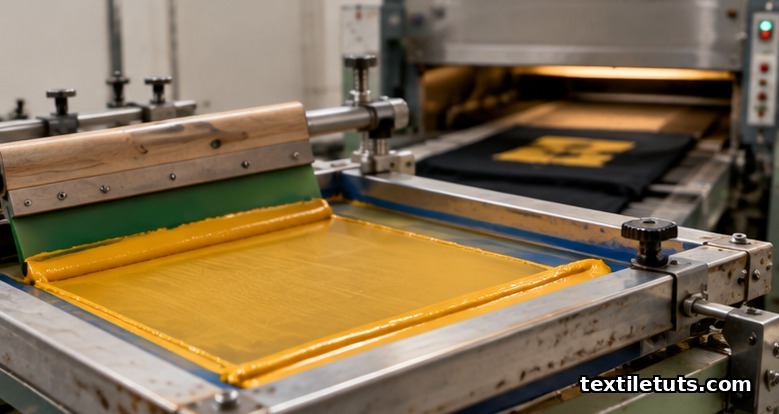
- Screen selection. For HD work, printers drop from the standard 156 to 200 mesh count used on flat prints to 80 to 110 mesh. Coarser mesh carries more ink per stroke but sacrifices fine line detail, so HD designs usually use bold line weights above 1.5 mm.
- Stencil build-up. Capillary film or a thick emulsion (typically 200 to 400 µm) is applied to the screen to push the mesh away from the substrate. Some shops stack two emulsion coats to deepen the off-contact distance and protect fine areas from breaking down under high-viscosity ink.
- HD base or pre-mixed HD ink. The ink is loaded at 20,000 to 40,000 cP viscosity, well above the 5,000 to 10,000 cP of standard plastisol. Some printers add 3 to 5% HD thickener to a regular plastisol; others buy a pre-formulated silicone HD base that cures at a lower temperature.
- Print stroke. A 70 to 80 durometer squeegee is run at slow to medium speed with a hard flood bar to pack the ink into the screen without flooding the stencil.
- Cure. A conveyor dryer set to 160 to 180 °C surface temperature, with the belt slowed so the print dwells in the heat zone for 15 to 25 seconds. Lower belt speeds compensate for the thermal mass of the thick deposit, which would otherwise stay under-cured in the center.
Standards and Durability Testing
High-density prints are evaluated against the same textile test methods as standard screen prints, with a few extra considerations for the thick deposit.
- AATCC TM 8, Colorfastness to Crocking. A standard dry crock test (10 strokes at 9 N with a cotton crocking cloth) is used to grade HD prints for surface transfer. AATCC gray-scale grade 4 to 5 is the industry expectation for a well-cured plastisol HD.
- AATCC TM 61, Colorfastness to Laundering. Industrial laundering cycles (typically 1A or 2A conditions at 49 °C or 71 °C) are used to assess crack resistance over 50 cycles. HD prints that survive 50 cycles at gray-scale grade 3 to 4 are considered commercially durable.
- ISO 105-C10, Colorfastness to Washing. The ISO equivalent, run at 40 °C or 60 °C with steel balls, is the standard cited by European and Asian brands that specify wash-fastness by ISO rather than AATCC.
- ASTM D4966, Martindale Abrasion. For HD prints on workwear or performance apparel, Martindale rub testing at 9 kPa simulates surface wear over thousands of cycles.
- ASTM D2724, Bonded and Laminated Apparel Fabrics. Relevant when HD printing is applied to bonded laminates, where the thick ink film must flex with the substrate without delamination.
Across these methods, the practical durability threshold is 4 to 5 grade colorfastness after 30+ wash cycles and visible relief height retained above 0.3 mm after 50 cycles.
Best Substrates and Where HD Print Performs Well
HD printing works best on substrates that can carry a thick ink film without distortion. Heavyweight cotton fleece (320 to 400 GSM) is the classic choice for hoodies and crewnecks because the fabric’s bulk masks the slight stiffness of the cured print. Mid-weight cotton (180 to 220 GSM) also accepts HD prints cleanly when the design uses bold shapes rather than fine text or hairline serifs.
Polyester and polyester-rich blends need a lower-cure HD ink (typically 140 to 150 °C cure with a polyester-friendly base) to avoid dye migration from the dispersed dyes in the substrate. Silicone HD inks, which cure at 130 to 150 °C and stretch up to 400% without cracking, are the standard choice on performance fabrics, spandex blends, and stretch athleisure.
Avoid HD prints on lightweight sheer fabrics (below 80 GSM), on tightly woven silk, or on highly elastic knits that move more than 50% in the cross-direction. On those substrates the thick print will lift, crack, or distort under stretch before the first wash cycle even begins.
Common Defects and How to Prevent Them
HD prints fail in predictable ways. Knowing the failure mode tells you which production variable to fix.
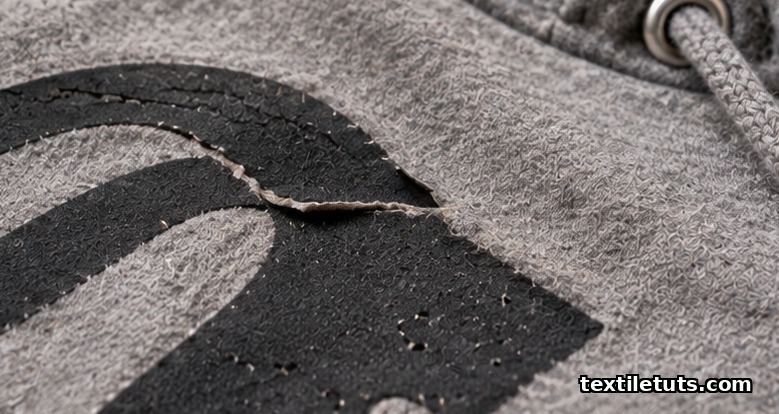
- Cracking at the base of the print. Usually caused by under-cure. The deposit’s interior never reaches gel temperature, so the print stays brittle. Fix: drop belt speed, raise dryer surface temperature to 170 to 180 °C, and confirm with a wash test to AATCC TM 61.
- Lifting at the edges after wash. Caused by poor substrate adhesion, often from residual silicone on the garment. Fix: pre-treat with a water-based adhesion promoter or wipe the print area with isopropyl alcohol before screen exposure.
- Print height loss on stretch fabrics. Caused by standard plastisol HD base on a stretch substrate. Fix: switch to a silicone HD ink rated for the substrate’s elongation percentage.
- Pin-holes and bubbles in the print. Caused by air trapped in the high-viscosity ink or by the emulsion not being fully dried before printing. Fix: let the stencil dry fully, vacuum the screen, and use a slower flood-bar pass to evacuate air before the squeegee stroke.
- Stiff hand-feel. Inherent to HD prints but tunable. Lower the deposit height (use 110 to 150 mesh instead of 80 to 110) and reduce print strokes from two passes to one pass.
Sustainability and Compliance Notes
HD printing raises two sustainability questions. First, conventional plastisol is PVC-based, and PVC has been flagged by several eco-certifications (ZDHC, bluesign) for restricted substances in certain finishes. The fix is to specify phthalate-free plastisol bases and to confirm compliance with ZDHC’s Manufacturing Restricted Substances List (MRSL) before production.
Second, the thicker deposit means more ink per print, which raises the per-garment chemistry load. Most commercial HD ink lines now offer OEKO-TEX Standard 100 Class I or Class II certification, which is the practical benchmark for direct-skin-contact apparel and children’s wear. Silicone HD systems and water-based HD systems reduce this load further, though they require tighter process control on the production line because their viscosity and cure window are less forgiving than standard plastisol.
Frequently Asked Questions
What is high-density printing on fabric?
High-density printing is a screen-printing technique that deposits 0.3 to 1.0 mm of plastisol or silicone ink in a single screen pass, creating a raised, three-dimensional graphic that stands above the fabric rather than soaking into it. It is most commonly used on hoodies, sweatshirts, sportswear, and decorative graphics on cotton or polyester blends.
Is high-density print the same as puff print?
No. Puff print uses a chemical blowing agent that expands the ink during curing, while high-density print uses a thick paste that does not expand. HD prints feel firmer and last longer than puff prints because there is no foam structure to collapse during washing.
How many washes does an HD print last?
When properly cured at 160 to 180 °C with a quality HD base, an HD print retains its shape and colorfastness at gray-scale grade 4 or above through 50 industrial wash cycles per AATCC TM 61. Puff prints typically fail earlier, often cracking by cycle 20 to 40, because the foam structure collapses under agitation.
Can high-density printing be done on stretchy fabric?
Yes, but only with a silicone HD ink formulated for stretch substrates. Standard plastisol HD inks crack on fabric that stretches more than 30 to 40%. Silicone HD inks stretch up to 400% without cracking and are the standard choice on performance wear, spandex blends, and athletic apparel.
Is high-density printing eco-friendly?
Conventional plastisol HD inks are PVC-based and can carry restricted phthalates, but phthalate-free plastisol bases and OEKO-TEX Standard 100 certified HD inks are now widely available. Silicone HD and water-based HD systems offer the lowest chemistry load per garment and are the most compatible with ZDHC and bluesign certifications.
References
- American Association of Textile Chemists and Colorists. AATCC Test Method 8: Colorfastness to Crocking. AATCC Technical Manual. — Rub-resistance test for screen-printed inks, 10-stroke crock at 9 N, gray-scale grading.
- American Association of Textile Chemists and Colorists. AATCC Test Method 61: Colorfastness to Laundering. AATCC Technical Manual. — Accelerated wash test for textile prints, 1A and 2A conditions at 49 °C and 71 °C.
- International Organization for Standardization. ISO 105-C10: Textiles, Tests for Colour Fastness, Colour Fastness to Washing. ISO. — ISO equivalent of the AATCC wash method, run at 40 °C or 60 °C with steel balls.
- ASTM International. ASTM D4966: Standard Test Method for Abrasion Resistance of Textile Fabrics (Martindale Abrasion Tester). ASTM. — Surface wear test for HD prints on workwear and performance fabrics.
- ASTM International. ASTM D2724: Standard Test Methods for Bonded, Fused, and Laminated Apparel Fabrics. ASTM. — Delamination and bond integrity on substrates that carry an HD print.
- Zhao, Q., et al. “Plastisol-based screen printing inks for textile applications: rheology and curing behavior.” Journal of Coatings Technology and Research, Springer. — Peer-reviewed review of thick-ink rheology, viscosity ranges, and curing kinetics.
- OEKO-TEX Association. Standard 100: Tested for Harmful Substances. OEKO-TEX. — Certification benchmark for HD inks used in direct-skin-contact apparel.
Editorial by Shahrukh Islam, TextileTuts.


