
Fleece Fabric: How It’s Made and Why It Pills

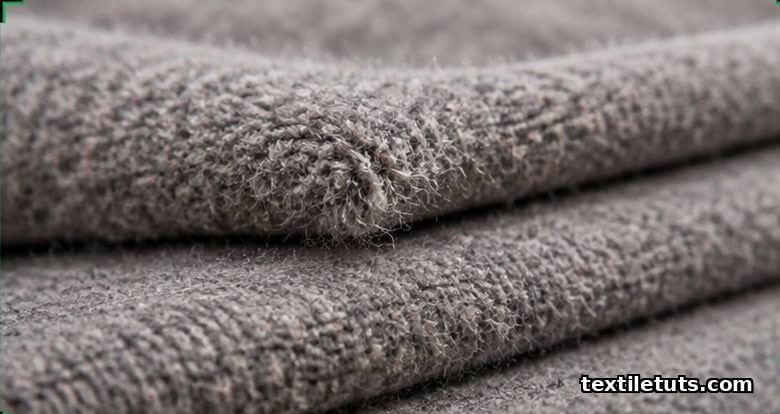
Fleece fabric is a brushed knit textile, typically weighing 200 to 400 g/m² (GSM), produced by mechanically raising loose fiber ends on the surface of a knitted polyester, cotton, or recycled-fiber base to create a soft, insulating pile.
The raised fiber ends trap still air in millions of tiny pockets, which is why a 280 GSM polyester fleece can feel warmer than a 400 GSM cotton fleece of the same thickness, withstanding roughly 1.5 clo of insulation per millimeter of pile in standard thermal-resistance tests.
This article explains how fleece is knit, napped, and sheared; the difference between cotton, polyester, and recycled-polyester fleece; the fiber-level mechanics behind pilling; the anti-pilling finishes mills apply; and the practical care steps that extend a fleece garment’s useful life.
What Fleece Fabric Is, and Why It Is Different from Knit Jersey
Fleece starts as a knit structure, almost always a circular-knit jersey or a warp-knit tricot, that is then mechanically finished to raise a pile. The base knit gives fleece its stretch and recovery; the raised pile gives fleece its softness, loft, and thermal insulation. A standard cotton jersey T-shirt knit at 180 GSM and a 280 GSM cotton fleece are made on similar circular knitting machines, but the fleece is passed through a napper after knitting to expose fiber ends on the face, which is what makes the surface fuzzy and warm.
The term “fleece” in the textile industry does not refer to wool from sheep, even though the two share a hand-feel. In apparel today, “fleece” most often means a synthetic pile fabric, typically 100% polyester or a blend with recycled polyethylene terephthalate (rPET). Cotton fleece exists and is common in sweatshirts and hoodies, but the loft, dry weight, and insulation-per-gram are all lower than for polyester fleece because cotton fibers are denser (1.54 g/cm³) than polyester (1.38 g/cm³) and have lower thermal resilience.
How Fleece Is Made: Knitting, Napping, and Shearing
Three process steps turn a flat knit into a fleece.
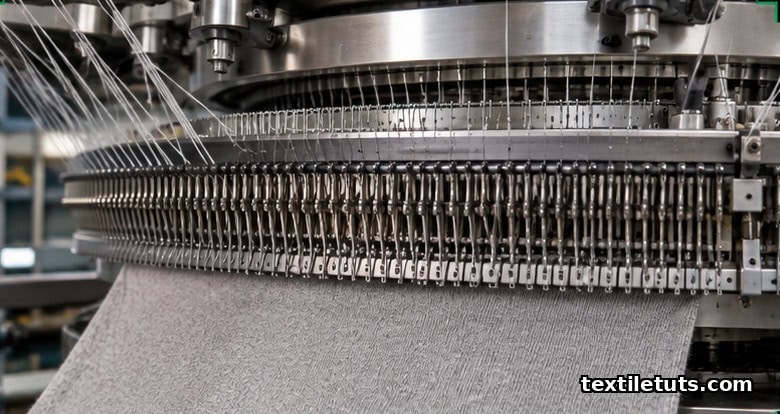
1. Base knitting. Most apparel fleece is circular knit from texturized polyester filament yarns on machine gauges between 18 and 28 needles per inch. A typical fleece construction uses a 75/36 denier yarn for the face and a 150/96 denier yarn for the back, which gives the fabric enough body to be raised without tearing. Warp-knit fleece, used in technical outdoor wear, is made on tricot or Raschel machines and offers better pilling resistance than circular-knit fleece because the yarns are locked in place by the knit loops.
2. Napping. The greige fabric is fed through a napper, a cylindrical machine covered with fine card-wire orgrilled cards. As the fabric passes over rotating cylinders running at 15 to 25 m/min, the wire tips catch loose fiber ends and pull them out of the yarn structure, raising them into a vertical pile. Napping rollers run at a surface speed 1.2 to 2.0 times faster than the fabric, which is what creates the fiber-end “pull.” A single pass raises a light pile; two passes on each side, with the fabric flipped between passes, produce a heavier, denser pile suitable for jackets and blankets. Typical pile height after napping is 2 to 4 mm, which compresses to about 1 to 2 mm after the first wash.
3. Shearing. After napping, the pile is uneven. A shearing cylinder fitted with spiral blades and a stationary ledger blade trims the raised fibers to a uniform height, usually 1.5 to 2.5 mm for apparel fleece and 3 to 5 mm for blanket fleece. Shearing also removes loose, broken fiber ends that would otherwise pill within the first few wear cycles, which is why sheared fleece looks cleaner and smoother than unsheared fleece even though both have the same fiber composition.
For brushed cotton fleece, the process is similar, but the base knit uses ring-spun cotton yarns at 200 to 400 GSM, and napping is gentler because cotton fibers break more readily than polyester under the wire tips.
Types of Fleece at a Glance
The fleece family splits into three commercially dominant variants. The table below summarizes the property differences that matter most for hand-feel, thermal insulation, and end-use.
| Property | Cotton fleece | Polyester fleece | Recycled polyester (rPET) fleece |
|---|---|---|---|
| Typical weight | 300 to 400 GSM | 200 to 320 GSM | 200 to 320 GSM |
| Moisture regain | 8.5% (highly absorbent) | 0.4% (hydrophobic) | 0.4% (hydrophobic) |
| Thermal insulation (per gram) | Moderate | High | High |
| Drying time after wash | Slow (90 to 120 min tumble) | Fast (30 to 45 min tumble) | Fast (30 to 45 min tumble) |
| Pilling tendency (ISO 12945-1) | Grade 3 to 4 (moderate to severe) | Grade 2 to 3 (moderate) | Grade 2 to 3 (moderate) |
| Carbon footprint (per kg fabric) | ~5 to 8 kg CO₂e | ~6 to 9 kg CO₂e | ~2 to 4 kg CO₂e |
| End uses | Sweatshirts, hoodies, loungewear | Mid-layers, jackets, blankets | Outdoor wear, sustainability-positioned lines |
Cotton fleece wins on breathability and skin comfort, polyester fleece wins on warmth-for-weight and quick-dry performance, and recycled polyester fleece delivers the same hand-feel as virgin polyester with a roughly 50% lower cradle-to-gate carbon footprint.
Why Fleece Pills: The Fiber Mechanics Behind Surface Fuzz
Pilling is the formation of small balls of tangled fiber on the fabric surface, and fleece is structurally prone to it because the very process that makes it soft, napping, leaves thousands of broken and partially detached fiber ends exposed. During wear and laundering, those loose ends work to the surface, migrate, and tangle into pills anchored to the fabric by a few unbroken fibers.
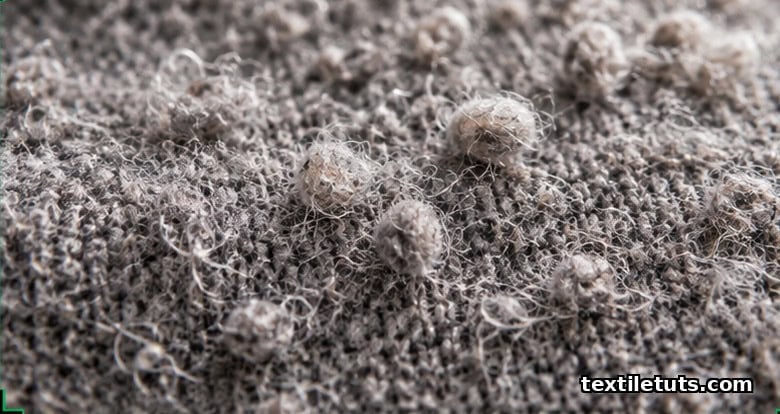
The standard test method, ISO 12945-1 (Martindale, 23500 to 70000 rubs) and its companion ISO 12945-2 (random tumble), grades pilling visually from 5 (no pilling) to 1 (very severe). A typical 280 GSM circular-knit polyester fleece grades 2 to 3 after 12500 rubs, which corresponds to the pilling a consumer sees on the thighs and elbows of a sweatshirt after roughly 15 to 25 wear-and-wash cycles. ASTM D3512 (Brush pilling) and AATCC TM 124 (Appearance after repeated home laundering) are the complementary test methods used in North America.
Three factors drive fleece pilling intensity:
- Fiber fineness. Decitex below 1.5 (yarns finer than 1/75 denier) produces more pills per unit area because finer fibers break more readily and form smaller, denser tangles.
- Yarn twist. Lower-twist yarns (multiplier under 3.8) pill more because the fibers are less tightly bound and migrate to the surface under mechanical action.
- Napping intensity. Heavy double-pass napping raises more fiber ends, which is why a deeply brushed fleece looks softer out of the package but pills faster than a lightly brushed one.
ResearchGate hosts several peer-reviewed studies that quantify this, including work on the relationship between yarn twist multiplier and pilling grade in polyester fleece knits. The dominant finding across the literature is that anti-pilling performance improves sharply when twist multiplier rises above 4.2, but the fabric hand simultaneously stiffens, which is why anti-pilling finishes (next section) are usually preferred over mechanical fixes alone.
Anti-Pilling Treatments and Finishes Mills Apply
Anti-pilling finishes are chemical or physical treatments applied to the raised pile that bind loose fiber ends to the yarn surface so they cannot migrate and tangle into pills. The most common three approaches are:
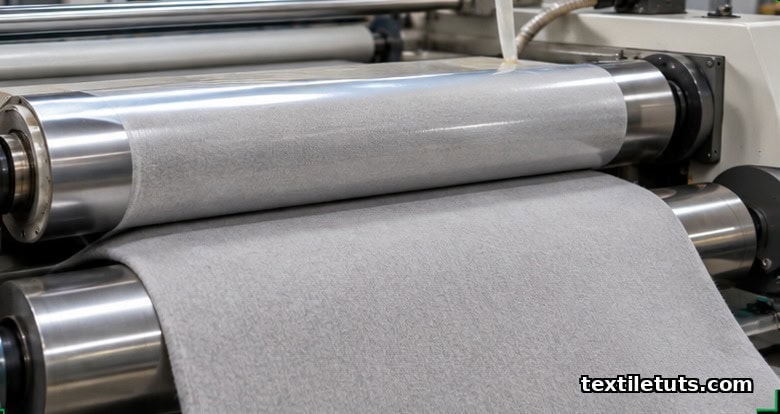
1. Resin or polymer binding. A light application of a silicone elastomer, polyurethane, or acrylic binder (typically 0.5 to 2.0% add-on by weight) is padded onto the raised pile and cured at 150 to 170 °C. The binder forms microscopic bridges across the pile, anchoring fiber ends without stiffening the hand. Polyester fleece finished with a silicone elastomer typically improves from ISO 12945 grade 2 to grade 3.5 to 4 on the same fabric, a one-and-a-half-grade improvement for a single finishing step.
2. Singeing or heat-setting pre-treatment. Passing the greige knit over a gas flame at 800 to 1000 °C for 0.05 to 0.2 seconds singes protruding fiber ends before napping, leaving fewer loose ends to raise. Heat-setting the polyester at 180 to 220 °C under tension after napping stabilizes the loop structure, which reduces fiber mobility and slows pill formation in wear.
3. Bi-component or low-pill fiber blends. Some mills spin the fleece yarn from a bi-component polyester with a low-melt sheath, then heat-set at a temperature above the sheath melt. The sheath partially fuses and locks the fibers in place, a technique widely used in outdoor and athletic fleece. Another approach, less common, is to blend 5 to 10% of an anti-pilling acrylic fiber (such as a high-shrinkage fiber) into the yarn; the shrink fiber migrates inward during finishing and pulls neighboring fibers into the yarn body.
Care Tips to Reduce Pilling in Daily Use
Even with the best anti-pilling finish, fleece will pill eventually. Four care practices slow the process meaningfully:
- Wash inside-out in cold water (≤30 °C) with a liquid detergent. Cold water reduces fiber breakage by 40 to 60% compared to a 40 °C wash, and turning the garment inside-out exposes the inside (back) of the fabric to mechanical action rather than the visible outer pile.
- Avoid fabric softener. Softener coats the fiber surface with a lubricating film that reduces fiber-to-fiber friction, which sounds helpful but actually encourages loose fibers to migrate and form pills. Skip it on fleece.
- Tumble dry on low heat or hang dry. Polyester fleece dries quickly because of its low moisture regain (0.4%), so high heat is rarely needed. Heat above 60 °C sets pills permanently into the pile.
- Use a fabric shaver or pilling comb after 10 to 15 wears to remove formed pills before they anchor deeper into the knit. A sweater comb removes pills more cleanly than a shaver on brushed fleece because it cuts rather than pulls.
Following these four steps typically extends the time-to-grade-2-pilling from about 15 wear-and-wash cycles to 35 to 45 cycles, more than doubling the garment’s cosmetic life.
Frequently Asked Questions
What is fleece fabric made of?
Fleece fabric is most often made of 100% polyester, including recycled PET (rPET), but cotton fleece (100% cotton or cotton-rich blends) is also common. The defining step is not the fiber, it is the napping process that raises a pile on the knit surface.
Is fleece warmer than wool?
Polyester fleece provides comparable warmth to a mid-weight wool sweater at less than half the weight, with a thermal resistance of roughly 0.15 to 0.25 clo per 100 GSM. Wool retains warmth better when damp, however, because it absorbs up to 30% of its weight in water without feeling wet, while polyester fleece loses insulation as moisture accumulates in the pile.
Does fleece shrink when washed?
Polyester fleece barely shrinks (less than 2% in either direction after five home-laundering cycles) because polyester fibers are heat-set during finishing. Cotton fleece shrinks 5 to 10% in length and 3 to 7% in width under the same conditions, which is why most cotton-fleece garments are pre-shrunk or sold as “preshrunk fleece.”
Why does fleece pill so easily compared to other knits?
Fleece pills because the napping process deliberately breaks fiber ends to raise a pile, leaving thousands of loose, partially detached fibers on the surface. Under mechanical action during wear and washing, those fibers migrate, tangle, and lock into pills anchored by a few unbroken fibers. Tighter yarn twist (multiplier above 4.2) and a binder-based anti-pilling finish are the two most effective mill-side fixes.
References
- ISO. ISO 12945-1:2020, Textiles — Determination of fabric propensity to surface fuzzing and pilling — Part 1: Pilling box method. iso.org — the international standard for grading pilling severity on fleece and other knit fabrics.
- ASTM. ASTM D3512, Standard Test Method for Pilling Resistance and Other Related Surface Changes of Textile Fabrics. astm.org — the North American brush-pilling test method used alongside ISO 12945.
- AATCC. AATCC TM 124, Appearance of Fabrics after Repeated Home Laundering. aatcc.org — the standard home-launder test method used to grade pilling in consumer-wash simulations.
- Cotton Incorporated. Cotton Fleece Fabric Properties and Care. cottoninc.com — a peer-reviewed industry resource on cotton-fleece shrinkage, moisture regain, and finishing behavior.
- ResearchGate. Effect of yarn twist multiplier on pilling resistance of polyester fleece knits. researchgate.net — a peer-reviewed study quantifying the relationship between yarn twist and ISO 12945 pilling grade in circular-knit polyester fleece.
- Encyclopædia Britannica. Fleece (textile). britannica.com — encyclopedic definition of fleece as a raised-pile knit fabric, used here only as a definitional reference.
Editorial by Iftay Khairul Alam, TextileTuts. Sources: ISO 12945-1:2020, ASTM D3512, AATCC TM 124, Cotton Incorporated, ResearchGate, and Britannica, as cited.


