
Jersey, Rib, Interlock, Pique: Knit Structures Explained

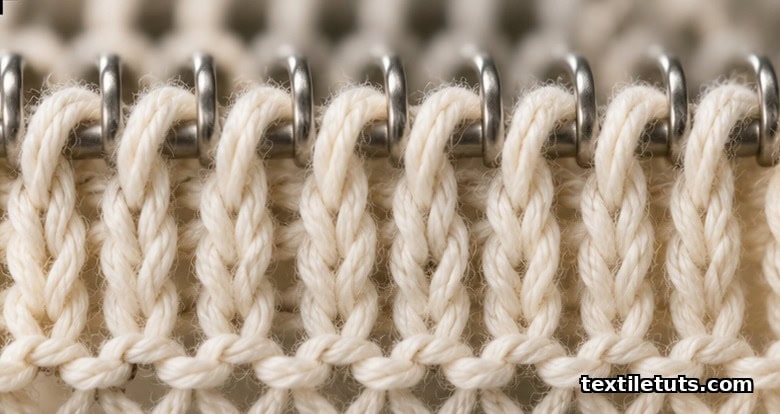
A single jersey fabric is produced on one needle bed with one set of yarns, typically yields 12–20 wales per cm (wales/cm) and 8–14 courses per cm, stretches 15–30% in the width direction and 5–10% in the length, and curls at the cut edges when relaxed, while a 1×1 rib uses two needle beds to alternate face and reverse loops every wale, recovering 80–100% after elongation and standing flat without curl.
Interlock and piqué are the two most common derivatives that solve the jersey edge-curling problem and add surface texture, and understanding how all four structures differ is the fastest way to choose the right knit for a T-shirt, a polo, a cuff, or a fitted dress.
This article walks through the construction, mechanical behavior, and end uses of plain (single) jersey, 1×1 and 2×2 rib, interlock (a true double jersey), and Lacoste piqué, with a side-by-side property table and the questions knitters, designers, and sourcing managers actually ask.
What Defines a Weft Knit Structure
Every weft knit fabric is built from one continuous yarn that is formed into intermeshed loops across a bed of needles. According to Spencer’s Knitting Technology (a standard textile engineering text now in its third edition), a knit loop has three components: the head (top arc), two side limbs, and the feet at the bottom that interlock with the loop below it. The vertical column of loops is called a wale, the horizontal row is a course, and the density is reported as wales per cm and courses per cm (or per inch in older literature).
Single-bed knitting produces only one side of loops visible at a time, while double-bed knitting feeds two needle sets that can work together or in opposition. This single mechanical choice (one bed or two) is what separates jersey, rib, interlock, and piqué from one another.
Plain (Single) Jersey: The Default Knit
Plain jersey, also called single jersey, is knitted on a single needle bed where every needle in every course pulls a new loop. Because all loops face the same way, the fabric has a clear technical face (smooth, V-shaped stitches) and a technical back (where the half-loops and yarn floats show), and it curls toward the face on the lengthwise cut edge and toward the back on the widthwise edge. The classic curl-on-cut-edge behavior is a predictable consequence of loop geometry, not a defect.
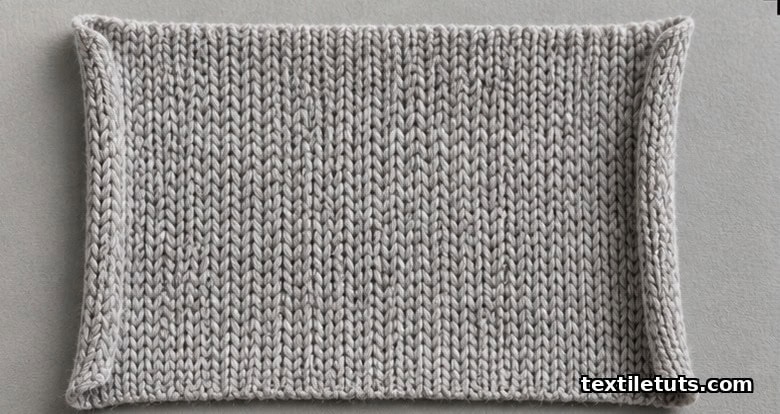
Typical jersey for T-shirts uses yarn counts of 20–32 tex (Ne 18–30) knitted at 18–24 gauge, producing a fabric weight of 140–180 g/m². Stretch behavior is highly directional: widthwise extension of 15–30% is normal, but lengthwise stretch rarely exceeds 5–10% before the loops lock. Recovery after 50% widthwise stretch is only about 70–85% for a 100% cotton jersey, which is why a cotton T-shirt loosens at the chest and hem after a few wears and needs the higher recovery of a cotton/elastane (spandex/Lycra) blend to hold shape.
Common end uses are T-shirts, tank tops, lightweight dress fabrics, lining, and tubular bandages. For fitted garments, a 95/5 cotton/elastane jersey is the standard; for medical wraps, a 100% cotton or viscose single jersey at 12–16 wales/cm is preferred for skin contact comfort.
Rib (1×1, 2×2): The Elastic Edge Structure
Rib fabric is knitted on two needle beds arranged in a V configuration, with face loops and reverse loops alternating within the same course. In a 1×1 rib, every wale alternates face and reverse; in a 2×2 rib, two face wales are followed by two reverse wales. Because the same course carries both face and back loops, rib fabric shows identical appearance on both sides (no face/back distinction) and lies flat without the edge curl of single jersey.
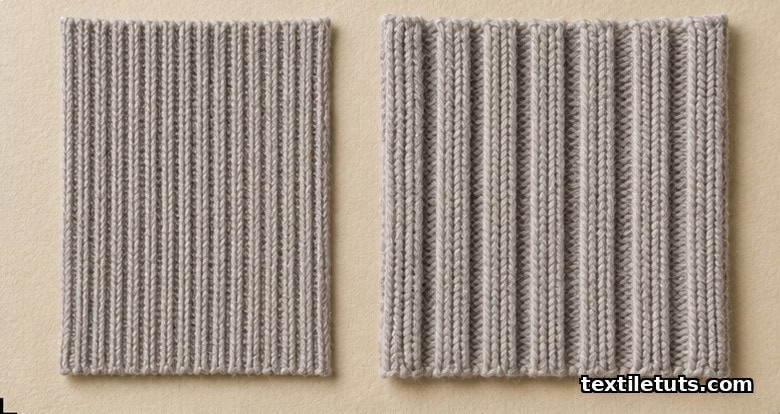
Rib is the most extensible basic weft structure. Plain 1×1 rib recovers up to 100% after 50–80% elongation across the width, and a cotton/elastic rib (95/5 or 90/10 cotton/elastane) routinely achieves 120–150% stretch with full recovery. The trade-off is dimensional stability: rib fabrics relax widthwise when washed unless they are knit at a tight stitch density (typically 14–18 wales/cm) on a fine gauge (16–20 gauge) circular or flat machine.
By far the dominant end use is the cuff, collar, hem, and waistband of sweatshirts, hoodies, socks, and underwear. 2×2 rib is heavier and more stable than 1×1 rib at the same yarn count, so it is chosen for outerwear cuffs and beanies where a chunkier elastic band is wanted. 1×1 rib with elastane is the standard for sock tops and fitted undergarment bands.
Interlock: The Stable Double Jersey
Interlock is technically a double jersey, not a rib, even though it looks like a balanced 1×1 rib from the surface. It is knitted on two needle beds where each bed knits its own 1×1 rib fabric, and the two fabrics are intermeshed by a set of tuck-and-miss sequences that lock the back loops of one bed into the front loops of the other. The result is a fabric with the same face appearance on both sides, no curl, and very low lateral stretch.
Interlock is the heaviest and most stable of the common knit structures. A standard cotton interlock at 20 gauge with 28 tex yarn weighs 180–240 g/m², has 14–18 wales/cm and 18–22 courses/cm, and stretches only 5–15% in the width and 5–10% in the length. Recovery after stretch is nearly 100% because the doubled loop structure resists deformation. Compared to single jersey, interlock has roughly double the thickness at the same yarn count and considerably higher bursting strength (a key reason it is favored for babywear and undergarments where push-through resistance matters).
End uses span polo shirts (when a smooth, drapeable, opaque surface is wanted), infant rompers and onesies, pajamas, lining for jackets, and stretchy base layers. The same double-bed technology produces punto di Roma (a romano with two-way stretch from feed-and-miss) and milano rib, both of which trade some elasticity for a more structured drape.
Piqué (Lacoste): The Textured Double Knit
Piqué, in the modern sense, refers to a double-knit structure with a clear three-dimensional surface texture, almost always with the small honeycomb or bird’s-eye pattern associated with the Lacoste polo shirt. The classic Lacoste piqué is built on a two-bed circular machine using a combination of knit and tuck stitches, with tuck loops drawn on alternate courses to form raised wales separated by recessed valleys. A bird’s-eye piqué is the same construction with finer tuck loops; a Roman or waffle piqué uses tuck patterns that run in both directions for a square grid.
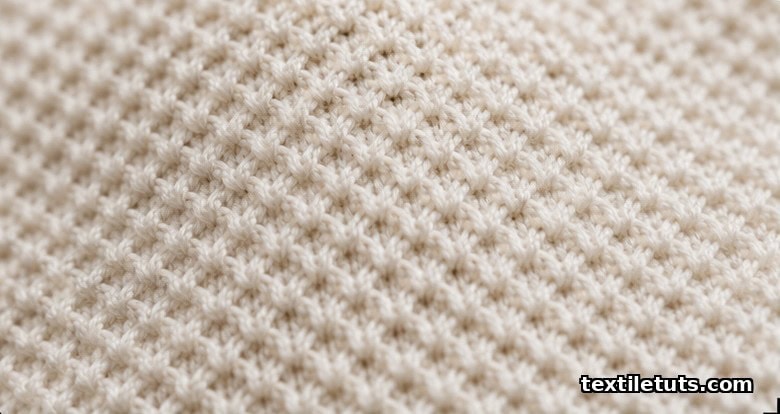
Piqué fabrics are heavier than single jersey at the same yarn count because of the tucked loops. A standard 100% cotton Lacoste piqué for polo shirts weighs 180–220 g/m² at 18–22 gauge and uses 24–32 tex combed cotton. The tuck loops create micro-channels on the back of the fabric that improve air and moisture vapor movement, which is the practical reason piqué polos feel cooler in hot, humid weather than smooth interlock polos at the same weight.
End uses are dominated by knit polo shirts, sports shirts, and some dress-casual knit shirts. Recent growth areas include piqué for polo-style dresses, children’s school uniforms, and knit panels in athleisure. The structural pattern is also used in mattress ticking and upholstery backing, where the geometric relief improves breathability and reduces surface cling.
Knit Structure Comparison: Jersey vs Rib vs Interlock vs Piqué
| Property | Plain Jersey | 1×1 Rib | Interlock | Lacoste Piqué |
|---|---|---|---|---|
| Needle beds | 1 | 2 (V-bed) | 2 (intermeshed) | 2 (knit + tuck) |
| Course count (typical) | 8–14/cm | 10–16/cm | 18–22/cm | 14–20/cm |
| Wale count (typical) | 12–20/cm | 14–22/cm | 14–18/cm | 14–18/cm |
| Fabric weight | 140–180 g/m² | 180–280 g/m² | 180–240 g/m² | 180–220 g/m² |
| Widthwise stretch | 15–30% | 80–150% | 5–15% | 10–20% |
| Lengthwise stretch | 5–10% | 5–15% | 5–10% | 5–10% |
| Edge behavior | Curls (both axes) | Flat | Flat | Flat, slight valley on cut |
| Recovery | 70–85% (cotton) | 95–100% | 95–100% | 85–95% |
| Primary end use | T-shirts, linings | Cuffs, collars, socks | Polos, babywear | Polo shirts, sportswear |
Frequently Asked Questions
Q1: What is the main difference between jersey and interlock?
Jersey is knitted on a single needle bed and curls at cut edges; interlock is knitted on two intermeshing needle beds and lies flat, with about 30–50% higher fabric weight and bursting strength at the same yarn count. For the same yarn count and gauge, interlock is roughly twice as thick and roughly half as stretchy across the width.
Q2: Why does rib stretch so much more than jersey?
Rib alternates face and reverse loops every wale, so each wale can rotate independently and the fabric opens sideways like an accordion. In single jersey, all loops face the same way and the fabric is constrained by the single-direction loop geometry, limiting widthwise stretch to roughly 15–30%.
Q3: Is piqué the same as knit fabric, or is it woven?
Lacoste piqué is a true weft-knit double jersey made on circular knitting machines with a pattern of knit and tuck stitches; it is not woven. The visible honeycomb or bird’s-eye pattern is formed by tucked loops, not by interlacing warp and weft yarns.
Q4: Which knit structure is best for a fitted T-shirt that keeps its shape after washing?
A 95/5 cotton/elastane single jersey at 18–22 gauge, 160–190 g/m², with a tight stitch density (around 14 wales/cm and 18 courses/cm) gives the best combination of hand feel, opacity, and recovery. Pure 100% cotton jersey loses shape after 5–10 wash cycles because its widthwise recovery is only about 70–85%.
Q5: Can interlock and piqué be made on the same circular knitting machine?
Yes, modern multi-gauge circular knitting machines with electronic needle selection can switch between interlock and piqué patterns by changing cam arrangements and yarn feeds. Small-lot production often uses one machine for both fabrics; high-volume polo shirt production typically dedicates machines to piqué because cam setup is slow.
References
- Spencer, D. J. Knitting Technology: A Comprehensive Handbook and Practical Guide. Woodhead Publishing, 3rd edition — the standard reference on weft-knit loop geometry, rib, interlock, and double-knit structures.
- Anbumani, N. Knitting Fundamentals, Machines, Structures and Developments. Woodhead Publishing India — covers single jersey, rib, interlock, and piqué with comparative property data.
- Ray, S. C. Fundamentals and Advances in Knitting Technology. Woodhead Publishing India — detailed treatment of tuck and miss patterns used in piqué and double knits.
- International Organization for Standardization. ISO 8388:1998 — Knitted fabrics — Types — Vocabulary. iso.org — official definitions of single jersey, rib, interlock, and double knit terms.
- Textile Institute. Knitting International — Journal of the Textile Institute archive — peer-reviewed articles on knit loop mechanics, stretch and recovery, and piqué structure.
- Au, K. F. (ed.). Advances in Knitting Technology. Woodhead Publishing — covers modern electronic flat and circular knitting machines used for interlock and piqué production.
This article is the working reference for the four basic weft-knit structures used in T-shirts, polo shirts, cuffs, and linings. Editorial by Iftay Khairul Alam, TextileTuts. Sources: Spencer, Anbumani, Ray, ISO 8388, Textile Institute, and Au as cited.


