
Flame Retardant Finishes

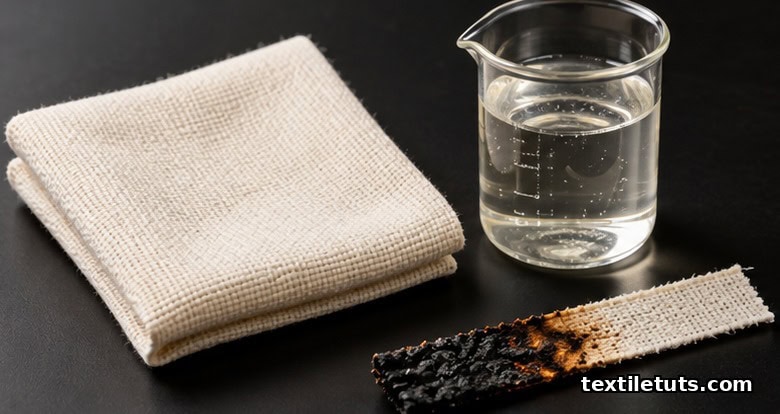
A flame retardant finish reduces the afterflame time of a treated textile to less than 2 seconds and the char length to under 150 mm when tested by ASTM D6413, with the most widely applied chemistry being organophosphorus compounds such as tetrakis(hydroxymethyl) phosphonium chloride (THPC) and its condensate derivatives applied at 50 to 300 g/L on cotton and cotton-polyester blends. These finishes work by interrupting the combustion cycle in the condensed or gas phase, and the choice between durable, semi-durable, and non-durable systems depends on the end-use laundering requirement defined by NFPA 701, ISO 15025, or BS 5852.
This article walks through the chemistry, the application routes, the test methods, and the durability classes that textile engineers use to specify a flame retardant finish, so the next time you see a “flame resistant” tag on a curtain or a coverall, you can read the chemistry behind the claim.
What a Flame Retardant Finish Actually Does
A flame retardant finish is a chemical treatment applied to a fabric that suppresses or delays ignition and slows flame spread once the fabric is exposed to a fire. The finish does not make the textile “fireproof”; it changes how the fiber degrades under heat. A cotton fiber treated with a phosphorus-based finish, for example, dehydrates into a carbonaceous char at roughly 300 to 400 degrees Celsius instead of releasing the volatile levoglucosan that feeds a flaming combustion cycle.
The three measurable outcomes of a successful flame retardant finish are: (1) a longer time to ignition, (2) a shorter afterflame time after the pilot flame is removed, and (3) a shorter char length measured vertically or at 45 degrees. These three numbers are the same ones you see printed on a test certificate, and they are governed by a small family of standards that the textile industry relies on.
Key Flame Retardancy Standards Used by the Industry
Engineers do not talk about “flame resistance” without naming the test that defines it. The most common standards are ASTM D6413 for vertical flame resistance of textiles, NFPA 701 for curtains, draperies, and similar decorative fabrics, ISO 15025 for protective clothing under limited flame spread, and BS 5852 for upholstered furniture composites. Each standard sets a different pass threshold.
Under ASTM D6413, a fabric passes when the afterflame time is at most 2 seconds on average, the afterglow time is under 5 seconds, and the char length is 150 mm or less when the specimen is exposed to a methane flame for 12 seconds. Under NFPA 701, a single specimen must show a weight loss below 40 percent and an average weight loss below 23.7 grams when exposed vertically for 45 seconds. ISO 14116, the European counterpart, grades fabrics into three Index 1, 2, and 3 categories based on flame spread, hole formation, and afterflame times.
How Flame Retardant Finishes Interrupt Combustion
Most finishes work through one of three mechanisms, and understanding them helps explain why one chemistry is chosen over another. In the condensed phase, the finish promotes char formation and releases non-combustible gases such as water vapor or carbon dioxide that dilute the flammable volatiles from the fiber. In the gas phase, halogen- or phosphorus-containing radicals intercept the high-energy hydrogen and hydroxyl radicals that sustain the flame and convert them to lower-energy species.
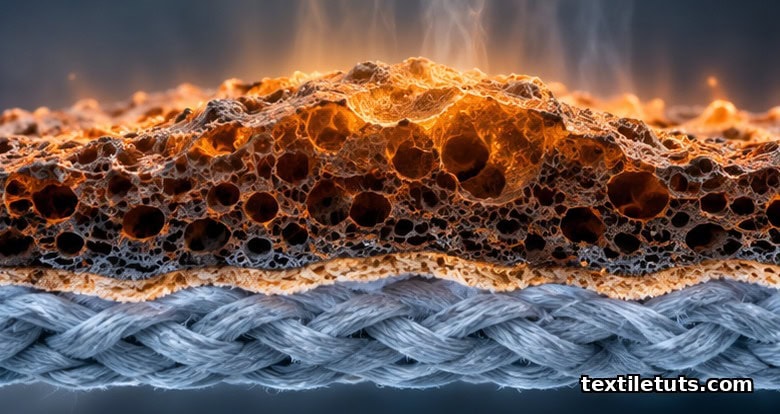
Some finishes also act as intumescent systems, expanding into a foamed, insulating char when heated. Phosphorus-nitrogen synergistic systems such as melamine-modified THPC condensates take advantage of both condensed and gas-phase activity, which is why the same chemistry often performs on cotton, polyester, and their blends with only minor process adjustments.
The Main Flame Retardant Chemistries
The chemistry shelf splits into four families. Halogenated systems, historically dominated by decabromodiphenyl ether and hexabromocyclododecane, work in the gas phase but face persistent scrutiny over bioaccumulation, which has shifted commercial demand away from them in most OECD jurisdictions since the early 2010s. Organophosphorus systems, including THPC, N-methylol dimethylphosphonopropionamide (MDPA), and vinyl phosphonate oligomers, dominate cotton and cotton-rich blends today. Nitrogen-based systems, especially melamine and its salts, are used as synergists with phosphorus or as standalone treatments for protein fibers such as wool.
Inorganic systems including antimony-halogen synergies, ammonium polyphosphate, and boron compounds such as boric acid and borax fill specific niches: borates are common in non-durable applications like cellulosic loose fibers for insulation, while antimony trioxide is almost always used as a synergist with halogenated species rather than on its own. A peer-reviewed review by Horrocks and Anand in the journal Materials (MDPI) confirms that the trend across 2010 to 2024 has been a clear shift toward phosphorus-nitrogen and intumescent systems for technical textiles and home furnishings.
Application Methods: Exhaust, Pad-Dry-Cure, and Backcoating
Three application routes cover most commercial flame retardant finishing. The pad-dry-cure method is the most common for woven and knit cellulosic fabrics. The fabric passes through a liquor containing 50 to 300 g/L of the active flame retardant, picks up 70 to 100 percent wet pickup on the pad mangle, then moves through a stenter or drying range at 110 to 130 degrees Celsius and a curing zone at 150 to 180 degrees Celsius for 2 to 5 minutes. The cure is what locks the finish into the fiber.
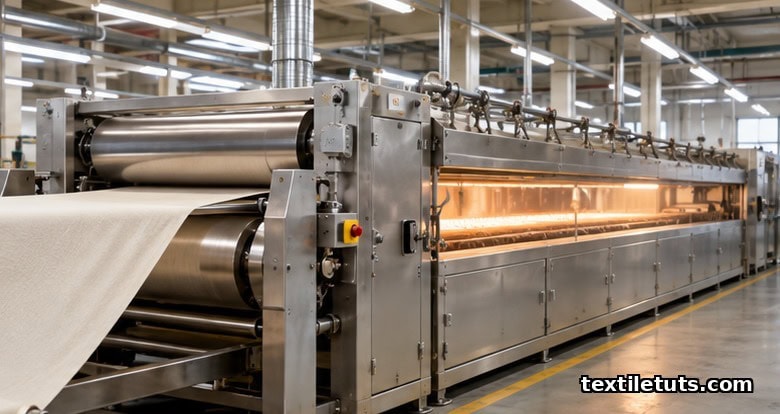
Exhaust application is used for loose stock, yarn packages, and garments where immersion under agitation gives more uniform distribution. Backcoating with an inherently flame retardant polymer such as a halogenated acrylic or a phosphorus-containing polyurethane is the standard for upholstery fabrics where the face fiber must remain soft and the FR function sits in a coated reverse side. Plasma-assisted grafting and sol-gel coating with silica-phosphorus hybrids are emerging as fourth and fifth routes for technical applications, but they are not yet common in conventional mills.
Durability: Non-Durable, Semi-Durable, and Durable Classes
Durability is the single most important specification after the test pass threshold. A non-durable finish, typically borax-boric acid on loose cellulosic fiber, resists only one or two washes and is used for products that are rarely laundered. A semi-durable finish, such as ammonium polyphosphate applied by a pad-dry process without a resin binder, tolerates 10 to 50 wash cycles and is common in industrial nonwovens and disposable protective apparel. A durable finish, defined by surviving 50 or more home-laundering cycles per AATCC TM 135 conditions, is required for workwear, military uniforms, and children’s sleepwear that must pass the United States 16 CFR Part 1615 and 1616 flammability standards.
Reaching durable flame retardancy requires a reactive finish that forms a covalent bond with the cellulose hydroxyl groups. THPC condensed with urea and ammonia, sometimes called the Proban process, has been the workhorse durable chemistry for cotton since the 1960s. Pyrovatex CP from Huntsman, a methylol-functional vinyl phosphonate, is another durable option that forms a covalent ether linkage with cellulose during curing.
Choosing Between Common Finishes for Cotton, Polyester, and Wool
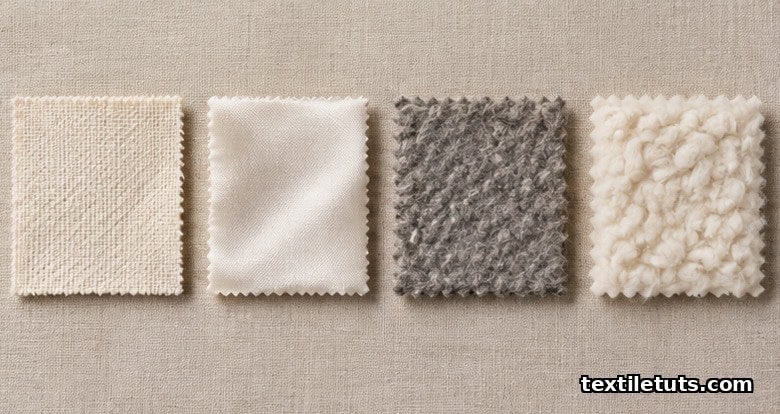
The fiber determines the chemistry. Cotton and other cellulosics respond well to phosphorus-based reactive finishes because the hydroxyl-rich cellulose backbone provides sites for covalent bonding. Polyester is more difficult; thermoplastics like PET melt and drip, which is itself a fire-spread mechanism. Polyester is usually flame retarded through dope addition of phosphorus compounds during melt spinning, or through a topical backcoating that holds the molten fiber in place. Wool is naturally more flame resistant than most synthetics because of its high nitrogen and sulfur content, and a mild zirconium- or titanium-based treatment is often enough to meet low-flammability thresholds for carpets and aviation interiors.
| Property | THPC / Proban on Cotton | Vinyl Phosphonate (Pyrovatex CP) on Cotton | Ammonium Polyphosphate on Polyester-Cotton | Borate on Loose Cellulose |
|---|---|---|---|---|
| Durability | Durable (50+ washes) | Durable (50+ washes) | Semi-durable (10-30 washes) | Non-durable (1-2 washes) |
| Application | Pad-dry-cure with ammonia cure | Pad-dry-cure with melamine resin | Pad-dry only, no cure | Exhaust or spray |
| Typical loading | 15-25% add-on | 20-30% add-on | 8-15% add-on | 5-10% add-on |
| ASTM D6413 char length | Under 100 mm | Under 120 mm | Under 150 mm | Under 150 mm (1 wash only) |
| Cost per kg treated fabric | Moderate | Moderate-high | Low | Very low |
| Common end-use | Workwear, military uniforms | Curtains, contract upholstery | Industrial nonwovens | Loose fiber insulation |
Environmental and Health Considerations
Two concerns dominate the conversation around flame retardant finishes today: the persistence of halogenated species in the environment and the potential for formaldehyde release from resin-bonded systems. THPC itself does not contain formaldehyde, but the urea-formaldehyde and melamine-formaldehyde resins used to durably fix some finishes can release low levels of free formaldehyde, which is why OEKO-TEX Standard 100 lists strict limits on extractable formaldehyde in flame retardant textiles used next to skin.
The industry response has been the gradual phase-out of decabromodiphenyl ether in apparel and the rise of reactive phosphorus systems that bind covalently to the fiber and do not leach under normal laundering. AATCC and ASTM have updated several test methods between 2018 and 2024 to require pH-adjusted sweat simulant extractions before flame testing, which catches finishes that would otherwise pass the dry test but fail after perspiration contact.
Frequently Asked Questions
What is the difference between flame retardant and flame resistant?
“Flame resistant” describes an inherent property of the fiber, such as aramid or modolymel, while “flame retardant” describes a chemical finish applied to a fiber that is not inherently flame resistant. A cotton garment treated with a Proban finish is flame retardant, while a Nomex coverall is flame resistant by the chemistry of the fiber itself.
How many wash cycles does a durable flame retardant finish last?
A finish is rated durable when it passes the relevant flame test after 50 home-laundering cycles per AATCC TM 135 or 50 industrial laundering cycles per ISO 15797, depending on the end-use specification. Some military specifications call for 100 cycles.
Are flame retardant finishes safe for children’s sleepwear?
In the United States, children’s sleepwear sized 9 months through 14 must pass 16 CFR Part 1615 or 1616, which is a vertical flame test with a 3-second exposure. Garments that pass this standard use either an inherently flame resistant fiber or a durable finish with a guaranteed afterflame time of 7 seconds or less. OEKO-TEX certified finishes are preferred because they restrict formaldehyde and other extractable residues.
Do flame retardant finishes affect the hand or breathability of fabric?
Yes, especially at the 20 to 30 percent add-on levels needed for durable cotton finishes. The hand becomes stiffer, and air permeability can drop 10 to 25 percent. Softener addition in the finishing bath and the use of micro-emulsion phosphorus finishes both help offset this, but a fully durable FR cotton will never match the hand of untreated cotton.
Can a flame retardant finish be removed or deactivated?
Non-durable and semi-durable finishes can be partially removed by repeated laundering with nonionic detergents at 60 degrees Celsius, which is one of the reasons specification documents require re-testing after a defined cycle count. Durable reactive finishes are essentially permanent and survive normal commercial laundering for the lifetime of the garment.
References
- ASTM International. ASTM D6413 / D6413M-22: Standard Test Method for Flame Resistance of Textiles (Vertical Test). ASTM International, West Conshohocken, PA. Vertical flame test method for char length and afterflame time.
- ASTM International. ASTM E84-22: Standard Test Method for Surface Burning Characteristics of Building Materials. Tunnel furnace test for interior textiles and wall coverings.
- National Fire Protection Association. NFPA 701: Standard Methods of Fire Tests for Flame Propagation of Textiles and Films. Curtains, draperies, and decorative fabric flammability test.
- International Organization for Standardization. ISO 15025:2016: Protective Clothing – Protection Against Heat and Flame – Limited Flame Spread Methods. Limited flame spread test for protective garments.
- AATCC. AATCC TM 33-2019: Flammability of Clothing Textiles. Vertical flammability method for apparel fabrics.
- Horrocks, A. R., and Anand, S. C. (eds.). Handbook of Technical Textiles. Woodhead Publishing. Standard reference for flame retardant chemistry and process design.
- Alongi, J., and Malucelli, G. “State of the Art and Perspectives on Flame Retardant Cotton Fabrics.” Materials (MDPI), vol. 8, no. 6, 2015, pp. 3450-3474. Peer-reviewed review of phosphorus-nitrogen FR systems on cotton.
This article is the working reference for flame retardant finishing of textiles. Editorial by Shahrukh Islam, TextileTuts. Sources: ASTM D6413, NFPA 701, ISO 15025, AATCC TM 33, and a peer-reviewed MDPI review by Alongi and Malucelli as cited.


