
Finishing Process Selection Guide

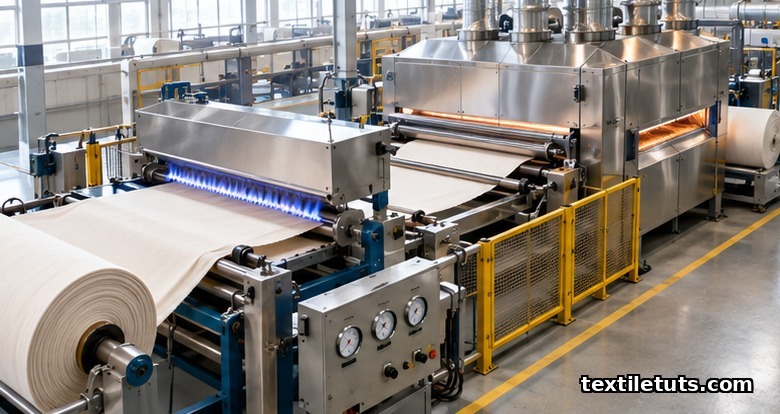
Textile finishing draws from 18-plus mechanical, chemical, and thermal unit operations to convert a mill-finished fabric into a saleable textile, with the choice governed by fiber content (cotton, polyester, wool, nylon), target hand-feel, performance specifications (ISO 13688, OEKO-TEX Standard 100), and machine capability, typically adding 8 to 30 percent to greige fabric cost.
This guide walks a textile engineer, merchandiser, or sourcing manager through the decision logic that turns “what does this fabric need to do?” into a specific finishing recipe, plus the test standards that gate each option.
By the end you will know how to match finish type to fiber, evaluate trade-offs between durability and hand, and read the test methods that decide whether a finish actually worked.
Why finishing is a sequence, not a single step
Finishing is everything that happens to a fabric between the loom or knitting machine and the cutting table. ISO 4920 (spray rating) and ASTM D751 both treat finished fabric as a different material than greige, and for good reason: a cotton woven that leaves the loom at 150 g/m² and 28 cm warp-shrinkage can become a saleable 145 g/m², 3 percent residual-shrink fabric after a controlled compaction step on a sanforizer.
The sequence matters because finishes interact. A softener applied before a durable-press resin reduces resin uptake by 15 to 25 percent, which is why production sheets specify the order, not just the list. Three families cover nearly every finishing line:
- Mechanical: singeing, desizing, mercerizing, raising, shearing, calendering, compacting, stentering.
- Chemical: scouring, bleaching, softener, easy-care resin, water-repellent, flame-retardant, antimicrobial, optical brightener.
- Thermal: heat-setting for synthetics, thermosol for reactive and disperse application, decatizing for wool, curing for resin finishes.
Step 1: Read the fabric before you read the recipe
Selection starts with three fiber facts, not the customer’s brief. ASTM D276 identifies fiber content, and the fiber list drives both chemistry and machine setpoints.
Cellulosics (cotton, linen, viscose) tolerate alkaline scour at pH 11 to 12 and hydrogen peroxide bleaching at 95 °C, but scorch above 200 °C in dry heat. Polyester needs 190 to 220 °C heat-setting for 30 to 45 seconds to lock dimensional stability; cotton cannot survive that envelope. Wool demands a different envelope entirely: decatizing at 110 to 130 °C with steam, never dry heat above 160 °C.
AATCC EP6 and AATCC EP7 together cover 27 standardized evaluation procedures for the appearance attributes that finishes are supposed to deliver, including smoothness (AATCC TM124), creasing (AATCC TM128), and pilling (AATCC TM196). Run those on greige first to set a baseline; a finish that does not move the needle on the baseline test is not worth its slot in the sequence.
Construction matters as much as fiber. A 200 g/m² twill can accept a resin that a 90 g/m² voile cannot, because the resin adds weight and the voile would lose the hand that justified its construction in the first place. Yarn twist direction matters for mercerizing luster (mercerization lifts luster most on combed, long-staple cotton with low-twist warp).
Step 2: Match the finish family to the end use
The fastest path to a wrong finish is to copy the customer’s brief into a recipe without translating it into measurable property targets. The four most common end-use maps in 2025 production:
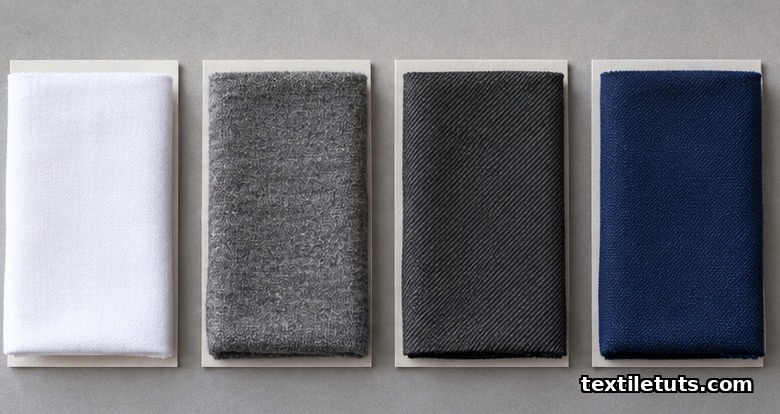
Apparel woven cotton shirting. Singe both faces (gas flame, 30 to 50 m/min), desize with enzyme at 60 °C, scour-bleach with hydrogen peroxide 4 to 5 g/L at 95 °C, mercerize with 22 to 24 °Bé sodium hydroxide under tension, then apply easy-care resin (DMDHEU at 8 to 10 percent on weight of fabric) cured at 160 °C for 3 minutes, finished with a silicone microemulsion softener at 1 to 2 percent. Residual shrinkage stays under 3 percent per AATCC TM135 and crease-recovery angle exceeds 250° per AATCC TM66.
Polyester knit activewear. Heat-set on a stenter at 190 °C for 30 seconds, scour at 60 °C with nonionic surfactant, dye with disperse at 130 °C under pressure, then apply hydrophilic softener and optional moisture-management finish. ISO 6330 procedure 4N wash-cycle stability and ISO 105 B02 light fastness at grade 4 are typical gates.
Wool worsted suiting. Crabbing at 80 °C in water, decatizing at 110 °C with steam for 5 minutes, optional machine-washable treatment with polymer resin (modern peroxide plus polymer systems have largely replaced Hercosett chlorination). ISO 3175 covers machine-wash criteria for wool and is the spec most brands cite.
Workwear and flame-retardant cotton. PROBAN (pre-condensate phosphonamide) or PYROVATEX (N-methylol dialkyl phosphonopropionamide) chemistry, cured at 160 °C, tested to ISO 11612 (limited flame spread) and ISO 11611 (welding protection). Wash durability to ISO 6330 5N at 50 cycles is the typical gate.
Step 3: Resolve the trade-offs every selector must weigh
No finish is free. Four trade-offs decide most recipes.
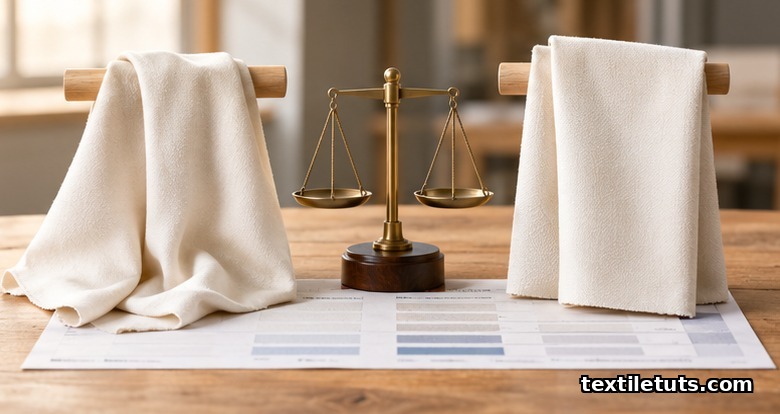
Hand vs. durability. Silicone softeners deliver the softest hand but lose 60 to 70 percent of their lubricity after 10 home washes per AATCC TM135. Polyethylene emulsions feel drier but survive 30-plus washes. Blends at 70/30 silicone/PE are common compromises.
Easy-care vs. tensile loss. DMDHEU resin at 8 percent add-on improves crease-recovery angle by 80 to 100° (AATCC TM66) but reduces warp tensile strength by 15 to 25 percent (ASTM D5034). Lower add-on at 4 to 5 percent plus a cross-link booster recovers most of the easy-care with half the strength loss.
Whiteness vs. fiber damage. Hydrogen peroxide at 5 g/L and 95 °C delivers a Berger whiteness of 78 to 82 with 6 to 8 percent tensile loss in cotton. Sodium hypochlorite delivers higher whiteness faster but at 12 to 15 percent tensile loss. Optical brighteners push apparent whiteness without more fiber damage but shift hue under daylight.
Function vs. ecology. Fluorocarbon-based water repellents in the older C8 chemistry face regulatory restriction under EU REACH; the C6 chemistry is the working substitute and delivers 80 to 90 percent of the C8 repellency at ISO 4920 grade 3 to 4. OEKO-TEX Standard 100 Class II limits extractable formaldehyde to 75 mg/kg for skin-contact fabrics; AATCC TM112 confirms.
Step 4: Quality-control gates that catch a bad finish
Three tests catch more finishing defects than the rest combined:
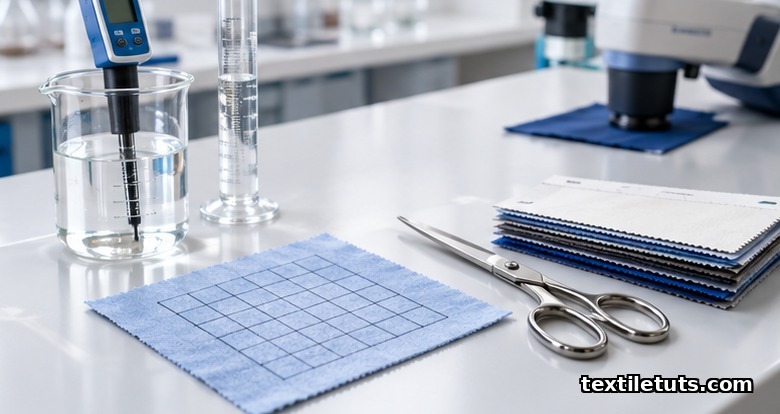
- Shrinkage per AATCC TM135 (or ISO 6330 plus ISO 5077): 3 washes plus tumble dry, measure before and after.
- pH of aqueous extract per ISO 3071: must fall in 4.0 to 9.0 for most apparel; outside this range the finish can irritate skin or hydrolyze on storage.
- Formaldehyde per ISO 14184-1 (free plus hydrolyzed): limits depend on the standard you sell to (OEKO-TEX, Japanese Law 112, GB/T 2912.1).
A fabric that passes shrinkage but fails pH usually traces back to insufficient after-soaping; one that passes pH but fails formaldehyde usually got too much resin or was not after-washed hot enough. Both are cheaper to fix on the line than at the customer’s warehouse.
Comparison Table: finishing options by fiber and end use
| Fiber / Fabric | Mechanical finishes | Chemical finishes | Thermal finish | Typical cost add (%) | Gate test |
|---|---|---|---|---|---|
| Cotton shirting woven | Singe, mercerize, sanforize | Easy-care resin, softener | Cure 160 °C | 15 to 22 | AATCC TM135, TM66 |
| Polyester knit | Brush, shear | Hydrophilic softener, antimicrobial | Stent 190 °C | 10 to 18 | ISO 6330, ISO 105 B02 |
| Wool worsted | Press, decatize | Mothproof, machine-wash resin | Decatize 110 °C | 18 to 25 | ISO 3175 |
| Cotton FR workwear | Calender for smoothness | PROBAN or PYROVATEX | Cure 160 °C | 22 to 30 | ISO 11612, ISO 6330 5N |
| Cotton knit jersey | Compact, calender | Soften, optional antimicrobial | Stent 180 °C | 8 to 12 | AATCC TM135, TM196 |
| Nylon woven | Heat-set on stenter | Water repellent (C6), softener | Stent 190 °C | 12 to 20 | ISO 4920, AATCC TM22 |
Frequently Asked Questions
What is the single most common mistake when selecting a finishing sequence?
Applying the softener before the durable-press resin. Silicone emulsions block 15 to 25 percent of resin uptake on cotton, so the fabric ends up soft but poorly stabilized and fails AATCC TM66 crease-recovery gates. Always apply the resin first, cure it, wash off residual catalyst, then apply the softener last.
How do I choose between mercerization and a caustic pad?
True mercerization requires slack mercerization under tension at 22 to 24 °Bé sodium hydroxide and gives the luster, dye-uptake lift, and 25 to 30 percent strength gain documented in cotton-finishing literature. A caustic pad (lower concentration, no tension) improves dye uptake only. If the brief mentions luster, strength, or mercerized cotton by name, only full mercerization delivers.
Are C6 fluorocarbons safe enough for a children’s-wear program?
Modern C6 fluorocarbons meet OEKO-TEX Standard 100 Class I (infants) limits for extractable perfluorinated compounds, and several ZDHC-compliant formulations clear Bluesign and GOTS thresholds. They deliver 80 to 90 percent of the water repellency that older C8 chemistry provided, grade 3 to 4 at ISO 4920. The remaining gap is oil repellency, where short-chain chemistry still underperforms C8.
How do I prove a finish is durable without waiting 50 wash cycles?
Accelerated laundering per ISO 6330 procedure 5N (40 °C, normal agitation, tumble dry) is the standard accelerated predictor; many buyers accept 5N times 10 cycles as evidence of 30 to 50 home-wash durability for softeners and easy-care finishes. Always pair with the relevant performance test (AATCC TM135 for shrinkage, AATCC TM196 for pilling) so you can plot property versus cycle count.
What test do I run first when a finishing defect appears on the line?
pH per ISO 3071. A fabric that is too alkaline or too acidic almost always points back to insufficient after-washing, and it explains 30 to 40 percent of finishing complaints (skin irritation, dye migration, odor). pH test kits cost pennies and give a 5-minute answer; escalate to AATCC TM135 for shrinkage and ISO 14184-1 for formaldehyde once pH is back inside spec.
References
- ISO 6330:2021. Textiles: Domestic washing and drying procedures for textile testing. International Organization for Standardization. Specifies 14 domestic wash procedures used as the accelerated durability reference for most apparel finishes.
- ISO 3071:2020. Textiles: Determination of pH of aqueous extract. International Organization for Standardization. The pH range of 4.0 to 9.0 is the safety gate for skin-contact textiles under most regulatory regimes.
- ISO 14184-1:2011. Textiles: Determination of formaldehyde, Part 1: Free and hydrolyzed formaldehyde (water extraction method). International Organization for Standardization. Quantitative method for the formaldehyde gate on easy-care and flame-retardant finishes.
- AATCC TM135-2018. Dimensional Changes of Fabrics after Home Laundering. American Association of Textile Chemists and Colorists. The standard shrinkage test for finishing validation in the U.S. market.
- AATCC TM66-2014. Recovery Angle of Creases in Fabrics after Repeated Home Laundering. American Association of Textile Chemists and Colorists. The crease-recovery gate that proves an easy-care resin actually worked.
- ASTM D5034-21. Standard Test Method for Breaking Strength and Elongation of Textile Fabrics (Grab Test). ASTM International. Used to measure tensile loss that accompanies resin application on cellulosics.
- Schindler, W.D. and Hauser, P.J. (2004). Chemical Finishing of Textiles. Woodhead Publishing (now Elsevier). Peer-reviewed academic reference covering the chemistry of softeners, resins, fluorocarbons, and flame retardants at production scale.
This article is the working reference for finishing-process selection on woven, knit, and technical textiles. Editorial by Shahrukh Islam, TextileTuts. Sources: ISO 6330, ISO 3071, ISO 14184-1, AATCC TM135, AATCC TM66, ASTM D5034, and Schindler & Hauser (2004) as cited.


