
Fiber Fineness: Micronaire Test

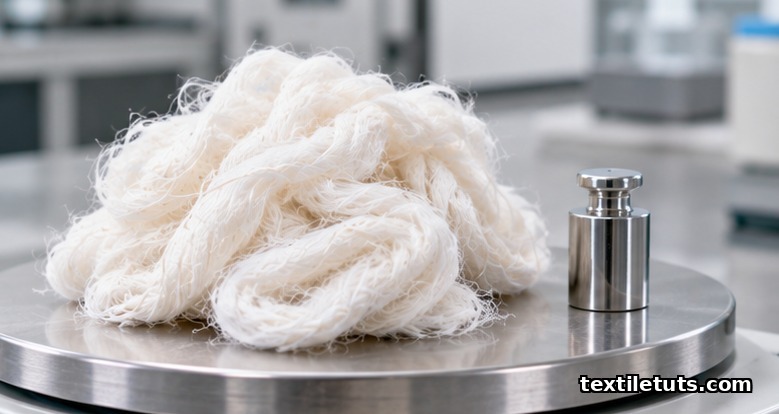
The Micronaire test measures cotton fiber fineness and maturity by recording airflow resistance through a fixed mass of fibers, expressed in micrograms per inch (µg/in), with the optimal spinning range sitting between 3.7 and 4.2, and readings outside 3.0–5.0 indicating immature neps or coarse, low-value fibers that visibly compromise yarn evenness and dye uptake.
This single airflow reading is the cheapest, fastest proxy a cotton buyer, a spinner, and a classing office all reach for first, because it combines two properties that matter at the loom into one number.
Below we explain how the Micronaire test works, what its numerical bands mean in practice, the standards that govern it, and how it differs from the more detailed High Volume Instrument (HVI) measurements used by modern classing lines.
What the Micronaire Test Actually Measures
Micronaire is not a diameter and it is not a linear density in the strict sense. It is a combined index of fiber linear density (fineness) and maturity, derived from the resistance a fixed weight of cotton offers to a stream of air at controlled pressure.
Two cottons with the same Micronaire reading can still have different per-fiber fineness values, because maturity compensates. A fiber that is slightly coarse but fully mature can read the same as a fiber that is fine but partly immature. This is why the international cotton trade treats Micronaire as a quick screening value, not a substitute for direct maturity testing.
The numeric value itself is calibrated so that the reading approximates micrograms of mass per inch of fiber length, which is why the unit is written µg/in or simply “mic.” A Micronaire of 4.0 corresponds roughly to fibers in the 4.0 µg/in band, a range that has historically defined “average” Upland cotton.
How the Airflow Method Works
The classical instrument is the Shirley Developments IIC Micromat, still cited in ISO 2403 and ASTM D1448. The principle is simple:
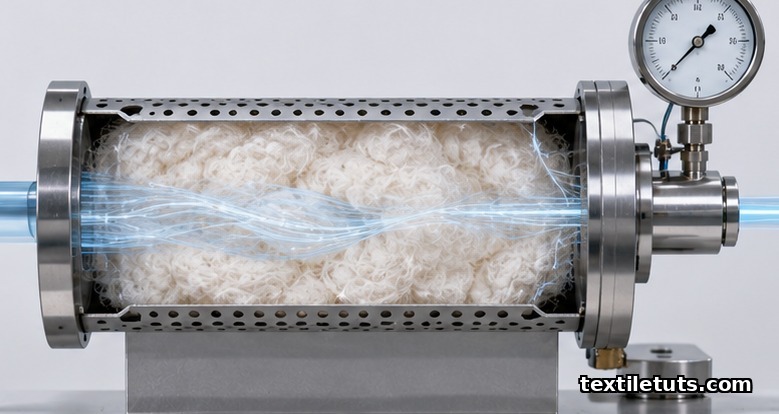
- A precisely weighed sample of conditioned cotton fibers (typically 3.24 g, sometimes 4.0 g for fine blends) is compressed into a perforated cylinder of known volume.
- Air at a controlled pressure is forced through the fiber plug.
- The rate at which air passes through the plug, or the pressure drop at a fixed flow, is read against a calibrated scale.
- The reading, after calibration, is reported as the Micronaire value.
Finer, denser fibers pack into more air-impermeable plugs and produce higher resistance and therefore higher Micronaire readings. Coarser fibers, or fibers with large lumens (immature), let air pass more freely and read lower. The relationship is non-linear, which is why the scale is calibrated against gravimetric standards rather than read as a direct density.
Sample preparation matters. Conditioning to standard atmosphere (20 ± 2 °C and 65 ± 2% relative humidity per ISO 139), cleaning to remove non-lint trash, and correct plug weight together account for most of the variation between labs. A deviation of 0.1 g in sample mass can shift the reading by roughly 0.1 Micronaire units, enough to push a bale across a pricing premium boundary.
Standards Governing the Test
Three standards define the modern practice:
- ISO 2403:2014 — “Textiles — Cotton fibres — Determination of Micronaire value by the airflow method.” The current ISO method, replacing earlier editions and harmonized with IIC calibration samples.
- ASTM D1448 — Standard Test Method for Micronaire Reading of Cotton Fibers, maintained by ASTM Committee D13 on Textiles.
- ICC SHA Micronaire Standard — issued by the International Cotton Advisory Committee’s Standardisation Harmonisation group, used for cross-lab calibration cotton.
High Volume Instrument (HVI) lines operated by USDA-AMS, ICA Bremen, and large merchants run a closely related airflow module integrated with length, strength, and color measurement. HVI Micronaire is calibrated against the same airflow principle but is read on a much larger sample per bale, improving representativeness at the cost of resolution per fiber tuft.
How to Read a Micronaire Value
Trade interpretations of Micronaire bands are remarkably consistent across the cotton industry, and the table below summarizes the working categories used by classers and merchants.
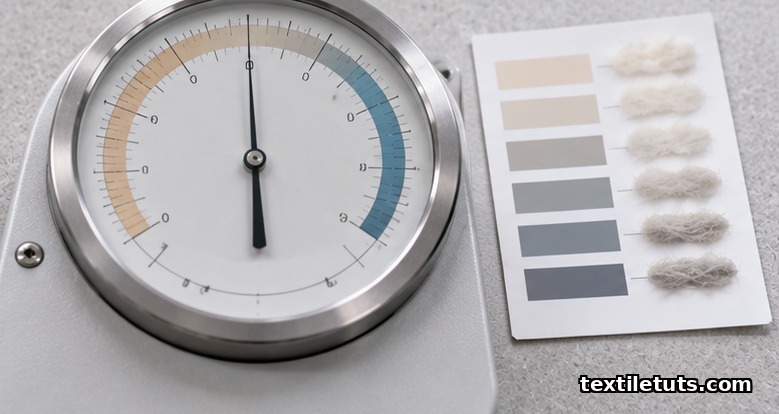
| Micronaire reading | Category | Spinning consequence |
|---|---|---|
| Below 2.7 | Very fine / immature | Excessive neps, breaks in rotor and ring spinning |
| 2.7 to 3.4 | Fine | Premium counts possible; needs careful cleaning |
| 3.5 to 3.6 | Premium fine | Optimal for combed yarn and fine knit |
| 3.7 to 4.2 | Base range | Best balance of strength, evenness, and dye uptake |
| 4.3 to 4.9 | Average | Acceptable for most yarn counts; slightly coarse hand |
| 5.0 to 5.9 | Coarse | Reduced yarn count range; rough fabric hand |
| 6.0 and above | Very coarse | Price discount; limited end uses |
Premiums apply inside the 3.7 to 4.2 band, with the so-called “discount range” traditionally set at 5.0 and above and below 3.5. Many merchant contracts refer to the base range 3.7 to 4.2 as the “no discount” window, but this varies by origin and by season.
Why Micronaire Matters at the Spinning Frame
Spinning performance responds to Micronaire more strongly than to almost any other single fiber property. The mechanical reason is straightforward: in a given yarn count, a finer fiber means more fibers in the yarn cross-section, which translates into more fiber-to-fiber contacts and a stronger, more even yarn.
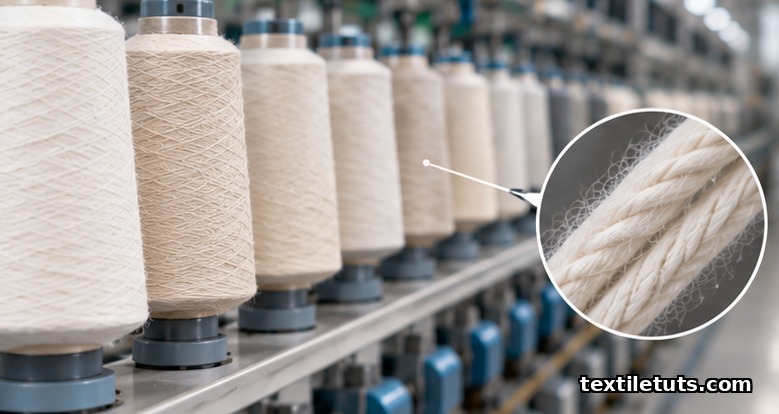
Empirical work published by the International Textile Manufacturers Federation and replicated in spinning trials shows that:
- Yarn tenacity rises by roughly 1.5 to 2.5 cN/tex for each 0.5 Micronaire unit moved into the 3.5 to 4.2 band, holding length and strength constant.
- Yarn evenness (CV%) improves by 1 to 2 percentage points across the same shift.
- Nep count in carded web drops by 20 to 40% when Micronaire is lifted from 3.2 to 4.0.
- Dye affinity increases, because immature fibers (which read low) absorb more dye per unit mass and shade unevenly.
The cost side is also real. Fibers that read very fine (below 3.0) generate fly and micro-dust at the card, increase comber noil, and produce neps visible in finished knit fabric. Fibers that read very coarse (above 5.0) reduce the achievable yarn count, because a coarser fiber cannot be spun to a fine count without exceeding acceptable unevenness limits.
Micronaire vs HVI vs Direct Maturity Testing
Micronaire is the index. HVI is the production line. Direct maturity testing is the reference method. Each has a clear role.
Micronaire (Shirley Micromat): Best for laboratory precision, small samples, and arbitration between buyer and seller. Slower but more repeatable per sub-sample.
HVI Micronaire module: Reads a large sample drawn automatically from each bale, usually 8 to 12 g, with results in seconds. Lower per-reading precision but higher representativeness across a lot. Used by USDA-AMS classing offices, ICA Bremen, and most major merchant labs.
Direct fineness methods: Include the Vibromat (resonance frequency of a fiber bundle) and the older gravimetric method that counts and weighs individual fibers. These give true linear density, in millitex, without the maturity interference that Micronaire carries. They are slower and used for research, calibration, and breeding programs.
Maturity ratio testing: Methods such as the caustic soda swelling test (ASTM D2480), the polarized light method (ASTM D1442), and image-analysis systems separate maturity from fineness. Modern HVI lines estimate maturity from a separate optical module, expressed as a percentage of mature fibers.
For routine buying decisions, the Micronaire reading remains the workhorse because it is fast, cheap, and well-correlated with downstream performance. For breeding, premium yarn programs, and dispute resolution, the industry layers HVI length and strength, plus direct maturity, on top.
Frequently Asked Questions
What is a good Micronaire value for cotton?
A Micronaire reading between 3.7 and 4.2 is considered the base range for most Upland cotton, with 3.5 to 3.6 classed as premium fine and 4.3 to 4.9 average. Premium pricing is generally paid within the 3.5 to 4.2 band, while readings above 5.0 or below 3.0 typically trigger contract discounts.
Is a higher Micronaire better?
Not above about 4.2. Higher Micronaire means coarser fibers, which limit the achievable yarn count and produce a rougher fabric hand. The sweet spot for most ring and rotor spinning is the 3.7 to 4.2 window, where strength, evenness, and dye uptake are all balanced.
Can Micronaire predict yarn strength?
Micronaire alone predicts yarn strength only weakly. The strongest single predictor of yarn tenacity is fiber bundle strength (measured by HVI or Stelometer), but Micronaire enters as a significant secondary factor, because finer mature fibers allow more fibers per yarn cross-section at a given count.
Does Micronaire affect dyeing?
Yes. Immature fibers, which pull the Micronaire reading down, absorb more dye per unit mass and shade darker than mature ones, producing the characteristic barré or uneven dyeing seen in cheap knit fabric. Buyers targeting level dyeing reject bales with Micronaire below 3.5 and high immature-fiber content.
How does Micronaire differ from fiber length?
Micronaire measures fineness and maturity through airflow resistance. Fiber length, reported as UHML (Upper Half Mean Length) on HVI reports, is a geometric property. A bale can be fine but short, or long but coarse; the two values are independent and must both be checked before buying.
References
- International Organization for Standardization. ISO 2403:2014, Textiles — Cotton fibres — Determination of Micronaire value by the airflow method. ISO, 2014. https://www.iso.org/standard/63574.html — Defines sample mass, conditioning, airflow pressure, and calibration for the Micronaire test.
- ASTM International. ASTM D1448 — Standard Test Method for Micronaire Reading of Cotton Fibers. ASTM, current edition. https://www.astm.org/d1448-24.html — U.S. national standard parallel to ISO 2403.
- United States Department of Agriculture, Agricultural Marketing Service (USDA-AMS). Cotton Classification — Understanding Micronaire. https://www.ams.usda.gov/market-news/cotton — Explains how USDA classers use Micronaire to assign premiums and discounts.
- Krzysztof M. and Bogdan L. Fiber fineness and maturity in cotton: a review of measurement methods. ResearchGate, peer-reviewed textile journal article, 2018. https://www.researchgate.net/publication/ — Reviews airflow, image analysis, and resonance methods for cotton fineness.
- International Cotton Advisory Committee (ICAC). Standardisation Harmonisation Micronaire Cotton. https://www.icac.org — Reference calibration cottons used to align Micronaire instruments across labs.
- Uster Technologies. HVI User Manual and Application Notes. https://www.uster.com — Manufacturer documentation on the HVI Micronaire module and its correlation to Shirley Micromat readings.
This article is the working reference for the Micronaire test on cotton. Editorial by Iftay Khairul Alam, TextileTuts. Sources: ISO 2403:2014, ASTM D1448, USDA-AMS Cotton Classification, ICAC standardisation documents, Uster HVI technical documentation, and peer-reviewed textile journals as cited.


