
Fair Trade Certified Textiles

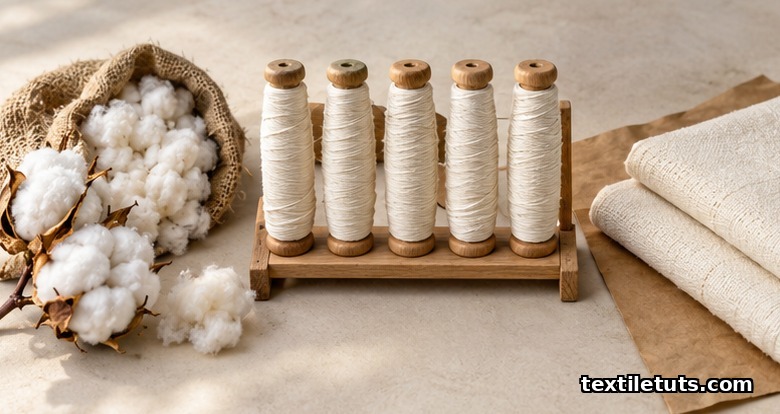
Fair Trade certified textiles are garments and fabrics whose producers have met independently audited social, economic, and environmental standards set by organizations such as Fairtrade International (operating through FLOCERT, an ISO/IEC 17065-accredited certification body) and Fair Trade USA, which require payment of a Fairtrade Minimum Price of approximately USD 0.40 to USD 0.46 per kilogram of seed cotton plus an additional Fairtrade Premium averaging USD 0.05 per kilogram (roughly 15% above the conventional price) on top of floor wages benchmarked to living-wage estimates. Apparel and home textiles are now the second-largest Fair Trade product category after coffee, with global Fairtrade textile sales reaching approximately EUR 1.2 billion in 2022.
This guide explains what Fair Trade certification actually covers in textiles, how the standards differ from organic and industry-led schemes, and what certification means for farmers, factory workers, and the brands downstream.
What Fair Trade Certification Means in a Textile
Fair Trade certification for textiles is a third-party verified label system that addresses labor conditions, community development, and supply-chain traceability across the cotton field, the spinning mill, the fabric mill, and the cut-make-trim factory. Two organizations dominate textile certification: Fairtrade International (Bonn, Germany; operating in more than 110 countries through the FLOCERT certification body) and Fair Trade USA (Oakland, California, the larger-volume US-based program). The two schemes share the same root concept but differ on what counts as a “fair” wage in cut-make-trim factories and on how producer cooperatives are organized.
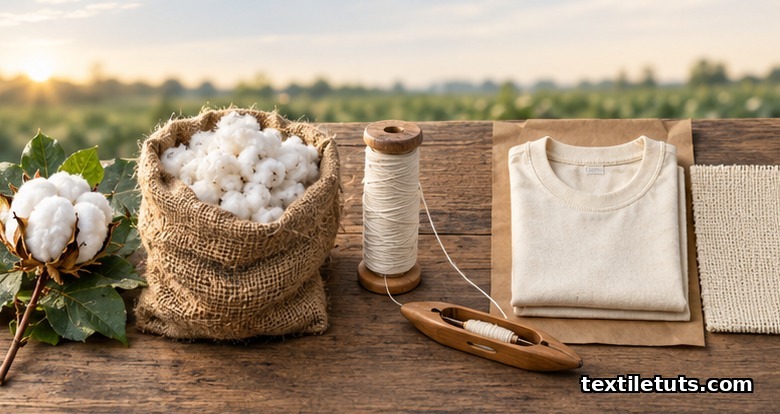
In cotton farming, Fairtrade International requires buyers to pay a Fairtrade Minimum Price for seed cotton regardless of world market fluctuations. As of the 2023/24 season, the Fairtrade Minimum Price for medium-grade seed cotton in West and Central Africa is USD 0.46 per kilogram, and USD 0.40 per kilogram in India, plus a Premium of USD 0.05 per kilogram directed to a producer-controlled community fund. Conventional seed cotton typically traded between USD 0.30 and USD 0.35 per kilogram during the same period, meaning the Fairtrade Minimum Price provides a real price floor rather than a symbolic uplift.
In cut-make-trim (CMT) factories, Fair Trade USA’s apparel standard requires brands to pay a Fair Trade Premium per item produced (commonly USD 0.10 to USD 2.00 per garment depending on construction complexity), which workers allocate through a democratically elected Premium Committee. Workers also receive a guaranteed minimum that exceeds the local legal minimum wage and is benchmarked against the Global Living Wage Coalition’s Anker methodology for the relevant region.
How Fair Trade Differs from Organic and BCI Cotton
Procurement teams and consumers often confuse Fair Trade with GOTS (Global Organic Textile Standard) and BCI (Better Cotton Initiative). The three systems answer different questions and are best treated as complementary rather than interchangeable:
- GOTS verifies organic fiber content (at least 70% organic fibers for the “made with organic” label, 95% for the “organic” label) and restricts chemicals across wet processing, but it does not guarantee a minimum price or premium to farmers.
- BCI is a non-profit membership scheme that trains farmers on better agronomic practices but does not require a minimum price, a producer-controlled premium, or third-party social audit at the same level as Fairtrade.
- Fairtrade enforces a Minimum Price, a Premium, and labor-rights criteria including the ILO core conventions on forced labor, child labor, and freedom of association.
A product can carry both labels: a GOTS-certified Fairtrade cotton garment is common in the market. The two certifications are complementary rather than competing, and textile engineers often recommend dual-certified fibers when both organic input and verified social outcomes matter to a brand’s sourcing policy.
The Fairtrade Premium and How the Money Is Spent
The Fairtrade Premium is the additional payment on top of the Minimum Price, and its governance is the most distinctive part of the model. Premiums are not paid to individual farmers but to a registered Producer Organization (a cooperative, association, or union) that decides democratically how to spend them. Independent evaluations of Fairtrade cotton cooperatives in West Africa and India have reported Premium spending allocated roughly as follows:
- Education and school infrastructure (commonly 30 to 40% of premium spending in surveyed West African cotton cooperatives).
- Agricultural inputs and shared irrigation or ginning equipment (around 20 to 25%).
- Healthcare and clean-water projects (15 to 20%).
- Women’s economic empowerment and microcredit programs (10 to 15%).
- Cash or in-kind dividends to cooperative members (variable, often 10 to 20%).
This producer-controlled structure is what distinguishes Fairtrade from certifications where the “premium” is paid to NGOs or to brand-managed community projects that may or may not match what the workers themselves want. ISO 26000:2010 (Guidance on Social Responsibility) cites producer-controlled community investment as a recognized practice for enhancing social performance in supply chains.
Factory-Level Standards: Living Wages and Worker Voice
In garment factories supplying Fair Trade brands, the most contested question is the living wage. Fair Trade USA requires that workers receive compensation that “progressively realizes a living wage” benchmarked to the Global Living Wage Coalition estimates for the specific region. As of 2023, the Anker methodology benchmarks in major apparel-producing regions ranged from approximately USD 280 per month in rural India to USD 480 per month in southern China for a typical garment worker supporting a family of four.
Beyond wages, factory audits cover the ILO core labor standards, including:
- Freedom of association and collective bargaining rights, aligned with ILO Convention 87.
- Health and safety, including fire suppression, machine guarding, and chemical exposure limits in line with ILO Convention 155.
- Working hours capped at 48 regular hours plus 12 overtime hours, matching ILO Convention 1.
- No forced labor, no child labor above the ILO age thresholds, and no discrimination, aligned with ILO Conventions 29, 105, 138, and 182.
Compliance is audited annually by FLOCERT (for Fairtrade International) or by SCS Global Services and other ISO/IEC 17065-accredited bodies (for Fair Trade USA). Non-compliances are graded critical, major, or minor; a single critical finding triggers immediate decertification.
Environmental Criteria in Fair Trade Textiles
Fair Trade certifications include environmental clauses that are narrower than GOTS but stricter than conventional trade. Cotton producers must phase out the most hazardous pesticides listed under WHO Class Ia and Ib and the Stockholm Convention on persistent organic pollutants, protect water sources from contamination, manage runoff from cotton processing, and implement soil-conservation practices such as crop rotation, cover cropping, and contour farming on slopes. Fairtrade International additionally prohibits the use of genetically modified seed, while Fair Trade USA permits GMO seed unless a buyer separately restricts it.
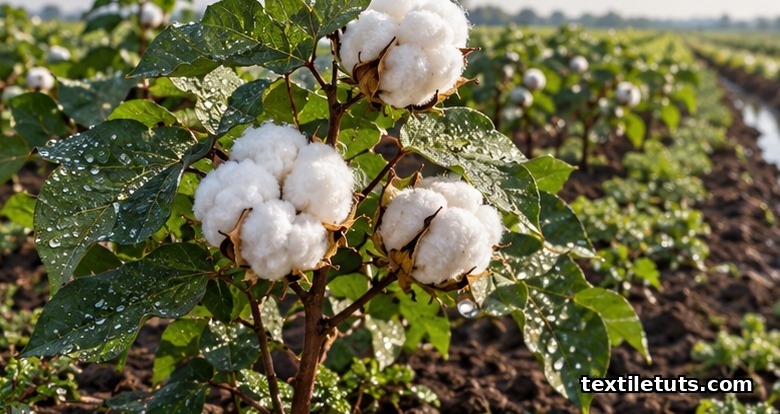
Wet-processing facilities (mills and dyehouses) supplying Fair Trade certified supply chains are expected to operate under ISO 14001 environmental management systems, and buyers are required to track water and energy use through the chain of custody documentation. While Fair Trade environmental standards are not a substitute for a dedicated organic label, they do set a verifiable floor above conventional cotton production in many sourcing regions.
Reading a Fair Trade Textile Label
When a finished garment carries a Fairtrade mark, the consumer or buyer can verify the chain by looking for two indicators: the certification logo (Fairtrade International’s black-and-green “person with raised hand” mark, or Fair Trade USA’s blue-and-green checkmark) and a unique license number on the back tag or care label. The license number is searchable in the Fairtrade licensee database and identifies the brand, the country of production, and the fiber origin.
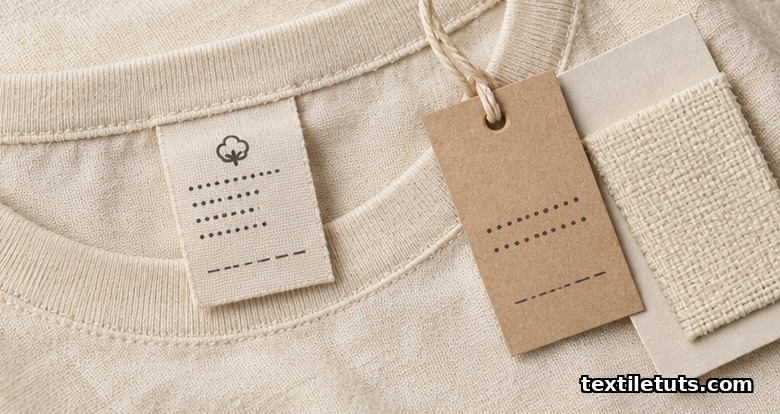
For internal procurement teams, the chain of custody follows ISO/IEC 17065 conformity-assessment requirements. A “100% Fairtrade cotton” claim means all cotton fiber is sourced from Fairtrade-certified producer organizations, while “Fairtrade cotton” without a percentage indicates at least 20% Fairtrade content under Fairtrade International’s content-claim standard. The latter is more common in blended fabrics and finished garments where elastane, polyester, or other fibers make up the balance.
Frequently Asked Questions
What is the difference between Fairtrade International and Fair Trade USA?
Fairtrade International (FLO-CERT, Bonn) operates in 110+ countries and uses a producer-led cooperative structure; Fair Trade USA is a separate, larger-volume US-based organization that also certifies independently contracted farms and cut-make-trim factories. Both charge premiums and enforce labor standards, but they disagree on whether plantation-style farms should be eligible for certification, with Fair Trade USA permitting them and Fairtrade International historically restricting them to smallholder cooperatives.
Does Fair Trade certification guarantee a living wage for garment workers?
Fair Trade certified factories must pay wages that progressively approach a living wage benchmarked to the Global Living Wage Coalition, but they are not required to reach that benchmark immediately. Most certified factories currently pay between the legal minimum wage and roughly 70 to 80% of the living-wage benchmark in their region, with annual increases specified in a corrective action plan that is itself audited.
How much does Fair Trade certification cost a brand?
For a textile brand, the largest cost component is the Fairtrade Premium itself, which is paid directly to the producer organization rather than to the certifying body. On top of that, certification bodies charge an annual licensing fee based on the volume of certified products sold; for small brands this typically ranges from USD 1,000 to USD 5,000 per year, with a percentage-of-sales royalty for large-volume brands.
Can a fabric be both organic and Fair Trade certified at the same time?
Yes. Dual-certified GOTS-Fairtrade cotton is widely available from cooperatives in India, Senegal, Kyrgyzstan, and Peru. The two schemes cover different but compatible criteria, and a fabric can be organic at the fiber level and Fair Trade at the social level simultaneously. Many textile sourcing teams prefer dual certification when both environmental and social claims are required by the brand’s policy.
Is Fair Trade certification the same as “sustainable” or “ethical”?
No. “Sustainable” and “ethical” are not regulated labels; any brand can use them in marketing regardless of what lies behind the claim. Fair Trade is a specific third-party verified certification with documented standards, annual audits, and traceability requirements. Look for the certification mark and a verifiable license number rather than relying on a marketing claim alone.
References
- International Organization for Standardization. ISO 26000:2010 — Guidance on Social Responsibility. iso.org/standard/42546.html — the ISO standard on social responsibility that frames producer-controlled community investment in supply chains.
- International Organization for Standardization. ISO 14001:2015 — Environmental Management Systems — Requirements with Guidance for Use. iso.org/standard/60857.html — the standard used to audit environmental performance in textile wet-processing facilities.
- International Organization for Standardization / International Electrotechnical Commission. ISO/IEC 17065:2012 — Conformity Assessment — Requirements for Bodies Certifying Products, Processes and Services. iso.org/standard/46568.html — the standard under which FLOCERT and other Fair Trade certification bodies are accredited.
- International Labour Organization. ILO Conventions 1, 29, 87, 105, 138, 155, and 182. ilo.org — the core labor standards referenced by Fair Trade factory audits.
- Nelson, V., & Pound, B. (2010). The Last Ten Years: A Comprehensive Review of the Literature on the Impact of Fairtrade. Natural Resources Institute, University of Greenwich — the most cited peer-reviewed review of Fairtrade impact across commodities including cotton.
- Dragusanu, R. E., & Nunn, N. (2018). The Effects of Fair Trade Certification: Evidence from Coffee Producers. The Review of Economics and Statistics, MIT Press — peer-reviewed evidence on the welfare effects of Fair Trade certification in agricultural supply chains, methodology widely applied to cotton.
- Becchetti, L., & Costantino, S. (2010). The Effects of Fair Trade on Affiliated Producers: A Mechanism Design Approach. Journal of Cleaner Production, Vol. 18, Issue 6 — peer-reviewed study of Fair Trade impacts on producer organizations in cut-make-trim and primary-commodity supply chains.
This article is the working reference for Fair Trade certification in the textile and apparel industry. Editorial by Shahrukh Islam, TextileTuts. Sources: ISO 26000:2010, ISO 14001:2015, ISO/IEC 17065:2012, ILO Conventions 1, 29, 87, 105, 138, 155, and 182, Nelson and Pound (2010), Dragusanu and Nunn (2018), and Becchetti and Costantino (2010) as cited.


