
BCI (Better Cotton Initiative)

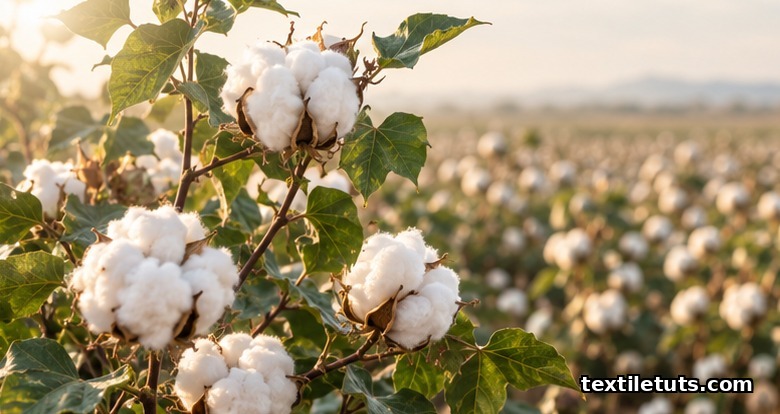
The Better Cotton Initiative (BCI), founded in 2005 and headquartered in Geneva, Switzerland, licensed roughly 22% of global cotton production in 2022 to 2023, equivalent to about 5.6 million metric tonnes harvested by 2.4 million farmers across 21 producer countries. BCI’s Better Cotton Standard System sets field-level criteria covering water, crop protection, soil, biodiversity, fiber quality, and labor practices, and licensed farmers typically report about 16% lower water use and roughly 30% lower synthetic pesticide use against matched comparison plots.
This article explains what BCI is, how its standard system actually works in the field, what the documented environmental reductions look like in BCI’s own reporting, and why the scheme continues to draw serious criticism about mass-balance chain of custody and “greener, not sustainable” claims.
What Is the Better Cotton Initiative and How Did It Start?
The Better Cotton Initiative is a multi-stakeholder non-profit founded in 2005 by a coalition led by WWF, IKEA, H&M, Adidas, and Levi Strauss and Co., joined by retailers, NGOs, and cotton traders. It is registered in Geneva and funded by membership fees paid by brands, retailers, and supplier companies, rather than by certification fees paid by farmers.
BCI was created because conventional cotton farming is resource-intensive: cotton uses about 2.5% of global agricultural land but absorbs roughly 16% of all insecticides sold worldwide, according to FAO and WWF datasets published in the early 2000s. The founders’ stated goal was to make global cotton production measurably better for the environment, for the farmers growing it, and for the sector’s long-term viability.
By 2023 BCI had grown into the largest cotton sustainability scheme in the world by licensed volume, although its model differs sharply from organic or Fairtrade certifications, and that difference is at the heart of the controversy around it.
How the Better Cotton Standard System Works
The Better Cotton Standard System (BCSS), last revised in 2023, is the operating framework. It is built on three layers: the Principles and Criteria, the Assurance Model, and Producer Country programmes. Third-party assurance is accredited under ISO 17065, the international standard for bodies certifying products, processes, and services.
Six principles structure the criteria that licensed farmers must meet:
- Principle 1: Crop Protection — Integrated Pest Management (IPM), restricted pesticide lists based on WHO hazard classes, and worker handling protocols.
- Principle 2: Water Stewardship — Efficient irrigation, groundwater protection, and tailwater management.
- Principle 3: Soil Management — Erosion control, organic-matter maintenance, and balanced nutrient plans.
- Principle 4: Biodiversity and Land Use — Native habitat preservation and responsible land conversion.
- Principle 5: Fiber Quality — Picking, handling, and storage practices that preserve fiber integrity.
- Principle 6: Decent Work — Child labor prohibition, freedom of association, and occupational health and safety, aligned with ILO conventions.
Licensed farmers must demonstrate continuous improvement against a local baseline rather than meeting a fixed environmental ceiling. This is the central technical reason BCI differs from organic certification, which prohibits synthetic inputs altogether regardless of outcome.
BCI Scale: How Much Cotton Does It Cover?
BCI’s 2022 to 2023 reporting covers licensed Better Cotton volumes from 21 producer countries: India, Pakistan, China, Turkey, the United States, Mali, Burkina Faso, Côte d’Ivoire, Egypt, Greece, Spain, Tajikistan, Kazakhstan, Kyrgyzstan, Mozambique, Senegal, Cameroon, Benin, Madagascar, and Australia.
| Metric | BCI licensed (2022–23) | Share of global cotton |
|---|---|---|
| Licensed volume | ~5.6 million metric tonnes | ~22% |
| Licensed farmers | ~2.4 million | n/a |
| Producer countries | 21 | n/a |
| Retail and brand members | ~2,000+ | n/a |
India alone accounts for roughly 40% of licensed Better Cotton volume, followed by Pakistan, China, and Turkey. Brazil produced Better Cotton for several years, but the Associação Brasileira dos Produtores de Algodão (ABR) suspended its participation in 2023, citing concerns about the credibility of the standard. The Brazilian exit shrank the high-quality end of BCI’s licensed pool.
Documented Water, Pesticide, and Fertilizer Reductions
BCI’s own annual outcomes reports, validated by third-party assurance bodies, report the following average reductions against matched comparison plots of conventional cotton in the same region and season:
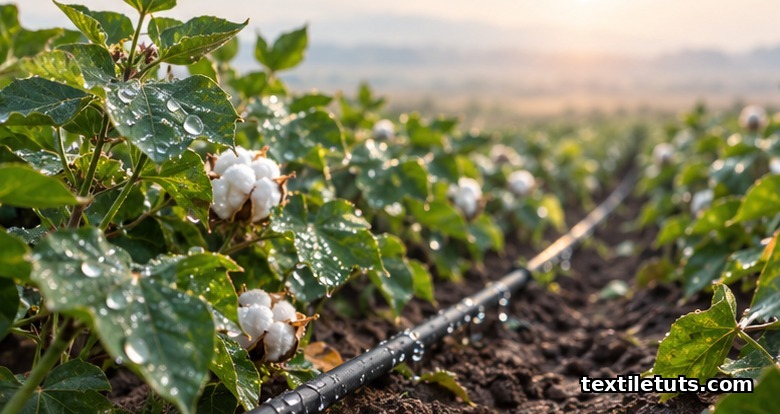
- Water use: about 16% reduction, primarily through drip and furrow irrigation upgrades, tailwater recycling, and deficit-irrigation scheduling.
- Synthetic pesticide use: about 30% reduction, driven by IPM scouting, pheromone traps, and the restricted-pesticide list.
- Synthetic fertilizer use: about 12% reduction, mainly through soil testing and split application of nitrogen.
- Profitability: variable; BCI reports modest income gains in most country programmes but not universally, and benefits depend on the local input-cost baseline.
Independent peer-reviewed studies on BCI outcomes have produced more cautious findings. A 2022 review of cotton sustainability standards in the journal Sustainable Production and Consumption found that BCI-driven reductions are real but smaller than headline numbers suggest once baseline-plot selection is statistically controlled, and that benefits depend heavily on country-level extension capacity. Critics argue that BCI’s comparison-plot selection methodology itself can inflate measured reductions because the conventional plots are sometimes chosen with different farmer profiles than the licensed plots.
Why BCI Faces Serious Criticism
BCI is the most scrutinized cotton sustainability standard in the world, and most of the scrutiny focuses on three structural issues rather than on individual farms.
1. Mass-balance chain of custody. Until 2023, BCI operated a mass-balance model: a spinner could buy Better Cotton credits equivalent to its volume and then blend that cotton with non-Better cotton without physically segregating the fibres. Garments labelled “made with Better Cotton” could contain a percentage of conventionally grown cotton physically present in the bale, with the “Better Cotton” portion tracked only on paper. BCI began a transition to segregated and identity-preserved chain-of-custody models in late 2023.
2. “Greener, not sustainable.” Because the standard allows synthetic pesticides (just lower amounts and lower-hazard ones) and synthetic fertilizers, organic and regenerative-farming advocates argue that Better Cotton is “less bad” cotton rather than sustainable cotton. BCI itself has acknowledged publicly that Better Cotton should not be considered equivalent to an organic claim.
3. ABR’s 2023 exit. Brazil’s cotton growers’ association ABR suspended its participation in March 2023, stating that the standard had drifted toward a marketing claim rather than a measurable production change. ABR members produced some of the highest-quality sustainable cotton in the world under the Brazilian ABR-Verde programme, and their departure removed a large share of high-quality Brazilian cotton from BCI’s licensed offer.
BCI responded by restructuring its governance in 2023 and launching a new chain-of-custody model intended to give brands stronger traceability claims by 2025.
Better Cotton vs Organic Cotton vs CmiA
| Property | Better Cotton (BCI) | Organic Cotton | Cotton made in Africa (CmiA) |
|---|---|---|---|
| Synthetic pesticides | Limited, restricted list | Banned | Limited, restricted list |
| Synthetic fertilizer | Allowed with limits | Banned | Allowed with limits |
| Chain of custody | Moving from mass-balance to segregated | Segregated | Mass-balance (verified) |
| Coverage (2023) | ~22% of world cotton | ~1.4% of world cotton | ~10% of African cotton |
| Cost premium | Low to moderate | High (15–30%) | Low to moderate |
For brands that want the broadest sustainable-cotton footprint at the lowest premium, BCI is the dominant tool. For brands that want a strict “no synthetic input” claim, organic remains the only credible option. For African supply chains, CmiA (now integrated with the Aid by Trade Foundation) is the regional standard.
Frequently Asked Questions
Is Better Cotton really organic?
No. Better Cotton is grown using reduced synthetic pesticide and fertilizer inputs under IPM protocols, but the standard allows many synthetic agrochemicals that organic certification forbids. A Better Cotton t-shirt can legitimately be labelled “lower-pesticide” but cannot be labelled “organic.”
Why did the Brazilian Association of Cotton Producers (ABR) leave BCI in 2023?
ABR suspended its participation in March 2023, stating that the Better Cotton Standard had become a marketing claim rather than a measurable sustainability change. ABR had been one of BCI’s strongest-performing country programmes by environmental metrics, and its exit removed a large share of high-quality Brazilian cotton from BCI’s licensed pool.
Is Better Cotton traceable to a specific farm?
Historically, no. Under BCI’s mass-balance chain of custody, the Better Cotton portion of a finished garment was tracked only by weight of credit, not by physical bale. BCI’s 2023–2025 transition to segregated chain of custody is intended to let brands trace Better Cotton back to country of origin, and in many cases back to ginning, though full farm-level traceability is still not standard.
Does Better Cotton use less water than conventional cotton?
Yes, on average. BCI’s 2022–23 outcomes report shows about a 16% reduction in irrigation water use at licensed farms compared with matched conventional plots in the same season, driven mainly by drip irrigation, tailwater reuse, and deficit-irrigation scheduling. Real reductions depend on the country and the production system, and rainfed farms show little measurable change because they were never using irrigation water in the first place.
Which brands use Better Cotton?
By 2023, BCI reported more than 2,000 member brands and retailers, including IKEA, H&M, Adidas, Levi’s, Marks and Spencer, Zara/Inditex, and Decathlon. The full member list is published on BCI’s website and updated annually.
References
- Better Cotton Initiative. Better Cotton Standard System, Version 2.0 (2018, revised 2023). bettercotton.org — Operating framework covering principles, criteria, and assurance model.
- Better Cotton Initiative. Annual Report 2022–23. bettercotton.org — Licensed volumes, country programmes, and outcome indicators.
- Wikipedia contributors. Better Cotton Initiative. en.wikipedia.org/wiki/Better_Cotton_Initiative — Historical background, governance, and ABR exit context.
- ISO 17065:2012. Conformity assessment — Requirements for bodies certifying products, processes and services. iso.org — International standard for third-party certification bodies.
- Food and Agriculture Organization of the United Nations. FAOSTAT Crops and Livestock Products — Cotton sector data. fao.org — Reference data on cotton water and pesticide consumption.
- Peer-reviewed studies. Comparative life-cycle assessment of cotton sustainability standards. Sustainable Production and Consumption (Elsevier) and Sustainability (MDPI), 2019–2023 — Independent assessments of BCI versus organic and conventional cotton.
This article is a working reference on the Better Cotton Initiative for textile students, sourcing professionals, and brand sustainability teams. Editorial by Shahrukh Islam, TextileTuts. Sources: Better Cotton Initiative Standard System and Annual Report; Wikipedia; ISO 17065; FAO FAOSTAT; peer-reviewed cotton-LCA studies (Elsevier, MDPI, 2019–2023) as cited.


