
Face Masks: Fabric Requirements

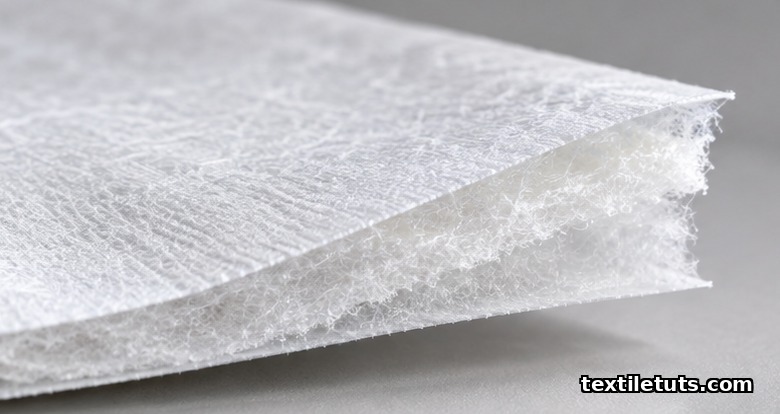
Medical face masks require a multi-layer nonwoven structure, typically spunbond-meltblown-spunbond (SMS) polypropylene, with the meltblown middle layer delivering bacterial filtration efficiencies of 95-98% and particulate filtration efficiencies of 95-98% against 0.1 µm aerosols, as specified under ASTM F2100-23 Level 1-3 performance tiers.
Three-layer construction is the minimum for surgical masks: a hydrophobic outer layer repels fluid splashes, a meltblown polypropylene middle layer captures particulates through electrostatic and mechanical filtration, and a soft inner layer absorbs moisture from breath. ASTM F2100-23 grades these materials by bacterial filtration efficiency (BFE), particulate filtration efficiency (PFE), fluid resistance in mmHg, and differential pressure (breathability) measured in mm H2O/cm². The composite fabric, not any single layer, must meet all four metrics simultaneously, which is why material selection and process control both matter.
Below is what textile engineers need to know about fabric construction, test methods, and material selection for face masks, from ASTM-rated surgical grades to reusable cloth options.
ASTM F2100-23 Performance Levels for Medical Face Masks
ASTM F2100-23 is the U.S. standard specification that grades medical face mask materials by performance, not by material composition. The standard defines three barrier levels that hospitals select based on procedure risk: low, moderate, and high exposure to fluids and aerosols.
ASTM F2100 Level 1 masks provide a BFE of ≥95% and PFE of ≥95% at 0.1 µm, fluid resistance of 80 mmHg, and differential pressure below 5.0 mm H2O/cm². Level 2 raises the BFE and PFE requirements to ≥98%, fluid resistance to 120 mmHg, and differential pressure below 6.0 mm H2O/cm². Level 3 holds filtration requirements at ≥98% but raises fluid resistance to 160 mmHg while keeping differential pressure below 6.0 mm H2O/cm² (ASTM International, F2100-23).
Differential pressure measures breathability. Lower values mean easier airflow. The 6.0 mm H2O/cm² threshold balances filtration against wearer comfort. Pushing filtration higher without raising differential pressure requires denser electret-charged meltblown webs and finer fiber diameters.
These performance metrics define the minimum specification for finished masks sold to U.S. hospitals. Manufacturers can exceed the numbers, but they cannot fall below them and still claim ASTM F2100 compliance.
Spunbond Polypropylene Outer and Inner Layers
Polypropylene is the dominant fiber for mask nonwovens because it is hydrophobic, melt-spinnable at low temperatures, and accepts electrostatic charging that boosts submicron filtration. Spunbond polypropylene (SBPP) is produced by extruding continuous filaments, drawing them with high-velocity air, and laying them on a moving belt. Basis weights for mask SBPP layers typically fall between 20 g/m² and 50 g/m².
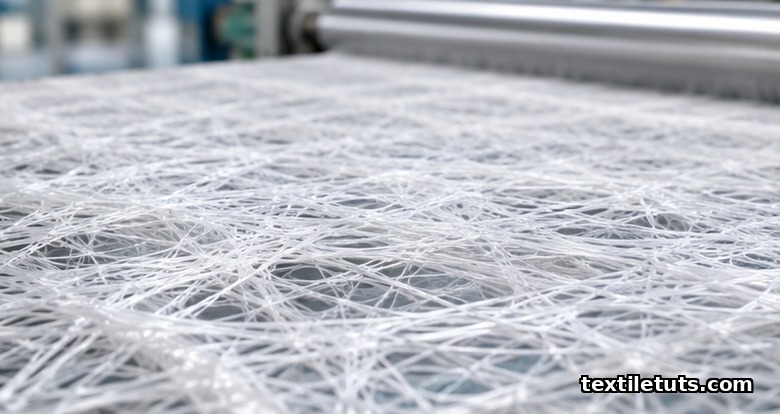
The outer SBPP layer is treated with a water-repellent finish or left inherently hydrophobic to resist splash penetration. Tests under ASTM F1862 measure fluid resistance by challenging the material with synthetic blood at controlled velocities; pass/fail thresholds align with the F2100 levels above. A 25 g/m² SBPP layer with a hydrophobic finish typically reaches the 80 mmHg Level 1 threshold; higher fluid resistance requires heavier or denser constructions.
The inner layer is typically a softer SBPP or a spunbond-meltblown composite designed to absorb exhaled moisture. Softness comes from finer filaments and lower basis weight rather than from chemical softeners, which can interfere with filtration and raise skin irritation during long wear.
Meltblown Polypropylene: The Filtration Core
The meltblown layer is the heart of the mask. Meltblown polypropylene fibers are extruded through fine dies and attenuated with high-velocity hot air to diameters of 1-5 µm, more than ten times finer than spunbond fibers. These microfibers form a tortuous web that mechanically intercepts particles.
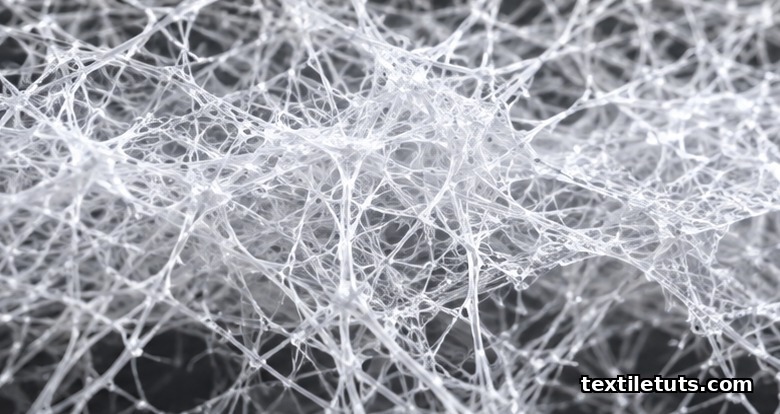
Two filtration mechanisms operate in a meltblown layer: mechanical (interception, impaction, and diffusion) and electrostatic. Electret charging, typically by corona discharge, injects stable dipoles into the polypropylene web so the fibers attract oppositely charged particles, including the smallest aerosols below 0.3 µm. This is why a 25 g/m² meltblown layer can filter ≥95% of submicron particles even though the fiber diameters alone would not predict that performance (Podgórski et al., 2006).
Meltblown basis weights for surgical masks range from 20 g/m² to 40 g/m² per layer. Higher-performance masks stack two meltblown layers or use a heavier single layer. Global shortages of MBPP during 2020 exposed how few manufacturers worldwide operate meltblown lines with the precision needed for medical filtration; many facilities can produce commodity meltblown for hygiene products but cannot hold the fiber diameter distribution and charge stability required for ASTM F2100.
Meltblown charge stability is also time-sensitive. Polypropylene electrets lose charge under high humidity, high temperature, and certain disinfectants. Shelf-life testing for surgical masks typically caps storage at two to five years from manufacture, depending on packaging and storage conditions.
SMS, SMMS, and Spunbond-Meltblown Composite Structures
Spunbond-meltblown-spunbond (SMS) is the most common composite nonwoven for surgical masks and many N95-equivalent respirators. The structure places a meltblown core between two spunbond carriers, which protect the delicate meltblown from abrasion and lint shedding during converting and wear.
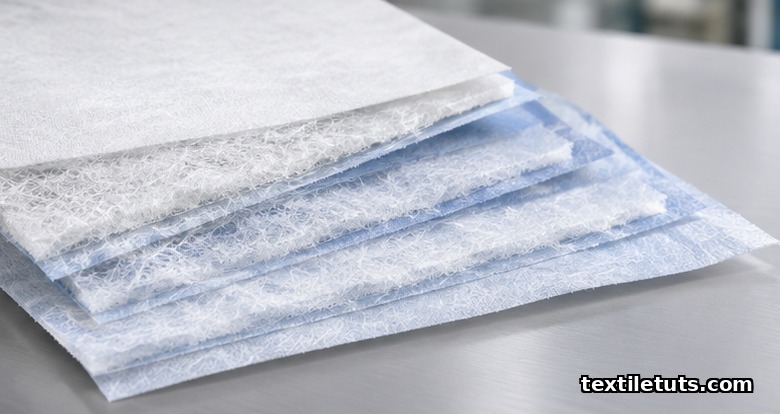
Spunbond-meltblown-meltblown-spunbond (SMMS) adds a second meltblown layer for higher filtration and is common in Level 2 and Level 3 masks. Other variants place spunbond on the outside and a thicker meltblown-spunbond laminate inside, depending on the manufacturer’s process.
Composite basis weights for finished SMS mask fabric typically total 60-100 g/m², with the meltblown accounting for 25-50% of that weight. The hydrophobic SBPP outer (typically 20-30 g/m²), MBPP middle (20-40 g/m²), and inner SBPP (20-30 g/m²) together define both comfort and barrier performance. Three-layer SMS at 80 g/m² is a typical Level 1 construction; Level 2 and Level 3 typically push the composite to 90-100 g/m² with denser meltblown.
BFE, PFE, and Breathability Test Methods
Bacterial filtration efficiency (BFE) is measured under ASTM F2101 using Staphylococcus aureus aerosol at a mean particle size of 3.0 ± 0.3 µm, with a challenge flow of 28.3 L/min. The difference in upstream and downstream colony counts yields the BFE percentage.
Particulate filtration efficiency (PFE) is measured under ASTM F2299 using latex sphere or NaCl aerosol at 0.1 µm, 0.3 µm, or other specified sizes. PFE matters for respirator-grade filtration because the most-penetrating particle size (MPPS) for electret media is around 0.3 µm, where mechanical and electrostatic contributions meet at their weakest point. Filtration efficiency at 0.1 µm is often higher than at 0.3 µm because diffusion dominates below 0.2 µm.
Breathability is measured as differential pressure per ASTM F2100 using a manometer across the material at a fixed flow rate. Lower values indicate easier breathing. Differential pressure sits alongside filtration efficiency in every ASTM F2100 performance tier because a mask that no one can wear is not a useful mask.
NIOSH 42 CFR Part 84 sets the U.S. respirator framework: N95 filters ≥95% of NaCl aerosol at 85 L/min; N99 filters ≥99%; N100 filters ≥99.97%. The 85 L/min test flow is much higher than the 28.3 L/min BFE flow, which is why respirator-grade masks need denser and stronger electret charging than surgical masks. Surgical masks and respirators are tested under different conditions and are not directly comparable.
Reusable Cloth Masks: What the Research Shows
Reusable cloth masks are not medical devices, but several peer-reviewed studies quantify their filtration against aerosols. A 2020 study in ACS Nano by Konda et al. found that a 2-layer cotton mask with a basis weight around 200 g/m² blocked 80-90% of particles below 300 nm when the fabric was tightly woven. Adding a third layer of cotton or a nonwoven insert pushed filtration above 90%.
Cloth filtration depends on three variables: fiber diameter (finer is better), weave tightness or knit density (denser is better), and number of layers (more layers raise filtration but also raise differential pressure). A 2-layer cotton mask with a 600-thread-count weave can approach surgical-mask filtration in lab tests, though fit and edge leakage dominate real-world performance.
Standards for community cloth masks emerged after 2020. CWA 17553:2020 (CEN Workshop Agreement) sets minimum filtration, breathability, and reusability criteria for fabric masks sold in Europe. The ASTM F3502-21 standard addresses barrier face coverings with two tiers of filtration and breathability, intended for general public use rather than healthcare. These standards do not replace ASTM F2100 for medical use; they offer a lower bar with documented test methods.
Frequently Asked Questions
What is the best fabric for a face mask?
For surgical and medical use, spunbond-meltblown-spunbond (SMS) polypropylene nonwovens meeting ASTM F2100-23 Level 1, 2, or 3 remain the standard. For reusable community masks, multi-layer cotton (2-3 layers, 200-600 g/m², tightly woven) combined with a nonwoven filter insert offers the best filtration-to-breathability balance documented in peer-reviewed studies.
What is the meltblown layer in a mask?
The meltblown layer is a nonwoven web of 1-5 µm polypropylene microfibers, typically 20-40 g/m² per layer, that captures airborne particles through a combination of mechanical interception and electrostatic attraction. It is the primary filtration layer in surgical masks and N95 respirators.
How many layers should a face mask have?
ASTM F2100-23 surgical masks use three layers: outer spunbond polypropylene, meltblown polypropylene middle, and inner spunbond polypropylene. Reusable cloth masks typically use 2-4 layers, with peer-reviewed research supporting filtration gains up to about 4 layers before breathability becomes impractical.
Are cloth face masks as effective as surgical masks?
Single-layer cloth masks filter 10-30% of submicron particles, well below surgical-mask performance. Properly constructed 2-3 layer tightly woven cotton masks can reach 70-90% filtration in lab tests, but fit, edge leakage, and washing durability all affect real-world performance. ASTM F3502-21 is the U.S. standard for evaluating barrier face coverings.
What fabric should not be used in a face mask?
Loosely knitted fabrics, single-layer woven materials under 100 g/m², and any fabric with visible gaps or stretch that breaks the seal at the edges should not be used as the sole barrier. Materials treated with fabric softeners or dryer sheets lose electrostatic charge on polypropylene and reduce filtration. Washable spunbond-meltblown composites are preferred when reuse is intended.
References
- ASTM International. F2100-23 Standard Specification for Performance of Materials Used in Medical Face Masks. ASTM.
- ASTM International. F2101-19 Standard Test Method for Evaluating the Bacterial Filtration Efficiency (BFE) of Medical Face Mask Materials, Using a Biological Aerosol of Staphylococcus aureus. ASTM.
- ASTM International. F2299-17 Standard Test Method for Determining the Initial Efficiency of Materials Used in Medical Face Masks to Penetration by Particulates Using Latex Spheres. ASTM.
- ASTM International. F1862-17 Standard Test Method for Resistance of Medical Face Masks to Penetration by Synthetic Blood (Horizontal Projection of Fixed Volume at a Known Velocity). ASTM.
- ASTM International. F3502-21 Standard Specification for Barrier Face Coverings. ASTM.
- NIOSH. 42 CFR Part 84 Respiratory Protective Devices. U.S. National Institute for Occupational Safety and Health.
- Konda, A., Prakash, A., Moss, G. A., Schmoldt, M., Grant, G. D., & Guha, S. (2020). Aerosol Filtration Efficiency of Common Fabrics Used in Respiratory Cloth Masks. ACS Nano, 14(5), 6339-6347.
- Podgórski, A., Bałazy, A., & Gradoń, L. (2006). Application of Nanofibers to Improve the Filtration Efficiency of the Most Penetrating Aerosol Particles in Electret Filters. Annals of Occupational Hygiene, 50(6), 549-561.
- CEN. CWA 17553:2020 Community Face Coverings. European Committee for Standardization.
This article is the working reference for face mask fabric requirements. Editorial by Md. Asad Ullah (Meem), TextileTuts. Sources: ASTM F2100-23, ASTM F2101-19, ASTM F2299-17, ASTM F1862-17, ASTM F3502-21, NIOSH 42 CFR Part 84, Konda et al. (ACS Nano 2020), Podgórski et al. (Annals of Occupational Hygiene 2006), CWA 17553:2020 as cited.


