
Enzyme Wash: Cellulase Treatment

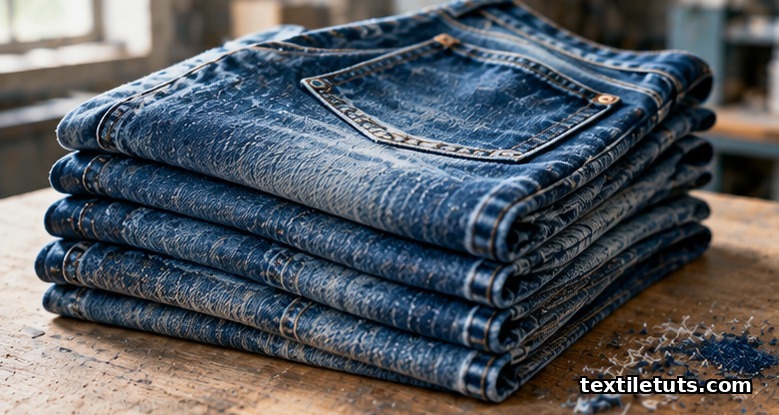
Enzyme wash with acid cellulase at 0.5–3.0% on weight of fabric (owf), pH 4.5–5.5, and 45–55 °C for 30–90 minutes removes surface microfibrils and indigo dye from cotton and cotton-blend denim, producing a stone-washed look with 30–50% less tensile-strength loss than pumice stone washing.
Cellulase enzymes hydrolyze the β-1,4-glycosidic bonds in cellulose, weakening the protruding fiber ends so they break off during agitation, which exposes less-dyed inner fiber, lightens the surface, and softens the fabric hand.
This guide covers the chemistry, process parameters, machinery, comparison with stone wash, quality-control tests, and frequently asked questions from finishing-floor managers and denim-mill engineers.
What Is Enzyme Wash and Why Cellulase?
Enzyme wash is a wet-finishing process in which a garment or fabric is treated with cellulase enzymes to modify the surface of cellulosic fibers. In denim finishing, the goal is to mimic the abrasion that pumice stones create: faded high points, soft hand, and visible yarn structure. Because enzymes are catalytic and selective, they attack only the cellulose on the fiber surface, leaving the bulk polymer largely intact. That selectivity is the main reason cellulase replaced pumice in most modern mills.
The active agent is a blend of cellulases, mostly produced by submerged fermentation of Trichoderma reesei or Aspergillus niger. Three classes of enzyme work together:
- Endoglucanases (EG, EC 3.2.1.4) cleave internal β-1,4 bonds randomly along the cellulose chain, producing new chain ends.
- Exoglucanases or cellobiohydrolases (CBH, EC 3.2.1.91) release cellobiose units from the chain ends.
- β-glucosidases or cellobiases (EC 3.2.1.21) hydrolyze cellobiose to glucose, preventing end-product inhibition of the first two classes.
The synergistic action of the three classes is what produces controlled surface erosion without excessive strength loss, a balance that single-enzyme systems cannot achieve. Commercial cellulase preparations for denim are typically sold as liquids with activity declared in CMC U/g or EGU/g, and dose is calculated against the weight of the garment or fabric.
How the Chemistry Translates to a Faded Look
Indigo dye sits on the surface of cotton yarn rather than penetrating the fiber core. During rope dyeing, the dye molecules form a layer roughly 1–2 µm thick on the outer fibrils. When cellulases hydrolyze those fibrils, indigo flakes off with them, exposing white or pale fiber underneath. The effect is strongest on raised surfaces such as seams, hems, pocket edges, and waistband folds, where mechanical agitation combines with enzyme hydrolysis to remove more dye per unit time.
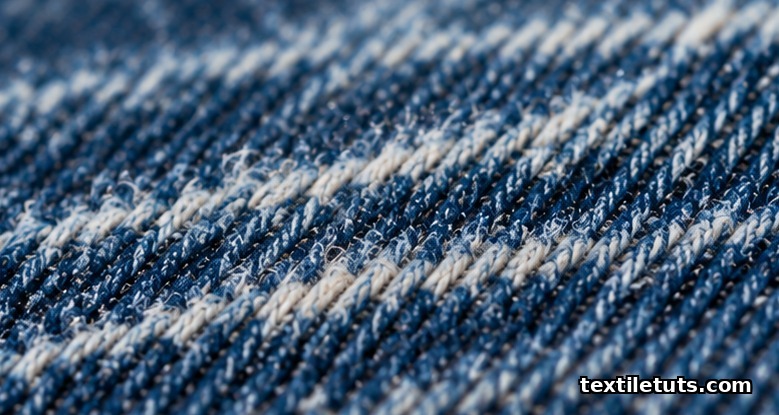
The chemistry also explains why cellulase works only on cellulosic fibers. Synthetic fibers such as polyester, elastane, and polyamide have no β-1,4-glycosidic bonds to hydrolyze, so they pass through the bath chemically unchanged. In a 98% cotton / 2% elastane denim, the elastane survives intact and the cotton surface abrades uniformly. In a 50/50 cotton-polyester blend, the polyester portion is unaffected while the cotton portion fades, which produces an uneven, two-tone look after repeated wash cycles. Designers sometimes exploit this for slub and nep effects; mills running a consistent product prefer blends below 30% synthetic to keep the finish predictable.
Process Parameters that Drive Results
Five parameters control the final look, hand, and strength loss. They must be controlled together because changing one shifts the others.
- Temperature: 45–55 °C is the working window for acid cellulase. Below 40 °C, enzyme activity falls sharply; above 60 °C, Trichoderma-derived cellulases denature within minutes and the bath becomes inactive.
- pH: 4.5–5.5, adjusted with acetic acid or citrate buffer. Modern acid cellulases tolerate pH 4.0–6.0; neutral cellulases (used for biopolishing of knit fabrics) work at pH 6.0–8.0.
- Dose: 0.5–3.0% owf for denim, where higher doses produce faster abrasion but also more tensile-strength loss and shade change.
- Time: 30–90 minutes of treatment, followed by a hot rinse at 70–80 °C for 10–15 minutes to deactivate the enzyme and prevent back-staining on lighter pockets or trims.
- Mechanical agitation: drum speed (6–12 rpm), liquor ratio (typically 1:6 to 1:10), and load factor all influence the rate at which loosened fibrils are removed. Higher agitation accelerates abrasion but increases pumice damage in stone-enzyme hybrid washes.
A common finishing-floor mistake is to push dose and time upward when a heavier vintage look is wanted. Beyond 3.0% owf or 90 minutes the returns diminish fast: fabric weight drops below the 8–12% window most specifications accept, and warp tensile strength can fall more than 20%, pushing the fabric out of apparel-grade tolerance.
Enzyme Wash vs Pumice Stone Wash
Cellulase has not fully replaced pumice in commercial denim; instead, most mills run a hybrid process. The trade-offs are summarized below.

| Property | Enzyme Wash | Pumice Stone Wash |
|---|---|---|
| Tensile strength loss | 5–15% | 20–40% |
| Fabric weight loss | 3–6% | 5–12% |
| Effluent sediment | Low (biological) | High (mineral sludge) |
| Machine wear | Minimal | Significant drum wall damage |
| Hand feel | Soft, smooth | Rougher, sometimes gritty |
| Repeatability | High (controllable dose) | Variable (stone breakage) |
| Cycle time | 30–90 min | 60–120 min |
| Sharp contrast points | Lower | Higher |
Most commercial denim mills now run a small charge of pumice (10–30% owf) combined with 0.5–1.0% owf cellulase. The stones create the sharp contrast points that customers associate with vintage denim, while the enzyme provides uniform background fading and softer hand. Pure enzyme-only washes are used for premium stretch denim where elastane survival is critical and for dark-wash rinse programs where only light abrasion is needed.
Industrial Process Flow
A standard enzyme wash cycle on an industrial garment-dyeing or washing machine proceeds as follows:
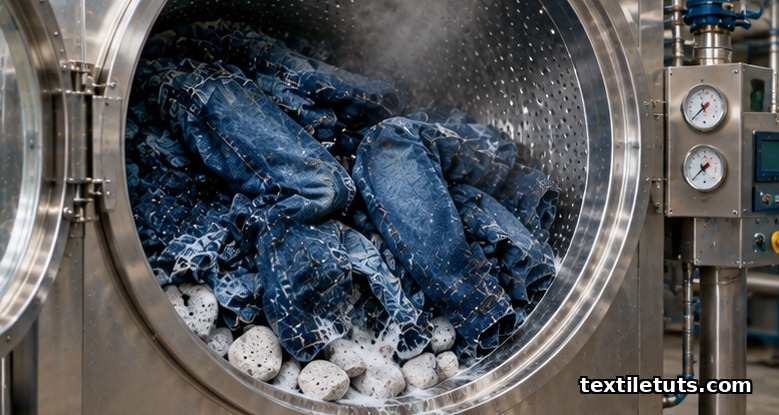
- Desize: garments are pre-treated with alpha-amylase at 60–80 °C for 15–20 minutes to remove starch-based sizing from weaving.
- Rinse: hot rinse at 70–80 °C to clear residual size and chemicals.
- Adjust bath: temperature set to 45–55 °C, pH 4.5–5.5 using acetic acid and citrate buffer. Bath circulated for 5 minutes to stabilize.
- Enzyme dose: cellulase added at 0.5–3.0% owf; bath circulated for 5–10 minutes to ensure even distribution before agitation starts.
- Treatment: drum rotation at 6–12 rpm for 30–90 minutes; small pumice load added at this stage if a hybrid process is used.
- Drain and rinse: bath dropped; garments rinsed at 70–80 °C for 10–15 minutes to denature residual enzyme and prevent back-staining.
- Optional softening: silicone microemulsion or fatty-acid softener applied in a fresh bath at 30–40 °C for 15–20 minutes.
- Hydroextract and dry: hydroextracted to 70–80% moisture pickup, then tumble-dried at 60–70 °C.
Operators must stop the bath with a heat shock above 80 °C or a pH shock above 9 before draining, because residual active enzyme entering the effluent can continue to hydrolyze cellulose in subsequent batches and produce off-shade staining.
Quality Control and Testing
Finishing mills verify enzyme-wash results with the following standardized tests:
- Weight loss per ISO 6330 reference wash, reported as percentage of original fabric weight before and after treatment.
- Tensile strength per ISO 13934-1 strip method or ASTM D5034 grab method, on both warp and weft directions.
- Pilling resistance per ASTM D3512 random tumble method, evaluated against AATCC photographic standards.
- Color change and crocking per AATCC TM 8, with shade measured on a spectrophotometer (typically expressed as CIELAB ΔE).
- Dimensional change per ISO 5077 after three or five home-laundering cycles, paired with ISO 6330.
A typical acceptable tolerance on enzyme-wash denim is 8–12% weight loss and no more than 15% reduction in warp tensile strength. Mills chasing a heavier vintage look accept higher weight loss (up to 18%) but compensate by using a heavier base fabric (14 oz/yd² instead of 11 oz/yd²) so the finished garment still meets the target weight at retail.
Frequently Asked Questions
Does enzyme wash damage the fabric permanently?
Enzyme wash removes a measurable fraction of cellulose (3–6% of fabric weight at typical doses), so the strength loss is real, not reversible. However, the loss is significantly lower than stone-wash damage, and the residual fabric still meets most apparel end-use specifications when process parameters stay within the 0.5–3.0% owf dose and 30–90 minute treatment window.
Can enzyme wash be used on cotton-polyester blends?
Yes, but the effect is uneven. The cotton portion fades and softens while the polyester portion is chemically unaffected, producing a two-tone look that can be either a feature or a defect depending on the intended aesthetic. For uniform results on blends, acid cellulase combined with a mild pumice charge is the most common approach.
What is the difference between acid cellulase and neutral cellulase?
Acid cellulases work at pH 4.5–5.5 and are the standard for denim because the acidic bath also helps release indigo dye from the fiber surface. Neutral cellulases work at pH 6.0–8.0 and are preferred for biopolishing of knit fabrics where the goal is to remove surface fuzz without affecting dye shade.
How do you stop the enzyme reaction at the end of the cycle?
Raise the bath temperature above 80 °C for at least 10 minutes, or raise the pH above 9 with sodium carbonate. Both treatments denature the enzyme protein and stop hydrolysis. A cold rinse alone does not stop the reaction; only heat or pH shock reliably inactivates the enzyme.
Is enzyme wash more sustainable than stone wash?
Yes, on three counts. First, the effluent is biodegradable rather than loaded with mineral sediment that must be landfilled. Second, the energy demand is lower because cycle times are 30–60% shorter. Third, machine wear from pumice impact is reduced, extending equipment life. The main sustainability caveat is that the indigo dye released into the bath still requires effluent treatment before discharge.
References
- International Organization for Standardization. ISO 6330:2021, Domestic washing and drying procedures for textile testing. iso.org — standard reference wash cycles for dimensional-change and appearance tests.
- International Organization for Standardization. ISO 13934-1:2013, Textiles, Tensile properties of fabrics, Part 1: Strip method. iso.org — tensile-strength test method.
- International Organization for Standardization. ISO 5077:2007, Determination of dimensional change. iso.org — paired with ISO 6330 for shrinkage evaluation after multiple home launderings.
- ASTM International. ASTM D5034-21, Breaking Strength and Elongation of Textile Fabrics (Grab Test). astm.org — tensile-strength alternative to ISO 13934.
- ASTM International. ASTM D3512-21, Pilling Resistance and Other Related Surface Changes of Textile Fabrics: Random Tumble. astm.org — pilling evaluation after enzyme wash.
- AATCC. AATCC Test Method 8, Colorfastness to Crocking. aatcc.org — color change and staining evaluation.
- Heikinheimo, L., Buchert, J., Miettinen-Oinonen, A., and Suominen, P. (2000). Effect of cellulases on cotton and denim. ScienceDirect — peer-reviewed analysis of cellulase action on cellulose fiber surface.
- Kan, C. W., Yuen, C. W. M., and Lam, Y. L. (2009). Effect of enzyme washing on the color, tensile strength and handle of denim fabric. ResearchGate — peer-reviewed process study on cellulase dosage and shade.
- MDPI. Cellulases in textile processing, a review. mdpi.com — open-access review of cellulase applications in textile wet finishing.
Editorial by Shahrukh Islam, TextileTuts. Sources: ISO 6330, ISO 13934-1, ISO 5077, ASTM D5034, ASTM D3512, AATCC TM 8, Heikinheimo et al. (2000), Kan et al. (2009), MDPI cellulase review as cited.


