
How to Remove Grass Stains from Clothes and Sports Gear

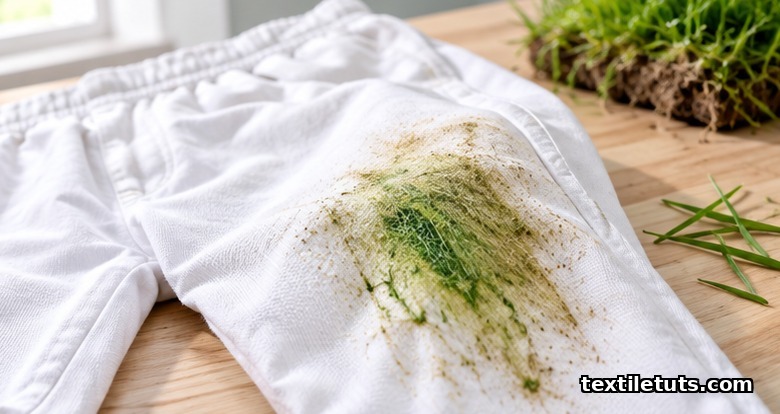
Grass stains are among the most stubborn common fabric stains because they consist of chlorophyll (a plant pigment), protein compounds from plant cells, and tannins — a triple-component stain that requires enzyme treatment to break down the organic matter. Cold water alone has minimal effect on grass stains; enzyme detergent is the most effective home treatment for all three stain components.
Why Grass Stains Are Difficult to Remove
Unlike food or mud stains that contain a single problematic compound, grass stains are a three-part chemical challenge. Each component binds to fabric in a different way and requires a different treatment approach.
Chlorophyll — The Green Dye
Chlorophyll is the primary pigment in grass and functions as a natural dye at the molecular level. Its porphyrin ring structure contains a magnesium ion at its center, which gives grass its characteristic green color. Chlorophyll bonds to cotton fibers through hydrogen bonding with the hydroxyl groups on cellulose. The molecule is non-polar and fat-soluble, which means water alone cannot lift it — but isopropyl alcohol (rubbing alcohol) dissolves chlorophyll effectively by breaking these hydrogen bonds.
Proteins — Plant Cell Contents
Grass contains structural and cytoplasmic proteins that behave similarly to blood stains and egg stains when heated. Once the protein in a grass stain coagulates — which happens when exposed to heat above 40°C (104°F) — it cross-links with cellulose fibers and becomes permanently set. This is why placing a grass-stained garment in a hot dryer can make the stain permanent: the heat causes the protein to denature and bond irreversibly to the fabric.
Tannins — The Brownish Compound
Tannins are polyphenolic compounds found in the cell walls of grasses. They produce a brownish discoloration in addition to the green from chlorophyll, which explains why older grass stains take on an olive or khaki tone. Tannins bind to proteins and cellulose through hydrophobic interactions and hydrogen bonding — the same mechanism that makes coffee and tea stains persistent. Tannins are oxidation-sensitive, which is why oxygen-based bleaches (OxiClean) work well on the tannin component.
Because each of these three compounds requires a different treatment chemistry, a single product — whether laundry detergent alone or rubbing alcohol alone — cannot fully remove a grass stain. Effective removal requires a multi-step approach targeting each component.
Method 1: Enzyme Detergent (Most Effective)
Enzyme detergents are the single most effective home treatment for grass stains because they address the protein component — the largest and most fiber-bonded part of the stain. Protease enzymes (also called proteolytic enzymes) cleave peptide bonds in proteins, breaking the large protein molecules into smaller water-soluble peptides and amino acids that wash away in the rinse cycle.
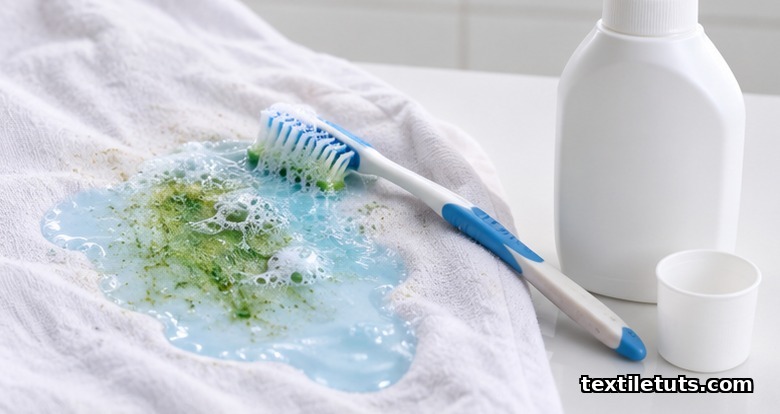
Protease enzymes work optimally at temperatures between 30°C and 50°C (86°F–122°F). Below 20°C (68°F), enzyme activity slows significantly. Above 60°C (140°F), the enzymes denature and lose effectiveness. For synthetic fabrics that require cold washing, a longer dwell time (soaking period) offsets the reduced enzyme activity.
- Do NOT pre-rinse with water. Wetting a dried grass stain before enzyme treatment can begin to re-dissolve and spread the chlorophyll pigment deeper into the fiber matrix. Treat the stain while the fabric is dry.
- Apply enzyme liquid detergent (Persil, Tide, or equivalent with protease listed as an active ingredient) directly onto the dry stain. Use enough product to fully saturate the stained area — approximately 2–3 tablespoons for a stain the size of a palm.
- Work the detergent in gently using a soft-bristled brush (an old toothbrush works well) or your fingers. Use circular motions working from the outside of the stain toward the center to avoid spreading.
- Allow the garment to sit for 30–60 minutes. For fresh stains (within 24 hours), 30 minutes is sufficient. For dried or set stains, allow 60 minutes minimum — up to 2 hours for stains that have been through a hot dryer cycle.
- Wash at the highest temperature safe for the fabric. Check the care label: cotton can tolerate up to 95°C (203°F), but colored cotton should be washed at 40°C (104°F) to prevent dye bleeding. Synthetic fabrics typically require 40°C (104°F) maximum. If in doubt, 40°C is a safe middle ground that maintains reasonable enzyme activity.
- Check the stain before placing the garment in the dryer. Heat from a tumble dryer will set any remaining pigment permanently. If the stain persists after washing, allow the garment to air dry and repeat the treatment before using any heat.
Method 2: Rubbing Alcohol (For the Chlorophyll Component)
Isopropyl alcohol (rubbing alcohol) at concentrations of 70% or higher is an effective solvent for chlorophyll. The alcohol molecule penetrates the porphyrin ring of chlorophyll and disrupts the hydrophobic interactions holding it to the fabric fiber. This chemical action works within minutes, making rubbing alcohol a useful pre-treatment step before enzyme detergent application.
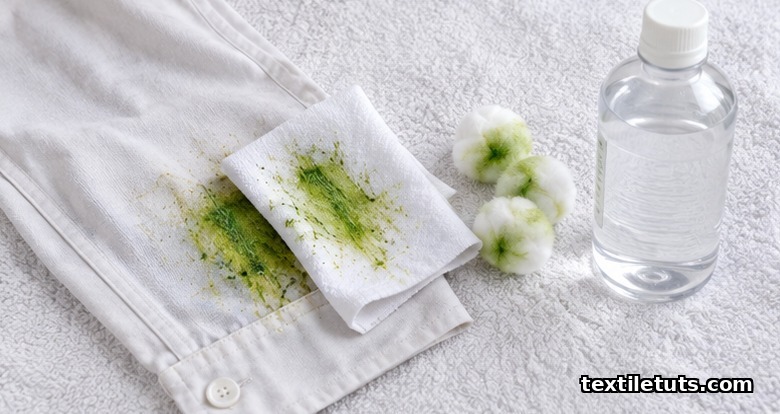
- Apply isopropyl alcohol (70% or 91%) to a clean white cloth or cotton ball.
- Blot the stain from the outside inward — never scrub in a circular motion, which spreads the pigment.
- Allow the alcohol to sit on the stain for 5–10 minutes. You will see the cloth picking up green color as the chlorophyll dissolves.
- Follow with enzyme detergent treatment. Rubbing alcohol addresses only the chlorophyll component — it does not break down the protein or tannin compounds, which require enzyme and oxidation treatment respectively.
Important: Do NOT use rubbing alcohol on acetate or triacetate fabrics. Isopropyl alcohol dissolves these fiber types and will damage the garment permanently. Test on an inconspicuous area first for any fabric you are uncertain about.
Method 3: OxiClean Pre-Soak (For Older or Set Stains)
OxiClean (sodium percarbonate, Na₂CO₃·1.5H₂O₂) releases hydrogen peroxide when dissolved in warm water. The released H₂O₂ acts as an oxidizing agent that breaks the double bonds in the chlorophyll molecule’s porphyrin ring (decolorizing it) and oxidizes tannins to colorless compounds. OxiClean is particularly effective on grass stains that have been through a hot dryer cycle, where the protein component has begun to set.
- Mix OxiClean powder in warm water (not hot — use 40°C/104°F maximum) at the concentration specified on the product label (typically 1 scoop per gallon of water).
- Soak the garment for 1–4 hours. For fresh stains, 1 hour is typically sufficient. For stains that have set for days or weeks, extend to the full 4 hours.
- For best results on severely set stains, apply enzyme detergent directly to the stain 30 minutes before beginning the OxiClean soak — this two-stage approach attacks the protein component first, then the color compounds.
- After soaking, wash as normal at the highest safe temperature for the fabric.
Method 4: Dish Soap + Hydrogen Peroxide (For White Cotton)
This method uses the bleaching power of hydrogen peroxide (H₂O₂) in combination with dish soap as a surfactant to lift color from white cotton fibers. Hydrogen peroxide bleaching works by generating free hydroxyl radicals (·OH) that attack the conjugated double bond system in chlorophyll, breaking it down to colorless smaller molecules. The reaction is accelerated by heat and by alkaline conditions (dish soap provides mild alkalinity).
- Mix 1 part clear dish soap (Dawn or equivalent) with 2 parts 3% hydrogen peroxide solution. For a standard stain, use approximately 1 tablespoon of dish soap and 2 tablespoons of hydrogen peroxide.
- Apply the mixture directly to the stain and work in gently with a soft brush.
- Allow to sit for 15–30 minutes. The mixture will begin bubbling as the H₂O₂ decomposes — this is the oxidation reaction actively breaking down the stain.
- Rinse thoroughly with cool water, then wash normally.
Use this method only on white and light-colored cotton fabrics. Hydrogen peroxide at concentrations above 3% or prolonged exposure can cause color loss even on colorfast fabrics. Test on an inconspicuous area (inside waistband or hem) before applying to the stain itself.
Grass Stains on Sports Gear
Sports gear presents unique challenges for grass stain removal: the stains are often large (covering knees, shins, or elbows), the fabrics are varied (from delicate synthetics to hard-shelled protective equipment), and the stains tend to be deeply embedded from repeated exposure during a season.
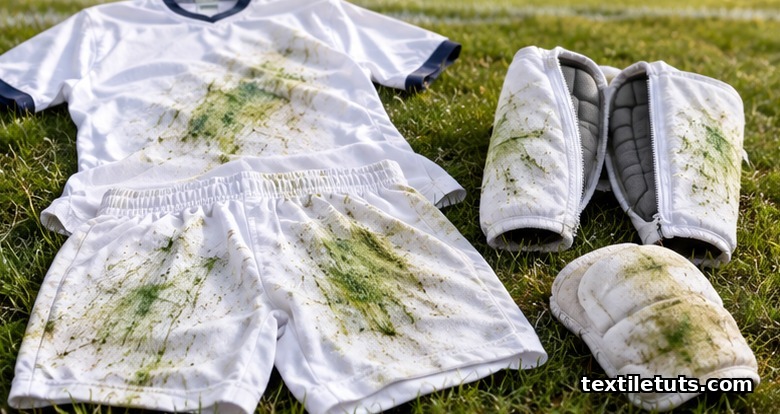
Football, Rugby, and Cricket Kits
These sports typically use white or light-colored polyester-cotton blends or 100% polyester fabrics. Because the fabrics are predominantly white, aggressive treatment is safe:
- Pre-treat with enzyme detergent and allow 30–60 minutes dwell time.
- Follow with an OxiClean soak at 40°C (104°F) for 2 hours.
- Machine wash at 40°C (104°F) maximum — higher temperatures risk damaging the polyester fibers and causing fabric pilling.
- Air dry or tumble dry on low heat. Never use a hot dryer on synthetic sports fabrics, as any residual pigment will set.
Synthetic Sports Fabrics (Running, Cycling, Gym)
Modern synthetic performance fabrics (polyester, nylon, elastane blends) are engineered to wick moisture and resist water-based stains, but they absorb oil-based substances like chlorophyll readily. These fabrics also attract and hold onto oils from skin, which can compound the grass stain problem:
- Use enzyme detergent soak at 30°C (86°F) — the enzyme handles both the grass protein and body oil components.
- Wash on a cold cycle (30°C/86°F maximum) using the same enzyme detergent.
- Skip the fabric softener — it coats synthetic fibers and actually makes stains harder to remove by reducing the fabric’s ability to absorb water and detergent.
- Air dry only. The heat from a tumble dryer sets protein stains permanently on synthetic fabrics.
Knee Pads, Shin Guards, and Removable Padding
Protective equipment often has fabric covers that can be removed and machine washed separately from the hard plastic or foam components:
- Remove fabric covers from hard components before any wet treatment — foam and plastic cores can absorb water and develop odor.
- Soak the fabric covers in enzyme detergent solution at 40°C (104°F) for 2 hours for heavily stained covers.
- For non-removable covers, apply enzyme detergent directly to the stained area, cover with a damp cloth, and allow 2 hours before wiping clean.
Grass Stains by Fabric Type
| Fabric | Pre-Treatment | Main Treatment | Wash Temperature | Notes |
|---|---|---|---|---|
| White cotton | Enzyme detergent (30 min) | Hydrogen peroxide + dish soap (30 min) or OxiClean soak | Up to 95°C (203°F) | Can use hottest wash safe for fabric; H₂O₂ safe on white only |
| Colored cotton | Enzyme detergent (30 min) | OxiClean soak (no H₂O₂) | 40°C (104°F) max | Test colorfastness first; H₂O₂ risks color lightening |
| Polyester / synthetic | Enzyme detergent (30 min) | Enzyme detergent + OxiClean (gentle) | 30–40°C (86–104°F) | Cold wash preferred; never tumble dry hot |
| Wool | Cold water blot only | Professional dry clean recommended | Cold hand wash only | Enzyme detergents damage wool fibers (protein-on-protein); avoid all chemicals |
| Nylon | Enzyme detergent (15 min) | Enzyme detergent + mild OxiClean | 30–40°C (86–104°F) | Nylon is durable but heat-sensitive; air dry only |
Wool and Delicate Fabrics
Wool fibers are themselves made of protein (keratin), which means protease enzyme detergents will break down the fabric along with the stain — a process called fiber degradation. Never use enzyme detergents on wool, silk, or other protein-based fabrics. For grass stains on wool garments, the only safe options are cold water blotting to prevent the stain from setting, followed by professional dry cleaning. Attempting home treatment with enzyme or oxidation products will damage the garment irreparably.
Frequently Asked Questions
Do grass stains come out in the wash?
Not reliably with just washing. Grass requires enzyme pre-treatment. Without pre-treatment, standard washing removes some of the stain but typically leaves visible green or yellow marks because the chlorophyll pigment is fat-soluble and water alone cannot lift it, and the protein component is not broken down without protease enzymes.
How do you remove old dried grass stains?
Soak in enzyme detergent for 1–2 hours first to soften and break down the protein compounds. Follow with an OxiClean soak for 2–4 hours to address the chlorophyll and tannin components through oxidation. Wash at the highest safe temperature for the fabric. If the stain persists after one cycle, allow the garment to air dry completely and repeat the full treatment before using any heat drying.
Does rubbing alcohol remove grass stains?
Rubbing alcohol effectively dissolves the chlorophyll (green pigment) component of grass stains by breaking the hydrogen bonds between chlorophyll and fabric fibers. However, alcohol alone does not address the protein or tannin components. For complete removal, follow the rubbing alcohol treatment with enzyme detergent to break down proteins, then OxiClean to oxidize tannins.
Can I use bleach on grass stains?
Chlorine bleach (sodium hypochlorite) is not recommended for grass stains because it can cause yellowing on white cotton fabrics through a reaction called halogenation, and it damages polyester and nylon fibers. Oxygen-based bleaches like OxiClean are safer and more effective on grass stains because they break down chlorophyll without the side reactions that cause fabric damage or yellowing.
How long should I let enzyme detergent sit on a grass stain?
For fresh grass stains (within 24 hours), 30 minutes of enzyme detergent dwell time is sufficient at optimal wash temperatures of 40–50°C (104–122°F). For dried or set stains, allow 60 minutes minimum, and up to 2 hours for stains that have been through a hot dryer cycle. Colder soaking temperatures require longer dwell times — at 20°C (68°F), double the soak duration.
Key Takeaways
- Grass stains are triple-component stains requiring enzyme treatment (protein), oxidation (chlorophyll and tannins), and targeted solvent action (chlorophyll) for complete removal.
- Never place a grass-stained garment in a hot dryer — heat permanently sets all three stain components.
- Enzyme detergent is the single most effective home treatment and should always be your first step.
- White cotton tolerates the most aggressive treatment (hot wash + hydrogen peroxide); wool requires professional dry cleaning only.
- Check the stain before drying every single time. Repeat the treatment if needed — grass stains typically require 2–3 cycles for complete removal on set stains.
For outdoor sports gear that combines both mud and grass exposure, see our guide to removing mud stains from clothes. For a full reference on treating other common fabric stains — including dye stains like coffee and tea — consult our comprehensive guide to removing all fabric stains.
References
- American Cleaning Institute. (n.d.). Stain Removal Guide. https://www.cleaninginstitute.org/how-tos/stain-removal-guide
- AATCC (American Association of Textile Chemists and Colorists). (n.d.). Technical Manual — Test Method 61: Colorfastness to Laundering. https://www.aatcc.org
- Cotton Incorporated. (n.d.). Cotton Fiber and Fabric Science. https://cottonworks.com
- ISO (International Organization for Standardization). (2010). ISO 105-C06:2010 — Textiles: Tests for colorfastness — Part C06: Colorfastness to domestic and commercial laundering. ISO.
- The International Wool Textile Organisation. (n.d.). Wool Care Guidelines. https://www.woolsafe.org


