
Cradle to Cradle Certified Textiles

Cradle to Cradle Certified® textiles must score at least 28 of 100 points across five quality categories (Material Health, Product Circularity, Renewable Energy and Climate, Water Stewardship, and Social Fairness) under the Cradle to Cradle Products Innovation Institute’s Version 4.0 standard, published in July 2022.
The standard rates each textile product on a five-tier scale (Basic, Bronze, Silver, Gold, or Platinum), so two fabrics carrying the same Cradle to Cradle Certified® mark from the same mill can have substantially different sustainability profiles depending on how they score in each category.
This article explains how the certification works, what each of the five performance categories measures, how the tiers compare against one another, and how Cradle to Cradle Certified® textiles differ from the OEKO-TEX, GOTS, and Bluesign labels buyers more commonly see in the apparel supply chain.
What Is Cradle to Cradle Certification?
Cradle to Cradle (often abbreviated C2C) is a product-level certification administered by the Cradle to Cradle Products Innovation Institute, a nonprofit founded in 2010 by William McDonough and Michael Braungart, the chemists and designers behind the 2002 book Cradle to Cradle: Remaking the Way We Make Things.
Unlike single-issue eco-labels that test for one attribute (chemical safety, organic content, or carbon footprint), C2C evaluates a product against five simultaneous performance categories and requires a minimum score in every category before a certificate is issued. A textile cannot pass the assessment by being strong in only one area. The Institute’s stated goal is to move manufacturing away from the traditional “cradle to grave” linear model, where products become waste, toward a “cradle to cradle” circular model where materials remain in continuous biological or technical cycles.
Version 4.0 of the Cradle to Cradle Certified® Product Standard, released in July 2022, replaced Version 3.1 and is the current benchmark auditors use. The Institute also runs a Material Health Certificate as a precursor assessment that some mills obtain before pursuing full product certification.
The Five Performance Categories in C2C Version 4.0
Version 4.0 organizes every assessment around five categories. Each category is scored on its own 100-point scale, and the lowest single-category score determines the overall tier a product can reach.
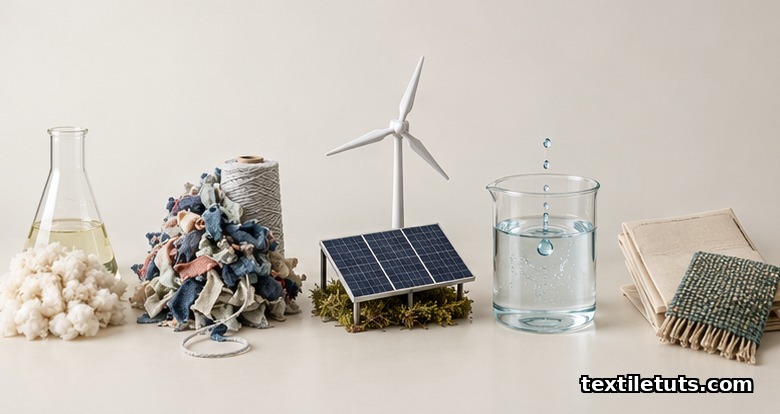
1. Material Health
Material Health assesses every ingredient above defined concentration thresholds in the finished textile against the Institute’s Banned, Restricted, and Permitted chemical lists. The assessment is conducted by licensed third-party assessors using a combination of AATCC TM 20A fiber analysis, OECD QSAR Toolbox computational toxicology screening, and review against REACH (EC) No 1907/2006 substance restrictions. Version 4.0 expanded the banned chemical list to include per- and polyfluorinated substances (PFAS), organophosphate flame retardants, and several phthalates above defined concentration limits.
2. Product Circularity
Product Circularity scores the textile on how well its materials can re-enter either a biological cycle (compostable fibers that decompose without harming soil) or a technical cycle (synthetic fibers designed to be recovered, separated, and reused without downcycling). The standard awards higher points for mono-material design, recyclable trims, and the absence of permanent chemical finishes that prevent fiber separation during recycling.
3. Renewable Energy and Climate
Renewable Energy and Climate measures the share of renewable electricity used at the manufacturing facility and the embodied carbon in the product. The threshold rises by tier, with higher tiers requiring progressively larger shares of renewable electricity at the manufacturing facility and audited carbon reporting, reaching 100% renewable energy at the Platinum level.
4. Water Stewardship
Water Stewardship evaluates water use, water quality at discharge, and the availability of water in the manufacturing watershed. Facilities in water-stressed basins must show water balance audits aligned with ISO 14046 (water footprint) and demonstrate that effluent meets the ZDHC (Zero Discharge of Hazardous Chemicals) Manufacturing Restricted Substances List, an industry tool widely adopted in textile wet processing.
5. Social Fairness
Social Fairness, added in Version 4.0 as a mandatory category, audits the facility against the ILO Declaration on Fundamental Principles and Rights at Work. Auditors review evidence on child labor, forced labor, freedom of association, working hours, and fair wages during on-site visits and through documentation review.
The Five Certification Tiers: From Basic to Platinum
The lowest single-category score determines the overall tier. To reach a given tier, a textile must score at or above that tier’s threshold in every one of the five categories, not just on average across them.
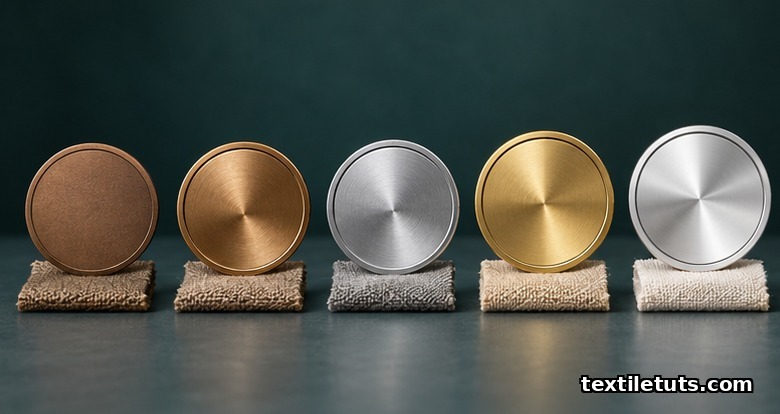
- Basic: 28 to 44 points in each category.
- Bronze: 45 to 59 points in each category.
- Silver: 60 to 74 points in each category.
- Gold: 75 to 89 points in each category.
- Platinum: 90 to 100 points in each category.
A real-world example: a cotton shirting fabric could achieve Platinum in Material Health and Renewable Energy but only Bronze in Product Circularity (because of a permanent stain-resistant finish that prevents fiber recovery). Its overall certificate would therefore be Bronze, because Bronze is the lowest category score. The Institute publishes a public registry of every certified product with each category score shown, so buyers can see the underlying numbers behind the mark.
Certificates are valid for two years, after which the textile must be re-assessed. The two-year cycle is shorter than the three-year cycle used by OEKO-TEX Standard 100 and the four-year cycle used by GOTS, reflecting C2C’s emphasis on continuous improvement at every tier.
Cradle to Cradle vs. OEKO-TEX, GOTS, and Bluesign
C2C is often grouped with other textile sustainability certifications, but its scope and pass criteria differ substantially. The table below summarizes the four most common labels buyers encounter.
| Standard | Issued by | Scope | Scoring |
|---|---|---|---|
| Cradle to Cradle Certified® v4.0 | C2C Products Innovation Institute (US nonprofit) | 5 categories: Material Health, Product Circularity, Renewable Energy, Water Stewardship, Social Fairness | 5 tiers (Basic to Platinum), minimum score required in each category |
| OEKO-TEX Standard 100 | OEKO-TEX Association (17 institutes) | Chemical safety testing of the finished textile | Pass or fail against Annex IV limit values |
| GOTS (Global Organic Textile Standard) | International Working Group (Germany) | Organic fiber content, chemical processing, and social criteria | Pass or fail, with “Organic” and “Made with Organic” labels |
| Bluesign® | Bluesign Technologies (Switzerland) | Chemical inputs and process management at mill level | Pass or fail with system partner tiers |
The clearest distinction is that OEKO-TEX, GOTS, and Bluesign are mostly pass-or-fail assessments against a defined list, while C2C grades performance on a continuous 100-point scale and requires a minimum in five separate areas. A buyer looking for a fabric certified free of harmful substances alone may find OEKO-TEX Standard 100 sufficient. A buyer aiming to communicate circular-economy credentials across chemical, energy, water, and social performance simultaneously will need C2C.
Limitations and Common Criticisms
Independent academic reviews of C2C have noted several limitations. A peer-reviewed analysis in the journal Sustainability found that the C2C framework, while rigorous on chemical inputs, scores Product Circularity in ways that can favor mono-material designs even when a multi-material blend has a lower overall environmental footprint across its full life cycle, a tension the Institute has acknowledged in Version 4.0 but not fully resolved.
Critics also point out that the certification is fee-based (the Institute charges assessment and licensing fees per product) and that the Renewable Energy category awards points for purchased renewable energy certificates without requiring the manufacturing facility to install on-site renewables. The Institute’s counter-position is that renewable energy certificates accelerate grid decarbonization faster than facility-by-facility retrofits in the short term.
Finally, the certification is product-level, not mill-level. A single facility can produce some textiles that achieve Platinum and others that only achieve Basic, depending on design choices, so buyers cannot infer the sustainability of a mill from any one of its certified fabrics.
Where C2C Certified Textiles Are Made
According to the Institute’s public registry, the largest concentrations of C2C certified textile products come from Italy, Germany, the Netherlands, Portugal, and the United States. The 2022 EU Strategy for Sustainable and Circular Textiles, published by the European Commission, identified Cradle to Cradle Certified® textiles as one of the verifiable product-level standards that supports the EU’s Digital Product Passport initiative, which will require every textile sold in the EU to carry digital sustainability data by 2030.
For mills in Bangladesh, India, and other major Asian textile-producing countries, C2C certification has been less common than GOTS or OEKO-TEX because of the higher cost of the assessment and the requirement for on-site social audits. TextileTuts expects uptake in South Asia to grow as global apparel brands extend their 2030 sourcing targets to include circular-economy-certified fabrics.
Frequently Asked Questions
Is Cradle to Cradle the same as the circular economy?
No. Cradle to Cradle is a product certification scheme administered by one nonprofit institute. The circular economy is a broader economic model that aims to keep materials in continuous use. C2C is one of several certification systems that translate circular-economy principles into a score a buyer can verify on a product label.
Does C2C mean a textile is biodegradable?
Not necessarily. The standard awards points in two separate cycles, biological (compostable) and technical (recoverable synthetic). A polyester fabric that is fully mechanically recyclable can score Platinum in Product Circularity without being biodegradable. The label tells the buyer the materials were designed to re-enter a cycle, not which cycle that is.
Is C2C stricter than GOTS for chemical safety?
The two standards share many restricted substance lists, but C2C Version 4.0 explicitly bans per- and polyfluorinated substances (PFAS), several phthalates, and organophosphate flame retardants above defined concentration limits, substances GOTS restricts but does not categorically ban. C2C also requires a third-party assessor to verify the chemical inventory, while GOTS relies on approved input lists plus mill-level audits.
How much does Cradle to Cradle certification cost?
The Institute does not publish a public price list. Assessment fees depend on product complexity, the number of production sites, and the certification tier pursued. Independent estimates in trade publications range from roughly USD 5,000 for a single Basic-level product to over USD 50,000 for a multi-site Platinum assessment, on top of annual licensing fees calculated as a percentage of certified-product revenue.
What happens if a certified textile fails a re-assessment?
Certificates are valid for two years. If a re-assessment score drops below the original tier threshold in any category, the product is downgraded or, in the case of a significant chemical or social compliance failure, suspended until the mill implements corrective actions. The Institute publishes suspensions in its public registry.
References
- Cradle to Cradle Products Innovation Institute. Cradle to Cradle Certified® Product Standard, Version 4.0. https://c2ccertified.org — the official standard document and category scoring thresholds.
- European Commission. EU Strategy for Sustainable and Circular Textiles. https://ec.europa.eu — COM(2022) 141 final, identifies C2C as a verifiable product standard supporting the EU Digital Product Passport.
- OECD. Chemicals in the Textile Sector: Background Report. https://oecd.org — government reference on chemical use across textile manufacturing.
- International Organization for Standardization. ISO 14040:2006 and ISO 14044:2006, Environmental Management: Life Cycle Assessment. https://iso.org — the LCA framework referenced by C2C Product Circularity scoring.
- Bach, V., et al. Critical Review of the Cradle-to-Cradle Concept and Its Implementation in Product Assessment. MDPI Sustainability, peer-reviewed. https://mdpi.com — academic review of C2C scoring methodology and its limitations.
- European Chemicals Agency. REACH Regulation (EC) No 1907/2006, Candidate List of Substances of Very High Concern. https://echa.europa.eu — the EU chemicals regulation referenced by C2C Material Health scoring.
- American Association of Textile Chemists and Colorists. AATCC TM 20A: Fiber Analysis: Qualitative. https://aatcc.org — the test method cited in C2C Material Health verification.
This article is the working reference for Cradle to Cradle Certified® textiles. Editorial by Shahrukh Islam, TextileTuts. Sources: Cradle to Cradle Products Innovation Institute, European Commission, OECD, ISO, MDPI, ECHA, and AATCC as cited.


