
Common Printing Defects

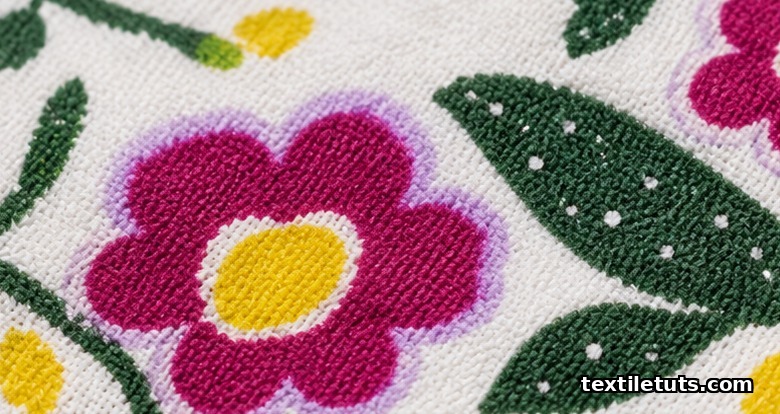
Textile printing defects affect 8 to 15 percent of commercially produced fabric lots, with misregistration (color alignment off by 0.5 to 2 mm), bleeding (color migration beyond the design boundary), and shade variation above Delta E 1.0 accounting for more than half of all rejections in rotary screen and flat screen printing.
These defects fall into two broad categories: color-related (off-shade, bleeding, poor wash fastness, crocking) and process-related (misregistration, pin holes, scrimpiness, foaming, paste marks). Identifying which class a sample falls into determines whether the fix belongs in the print paste recipe, the screen preparation, the drying and curing schedule, or the post-print wash-off sequence.
This guide covers the twelve most common printing defects in reactive, disperse, acid, and pigment printing on woven and knitted substrates, with the root cause, the test method used to confirm the defect, and the corrective action that production engineers apply.
What Counts as a Printing Defect
A printing defect is any visible or measurable deviation from the approved strike-off standard. Visible defects are obvious (a smudge, a missing color, a colored line running across a white area). Measurable defects require instrumental confirmation, typically spectrophotometric color difference (Delta E) above 1.0 against the standard under D65 illumination, or geometric deviation above 0.3 mm measured against the design repeat.
The AATCC Gray Scale for Color Change and the AATCC Gray Scale for Staining (both referenced in ISO 105-A02 and ISO 105-A03) define the acceptable visual threshold. A Grade 4 reading (Delta E approximately 0.8 to 1.5 depending on hue) is the minimum acceptance for production lots in most commercial programs; Grade 3 or below is automatic rejection.
Bleeding and Color Migration
Bleeding occurs when dye migrates from the printed area into adjacent white or differently colored regions, typically along fiber boundaries or during the wash-off step. In reactive printing on cotton, bleeding is most often a hydrolysis problem: the reactive dye hydrolyzes during fixation, loses its covalent bonding site, and washes off into the bath where it re-exhausts onto adjacent fibers.
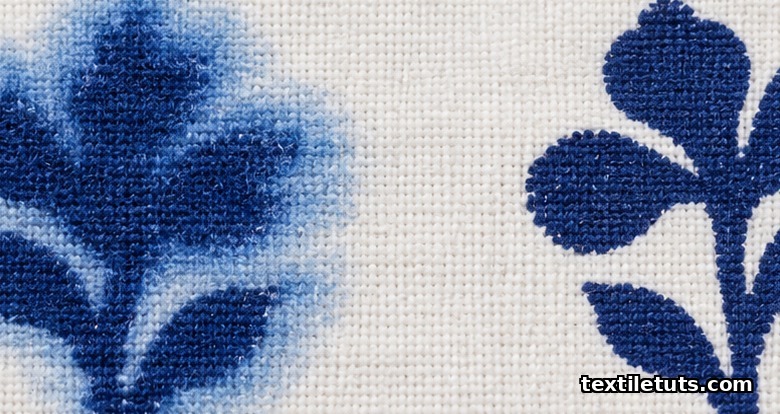
AATCC TM 61 (Colorfastness to Laundering) and ISO 105-C06 together grade bleeding severity. A test sample is washed under defined conditions (40°C with steel balls for AATCC 2A; 60°C for ISO C06 C2), then evaluated against the multifiber strip. Bleeding grades below 3 to 4 on the gray scale trigger rejection of the entire lot.
Fixes include increasing the alkali concentration to push fixation rate above 85 percent, reducing the dwell time in the wash-off bath to under 90 seconds per rinse, and adding a cationic fixing agent (typically a quaternary polyamine at 0.5 to 2.0 percent on weight of fabric) when reactive dyes with low wash-fastness are unavoidable.
Misregistration
Misregistration is the offset between two or more color screens in a multi-color design. The defect appears as a thin white gap where two colors should meet, or as a colored overlap where they should not. In rotary screen printing, misregistration tolerances are typically within 0.2 mm; in flat screen printing, 0.3 mm; in digital inkjet, the tolerance is approximately 0.05 mm limited by droplet placement accuracy.
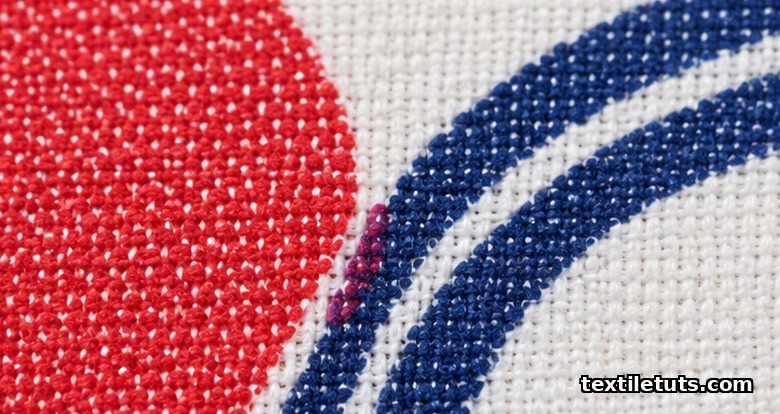
Misregistration above 0.5 mm is visible to the naked eye at a normal viewing distance of 60 cm and is the most common single defect class reported by Asian print mills producing for European and North American buyers.
Root causes include screen-to-screen dimensional mismatch from improper screen storage (rotary nickel screens expand and contract with humidity and temperature), fabric stretch on the print blanket, and dryer or steamer tension variations between color stations. Engineering controls involve pre-print conditioning of the fabric to 20°C and 65 percent relative humidity for at least 4 hours, and daily registration checks against a cross-hair target.
Shade Variation Between Lots and Within a Lot
Shade variation is a Delta E difference between two production runs of the same color recipe, or between the selvedge and the center of a single run. Acceptable shade variation in commercial reactive printing is Delta E below 1.0 measured under D65 illumination against the standard.
Variation above Delta E 1.5 is generally visible side-by-side and is the second most common cause of buyer complaints after misregistration. Causes include inconsistent print paste viscosity (target typically 8,000 to 12,000 cP at 25°C for rotary screen), drift in dye concentration between additions, fabric absorbency variation across the lot, and inconsistent drying conditions.
The corrective ladder starts with verifying paste viscosity with a Brookfield viscometer every 200 m of fabric, then rechecking dye concentration in the stock solution by spectrophotometry every batch, confirming fabric moisture content below 6 percent before printing, and rechecking steamer temperature uniformity across the width (target 102°C ± 2°C for reactive fixation).
Pin Holes and Screen Marks
Pin holes are small unprinted dots, typically 0.5 to 2 mm in diameter, that appear as white spots against a colored ground. They result from partial blockage of the screen mesh by dried paste residue, lint, or broken filaments from previous prints. Pin holes above 3 per 100 square meters trigger first-quality rejection in most programs.
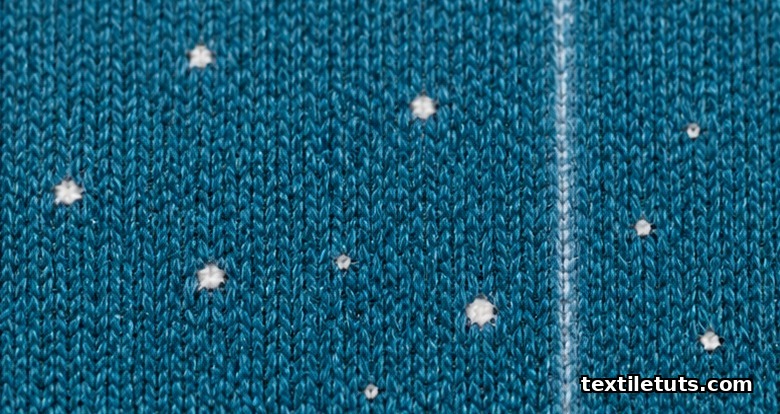
Screen marks are continuous linear defects caused by damage to the screen mesh or by foreign material lodged in the mesh openings. They appear as thin lines parallel to the print direction. Causes include improper screen cleaning between cycles, using solvents that damage the photoemulsion, and accidental contact between the squeegee and the screen mesh.
Scrimpiness and Streaking
Scrimpiness is uneven print paste distribution across the fabric width, producing irregular darker and lighter bands parallel to the print direction. The root cause is incorrect squeegee pressure (typically too low), squeegee angle outside the 75 to 85 degree range, or non-uniform screen mesh tension.
Streaking is a similar defect but typically runs in the warp direction only and has a more defined edge. It usually points to uneven drying, where wet print paste migrates with the drying front and concentrates along the warp yarns.
Stiff Hand and Harsh Feel
Excess print paste or improper binder cross-linking leaves the printed area stiffer than the ground fabric. In pigment printing, this is almost always a binder dosage problem (target 5 to 12 percent on weight of print paste depending on fiber); above 15 percent, the hand is noticeably boardy. In reactive printing, harsh hand is typically caused by overdrying at temperatures above 140°C, which can yellow the cotton and make the fibers brittle.
Standard test: AATCC TM 202 (Relative Hand Value) or the simpler subjective panel test where 5 trained evaluators rate the fabric on a 1 to 5 scale against the strike-off.
Crocking and Wet Rubbing Failure
Crocking is the transfer of color from the printed surface onto another surface by rubbing. It is the most common fastness defect in pigment printing and is graded using AATCC TM 8 (Colorfastness to Crocking), which uses a Crockmeter to rub a white cotton square against the print under defined pressure (9 N) for 10 cycles.
The reading is taken against the AATCC Chromatic Transference Scale. Grade 4 or above (dry) and Grade 3 or above (wet) are typical minimums for apparel fabrics. Grade 2 in either condition is automatic failure.
Wet crocking below Grade 3 typically points to insufficient binder cure or improper use of a wet-rub improver. Common fixes include increasing the curing temperature by 10°C within the binder’s recommended window, or adding 1 to 3 percent silicone emulsion as a wet-rub improver.
Foaming and Air Bubbles in the Print Paste
Foaming during printing produces voids in the print where air bubbles burst and prevent paste contact with the fabric. Causes include high shear mixing, hard water (above 200 ppm CaCO3), and absence of a defoamer. The fix is mechanical (vacuum deaeration before the print run) and chemical (silicone defoamer at 0.05 to 0.2 percent on weight of paste).
Print Paste Marks and Doctor Lines
Visible streaks parallel to the squeegee direction are usually doctor line marks, caused by bent squeegee edges, dried paste on the squeegee tip, or uneven squeegee pressure across the width. Fixes include replacing the squeegee every 4 to 6 hours of continuous printing, keeping a spare squeegee cleaned and ready, and verifying squeegee straightness with a straightedge at every shift change.
Poor Wash Fastness and Light Fastness
Wash fastness below Grade 3 to 4 is the single most common rejection reason in buyer-tested reactive prints. The defect typically appears as visible fading of the print or staining of adjacent whites after 5 home-laundering cycles. AATCC TM 61 and ISO 105-C06 are the two reference tests, and both are accepted in commercial contracts.
Light fastness below Grade 4 (tested per ISO 105-B02 using a xenon arc lamp for 20 to 40 hours depending on the end use) is a separate but related issue. Reactive and disperse dyes vary widely in light fastness; Grade 3 or below on a deep shade requires a UV absorber added to the print paste at 1 to 3 percent.
Defect Summary Table
| Defect | Primary Cause | Reference Test | Acceptance Threshold |
|---|---|---|---|
| Bleeding | Hydrolysis, incomplete wash-off | AATCC TM 61 / ISO 105-C06 | Gray scale 3 to 4 or above |
| Misregistration | Screen stretch, fabric distortion | Visual + ruler | 0.2 to 0.3 mm tolerance |
| Shade variation | Paste viscosity, dye lot variation | Spectrophotometer (Delta E) | Delta E below 1.0 |
| Pin holes | Screen blockage | Visual count | Under 3 per 100 m² |
| Stiff hand | Excess binder, overdrying | AATCC TM 202 / panel test | Hand value within 1 grade of strike-off |
| Crocking | Binder cure, wet-rub improver | AATCC TM 8 | Dry 4, Wet 3 minimum |
| Foaming | Mixing, water hardness, defoamer | Visual + density check | No voids above 1 mm |
| Poor wash fastness | Fixation rate, soaping | AATCC TM 61 / ISO 105-C06 | Grade 3 to 4 or above |
| Poor light fastness | Dye selection, UV absorber | ISO 105-B02 | Grade 4 or above |
Prevention: Process Controls That Reduce Defect Rates
Defect rate reduction in commercial textile printing comes from controlling the five process variables that account for most rejections: paste viscosity, fabric moisture content, steamer temperature profile, wash-off bath exchange rate, and registration check frequency. Mills that implement Statistical Process Control (SPC) on these five parameters typically reduce first-quality reject rates from 10 to 15 percent down to 3 to 5 percent within six months.
Daily inputs that pay back fastest: a Brookfield viscosity check on every paste batch (target 8,000 to 12,000 cP at 25°C), a moisture meter reading on every fabric roll before it enters the printer (target under 6 percent regain), and a registration check at every 200 m of running fabric using a fixed cross-hair target fixed to the print blanket.
Frequently Asked Questions
What is the most common textile printing defect?
Misregistration is the most frequently reported defect class in commercial reactive and pigment printing, accounting for roughly 30 to 40 percent of all rejections. Bleeding and shade variation together account for another 25 to 35 percent. The remaining defects (pin holes, stiff hand, crocking, foaming) account for the balance in roughly equal proportions.
How do you measure shade variation in printed fabric?
Shade variation is measured with a spectrophotometer (typically a Datacolor or X-Rite bench-top unit) under D65 illumination. The sample is read against the approved strike-off standard, and the color difference is reported as Delta E (CIELAB 1976 or, increasingly, CIEDE2000). Delta E below 1.0 is generally invisible; Delta E 1.0 to 2.0 is visible side-by-side; Delta E above 2.0 is visible at a normal viewing distance.
What is the difference between crocking and bleeding?
Crocking is color transfer from the printed surface onto another surface by rubbing (a mechanical test, AATCC TM 8). Bleeding is dye migration during washing or wet processing (a wet-chemical test, AATCC TM 61 or ISO 105-C06). Crocking measures the strength of the dye-binder-fiber bond; bleeding measures how much unbound or hydrolyzed dye remains after wash-off.
How can pin holes be prevented in screen printing?
Pin holes are prevented by proper screen cleaning between cycles (using a non-foaming detergent followed by a low-pressure water rinse), conditioning the print room to 20 to 25°C and 55 to 65 percent relative humidity, filtering the print paste through a 100-micron screen before it enters the print head, and inspecting screens under backlighting before each run to spot mesh damage.
What causes harsh hand after printing, and how is it corrected?
Harsh hand is caused by excess binder in pigment printing (above 12 to 15 percent on weight of paste), overdrying of reactive prints above 140°C, or starch-based thickener residue left in the fabric after inadequate wash-off. Corrections include reducing binder dosage, lowering the dryer temperature to 120 to 130°C for reactive prints, and adding an extra wash-off bath with a non-ionic detergent at 60°C for 10 minutes to remove thickener residue.
References
- AATCC. Test Method 8-2007: Colorfastness to Crocking: AATCC Crockmeter Method. AATCC Technical Manual — the standard reference for the dry and wet crocking test method used to grade printed fabric.
- AATCC. Test Method 61-2013: Colorfastness to Laundering: Accelerated. AATCC Technical Manual — the reference test for wash fastness used in commercial print contracts.
- ISO. ISO 105-C06:2010, Textiles — Tests for colour fastness — Part C06: Colour fastness to domestic and commercial laundering. ISO — the international counterpart to AATCC TM 61, used in European and Asian commercial contracts.
- ISO. ISO 105-B02:2014, Textiles — Tests for colour fastness — Part B02: Colour fastness to artificial light: Xenon arc fading lamp test. ISO — the reference test for light fastness in printed and dyed textiles.
- AATCC. Test Method 202-2012: Relative Hand Value of Textiles. AATCC Technical Manual — the reference test for fabric hand after printing and finishing.
- ResearchGate. Common Defects in Textile Printing and Their Remedies. https://www.researchgate.net — peer-reviewed review of printing defect classes and their root causes in commercial production.
- ScienceDirect. Reactive Dye Printing on Cotton: Process Variables and Defect Analysis. https://www.sciencedirect.com — peer-reviewed paper on the effect of paste viscosity, steamer temperature, and wash-off conditions on print quality.
This article is the working reference for textile printing defects. Editorial by Shahrukh Islam, TextileTuts. Sources: AATCC TM 8, AATCC TM 61, AATCC TM 202, ISO 105-C06, ISO 105-B02, and peer-reviewed papers on ResearchGate and ScienceDirect as cited.


