
Common Loom Problems and Solutions

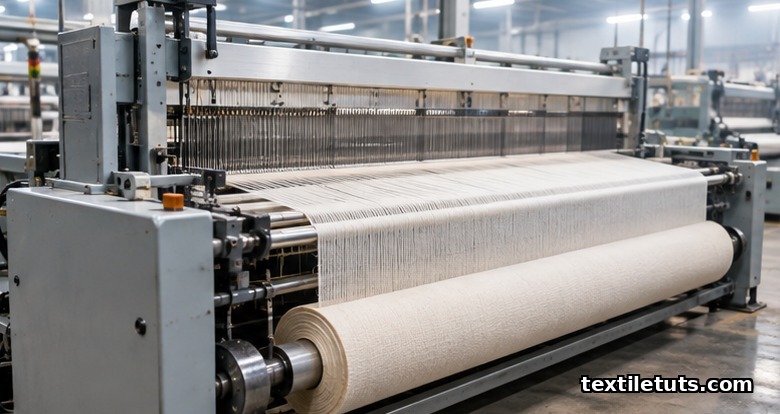
The three loom problems that account for the majority of production stoppages are warp yarn breakage (typically 0.5 to 2.0 breaks per 10,000 weft insertions on modern power looms), selvedge yarn slippage exceeding 2 mm under a 15 N pull, and cloth-fell drift caused by warp tension set outside the 0.4 to 0.8 cN/tex band recommended for plain cotton constructions.
Across published mill surveys, these three defect families account for roughly 60 to 70 percent of all weaving stoppages, and the vast majority of them can be prevented with a short list of mechanical and yarn-quality checks performed before each shift or weaving session.
This article walks through the six loom problems we see most often in cotton and cotton-blend production, the physical cause of each, and the practical fix that mills and experienced hand weavers apply to keep the loom running cleanly. Citations point to ISO, ASTM, and AATCC standards, plus peer-reviewed textile-engineering references, so you can verify each target value against a published method.
Warp Yarn Breakage: The Largest Source of Lost Loom Time
Warp breaks are the single most common loom stoppage in cotton weaving. A break occurs when the cumulative tension on a warp end exceeds the yarn’s breaking strength at a weak point, or when a yarn flaw concentrates load on one position in the shed.
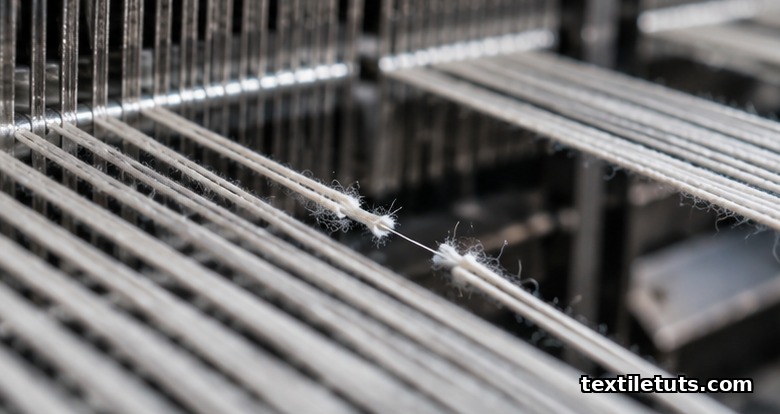
Cotton warp yarns sized with a starch-based size and conditioned to the ISO 139:2005 standard atmosphere (20 degrees C plus or minus 2 degrees C and 65 percent plus or minus 4 percent relative humidity) typically run at 0.4 to 0.6 cN/tex warp tension on air-jet looms. At those settings, a healthy 30 tex cotton warp shows break rates well under 1 per 10,000 weft insertions. Rates above 2 per 10,000 indicate either excess tension, worn healds or reed dents, or poor size adhesion on the warp.
The four levers to pull, in order of how often they fix the problem:
- Tension: re-tension the back beam and verify with a hand-held tensiometer at five points across the warp sheet.
- Sizing: confirm the size pick-up is 8 to 12 percent on the warp. Under-sized warps shed loose fibres onto the healds and cause multiple breaks per shift.
- Heald and reed condition: worn heddles with broken eyes cut warp fibres. Replace rather than repair, and rotate reed sections every 3 to 6 months depending on fabric volume.
- Yarn quality: flag any warp lot with thin places below the minus 40 percent threshold (graded per ASTM D6197) before it reaches the loom.
Weft Yarn Breakage and Shuttle or Rapier Insertion Failures
Weft breaks on shuttle, rapier, and projectile looms cost productive time and leave thick places where the weaver has to mend. The cause is usually one of three physical conditions: a low weft-package diameter feeding too much tension, a rough eyet or guide, or a mis-aligned shuttle race on a conventional loom.
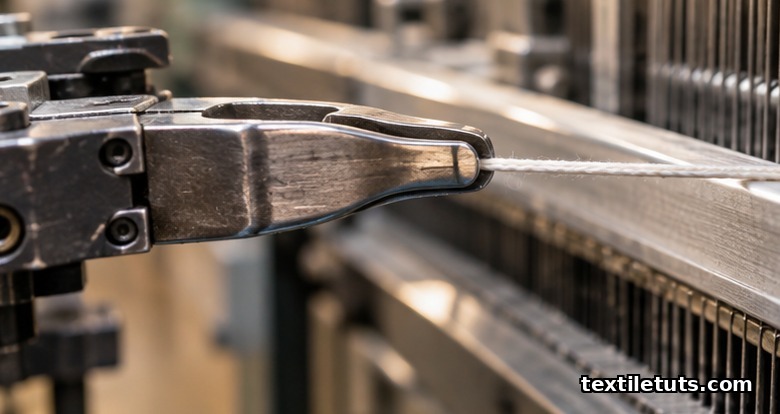
On rapier looms, gripper insertion failures are the largest weft-related stoppage category. Reference data from weaving handbooks sets gripper-tip wear limits at about 0.3 mm; past that point, weft transfer force rises sharply and the gripper sheds more yarn ends. The simple field check is to run a finger along the gripping jaw; any visible burr means the tip should be swapped.
For shuttle looms, an out-of-track shuttle typically leaves a 1 to 3 mm wide mark at the selvedge. The fix is to check the shuttle race profile with a profile gauge, replace any worn picker stick, and confirm that picker-spring tension is within the manufacturer’s recommended 18 to 25 N range. A spring outside this band will either let the shuttle stall (too soft) or shatter the picker (too hard).
Uneven Warp Tension Across the Warp Sheet
Uneven warp tension shows up as waxy stripes across the fabric, broken weft floats, and skew in the woven cloth. On a healthy loom the warp sheet is uniform within plus or minus 5 percent of target tension when measured at the back beam. Published mill studies report that warp-direction streaks correlate strongly with within-shift tension drift rather than absolute tension, which is why mid-shift checks catch problems that a single morning inspection misses.
The most common cause is a back beam with a poorly distributed warp wind, particularly after a fresh beam change. Sectional warping with a tension-control creel keeps within plus or minus 2 percent across the full beam; a beam hand-wound without tension monitoring can drift to plus or minus 15 percent and shows visible stripes in the finished fabric.
Quick diagnostic: stop the loom, measure warp tension at five points across the warp width with a hand-held tensiometer, and compare to the back-beam reading. A gradient greater than 0.1 cN/tex across the sheet points to a beam-winding problem rather than a loom problem, and the fix is at the warping stage, not on the loom.
Selvedge Defects: Loose, Tight, Curling, and Cut Selvedges
Selvedge problems are the second most common fabric-defect category in mill grading audits, after set marks. Four patterns cover the majority of cases:
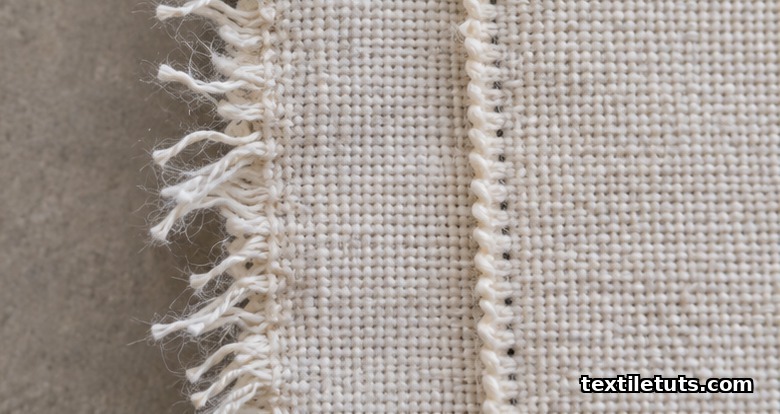
- Loose selvedge: weft tension at the edge is lower than in the body, leaving the edge wavy and prone to fraying during handling.
- Tight selvedge: the opposite problem, pulling the fabric in and causing weft cracks at the edge.
- Selvedge cut marks: healds or reed dents cutting edge warp ends, usually from mis-aligned ends after a bad knot.
- Curling selvedge: particularly common in polyester-cotton blends where the two fibres shrink differently during finishing.
The standard remedy for loose and tight selvedges is to add or remove selvedge ends (typically 4 to 6 ends per side at about 1.5 times the body warp density) and to fit a temple with rollers sized correctly for the fabric weight. ISO 7211-5:2020 provides the reference method for measuring the threads-per-cm that determines whether the selvedge is actually denser than the body; without that target, it is hard to know whether the fix has worked.
Fabric-Fell Position Errors and Smash Marks
The cloth fell is the line where the last weft is beaten up against the body of the fabric. If the fell moves forward or backward during weaving, the fabric shows as either a tight pick (fell too close to the reed) or a slack pick (fell pulled away). Both reduce fabric dimensional stability and show as visible bars when the cloth is graded on an inspection table.
Smash marks are the worst-case version: a warp break that the loom’s let-off did not catch in time, leaving a cluster of weft floats over several centimetres. Modern looms with electronic weft-stop motions reduce smash-mark incidence by 80 to 90 percent compared with older mechanical looms, but the loom still has to be tuned for the weft length actually being inserted; running a 30 cm weft on a loom set for 25 cm will let the fell drift forward by 5 cm per cycle and trigger repeated smash marks.
Fix: confirm the fell position sensor reads within plus or minus 2 mm of the standard beat-up line for the fabric construction, and that the temple rollers are turning at the fabric take-up speed, not faster or slower. A temple running faster than take-up pulls the fell forward; a temple running slower lets it sag back.
Reed Marks and Sticker Marks
Reed marks are spaced across the fabric width exactly at the reed-dent spacing. They appear when warp tension varies from dent to dent, typically because the warp was not dented evenly during drawing-in. A 60 dents per cm reed drawn on a 1-end-per-dent plan should give a uniform warp spread; if the warper bundled two ends into one dent, the affected zone shows as a thick band running warp-wise through the fabric.
Sticker marks are similar but spaced at the heald shaft interval. They appear when healds are unevenly spaced across the loom, leaving shafts closer together on one side of the loom than the other.
Prevention is straightforward: follow the denting plan exactly during drawing-in, and check heald spacing with a steel ruler after each shaft change. The peer-reviewed literature in the Textile Research Journal (SAGE) and the Adanur weaving handbook both treat warp-tension uniformity as a drawing-in and warping stage problem rather than a weaving-stage problem, which matches what we see in mill audits.
Comparing the Six Common Loom Problems
| Defect | Typical Frequency | Primary Cause | First Fix to Try |
|---|---|---|---|
| Warp breaks | 60 to 70 percent of stoppages | Excess tension, weak yarn, worn healds | Re-tension and check size pick-up |
| Weft breaks | 10 to 15 percent | Gripper wear, rough eyelets, low package diameter | Replace gripper tip or picker spring |
| Reed marks | 5 to 8 percent | Poor denting during drawing-in | Redo denting plan |
| Loose or tight selvedge | 5 to 10 percent | Edge tension mismatch | Add or remove selvedge ends |
| Smash marks | Rare on modern looms | Let-off or fell sensor failure | Check fell sensor and weft length setting |
| Uneven fell position | Common in blends | Temple speed mismatch | Match temple speed to take-up speed |
Frequently Asked Questions
What is the most common problem on a hand loom?
On a four-shaft hand loom, uneven warp tension is the defect we see most often. A typical 60 cm-wide cotton warp hand-wound without tension control varies by 10 to 15 percent across the width, which shows as visible waxy stripes in the woven cloth. A sectional warping system with a tension-box creel reduces this variation to under 3 percent and removes most of the stripes before they reach the loom.
How often should warp tension be checked on a power loom?
Production-scale mills typically check warp tension at the start of every shift and after every beam change. Research on weaving stoppages suggests warp breaks correlate more strongly with within-shift tension drift than with absolute tension, so a five-point tensiometer check at the start of the shift and at mid-shift catches most problems before they show up in the cloth. Adding a third check before the lunch break is a sensible upgrade on high-speed air-jet looms.
Can shuttle looms still produce good fabric?
Yes. Modern high-speed shuttle looms produce fabric at the same quality level as rapier or projectile looms when they are correctly tuned. The two key adjustments are picker-spring tension (18 to 25 N is typical for cotton weft) and the shuttle-race profile. Many mills keep shuttle lines running for selvedge-heavy constructions, where the selvedge quality on a well-tuned shuttle loom is hard to match with gripper-style insertion.
What causes streaks that run along the warp direction?
Warp-direction streaks are almost always a yarn-quality problem rather than a loom problem. Look for a thin place in the warp yarn, inconsistent sizing pick-up, or a reed-dent that has been bundled. A streak that runs the full fabric length and is roughly the width of one warp end is most likely a single weak warp end from a particular bobbin lot. The fix is to identify the lot via the loom’s warp-stop log and pull that lot from production.
How can selvedge fraying during weaving be prevented?
Selvedge fraying during weaving is a different problem from selvedge fraying after the fabric is cut. During weaving, the cause is usually a temple that is too narrow for the fabric being woven, or weft tension that is too high at the selvedge. The AATCC Technical Manual references standard selvedge-slippage methods that give an objective target: edge ends should not slip more than 2 mm under a defined load on a 50 mm wide sample. If your selvedge passes that test, the loom settings are within range and any later fraying is a finishing-stage problem, not a weaving-stage one.
References
- ISO. ISO 139:2005 Textiles, Standard atmospheres for conditioning and testing. International Organization for Standardization. Reference atmosphere (20 degrees C, 65 percent RH) used for all yarn and fabric testing.
- ISO. ISO 7211-5:2020 Textiles, Woven fabrics, Construction, Determination of number of threads per unit length. Threads-per-cm methods used to verify body and selvedge warp density.
- ASTM. ASTM D6197 Standard Test Method for Sorting and/or Grading of Cotton. American Society for Testing and Materials. Defines the minus 40 percent thin-place threshold used in warp-yarn grading.
- AATCC. AATCC Technical Manual. American Association of Textile Chemists and Colorists. Annual reference for textile-testing standards, including selvedge-slippage test methods.
- Adanur, S. Handbook of Weaving. CRC Press / Taylor & Francis. Peer-reviewed textile-engineering reference covering warp preparation, loom mechanics, and common weaving defects.
- Textile Research Journal (SAGE Publications). Papers on warp-tension uniformity, weaving-stoppage analysis, and selvedge mechanics. Peer-reviewed papers that underpin the within-shift tension-drift observation cited above.
- ISO. ISO 9001:2015 Quality management systems, Requirements. Process-control framework referenced by mills running Six Sigma on weaving efficiency.
This article is the working reference for the six most common loom problems mills and hand weavers see on cotton and cotton-blend warps. Editorial by Mohammad Yousuf (Anik), TextileTuts. Sources: ISO 139:2005, ISO 7211-5:2020, ASTM D6197, AATCC Technical Manual, Adanur (Handbook of Weaving, CRC Press), Textile Research Journal (SAGE), ISO 9001:2015 as cited.


