
Color-Changing Textiles

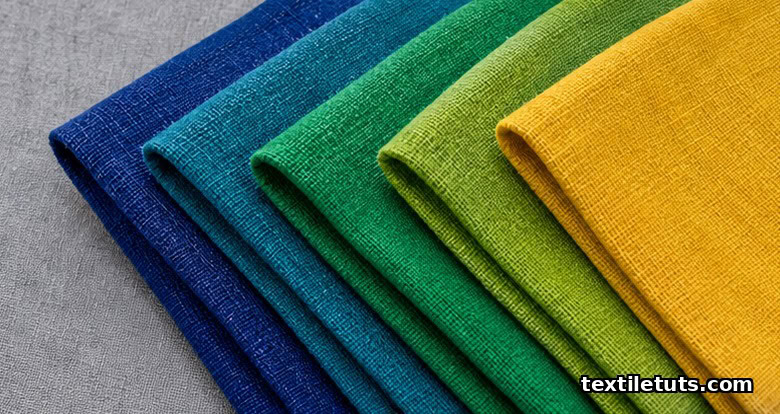
Color-changing textiles, also called chromic fabrics, shift their visible hue in response to an external stimulus such as heat, light, pH, or electric current, with thermochromic leuco-dye systems typically activating at 28–31 °C and producing a CIE ΔE color difference of 15–35 against the unactivated state.
The hue shift comes from a chromophore (the part of a molecule responsible for its color) embedded in or coated onto the fiber that reversibly rearranges its electronic structure when the trigger arrives, so the dye either opens or closes its conjugated π-system (a chain of alternating single and double bonds that absorbs visible light) and the reflected wavelength moves.
This article walks through how each chromic class works, how the chemistry is anchored to cotton, polyester, and polyamide substrates, what colorfastness results look like under ISO 105 and AATCC test methods, and where the technology already appears in apparel, safety wear, and medical monitoring.
What “Color-Changing” Means in Textile Science
Textile engineers classify chromic fabrics by the stimulus that drives the hue change. Six classes dominate the published literature:
- Thermochromic — heat
- Photochromic — UV and visible light
- Electrochromic — applied voltage
- Halochromic / ionochromic — pH change or metal ions
- Solvatochromic — solvent polarity
- Piezochromic / mechanochromic — mechanical pressure
The common thread is reversibility. A chromic textile is expected to return to its original color once the stimulus is removed, which distinguishes it from photobleaching (the permanent fading caused by light damage) or thermobleaching (the permanent yellowing caused by heat damage).
Chromic systems also differ from classical dyes in one important way: they are typically applied as a surface finish rather than fixed inside the fiber matrix. Microencapsulation (trapping the active dye inside polymer shells 1–10 µm wide) and sol-gel coatings (inorganic glass-like films built up molecule by molecule from a liquid precursor) are the two most studied routes for keeping the chromophore on the fabric while still letting the trigger reach it.
Thermochromic Textiles: How Heat Reverses the Color
Thermochromic behavior in apparel almost always comes from leuco dye (a colorless dye precursor) systems, a three-component mixture of a color former, a color developer, and a low-melting solvent. At room temperature the developer holds the color former in a colored, ring-closed lactone (a cyclic ester); once the solvent melts at its activation temperature, the complex dissociates and the lactone opens, becoming colorless.
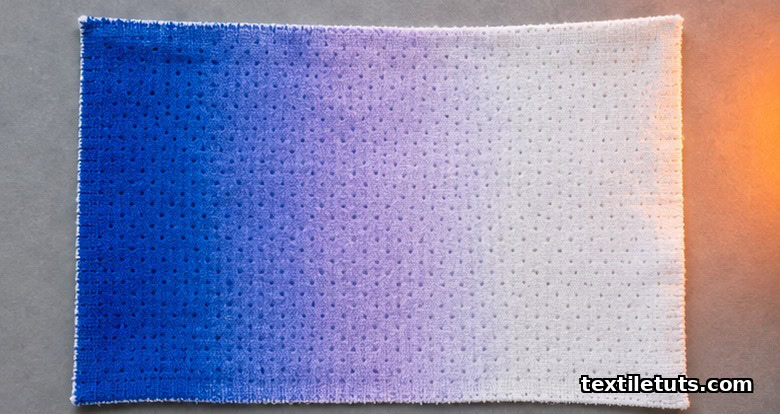
The activation temperature is tuned by selecting the solvent. Decanol blends activate near 28 °C, hexadecanol blends near 38 °C, and blends of higher-melting alcohols near 45 °C, which is why commercial “mood” T-shirts shift at skin temperature while industrial warning labels shift only above 45 °C. Color contrast, expressed as ΔE (a unit from CIE Lab color space where 1 is “just noticeable” and values above 5 are obvious), typically measures 15–35 between the colored and colorless states when measured on white cotton.
For textile use the leuco system is microencapsulated with a melamine-formaldehyde or polyurethane shell and printed or pad-coated (applied by passing the fabric through a bath and squeezing out excess liquid with rollers) onto the fabric. The capsules must survive laundering, which is the central durability problem. Studies on cotton report 50–80 % retention of color strength after 10 home wash cycles when the capsules are cross-linked (chemically bonded into a network) with a binder resin at 120–150 °C.
Photochromic Textiles: UV Light as the Trigger
Photochromic dyes, most commonly spiropyrans (spiro compounds that switch between a colorless and a colored form when exposed to UV light) and naphthopyrans (related spiro compounds known for faster fade-back and better lightfatness), undergo a ring-opening reaction when they absorb UV-A (315–400 nm) radiation. The colorless spiro form converts to a colored merocyanine (a planar, conjugated form of the dye), then thermally relaxes back over seconds to minutes depending on the dye and the polymer matrix.
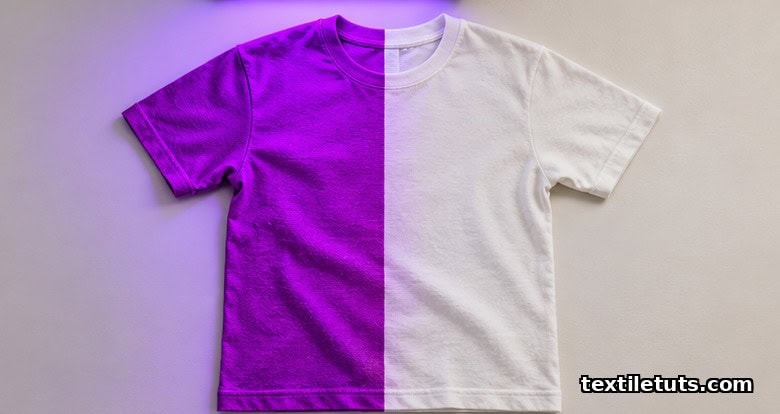
On textiles the dye is either exhaust-dyed (drawn into the fiber from a hot bath until the bath is depleted) into polyamide or silk, which has the right polar sites to host the merocyanine, or applied as a microcapsule dispersion on cotton. UV-driven ΔE values of 10–25 are routinely reported after 5 minutes of UV-A exposure at 365 nm on a 100 W lamp.
The limitation is fatigue. Spiropyrans lose 30–50 % of their color strength after 50 UV/dark cycles in laboratory tests, which is one reason outdoor photochromic garments remain niche. Naphthopyrans and inorganic silver-halide glasses offer better fatigue resistance and are the route taken by commercial photochromic sunglass lenses; the same chemistry has been adapted to textile fibers, though wash durability still trails thermochromic systems.
Electrochromic Textiles: Color from an Applied Voltage
Electrochromic textiles carry a conductive layer, typically PEDOT:PSS (a conductive polymer blend widely used in flexible electronics), carbon nanotube coatings, or silver nanowire networks, on top of which an electrochromic polymer such as polyaniline or prussian blue analogue is deposited. Applying 0.5–2.0 V across the conductive layer oxidizes or reduces the polymer and shifts its absorption band.
Reported switching speeds are 1–10 seconds for a full color-to-color transition, and cycle lifetimes exceed 1,000 switches when the device is encapsulated. Mortimer’s review in Chemical Society Reviews lists the standard electrochromic figures of merit: optical contrast ΔT (the percent change in light transmission at a chosen wavelength, with 40–60 % typical), response time, coloration efficiency (the change in optical density per unit charge injected, reported in cm²/C), and cycle life.
For apparel, the engineering constraint is power delivery. Most published garments use thin-film printed batteries or are charged inductively, which keeps the textile flexible. Electrochromic fabrics have appeared in runway prototypes and academic demonstrators rather than mass-market clothing, mainly because the power budget is still too high for an everyday T-shirt.
Halochromic and pH-Sensitive Textiles
Halochromic dyes, including anthocyanins (the same pigment family that colors red cabbage and blueberries), phenolphthalein derivatives, and certain azo dyes (synthetic dyes that carry the –N=N– group, the workhorse of the dye industry), change color when the surrounding pH crosses their transition range. This makes them useful for wound dressings that flag infection (the pH of chronic wounds rises above 7.5, well documented in peer-reviewed surveys) and for sweat-sensing sportswear.
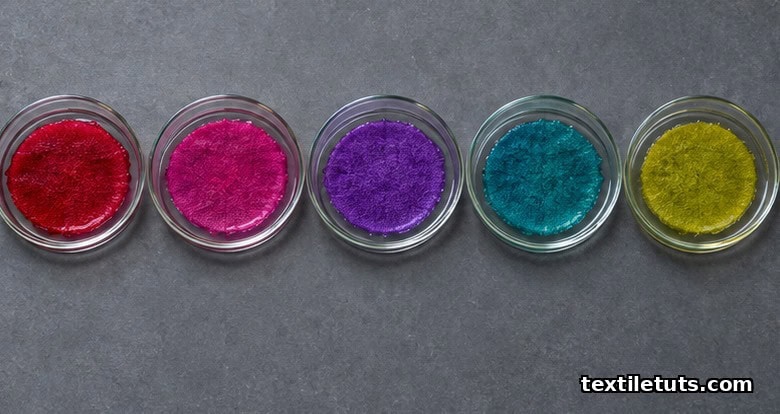
A typical anthocyanin extract from red cabbage shifts from red (pH 3) through purple (pH 5) to green and yellow (pH 8–10). When the extract is fixed to a cotton towel via a sol-gel silica matrix, the pH response survives 5–10 wash cycles, which is enough for single-use medical applications but not for everyday apparel.
How Chromic Textiles Are Tested for Color and Durability
Two standards families dominate chromic textile testing. CIE colorimetry under ISO 13655 and ISO 105-J03 supplies the ΔE, ΔL, Δa, Δb numbers that quantify the color shift. AATCC TM 110 and AATCC TM 143 supply the wash protocols. ISO 105-B04 covers accelerated lightfastness (resistance to fading from light exposure), and AATCC TM 8 covers crocking (the rubbing-off of color onto another surface).
A useful benchmark: a chromic textile that loses less than 5 ΔE after 20 AATCC TM 143 wash cycles, less than 1 grade on the AATCC Gray Scale for color change after 20 AATCC TM 16 lightfastness hours, and passes a 4-grade AATCC TM 8 dry crock test is generally considered commercially durable for fashion applications. Each of those thresholds is documented in the AATCC Technical Manual.
For thermochromic systems specifically, activation temperature is measured by a heating stage on a spectrophotometer, and the hysteresis (the temperature gap between the warming-up color change and the cooling-down color change) is reported; values of 2–6 °C are typical and are useful for tuning the visual feel.
Where Color-Changing Textiles Are Already in Use
Three application areas have crossed from lab to market:
- Safety and protective wear. Thermochromic warning patches on firefighter hoods darken when the outer layer is breached, giving a visual cue that heat has reached the inner lining.
- Medical monitoring. Halochromic wound dressings flag pH shifts linked to bacterial colonization, a peer-reviewed application area for chronic-wound care.
- Fashion and brand engagement. Photochromic and thermochromic T-shirts, swimwear, and sneakers are sold globally, mostly as short-lifecycle fashion items where 30+ wash cycles is sufficient.
Military camouflage that shifts hue to match terrain, smart window fabrics that darken on solar load, and anti-counterfeit labels that reveal a logo under UV are all active research areas, several of them published in journals indexed in Springer Open and MDPI.
Comparison Table: Chromic Systems at a Glance
| Property | Thermochromic | Photochromic | Electrochromic | Halochromic |
|---|---|---|---|---|
| Stimulus | Heat (28–45 °C) | UV-A (315–400 nm) | Voltage (0.5–2.0 V) | pH change |
| Typical ΔE | 15–35 | 10–25 | 20–50 | 10–40 |
| Switch time | 1–10 s | 10–300 s | 1–10 s | 1–60 s |
| Cycle life (lab) | 500–2,000 | 50–200 | 1,000–10,000 | 100–500 |
| Main durability risk | Wash-off of capsules | UV fatigue | Power delivery | pH exhaustion |
| Commercial use today | High (fashion, safety) | Medium (fashion) | Low (concept) | Low–medium (medical) |
Frequently Asked Questions
What is the activation temperature of thermochromic fabric?
Commercial thermochromic textiles for apparel are tuned to activate between 28 °C and 31 °C, near skin temperature, so the color shift is visible the moment the garment is worn. Industrial warning labels use higher-melting solvent blends that activate at 45 °C or above, so the patch stays one color at room temperature and only shifts when heat is present.
How long does the color shift last once the stimulus is removed?
Photochromic dyes relax back in 10–300 seconds depending on the dye class and the surrounding polymer matrix. Thermochromic systems return to their colored state as the solvent recrystallizes, usually within 5–30 seconds for skin-temperature systems and faster for higher-activation blends. Electrochromic textiles hold their new color as long as the voltage is applied and revert within seconds once it is removed.
Are color-changing fabrics machine washable?
Microencapsulated thermochromic prints on cotton survive 10–20 standard home wash cycles before noticeable fading, which is enough for fashion garments that are not washed daily. Photochromic and halochromic systems are less durable under machine washing, and electrochromic fabrics require sealed electronics and are generally hand-wash or dry-clean only.
Do chromic textiles fade in sunlight?
All chromic classes fade under prolonged UV exposure. Spiropyran-based photochromic dyes fatigue fastest, losing 30–50 % of their color strength after 50 UV/dark cycles. Thermochromic systems are more stable because the chromophore is shielded inside a microcapsule, but the capsule wall itself yellows after 200+ AATCC TM 16 light hours, which dulls the apparent color.
Is color-changing textile technology safe to wear against skin?
Microencapsulated thermochromic leuco dyes that meet OEKO-TEX Standard 100 (an independent lab certification that screens textiles for harmful substances at multiple skin-contact levels) are considered safe for skin contact, because the capsules prevent the dye from migrating onto the wearer’s skin. Photocatalytic chromic systems that release reactive species are not typically certified for skin contact and are restricted to outerwear.
References
- International Organization for Standardization. ISO 105-J03:2009 Textiles — Tests for colour fastness — Part J03: Calculation of colour differences. iso.org — the CIE Lab ΔE formula used throughout chromic textile measurement.
- American Association of Textile Chemists and Colorists. AATCC TM 143-2018 Simultaneous Home Laundering of Apparel Fabrics. aatcc.org — multi-cycle wash protocol used to rate chromic durability.
- American Association of Textile Chemists and Colorists. AATCC TM 16.3-2020 Colorfastness to Light: Xenon-Arc. aatcc.org — accelerated lightfastness protocol for chromic textiles.
- Mortimer, R.J. Electrochromic Materials. Chemical Society Reviews, Royal Society of Chemistry — peer-reviewed review of electrochromic figures of merit and polymer systems.
- Christie, R.M. Chromic Materials: Fundamentals and Applications. Published via ResearchGate — textbook treatment of thermochromic, photochromic, and halochromic dye chemistry.
- Seeboth, A.; Lötzsch, D.; Ruhmann, R. Thermochromic Polymers — Fundamentals and Applications. Published via ResearchGate — peer-reviewed review of microencapsulated thermochromic systems.
- American Association of Textile Chemists and Colorists. AATCC EP 9-2017 Visual Evaluation of the Color Change of Textile Materials. aatcc.org — Gray Scale procedure used to score colorfastness.
This article is the working reference for color-changing (chromic) textile chemistry, durability, and applications. Editorial by Md. Asad Ullah (Meem), TextileTuts. Sources: ISO 105-J03, AATCC TM 16.3 / TM 143 / EP 9, Mortimer (Chem. Soc. Rev.), Christie (ResearchGate), Seeboth et al. (ResearchGate) as cited.


