
Carpet Yarn Spinning: BCF and Staple Processes

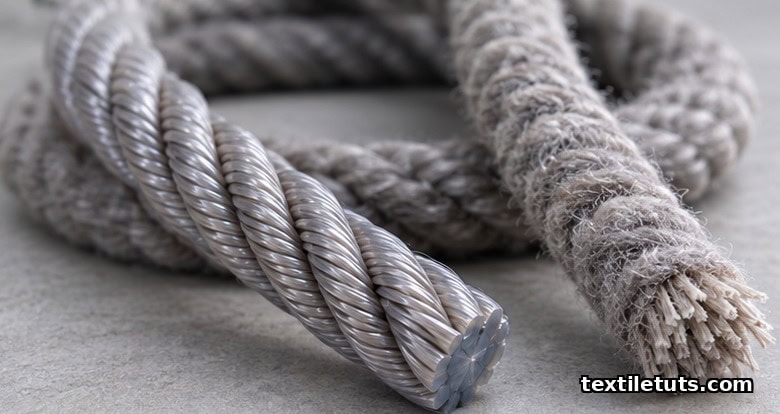
Carpet yarn spinning produces two principal yarn constructions: bulked continuous filament (BCF) at 1200–3600 denier texturized at 180–230 °C, and staple carpet yarn spun from 80–150 mm cut fibers with cable twist of 90–200 turns per meter. These two routes cover more than 95% of the world’s tufted carpet face yarn by volume, and the choice between them determines surface texture, dye behavior, resilience, and price. Below is the working reference on how each yarn is made, why the numbers above are what they are, and where each yarn type ends up on the floor.
Carpet Yarn Performance Requirements
Carpet face yarn is a high-bulk, high-resilience construction that lives under foot traffic, caster wheels, and UV exposure. Four measurable properties decide whether a fiber qualifies as a carpet yarn:
- Linear density: 1200–3600 denier for BCF (about 3–8× heavier than apparel filament yarn) and 200–700 tex for staple carpet yarn. Heavier yarns give deeper pile heights of 8–20 mm without losing cover.
- Bulk: 15–35% increase in apparent volume after texturizing, measured as the difference between drawn and bulked denier under standard load.
- Twist retention: cable twist must survive heat-setting at 130–140 °C without untwisting, since tufting needles apply 2–4 N of axial force.
- Resilience: compression recovery above 80% after 1000 cycles at 50% compression, per ASTM D3936.
Polyamide 6 (nylon 6) and polyamide 6.6 dominate carpet face yarn because they hold a heat-set crimp; polypropylene (PP) covers the BCF economy segment; wool and wool blends own the high-end staple segment. ISO 2424 defines the carpet pile weight tolerance bands used by tufters to accept or reject yarn lots.
Bulk Continuous Filament (BCF) Spinning Process
BCF spinning is a one-step melt extrusion to package process. Polymer chips (nylon 6, nylon 6.6, or PP) are melted at 250–290 °C, extruded through a spinneret with 50–140 holes, and the filaments are quenched in a cross-flow air duct. The cooled tow then passes over a hot draw pin or heated godet at 180–230 °C (for nylon) where the filaments are drawn 3.0–4.2× and simultaneously texturized.
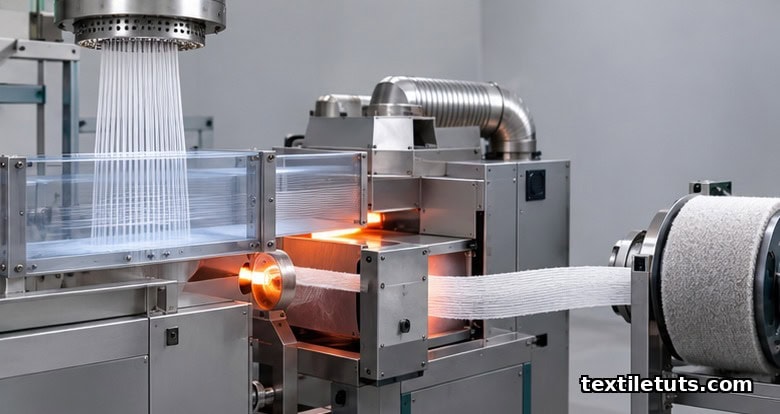
Two texturizing methods are standard:
- Hot-fluid (air-jet) texturizing: the tow is blown with hot air or steam at 180–230 °C through a stuffer box or jet, which forms random 3D crimp. This is the dominant BCF method and produces the springy, multi-directional crimp that gives BCF carpet its crush resistance.
- Gear-crimp texturizing: the tow passes between heated intermeshing gears at 130–160 °C, forming a regular saw-tooth crimp. Used for some polypropylene BCF and for carpet backing yarn.
After texturizing, the filament sheet is collapsed into a tow, coated with 0.3–1.0% of spin finish (a lubricating, antistatic, and cohesion oil), and wound on a take-up at 2500–4500 m/min. Modern BCF lines (Reemay, Neumag, Superba, Oerlikon Barmag) integrate drawing, texturizing, and winding in a single continuous operation. The drawn, bulked denier is calibrated by the spinneret hole count and the winder speed, not by post-extrusion stretching.
BCF yarn is sold either as flat yarn for further twisting or, in about 60% of installations, as pre-twisted cable from an integrated two-for-one twister that takes the BCF off the winder, plies it with counter-direction twist at 90–200 t/m, and heat-sets it in line. The two-for-one (TFO) cabling step is what turns a flat BCF into a tuftable yarn with the cohesion needed to survive the needle.
Staple Carpet Yarn Spinning Process
Staple carpet yarn follows the classical short-staple or long-staple route: filaments are spun, drawn, and then cut into short lengths before being re-spun into yarn. The extra processing buys a different surface texture, not a different fiber chemistry.
The standard route for nylon or PP staple carpet yarn is:
- Extrude and draw as for BCF, but on a separate tow line that bundles hundreds of thousands of filaments into a 5–15 ktex tow.
- Creel and stretch-break the tow across a series of heated rollers at 130–180 °C so filaments break at random points and form a sliver with fiber lengths of 80–150 mm.
- Cut the tow with a rotary cutter into 80–150 mm staple and bale it. Cut lengths above 120 mm are preferred for worsted spinning; 60–100 mm feeds woolen or semi-worsted systems.
- Card and draft on a worsten card (Worsted) or woolen card (Woolen). Worsted carpet yarn uses a rectilinear comb and gill drawing at 6000–12000 fibers/min to align fibers parallel and remove neps. Woolen carpet yarn uses a single-cylinder card that leaves fibers randomized for a fuzzy, felted hand.
- Roving and ring-spin the sliver at a heavy roving tex of 1000–2500 and spin to a final yarn count of 100–400 tex (R 25–R 100 metric, or roughly 250–1000 denier per single).
- Two-ply and cable on a TFO twister at 90–200 t/m. The cable direction is opposite to the singles so the finished yarn is balanced.
Wool carpet yarn uses a similar path but starts from washed wool top. The Bradford or French worsted system produces a smooth, parallel-fiber yarn for Axminster and Wilton weaving. The woolen system produces a hairy, full yarn for tufted Saxony and for hand-knotted rugs.
Heat-Setting of Carpet Yarn
Heat-setting locks in the crimp and the cable twist so the yarn keeps its bulk under traffic. For nylon 6, the glass transition temperature is around 47 °C, so the set temperature must be well above it: typical Superba and Suessen heat-setting lines run at 128–140 °C with a dwell time of 60–180 seconds, depending on yarn linear density and number of ends. For nylon 6.6, set temperature rises to 180–200 °C because of its higher crystalline melting point.
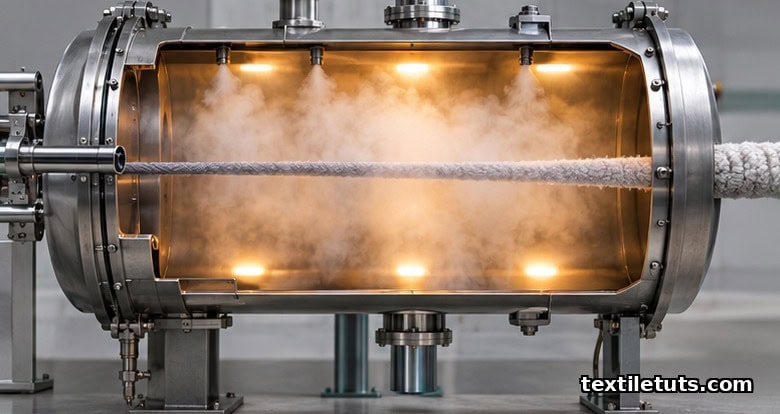
Two industrial heat-set methods dominate:
- Superba (TVP) process: the yarn is threaded through a saturated steam autoclave at 130–140 °C (nylon 6) for 1–3 minutes. Steam-set nylon 6 retains 85–92% of its crimp after 1000 compression cycles, the highest in the industry.
- Suessen process: dry heat in a continuous oven with dwell time of 30–60 seconds at 180–200 °C for nylon 6.6. Faster but uses more energy per kilogram.
PP is heat-set at 110–125 °C because of its lower softening point. Heat-setting below the recommended window produces a yarn that loses bulk after 10–20 wash cycles; above the window the filaments fuse and tuftability drops.
Twisting and Cabling of Carpet Yarn
Carpet yarn is almost always two-ply cable because singles yarn cannot survive the tufting needle. The singles twist (typically 100–250 t/m, Z or S) is set first, then two singles are plied with the opposite twist at 90–200 t/m. The balance between singles and ply twist decides the surface:
- Equal-and-opposite twist produces a smooth, round cable used in cut-pile Saxony.
- Ply twist higher than singles over-twists the surface and creates the kinked, lively hand of a frieze.
- Loose ply twist under 100 t/m produces a soft, lustrous cable used in some velvets.
Two-for-one (TFO) twisters are the standard for BCF cabling because they insert one turn per revolution using a stationary yarn storage package, reaching 18,000–25,000 rpm. Ring-twisted carpet yarn (also called ring-cabled) is still used for very heavy wool carpet yarn where the lower 4000–6000 rpm gives better hand control.
Yarn Surface Effects — Frisé, Saxony, and Frieze
The three carpet textures most often confused by buyers are all heat-set twisted cables. The difference lives in the ply twist level and the surface finishing:
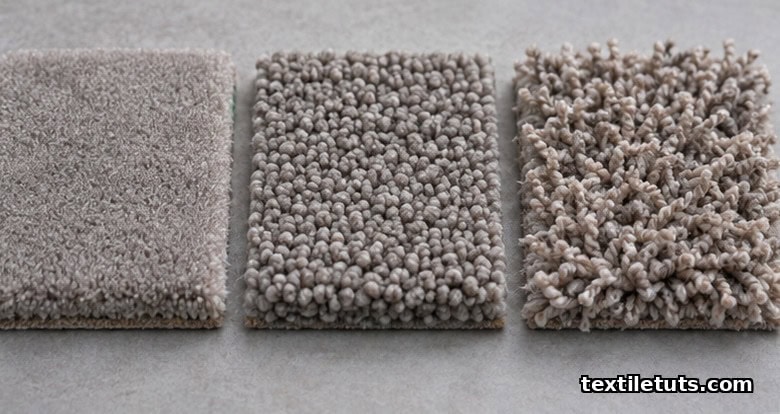
- Saxony: tightly twisted (single 200–250 t/m Z, ply 180–220 t/m S) heat-set two-ply cable. After tufting, the yarn is sheared to a uniform 8–15 mm height. The finish is a smooth, almost velvet-like surface where individual tufts are visible but the same direction. Saxony uses BCF or worsted-spun staple.
- Frisé: tightly twisted heat-set yarn with high ply twist (220–280 t/m) and a finer denier per filament (3–5 dpf). The tufts are shorter, 6–10 mm, and the surface reads as a tight pebble or curl. Frisé is almost always BCF because the fine dpf is hard to achieve in staple form.
- Frieze (or frieze): very high ply twist (250–320 t/m) over a soft singles twist (120–160 t/m). The over-twist kicks individual tufts into random S-curves, producing the rough, kinked, casual hand. Frieze uses BCF nylon 6.6 with high bulk.
A fourth, less-known texture, berber, is made from undyed or solution-dyed BCF of mixed deniers and colors to imitate natural wool. It is not a yarn construction in itself but a color-blending technique applied to BCF.
BCF vs Staple Carpet Yarn — Comparison Table
| Property | BCF (Bulk Continuous Filament) | Staple Carpet Yarn |
|---|---|---|
| Process | One-step extrude, draw, texturize, wind | Extrude, tow, stretch-break, cut, card, spin, ply |
| Linear density | 1200–3600 denier | 200–700 tex (250–1000 denier per single) |
| Filament fineness | 10–24 dpf (3–5 dpf for fine frisé) | Not applicable, cut into 80–150 mm staple |
| Texturizing temperature | 180–230 °C (nylon) | Steam-set or dry heat-set at 130–200 °C after cabling |
| Cable twist | 90–200 t/m, two-for-one | 90–200 t/m, ring or TFO |
| Surface texture | Uniform, smooth or frieze/curl with high twist | Matte, slightly hairy, hand-spun look |
| Dyeing | Solution-dyed (color-fast) preferred; piece-dye possible | Piece-dyed or stock-dyed |
| Throughput | 2500–4500 m/min single end | 30–80 m/min ring-spin equivalent |
| Main end uses | Residential cut-pile, commercial loop, automotive carpet | Wool-style Saxony, Axminster, Wilton, hand-knotted rugs |
Frequently Asked Questions
Q1: What is the difference between BCF and staple carpet yarn?
BCF is a continuous filament yarn made in one step by extruding, drawing, and texturizing polymer melt into 1200–3600 denier cable. Staple carpet yarn is made by extruding filaments, cutting them into 80–150 mm lengths, and re-spinning them into yarn on a worsted or woolen system. BCF gives a smooth, uniform surface and is produced at very high throughput; staple gives a matte, slightly hairy, hand-spun look at lower throughput.
Q2: Why is nylon 6 the preferred polymer for BCF carpet yarn?
Nylon 6 has a glass transition temperature of about 47 °C and can be texturized at 180–230 °C and heat-set at 130–140 °C, which lets it hold a crimp under foot traffic for 10–20 years. It also accepts both acid and disperse dyes, takes solution-dye pigments uniformly, and gives 85–92% crimp retention after 1000 compression cycles, the highest of any common carpet polymer.
Q3: What temperature is used to heat-set carpet yarn?
Nylon 6 carpet yarn is heat-set at 128–140 °C in saturated steam (Superba process) for 60–180 seconds. Nylon 6.6 needs 180–200 °C in dry heat (Suessen process) because of its higher crystalline melting point. Polypropylene is heat-set at 110–125 °C. Setting below the recommended window causes crimp loss after a few wash cycles; setting above the window causes filament fusion and tufting breakage.
Q4: What cable twist gives a frieze carpet its kinked surface?
A true frieze uses singles twist of 120–160 t/m in one direction and ply twist of 250–320 t/m in the opposite direction. The ply twist is high enough to push each tuft into a random S-curve when the yarn is cut at the tufting step, producing the rough, casual, “peppered” hand associated with frieze carpet. Standard Saxony uses much lower ply twist of 180–220 t/m for a smoother finish.
Q5: Is BCF carpet yarn better than staple carpet yarn?
Neither is better in absolute terms. BCF is cheaper per square meter, holds color better when solution-dyed, and offers higher resilience per unit weight. Staple gives a more natural wool-like look, accepts piece-dye colorways more easily, and is the only option for woven Axminster and Wilton constructions. For residential cut-pile the choice is mostly aesthetic and not performance-driven.
References
- McIntyre, J.E. (Editor). Synthetic Fibres: Nylon, Polyester, Acrylic, Polyolefin. Woodhead Publishing (SCI journal partner). https://shop.elsevier.com/books/synthetic-fibres/mcintyre/978-1-85573-588-0 — peer-reviewed chapters on BCF extrusion and carpet yarn texturizing.
- Wilkie, A. and Wulfhorst, B. Polyamide Carpet Yarn — Production, Properties and End Uses. Chemical Fibers International (Wiley journal). https://onlinelibrary.wiley.com/journal/21969441 — covers heat-setting, cable twist, and tuftability of BCF nylon carpet yarn.
- American Society for Testing and Materials. ASTM D3936 — Standard Test Methods for Bulk Properties of Carpet Yarn. https://www.astm.org/d3936 — bulk, resilience, and tuftability acceptance test method.
- International Organization for Standardization. ISO 2424:2022 — Textile floor coverings — Basic properties of carpet yarn. https://www.iso.org/standard/82609.html — defines denier, tex, and pile weight tolerances for face yarn.
- Wilson, D. The Science of Carpet Yarn Twist and Set. Journal of the Textile Institute (Taylor & Francis). https://www.tandfonline.com/toc/titl20/current — peer-reviewed papers on cable twist retention and heat-set kinetics.
- Kozlowski, R. and Muzyczek, M. (Editors). Handbook of Natural Fibres: Volume 2 — Processing and Applications. Woodhead Publishing. https://shop.elsevier.com/books/handbook-of-natural-fibres-volume-2/kozlowski/978-0-12-818782-1 — staple wool carpet yarn spinning routes (worsted and woolen).
- International Wool Textile Organisation. Wool Carpet Yarn Specifications (IWTO-34). https://iwto.org — standard specifications for worsted and woolen carpet yarn counts and twist.
Editorial by Iftay Khairul Alam, TextileTuts. Sources: McIntyre (Woodhead), Chemical Fibers International (Wiley), ASTM D3936, ISO 2424, Journal of the Textile Institute, Handbook of Natural Fibres (Woodhead), IWTO-34 as cited.


