
Canvas and Duck Cloth

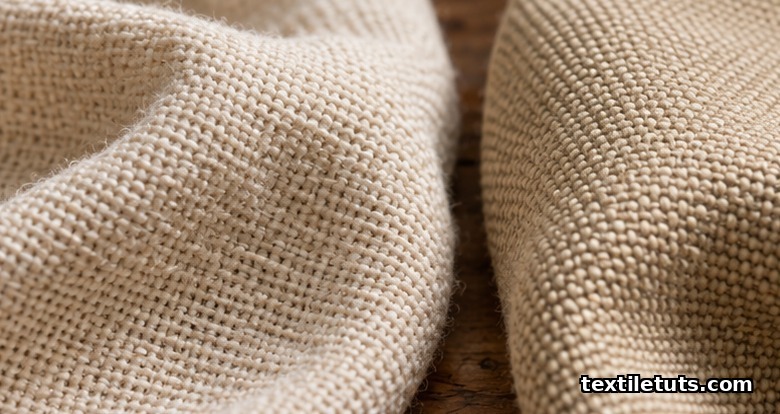
Cotton canvas and duck cloth share the same plain-weave construction, but numbered duck canvas ranges from 7 to 30 oz/yd² (roughly 240 to 1,015 g/m²) while conventional cotton canvas for painting and apparel typically falls between 6 and 12 oz/yd² (200 to 405 g/m²), making duck cloth the heavier, more tightly woven sibling of the canvas family.
Both fabrics belong to the same textile family and are sometimes used interchangeably, but their weight numbering systems, fiber blends, and end-use performance differ in ways that matter for sewing projects, workwear, footwear, and industrial covers.
This guide explains the origins of each fabric, how the U.S. numbered duck system works, the technical properties that distinguish them in the lab and on the workbench, and how to pick the right weight for a specific project.
What Is Canvas Fabric?
Canvas is a plain-weave fabric traditionally woven from cotton, linen, or hemp yarns, with the simplest possible interlacing pattern: one warp yarn over, one weft yarn under, repeated across the entire cloth. The word itself traces back to the Latin cannabis (hemp), and for centuries canvas referred to any heavy, coarse cloth used for sails, tenting, and oil painting surfaces.
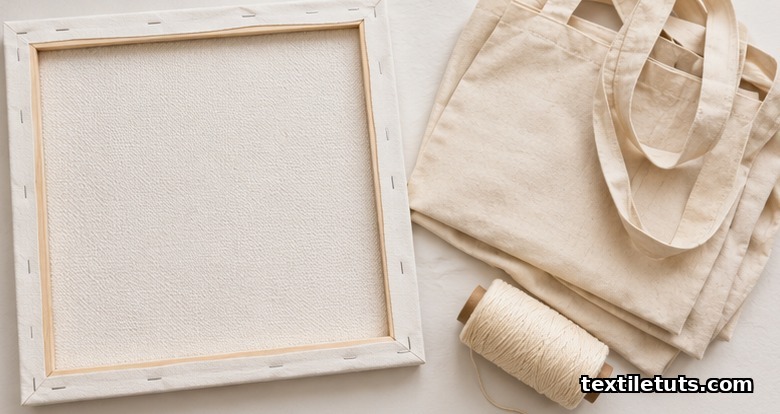
Modern canvas covers a wide weight range. Lightweight cotton canvas used for clothing, slipcovers, and lightweight bags typically weighs 6 to 10 oz/yd² (200 to 340 g/m²). Heavier canvas for artist surfaces and upholstery climbs to 12 to 18 oz/yd² (405 to 610 g/m²). Mass per unit area for woven fabrics is determined gravimetrically under ISO 3801, with conditioning at 20 °C and 65% relative humidity before weighing.
The fabric’s plain-weave structure gives it balanced strength in both warp and weft directions, which is why canvas has remained the standard for applications where tearing resistance matters: sails, tents, tarpaulins, and industrial covers dating back to the 16th century.
What Is Duck Cloth?
Duck cloth, sometimes called duck canvas, is a subcategory of canvas distinguished by its higher thread count and tighter weave. The term “duck” comes from the Dutch word doek, meaning linen cloth, and the fabric emerged commercially in the 19th century as a more densely woven alternative to traditional canvas for workwear, military tents, and sailcloth.
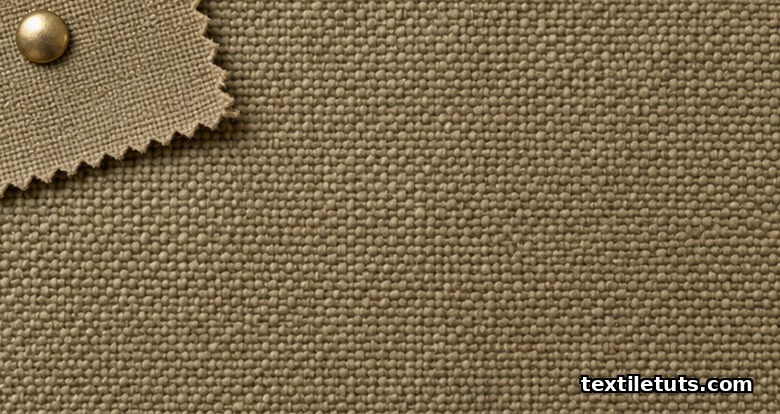
The defining feature of duck cloth is its construction. A typical 12 oz/yd² (405 g/m²) cotton canvas uses around 60 ends per inch in the warp and 40 picks per inch in the weft. A 12 oz/yd² duck cloth uses roughly 80 ends and 60 picks, increasing total thread count by 30 to 40%. That denser packing is what gives duck cloth its characteristic stiffness, smoother surface, and improved abrasion resistance compared to ordinary canvas of the same weight.
Most duck cloth sold today is 100% cotton, but the category also includes poly-cotton blends for outdoor applications and treated versions with water-repellent or fire-retardant finishes.
Canvas vs Duck Cloth: Key Differences
The two fabrics overlap in fiber content and weave structure, but they differ in thread count, weight grading, and typical applications. The table below summarizes the main points of comparison using values typical of commercial cotton grades.
| Property | Standard Cotton Canvas | Duck Cloth (Numbered Duck) |
|---|---|---|
| Typical weight range | 6 to 18 oz/yd² (200 to 610 g/m²) | 7 to 30 oz/yd² (240 to 1,015 g/m²) |
| Weave construction | Plain weave, balanced | Plain weave, denser thread packing |
| Thread count (warp/weft) | Lower (often 50/40 to 60/40) | Higher (often 80/60 to 100/70) |
| Stiffness | Moderate, softens with washing | Stiffer hand, holds shape well |
| Common uses | Art surfaces, apparel, lightweight bags | Workwear, tool bags, sandbags, awnings, sneakers |
| Weight grading | oz/yd² or g/m² only | Numbered system (No. 1, No. 2 … No. 12) |
The Numbered Duck System Explained
The U.S. canvas industry uses a numbered classification that dates back to the early 1900s. In this system, the number refers to the weight of a linear yard of fabric at a standard historical width (around 22 inches for the traditional numbering). Lower numbers mean heavier cloth, which is the opposite of what most newcomers expect.
No. 1 duck is the heaviest commercial grade at 18 to 30 oz/yd² (610 to 1,015 g/m²), suitable for conveyor belts, heavy industrial covers, and sandbags. No. 12 duck is the lightest grade at around 7 oz/yd² (240 g/m²), used in lighter workwear, shoe linings, and filtration products. No. 4 and No. 6 are mid-weight grades commonly used in tool bags, upholstery, and utility clothing.
Mass per unit area for numbered duck is verified under ASTM D3776, the U.S. equivalent of ISO 3801. Both standards specify gravimetric determination after conditioning at 20 °C and 65% relative humidity, with reported values commonly varying by 3 to 5% between laboratories.
Properties and Performance Testing
Strength is the property most often cited when comparing canvas and duck cloth. Tensile strength is measured under ISO 13934-1 (strip method) or ASTM D5034 (grab method). A 10 oz/yd² (340 g/m²) cotton duck typically tests at 600 to 800 N in the warp direction and 400 to 600 N in the weft, depending on yarn twist and thread density. A plain canvas of the same weight usually tests 15 to 25% lower because of its looser weave.
Abrasion resistance is another clear differentiator. The Martindale test (ISO 12947) and the Wyzenbeek test (ASTM D4157) both expose fabric to repeated rubbing cycles until visible surface damage appears. A 12 oz/yd² cotton duck typically withstands 30,000 to 50,000 Martindale cycles before pilling, while a comparable plain canvas at the same weight usually fails between 15,000 and 25,000 cycles.
Water resistance depends on finish. Untreated cotton duck absorbs 60 to 80% of its dry weight in water within 30 minutes of immersion. Wax-treated or water-repellent finished duck can reach spray ratings of 80 to 100 out of 100 on the AATCC TM22 spray test, qualifying as water-resistant for outdoor covers and awnings, though not fully waterproof for submersion.
Common Applications
Workwear and tool bags dominate duck cloth usage. Heavy-duty jackets, tool aprons, and reinforced tote bags rely on No. 4 to No. 8 duck because the fabric stands up to repeated abrasion and resists tearing at seams and stress points.
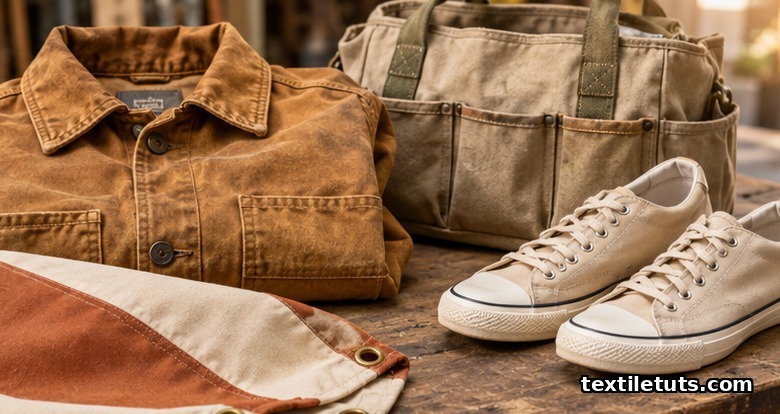
Footwear is another major market. Sneaker uppers, espadrilles, and deck shoes use 8 to 12 oz/yd² duck because the fabric holds its shape under foot without bunching. The same density makes duck a common substrate for embroidered patches, appliqués, and structured hats.
Standard canvas, by contrast, dominates in artist surfaces, where a smoother, less stiff hand lets paint glide without dragging. Theatrical backdrops, photography cycloramas, and event tents also use lighter canvas because the lower weight reduces stress on rigging hardware.
Industrial applications such as filtration media, conveyor belts, and tarpaulins use heavier No. 1 to No. 3 duck because the dense weave supports mechanical loading and resists puncture better than lighter canvas grades.
Care and Maintenance
Untreated cotton canvas and duck cloth can usually be machine washed in cold water (≤30 °C) on a gentle cycle, then tumble-dried on low heat or air-dried flat to limit shrinkage. Dimensional change after home laundering is measured under AATCC TM135, and untreated cotton duck typically shrinks 5 to 10% in length and 3 to 7% in width after three wash cycles.
Pre-washing fabric before cutting and sewing avoids shrinkage surprises after the project is complete. Hot water above 60 °C and high-heat drying accelerate shrinkage and may stiffen the fabric permanently by collapsing the cotton fiber’s natural crimp.
Wax-treated or water-repellent duck should not be machine washed, as the agitation strips the finish. Spot cleaning with a damp cloth and mild soap preserves the treatment. Re-waxing with a fabric wax every 12 to 24 months restores water repellency in workwear and outdoor covers.
How to Choose Between Canvas and Duck Cloth
For painter’s canvases, theatrical backdrops, and lightweight apparel bags where a softer hand matters more than brute strength, conventional cotton canvas in the 8 to 12 oz/yd² range is the right call. The smoother surface takes grommets, prints, and dye evenly without bleeding.
For tool bags, workwear jackets, footwear uppers, and awnings where the fabric must resist tearing, abrasion, and puncture, numbered duck in the No. 4 to No. 8 grade (10 to 18 oz/yd²) delivers the best balance of weight and durability. Anything heavier than No. 1 (above 18 oz/yd²) is industrial territory and difficult to sew on a home machine.
Outdoor applications exposed to rain or sun should use duck cloth with a water-repellent finish or pre-waxed canvas, and seams should be sealed with a waterproof seam tape. Standard untreated canvas fails spray tests (AATCC TM22) within minutes of water exposure.
Frequently Asked Questions
Is duck cloth the same as canvas?
Duck cloth is a type of canvas. All duck is canvas, but not all canvas is duck. The defining difference is thread count: duck cloth packs more threads per inch in both warp and weft, producing a denser, stiffer, more abrasion-resistant fabric than ordinary canvas of the same weight. Duck is also graded on the U.S. numbered system (No. 1 to No. 12), while standard canvas is sold by weight alone.
What is the heaviest duck cloth available?
No. 1 numbered duck is the heaviest commercial grade, weighing 18 to 30 oz/yd² (610 to 1,015 g/m²). It is used for industrial conveyor belts, sandbags, and heavy-duty covers. Above No. 1 the fabric enters specialty territory and is usually custom woven to order for specific industrial applications.
Is duck cloth waterproof?
Untreated cotton duck absorbs water readily and is not waterproof. Wax-treated or water-repellent finished duck can pass the AATCC TM22 spray test at ratings of 80 to 100 out of 100, which qualifies as water-resistant for outdoor covers and awnings, but not fully waterproof for prolonged submersion or heavy rain.
Can you wash duck canvas in a washing machine?
Untreated cotton duck can be machine washed in cold water (≤30 °C) on a gentle cycle, then air-dried or tumble-dried on low heat. Expect 5 to 10% shrinkage in length and 3 to 7% in width after three wash cycles, measured under AATCC TM135. Wax-treated or water-repellent finished duck should be spot-cleaned only, as machine washing strips the protective finish.
Which is stronger, canvas or duck cloth?
At equal weight, duck cloth is stronger than conventional canvas because of its higher thread count. A 10 oz/yd² (340 g/m²) cotton duck typically tests at 600 to 800 N tensile strength (warp direction) under ISO 13934-1, compared with 400 to 600 N for a plain canvas of the same weight. Duck also withstands roughly twice the Martindale abrasion cycles before showing surface damage.
References
- International Organization for Standardization. ISO 3801:1977, Textiles: Woven fabrics, Determination of mass per unit length and mass per unit area. ISO. Method for gravimetric weight determination used across the canvas and duck cloth industry.
- ASTM International. ASTM D3776/D3776M-20, Standard Test Methods for Mass Per Unit Area (Weight) of Fabric. ASTM. U.S. standard for fabric weight measurement, equivalent in principle to ISO 3801.
- American Association of Textile Chemists and Colorists. AATCC TM135, Dimensional Changes of Fabrics After Home Laundering. AATCC. Standard test method for shrinkage in cotton and cotton-blend woven fabrics.
- American Association of Textile Chemists and Colorists. AATCC TM22, Water Repellency: Spray Test. AATCC. Standard spray rating method for water-repellent finished fabrics.
- International Organization for Standardization. ISO 13934-1:2013, Textiles: Tensile properties of fabrics, Part 1: Determination of maximum force using the strip method. ISO. Standard tensile strength method referenced throughout the canvas and duck cloth industry.
- International Organization for Standardization. ISO 12947-1:1998, Textiles: Determination of the abrasion resistance of fabrics by the Martindale method. ISO. Martindale abrasion test referenced for duck cloth performance claims.
- ASTM International. ASTM D4157-13, Standard Test Method for Abrasion Resistance of Textile Fabrics (Oscillatory Cylinder Method). ASTM. Wyzenbeek test method, the U.S. counterpart to ISO 12947.
This article is the working reference for canvas and duck cloth. Editorial by Mohammad Yousuf (Anik), TextileTuts. Sources: ISO 3801, ISO 13934-1, ISO 12947-1, ASTM D3776, ASTM D4157, AATCC TM22, and AATCC TM135 as cited.


