
Cam System in Circular Knitting

The cam system in a circular knitting machine converts the rotational motion of the needle cylinder into precise vertical movement of each needle, using three to four hardened steel cam segments (raising cam, stitch cam, guard cam, and optionally a tuck cam) per feed position to control loop formation at speeds of 18-35 RPM on 30-inch diameter machines and up to 80 RPM on smaller 10-12 inch diameter units. This single mechanical assembly is what distinguishes a circular knitting machine from any other textile equipment, because the cam profile alone determines loop length, fabric weight, and stitch density.
This article explains what a knitting cam does, how each cam segment guides the needle butt, why stitch cam geometry sets the loop length, and how multi-feed cam boxes build plain jersey, rib, interlock, and three-thread fleece on the same cylinder.
What the Cam System Does in a Circular Knitting Machine
A circular knitting machine has hundreds to thousands of needles held vertically in slots cut around the circumference of a rotating cylinder (or dial, in double-jersey machines). The cylinder spins continuously, but the needles themselves do not rotate. They must rise, clear, knit, and return to the rest position in a defined order, every revolution, at every feed. The cam system is the stationary assembly that performs this conversion of rotary to linear motion.
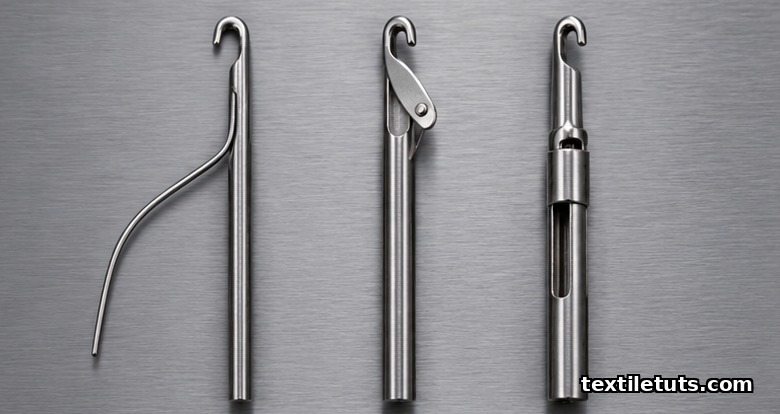
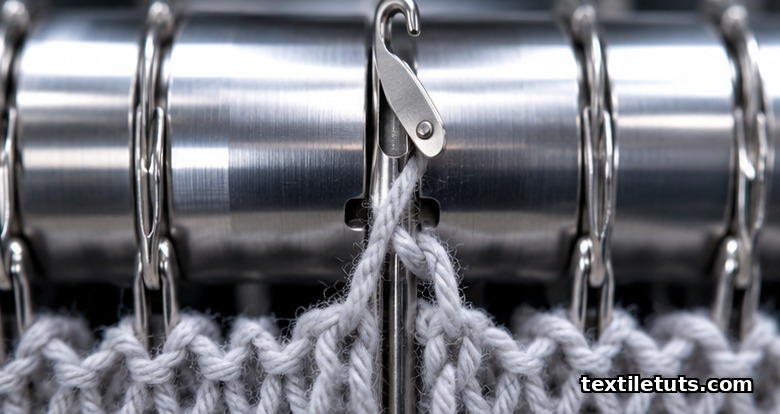
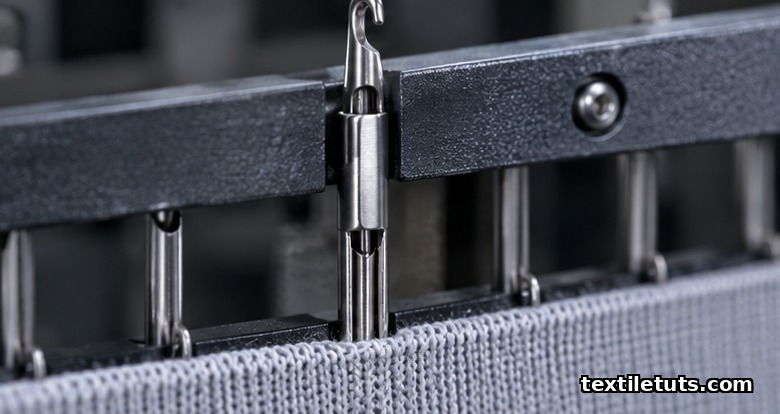
Each needle has a hook at the top (for catching yarn) and a butt at the bottom. The butt slides along stationary cam tracks as the cylinder rotates, and the shape of those tracks forces the needle up or down by a controlled distance. ISO 4921:1984 (Knitting: Basic Terms) defines the cam as “a shaped component, or set of components, that controls the movement of the needle in its track,” and this definition has not been revised since first publication.
The mechanical advantage of cam control is consistency. Once a cam profile is ground, every needle follows the identical path on every revolution. A 30-inch diameter single-jersey machine at 28 RPM makes roughly 14.5 million needle cycles per hour per feed; without the rigid geometry of the cam, this consistency would be impossible.
Main Components: Cylinder, Needle Butt, Cam Track
Three parts must work together for the cam system to function:
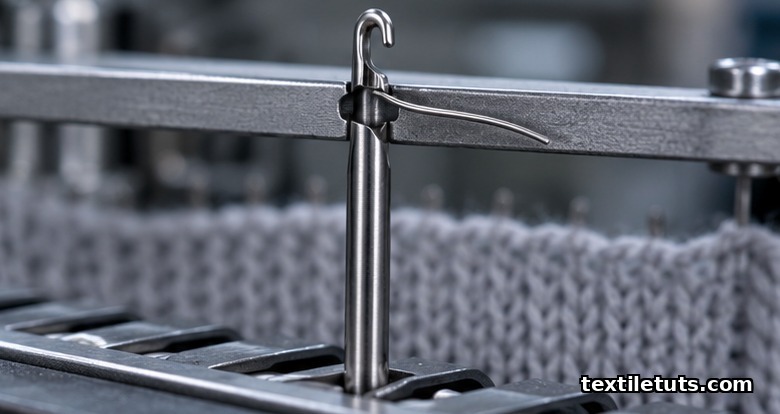
- Needle butt: A square or rectangular projection at the bottom of the needle that slides along the cam track. The butt’s height sets how far the needle will rise.
- Cylinder slot: A vertical groove cut into the needle cylinder that holds each needle and keeps it oriented. Slots are typically cut at 1.5-degree pitch angles for a standard gauge machine.
- Cam track: A precision-ground channel cut into the cam segment. Its shape, depth, and angle govern needle motion.
Cam segments are made from case-hardened chrome-nickel steel (commonly EN31 or AISI 52100) heat-treated to 60-62 HRC. This hardness is required because a single needle butt slides over the cam face roughly 1,200 times per minute per feed, and a softer steel would wear within hours, changing loop length across the production run.
Types of Cams and Their Functions
Every cam system in circular knitting contains at least three distinct cam segments per feed. Each performs one specific job during the needle’s cycle.
Raising Cam (Lift Cam)
The raising cam lifts the needle from its lowest position to the highest point needed for yarn catching. Its profile is a curved ramp, often rising 8-12 mm over a track arc of 60-90 degrees of cylinder rotation. The exit angle of the raising cam, usually between 30 and 45 degrees, controls how abruptly the needle reaches its peak.
Stitch Cam (Loop Formation Cam)
The stitch cam controls the actual loop length. It holds the needle at a fixed height while the yarn wraps the hook, then descends in a controlled ramp that releases the needle back down through the new loop. The depth of the stitch cam determines the stitch cam setting, expressed in millimeters. Common stitch cam settings range from 2.5 mm (tight, lightweight jersey) to 4.5 mm (loose, heavy fleece).
Guard Cam (Holding Cam)
The guard cam prevents the needle from rising higher than the operator has set. Without the guard, the needle could overshoot during high-speed running. The guard is often a low step positioned right at the top of the raising cam’s exit.
Tuck Cam (Optional)
On machines configured for tuck stitches, a tuck cam is added between the raising and stitch cams. The tuck cam holds the needle at an intermediate height, so the new yarn is caught while the old loop remains on the needle body rather than being knocked off. This produces the float-and-tuck patterns used in three-thread fleece backing and bird’s-eye fabrics.
How the Cam Box Works: Multi-Feed Layout
On a modern circular knitting machine, cams are not loose pieces. They are mounted as a single bolted unit called the cam box, with one complete cam set per feed position. A 30-inch single-jersey machine with 90 feeds has 90 identical cam boxes arrayed around the circumference, separated by yarn carriers that deliver one end of yarn per feed at the knitting point.
The cam box is positioned between the cylinder and the dial (on double-jersey machines) or between the cylinder and the take-down system (on single-jersey machines). Each cam box can be raised or lowered as a unit for fabric doffing, but during knitting it remains rigidly fixed.
The feeds are typically evenly spaced at 4-degree intervals on a 90-feed machine (360 degrees / 90 feeds = 4 degrees). At 28 RPM, each feed has 0.071 seconds (71 milliseconds) to complete one needle cycle, which is why cam profile geometry is engineered to within 0.01 mm tolerance on modern CNC-ground cam boxes.
Stitch Cam Geometry and Loop Length Control
Loop length, the single most important parameter of a knitted fabric, is set entirely by the stitch cam. To understand how, consider the path of the needle:
- The needle starts at the rest position, hook down.
- The raising cam lifts it to clear height (typically 9-11 mm above the rest position).
- The needle passes the yarn at the highest point.
- The presser or stitch cam pushes it down, knocking the old loop over the new yarn.
- The stitch cam holds the needle at the loop-formation height while the needle descends.
- Below the stitch cam exit, the guard cam prevents any further rise until the cycle restarts.
The depth at which the stitch cam holds the needle determines how much yarn the needle pulls into the fabric. A deeper stitch cam (higher numerical setting) means a longer loop, which means more yarn consumed and higher fabric GSM (grams per square meter). For a standard 150 GSM single-jersey t-shirt fabric, the stitch cam setting is typically 3.0-3.2 mm on a 24-gauge, 30-inch machine running 24-26 needles per feed per cycle.
Knit Structures Produced by Cam Selection
The same cylinder can knit radically different structures by changing only the cam configuration.
| Fabric Structure | Cam Configuration | Needle Rises | Typical End Use |
|---|---|---|---|
| Plain jersey (single knit) | One set of cams per feed, single cylinder | Knit only | T-shirts, underwear linings |
| Rib 1×1 | Two cam sets (cylinder + dial), alternating needles | Knit only, alternating | Cuffs, collars, waistbands |
| Interlock | Two cam sets, short needle/long needle | Knit only, alternating feeders | Dress shirts, polo knits |
| Three-thread fleece | Three cam sets including a tuck cam on the back feed | Knit + tuck on backing | Hoodies, sweatpants |
| Piqué | Two cam sets, tuck + knit combination | Knit and tuck alternating | Polo shirts |
ISO 8554:1984 (Knitting: Machine Designation) requires that machine manufacturers publish the cam arrangement for each fabric type a machine is rated to produce, and this is the practical reference knitting engineers use when selecting cam sets for a specific fabric.
Cam Wear, Maintenance, and Fabric Defects
Cam systems are wear parts. Typical service life is 18-24 months for a machine running two shifts per day, after which cam profiles must be reground or replaced. As cam profiles wear, three defect patterns emerge on the fabric:
- Horizontal lines (barré): Worn cam segments produce slightly different loop lengths at different feeds, visible as horizontal streaks across the greige fabric. AATCC Test Method 178 (Barré Visibility) provides a standard reference for rating these defects.
- GSM drift: As stitch cam depth wears downward, loop length shortens and fabric GSM rises over a production run, sometimes by 5-8% over 48 hours.
- Needle damage: Severely worn cam edges chip or burr, damaging needle butts and accelerating both cam and needle replacement costs.
Preventive maintenance schedules typically call for cam inspection every 1,500-2,000 operating hours, with profile measurements taken at six reference points per cam using a contour projector or coordinate measuring machine. ASTM D4850 (Standard Terminology Relating to Fabrics) defines the standard vocabulary used in these inspection reports.
Frequently Asked Questions
What is the function of the cam system in a circular knitting machine?
The cam system converts the cylinder’s continuous rotation into precise up-and-down needle movement. It controls four phases of the needle cycle: raising, holding at clearing height, descending through the stitch cam to form the loop, and returning to rest. Without the cam system, the needles could not produce uniform loops.
How does the stitch cam control loop length?
The stitch cam holds the needle at a fixed height while the new loop forms. A deeper stitch cam setting (commonly 2.5-4.5 mm) keeps the needle higher, which forces more yarn into the loop and produces a longer, heavier stitch. A shallower setting shortens the loop, reduces yarn consumption, and produces a lighter fabric.
What is the difference between a raising cam and a stitch cam?
The raising cam lifts the needle from rest to clearing height, typically an 8-12 mm rise over 60-90 degrees of cylinder rotation. The stitch cam then takes over, holding the needle at the knit position and releasing it in a controlled descent through the new loop. The raising cam controls how the needle gets up; the stitch cam controls how the loop gets made.
Why are there multiple cam boxes on one circular knitting machine?
Each feed on a multi-feed machine has its own dedicated cam box. A modern 30-inch single-jersey machine with 90 feeds has 90 cam boxes arrayed around the cylinder. This lets each feed deliver one end of yarn at the knitting point, multiplying the machine’s productivity by the number of feeds without requiring the cylinder to rotate faster.
How does cam wear cause visible fabric defects?
Worn cam segments change the loop length at specific feeds, which shows up as horizontal streaks called barré across the fabric. AATCC Test Method 178 rates barré visibility, and routine cam inspection every 1,500-2,000 operating hours is the standard preventive measure. As cam profiles wear, fabric GSM can drift upward by 5-8% over 48 hours of continuous production.
References
- International Organization for Standardization. ISO 4921:1984, Knitting: Basic Terms. Defines cam, needle, sinker, and other knitting machine terminology.
- International Organization for Standardization. ISO 8554:1984, Knitting: Machine Designation. Specifies how cam arrangements are described for different knit structures.
- ASTM International. ASTM D4850-23, Standard Terminology Relating to Fabrics. Reference vocabulary for fabric inspection and defect reports.
- AATCC. AATCC Test Method 178-2017, Barré Visibility. Standard method for rating horizontal streak defects in knit fabrics.
- Spencer, D.J. Knitting Technology: A Comprehensive Handbook and Practical Guide. 3rd ed., Woodhead Publishing. Standard textile-engineering reference for cam geometry and circular knitting machine design.
- Journal of the Textile Institute. Effect of Cam Profile on Loop Length Variation in Single-Jersey Knitting. Peer-reviewed study on how cam shape drives fabric weight consistency.
Editorial by Iftay Khairul Alam, TextileTuts. Reviewed by Sabbir Ahmed, TextileTuts. Sources: ISO 4921:1984, ISO 8554:1984, ASTM D4850, AATCC TM 178, and Spencer’s Knitting Technology as cited.


