
Knitting Mill Workflow

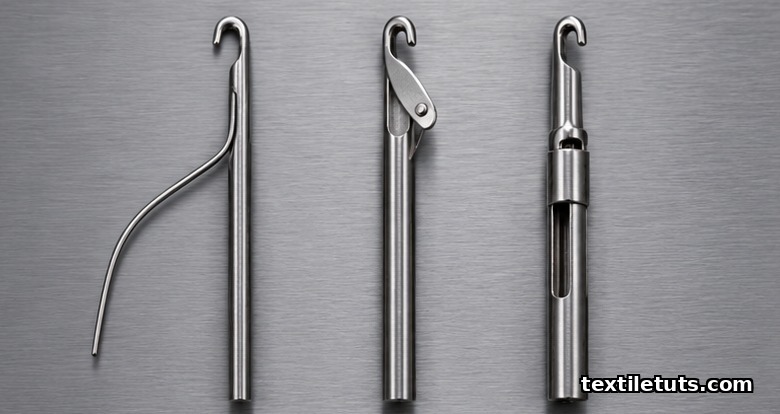
A modern knitting mill converts yarn packages into finished fabric through eight sequential stages (yarn preparation, knitting, greige inspection, wet processing, hydro-extraction, drying, compacting, and packing), with circular weft knitting typically operating at 18 to 35 revolutions per minute (RPM) and producing single-jersey fabric at 120 to 220 grams per square meter (GSM) within tolerances controlled to plus or minus 5 percent GSM variation. The workflow balances machine productivity (measured in kg per shift per machine) against quality benchmarks (stitch length uniformity, course and wales density, and dimensional stability after relaxation). Understanding each stage explains why a knit T-shirt feels different from a woven shirt and why the same yarn can produce dozens of distinct fabrics.
This article walks through every step in a contemporary weft knitting mill, from package creel to finished roll, and explains the process variables that determine final fabric quality.
Yarn Preparation and Package Conditioning
Before any needle forms a stitch, the yarn must arrive at the knitting machine in a state that minimizes tension variation and surface damage. Knitting yarns arrive on cones (typically 1.0 to 2.5 kg on paper or plastic cones) and are conditioned for at least 24 hours in a humidified storage area held at 65 plus or minus 2 percent relative humidity and 20 plus or minus 2 degrees Celsius, per ISO 139:2005 (Textiles — Standard atmospheres for conditioning and testing).
Cone stands feed up to 60 packages simultaneously on a circular machine, with each yarn end passing through a tensioner, a yarn break sensor, and a guide before reaching the needles. Waxed or lubricated yarns reduce friction at the needle hook by 15 to 25 percent compared with untreated yarn, which lowers end-break rates during high-speed knitting. Lubrication residue is later removed in scouring, so the lubricant is selected to be water-soluble (usually paraffin wax with an emulsifier load of 1.5 to 3.0 percent on weight of yarn).
The Knitting Stage — Stitch Formation on Circular Machines
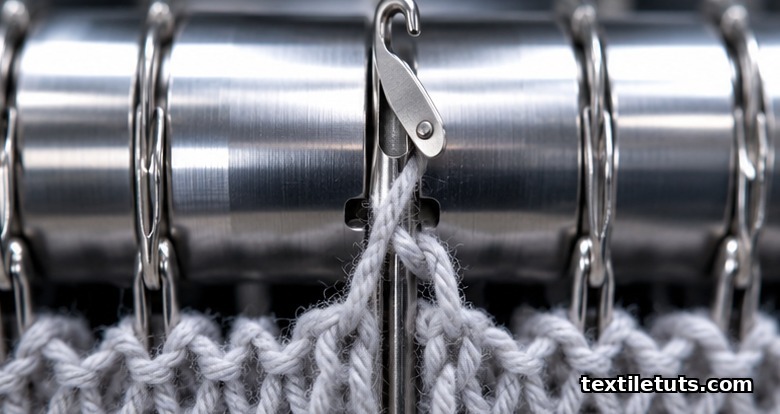
The knitting stage is the heart of the workflow. On a circular weft knitting machine, a needle cylinder and dial (or a single cylinder with a sinker ring on single jersey machines) rotate beneath stationary or rotating cam systems. Each needle receives yarn in sequence, forming a stitch in a continuous spiral that exits the machine as an open-width tube. The fundamental kinematic target is stitch length, defined as the length of yarn consumed per stitch (typically 2.5 to 4.5 millimeters for cotton and 2.0 to 3.5 millimeters for synthetic filament yarns).
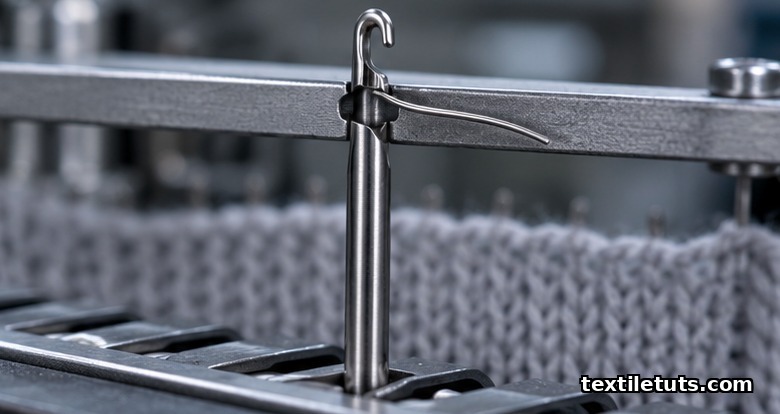
Production speed depends on fabric structure. Single jersey machines routinely run at 30 to 35 RPM for cotton counts Ne 24 to Ne 32, producing 1.5 to 2.5 meters of fabric per minute, while rib machines operate at 20 to 25 RPM because of the higher needle count and slower cam profile. Interlock and jacquard machines run slower still, typically 12 to 18 RPM, because each course requires multiple yarn feeds and electronic needle selection. Machine gauge (E) refers to needles per inch; an E24 machine has 24 needles per inch across the dial or cylinder, and a circular machine of 30-inch diameter at E24 contains approximately 2,260 needles on the dial and 2,260 on the cylinder (for rib or interlock configurations).
Fabric weight is set by three interrelated variables: yarn count, stitch length, and the machine gauge. For a 26-inch diameter single jersey machine at E24 producing 100 percent cotton at Ne 30 with a stitch length of 3.2 mm, the resulting GSM typically lands between 150 and 165. A 1 mm change in stitch length shifts GSM by approximately 5 to 7 percent for cotton on standard jersey structures, which is why stitch length control is monitored every two hours on the production floor.
Greige Fabric Inspection and Relaxation
Knitted fabric leaves the machine under tension. Before any further processing, it is relaxed to release latent stresses, which is the only way to achieve stable dimensional measurements. Relaxation dryers (also called stenters or steam relaxers) pass the open-width fabric over a heated surface or through a steam chamber at 100 degrees Celsius for 60 to 120 seconds, which causes fibers to re-arrange into their lowest-energy configuration. After relaxation, residual shrinkage is reduced from a pre-relaxation level of 15 to 20 percent to a post-relaxation level of 3 to 5 percent in the lengthwise direction and 4 to 6 percent in the widthwise direction (measured per AATCC TM 135).
Inspection tables run at 15 to 25 meters per minute with overhead lighting of at least 1,000 lux. Defects logged here include needle lines (vertical streaks from bent or worn needles), barre (horizontal bands from lot-to-lot variation in yarn count or dye affinity), holes, dropped stitches, and contamination. A typical first-quality mill aims for a defect rate of 1 to 3 per 100 meters of fabric; anything above that is downgraded to B-grade stock.
Wet Processing — Scouring, Bleaching, and Dyeing
Greige knit fabric then enters wet processing to clean, bleach, and color it. The order of operations depends on the end use. For a white finished fabric, the sequence is singeing (passing fabric over a gas flame at 900 to 1,000 degrees Celsius for 0.05 to 0.1 seconds), desizing (removing starch sizing with alpha-amylase at 60 to 70 degrees Celsius), scouring (removing waxes, oils, and pectins with sodium hydroxide at 3 to 5 grams per liter and a non-ionic surfactant at 90 to 95 degrees Celsius for 20 to 30 minutes), bleaching (hydrogen peroxide at 8 to 12 grams per liter at 95 degrees Celsius and pH 10.5 to 11.0 for 45 to 60 minutes), and finally washing and neutralization.
For dyed fabric, the same scour-bleach sequence is followed by dyeing. Reactive dyeing of cotton (the most common chemistry for knit fabrics) requires salt (sodium chloride or sodium sulfate) at 40 to 80 grams per liter to drive the dye onto the fiber, soda ash to fix the dye at pH 10.5 to 11.0, and a dyeing temperature of 60 to 80 degrees Celsius for 45 to 90 minutes. Disperse dyeing of polyester is performed at 130 degrees Celsius under pressure for 30 to 60 minutes. Color fastness is tested per AATCC TM 61 (laundering) and AATCC TM 8 (crocking) before fabric moves on to finishing.
Hydro-Extraction and Drying
Wet fabric leaving the dye bath carries 70 to 80 percent water by weight, so mechanical dewatering comes first. Centrifugal hydro-extractors spin fabric at 800 to 1,200 RPM and remove water down to 50 to 60 percent wet pickup. Modern mills increasingly use vacuum slot extractors, which use a 0.06 to 0.08 MPa vacuum to pull water from the fabric through a stainless slot; vacuum systems are gentler than centrifuges and reduce crease formation, especially on knit fabrics.
Drying is performed either on a stenter frame or a relaxed dryer. Stenter drying uses heated air at 130 to 180 degrees Celsius with overfeed (10 to 25 percent) to simultaneously dry and set fabric width, with maximum width determined by the stenter chain setting (typically 180 to 220 centimeters for apparel knit fabric). Drying time is 30 to 90 seconds depending on fabric weight; overdrying at temperatures above 180 degrees Celsius causes yellowing of cotton (due to cellulose degradation) and is avoided.
Compacting and Calendering
The penultimate step is compaction. A compactor mechanically shrinks the fabric in the lengthwise direction by feeding it between a heated cylinder (150 to 170 degrees Celsius) and a felt blanket under controlled pressure. Typical compaction of 5 to 10 percent lengthwise brings residual shrinkage down to within plus or minus 3 percent, which is the industry threshold for a fabric labeled as “pre-shrunk.” Compacting also stabilizes fabric hand (the feel) by locking the loop geometry; without compaction, knit fabric relaxes further when the consumer washes it, causing garments to shorten by 5 to 10 centimeters in length.
Calendering is an optional step performed with heated rollers at 100 to 120 degrees Celsius under 20 to 40 tons of linear pressure to smooth the surface, control air permeability, and impart a subtle sheen. Light calendering (low pressure) is used for print-base fabric; heavy calendering is reserved for technical interlock linings.
Final Inspection and Packing
Finished fabric passes through a final inspection table running at 20 to 30 meters per minute, where four to six inspectors visually grade the fabric against the customer’s specification. Accepted fabric is measured on a rolling and weighing machine; a typical mill produces 20 to 35 kg of fabric per roll with roll diameters of 40 to 50 centimeters. Rolls are wrapped in polyethylene film (0.05 to 0.08 mm gauge), labeled with a barcode containing lot number, shade reference, GSM, and piece length, and stored in a finished-goods warehouse at 50 to 65 percent relative humidity.
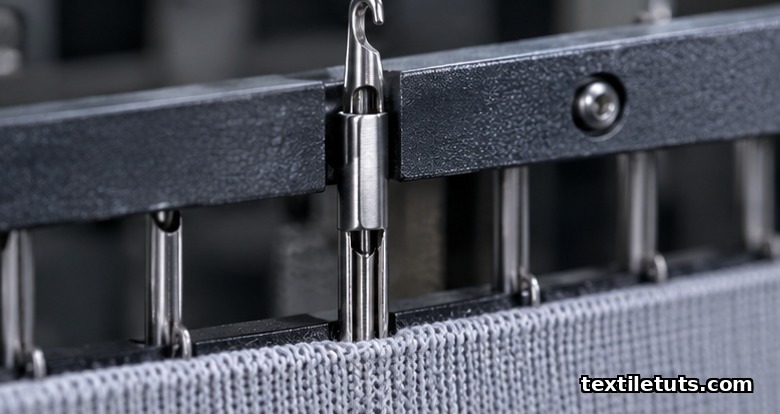
Final fabric audits verify four parameters: GSM (per ASTM D3776), stitch density (per ASTM D3887), bursting strength (per ASTM D3786), and dimensional stability after five wash cycles (per AATCC TM 150). A passing fabric meets all four specifications within the customer’s tolerance window, which is typically plus or minus 5 percent on GSM, plus or minus 1 stitch per cm on density, and plus or minus 3 percent on dimensional change after washing.
Common Defects and Their Causes
Even in well-controlled mills, defects occur. The most frequent ones in circular knitting are needle lines (caused by a bent or worn needle, often from yarn foreign matter), barre (caused by mixing yarn lots with different dye affinity), holes (from a broken needle or yarn slippage on the sinker), and spirality (fabric skewing more than 5 percent from its true course, caused by wale-direction twist imbalance in the yarn). Each defect has a known root cause, which is why mills track defect maps hourly on the knitting floor and root-cause analysis is performed within 24 hours of an out-of-control point.
Spirality is particularly important for apparel knitting because it affects garment symmetry. Yarn with twist liveliness above 3.5 turns per cm (TPM) requires a heat-setting or steam-relaxation step before knitting to bring spirality to within 4 percent, the threshold for export garment buyers in most retail specifications.
Workflow Timing and Throughput
The full workflow from yarn package to finished roll for a typical cotton single-jersey fabric is 8 to 14 hours, of which knitting itself is only 2 to 4 percent of total production time (most of the time is spent in wet processing, drying, and compaction). A medium-size mill with 25 circular machines and a daily output target of 30 tons operates 3 shifts of 7.5 hours each, with cleaning and preventive maintenance scheduled into the 4th shift or during weekend downtime.
| Stage | Typical Time / Speed | Key Quality Variable |
|---|---|---|
| Yarn conditioning | 24 hours | Moisture regain (8.5% for cotton) |
| Knitting (circular, E24) | 20–35 RPM | Stitch length (+/- 0.2 mm) |
| Greige inspection | 15–25 m/min | Defect count < 3 / 100 m |
| Relaxation drying | 100 °C, 60–120 s | Residual shrinkage < 6% |
| Scouring-bleaching | 90–95 °C, 45–60 min | Whiteness index > 78 |
| Dyeing (reactive) | 60–80 °C, 45–90 min | Wash fastness grade 4+ |
| Hydro-extraction | 800–1,200 RPM | Wet pickup < 60% |
| Stenter drying | 130–180 °C, 30–90 s | Width stability +/- 1 cm |
| Compacting | 150–170 °C, 5–10% shrink | Residual shrinkage +/- 3% |
| Final inspection | 20–30 m/min | 4-point fabric audit pass |
Frequently Asked Questions
What is the difference between weft knitting and warp knitting?
Weft knitting forms each course of loops from a single yarn that travels horizontally across the needles, with one yarn end per feed. Warp knitting uses a warp beam of parallel yarns, with each needle forming loops from many yarns that travel vertically along the fabric length. Weft knit is more common in apparel (T-shirts, polo shirts, underwear); warp knit is more common in technical and sports textiles (tricot, raschel, mesh).
How does a knitting mill control GSM and stitch length?
GSM is controlled indirectly by adjusting stitch length on the machine (each 1 mm change in stitch length shifts GSM by 5 to 7 percent for cotton jersey), using positive feed systems that maintain constant yarn tension, and recalibrating every two hours with a stitch-length gauge. Quality labs verify GSM every four hours on a circular cutter and precision balance per ASTM D3776.
What causes spirality in knit fabric and how is it corrected?
Spirality (fabric skew off the true course) is caused by twist imbalance in the knitting yarn, with twist liveliness above 3.5 turns per cm (TPM) producing skew above 5 percent. Mills correct spirality by selecting low-TPM yarn (typically 2.5 to 3.0 TPM for cotton), using steam relaxation at the greige stage, and adjusting the take-down tension on the knitting machine.
Why does knit fabric shrink after the first wash even when pre-shrunk?
Pre-shrunk knit still relaxes an additional 1 to 3 percent when a consumer washes it at home, because the relaxation and compaction stages remove most but not all latent stresses in the loop geometry. True zero-shrink knit requires both compaction and a heat-setting step (typically 180 degrees Celsius for 30 seconds), which is reserved for technical fabrics rather than everyday apparel due to cost.
How much water does a typical knitting mill use per kilogram of fabric?
A modern wet-processing line for cotton knit consumes 80 to 150 liters of water per kilogram of finished fabric, with the highest consumption in the dyeing bath (40 to 50 L/kg) and rinsing (30 to 60 L/kg). Best-practice mills using counter-current rinsing and overflow reuse reduce this to 50 to 80 L/kg, which is now a buyer requirement from most European and North American apparel brands.
References
- International Organization for Standardization. ISO 139:2005 — Textiles — Standard atmospheres for conditioning and testing. iso.org — defines the 65 plus or minus 2 percent relative humidity and 20 plus or minus 2 degrees Celsius conditioning atmosphere used throughout knitting-mill workflows.
- ASTM International. ASTM D3776 / D3887 / D3786. astm.org — Standard test methods for fabric mass per unit area, fabric knit construction (courses and wales), and bursting strength of knitted textiles; cited for the four-parameter fabric audit.
- AATCC. AATCC TM 135 and TM 150 — Dimensional Changes of Fabrics. aatcc.org — test methods for fabric dimensional stability after home laundering, cited for residual shrinkage thresholds.
- Ray, Sadhan C. Fundamentals and Advances in Knitting Technology. Woodhead Publishing India, 2012, researchgate.net — academic reference covering circular knitting machine mechanics, cam design, and defect analysis.
- Spencer, David J. Knitting Technology: A Comprehensive Handbook and Practical Guide. Woodhead Publishing, 2001, sciencedirect.com — covers weft knitting, warp knitting, machine specifications, and production economics.
- International Journal of Clothing Science and Technology, Emerald Publishing, “Dimensional behavior of plain weft knitted fabrics during home laundering,” researchgate.net — peer-reviewed study on residual shrinkage and spirality after multiple wash cycles.
Editorial by Iftay Khairul Alam, TextileTuts. Reviewed for technical accuracy by the TextileTuts editorial team. Sources: ISO 139, ASTM D3776/D3887/D3786, AATCC TM 135/150, and Woodhead Publishing textile-engineering references as cited.


