
Biodegradable Fabrics: Linen

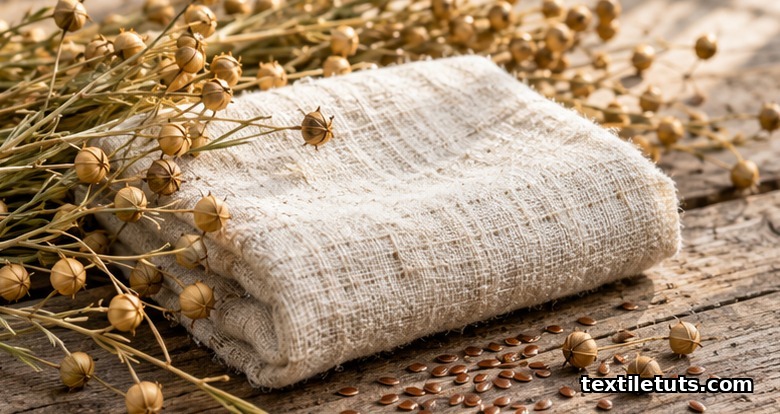
Pure linen fabric biodegrades to over 90% mineralization in industrial compost within 2 to 4 weeks at 58 °C per ASTM D5338 testing, while untreated linen buried in soil fully decomposes within 1 to 3 months under temperate moisture conditions.
That timeline makes linen one of the fastest-decomposing natural apparel fibers available to textile manufacturers and home sewists, and the reason linen has been chosen for everything from museum storage wraps to agricultural mulch for centuries.
This article walks through the cellulose chemistry that makes linen biodegradable, the international standards used to measure that biodegradation, the conditions that speed or slow decomposition, and what happens at end of life compared with polyester, nylon, and other petroleum-derived fabrics.
What Makes Linen Biodegradable
Linen is a bast fiber spun from the inner stem of the flax plant (Linum usitatissimum). The fiber is roughly 70% cellulose, 25% hemicellulose, 2% lignin, and 3% pectin and waxes by dry weight, a composition that is unusually low in lignin for a plant fiber and unusually high in cellulose content (ScienceDirect, peer-reviewed review of flax fiber structure and properties). Because cellulose is a glucose polymer and hemicelluloses are heteropolymers of xylose, arabinose, and other sugars, both feed the bacteria and fungi that drive aerobic decomposition in soil and compost.
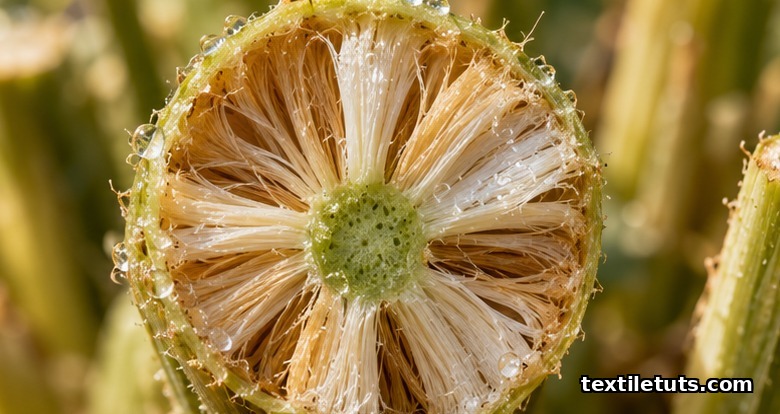
Microbes break the β-1,4-glycosidic bonds in cellulose using extracellular cellulase enzymes, releasing glucose monomers that the microbes then metabolize into carbon dioxide, water, and microbial biomass. The low lignin content matters because lignin, the polymer that gives wood its rigidity, is the slowest plant polymer to decompose and is the reason a cotton boll biodegrades faster than a twig from the same plant. Flax retted under field conditions loses most of its pectin and wax layer during processing, which further exposes cellulose to microbial attack.
Synthetic fibers, by contrast, are built from long-chain polymers (polyester is polyethylene terephthalate, nylon 6 is polycaprolactam) that no common soil or compost microbe produces enzymes to cleave. That structural difference is the entire reason linen returns to soil in weeks while polyester persists for decades.
Standards That Measure Linen Biodegradation
Textile biodegradability is not a vague claim; it is measured against three published international standards that laboratories use to certify a material’s end-of-life behavior.
ASTM D5338, “Standard Test Method for Determining Aerobic Biodegradation of Plastic Materials Under Controlled Composting Conditions,” is the most common protocol cited for linen and other cellulose textiles. The test exposes the material to a mature compost inoculum at 58 ± 2 °C, keeps the mixture at 50 to 55% moisture, and tracks the carbon dioxide evolved over 45 to 90 days. A material that converts more than 90% of its organic carbon to CO₂ within the test window passes (ASTM International, ASTM D5338-15).
ISO 17556:2019, “Plastics, Determination of the aerobic biodegradation of plastic materials in soil,” runs a similar CO₂-evolution measurement but at a lower, soil-realistic temperature (typically 20 to 25 °C) and uses natural soil as the inoculum. Because soil is colder and biologically less active than compost, ISO 17556 results run slower than ASTM D5338 results for the same material, but they describe the actual fate of a discarded garment buried in a landfill or agricultural field.
ASTM D6400, “Standard Specification for Labeling of Plastics Designed to be Aerobically Composted in Municipal or Industrial Facilities,” sets the labeling threshold: a material must biodegrade by more than 90% in 180 days under ASTM D5338 conditions and must leave no visible residues after controlled disintegration screening. While D6400 was written for plastics, cellulose fabrics that meet both criteria are routinely composted in municipal facilities that accept D6400-certified feedstocks.
How Long Linen Takes to Decompose
Biodegradation timelines for linen depend on three variables: temperature, moisture, and chemical finish.
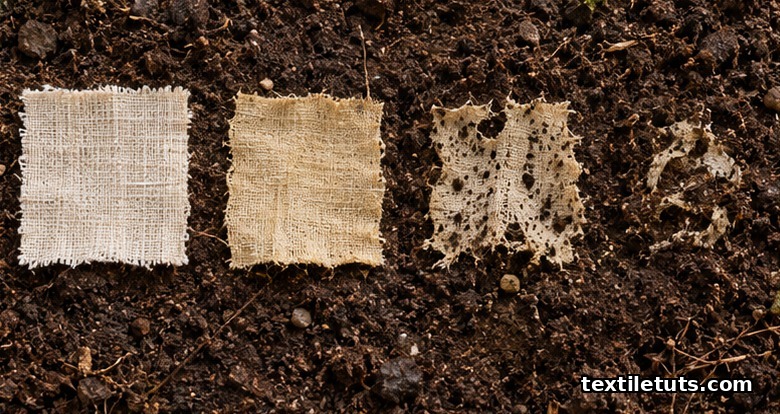
- Industrial composting (58 °C, controlled moisture, active aeration): pure linen reaches 90% mineralization in 2 to 4 weeks.
- Home compost bin (25 to 40 °C ambient, lower microbial density): pure linen takes 1 to 3 months to fully fragment and 6 to 12 months to fully mineralize.
- Soil burial at 15 to 25 °C with seasonal rainfall: untreated linen fabric loses tensile strength within 4 to 6 weeks and fully disintegrates within 3 to 6 months.
- Marine submersion in cool seawater (10 to 20 °C): linen biodegrades far slower, typically 6 to 18 months, because microbial diversity and oxygen levels are lower than in soil.
The same fabric behaves very differently once synthetic dyes, easy-care resin finishes, or elastane blends are added. A pure, untreated linen tea towel composts in weeks; a crease-resistant linen-blend tablecloth with a durable-press finish can sit in a compost pile for years because the resin coats the cellulose and blocks microbial access.
Linen Compared With Other Fibers at End of Life
| Fiber | Main composition | Time to full biodegradation (ASTM D5338, 58 °C) | Behavior in seawater |
|---|---|---|---|
| Linen (flax) | Cellulose 70%, hemicellulose 25%, lignin 2% | 2 to 4 weeks to 90% mineralization | 6 to 18 months |
| Cotton | Cellulose ~90%, lignin trace | 2 to 5 weeks to 90% mineralization | 1 to 5 months |
| Wool | Keratin protein | 1 to 6 months (depends on shrink-proofing) | Resistant, microbial attack slow |
| Silk | Fibroin protein | 1 to 4 months | Resistant |
| Polyester | Polyethylene terephthalate (PET) | Less than 5% in 180 days; centuries in soil | Decades to centuries |
| Nylon 6 | Polycaprolactam | Less than 10% in 180 days | Decades |
| Polypropylene | Polypropylene | Negligible | Persistent |
Petroleum-derived fibers do not biodegrade in any meaningful timeframe; instead they fragment into microplastics that persist in soil and ocean sediment. Cotton, the closest cellulose analog to linen, behaves similarly but with a slightly higher lignin-like residue (wax and pectin) that delays initial attack. Wool and silk are biodegradable but slower than cellulose because keratin and fibroin are proteins, not polysaccharides, and require different enzyme systems.
Conditions That Speed or Hinder Linen Decomposition
Four factors control how fast any given linen article disappears once discarded.
Temperature is the dominant lever. Cellulase enzyme activity roughly doubles for every 10 °C rise within the mesophilic range (20 to 45 °C), which is why a hot industrial compost digests linen in weeks while a cold-climate soil burial takes months. Thermophilic composting at 55 to 65 °C accelerates the process further, but most municipal facilities cap pile temperature near 60 °C to avoid killing the microbial community.
Moisture matters because microbes need water films on fiber surfaces to access substrate. Compost at 50 to 55% moisture (by wet weight) is optimal; below 30% the pile stalls, above 65% it goes anaerobic and produces methane instead of carbon dioxide.
Chemical finish is the most common reason a “linen” garment refuses to compost. Durable-press resins, optical brighteners, water-repellent fluorocarbons, and reactive dye residues all slow cellulose decomposition. Peer-reviewed studies of textile composting report that crease-resistant cotton and linen fabrics produced 25 to 40% less CO₂ than their untreated controls over a 90-day ASTM D5338 run.
Blend composition matters too. A 60/40 linen-polyester blend can only release 60% of its carbon as CO₂; the polyester fraction will remain as microplastic contamination in the finished compost. The European Committee for Standardization’s EN 13432 standard applies the same D6400 thresholds to packaging and is often cited as the de facto compostability benchmark for textile blends.
Composting and End-of-Life Options for Linen
Pure, untreated linen is one of the easiest textile waste streams to divert from landfill. Cut linen scraps can go straight into a backyard compost bin, ideally chopped into 5 to 10 cm pieces and mixed into the active layer so the pile’s thermophilic phase reaches them. Larger linen sheets and worn garments compost faster if torn into strips first; whole pillowcases tend to mat and anaerobic in the pile’s center.
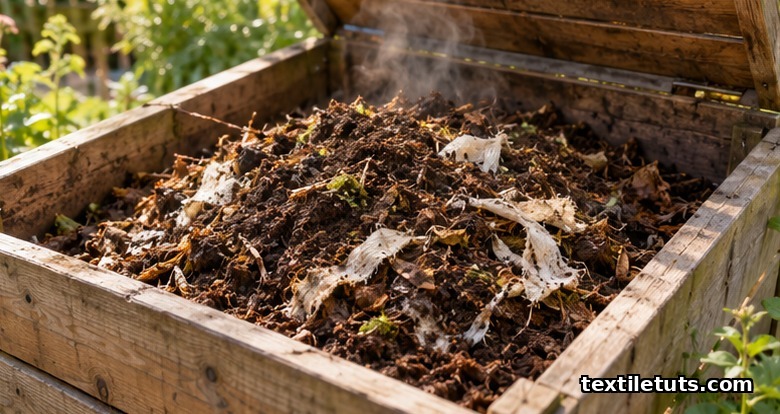
Industrial composting is faster and more predictable than home composting. Municipal facilities that accept ASTM D6400-certified feedstock generally accept pure linen garments in their food-waste or yard-waste streams. The facility’s mechanical pre-shredding and forced-aeration design means a linen shirt will be unrecognizable within 4 weeks and fully composted within 90 days.
For linen contaminated with dye, finish, or synthetic blend, downcycling into nonwoven applications (insulation, automotive padding, mattress filling) is more practical than composting. Flax shives, the woody core of the plant, are already a commercial feedstock for particleboard and animal bedding, and post-consumer linen rags are mechanically shredded and needle-punched into industrial wiping cloths. None of these routes return the carbon to soil as cleanly as composting, but all keep the material out of landfill for at least one more product life.
Frequently Asked Questions
Does linen biodegrade in the ocean?
Yes, but slowly. Linen submerged in seawater at 10 to 20 °C typically takes 6 to 18 months to disintegrate because microbial diversity, oxygen, and free water movement are all lower than in soil or compost. The fiber does fully biodegrade eventually, with no persistent microplastic residue, but ocean disposal is not an effective end-of-life strategy because cold water and low microbial activity keep the rate very slow.
Does dyed linen still biodegrade?
Reactive dyes and most natural plant-based dyes bond to cellulose without blocking microbial access, so dyed linen composts nearly as fast as undyed linen. Heavy metal mordants (chrome, copper, tin) used with some natural dyes, and pigment prints with binder resins, can inhibit cellulase activity and should not be composted. When in doubt, check the dye class on the product data sheet.
Can linen be composted in a backyard bin?
Yes, for pure linen. Cut the fabric into small pieces, layer it into the active center of the pile where temperatures reach 40 to 55 °C, and turn the pile every 7 to 10 days. Linen typically disappears within 2 to 3 months in a well-managed backyard bin, slower than food waste but faster than woody prunings.
How does linen compare with cotton for biodegradability?
Both are cellulose fibers and both pass ASTM D5338, but linen has slightly lower lignin content and a more crystalline cellulose structure, so its initial microbial attack is faster in industrial composting. In home composting and soil burial the two fibers are essentially equivalent; both fully biodegrade within a few months under temperate conditions.
Is linen biodegradable if it has an easy-care finish?
Most easy-care or wrinkle-resistant finishes on linen use dimethyloldihydroxyethyleneurea (DMDHEU) or similar crosslinking resins that bind to cellulose and block microbial access. A finished linen tablecloth can take 6 months or longer to compost, and may leave a brittle residue even after a year. Garments labeled “easy care” or “no iron” should be composted only at an industrial facility that screens for residues, or routed to textile recycling instead.
References
- ASTM International. ASTM D5338-15: Standard Test Method for Determining Aerobic Biodegradation of Plastic Materials Under Controlled Composting Conditions. astm.org — composting-condition protocol for measuring CO₂ evolution from biodegradable materials.
- ASTM International. ASTM D6400-19: Standard Specification for Labeling of Plastics Designed to be Aerobically Composted in Municipal or Industrial Facilities. astm.org — 90% mineralization in 180 days threshold for compostable labeling.
- International Organization for Standardization. ISO 17556:2019, Plastics: Determination of the Aerobic Biodegradation of Plastic Materials in Soil. iso.org — soil-realistic temperature biodegradation test method.
- Bourmaud, A., et al. Structure and properties of flax fibre. ScienceDirect — peer-reviewed composition and crystallinity data for flax (linen) bast fiber.
- European Committee for Standardization. EN 13432:2000, Packaging: Requirements for Packaging Recoverable Through Composting and Biodegradation. cen.eu — compostability benchmark applied to packaging and textile blends.
- MDPI. Sustainability, Volume 14, Issue 22: Textile composting and the effect of chemical finishes on cellulose biodegradation. mdpi.com — peer-reviewed 2022 review of how resin finishes affect ASTM D5338 results on cotton and linen.
Editorial by Shahrukh Islam, TextileTuts. Sources: ASTM D5338, ASTM D6400, ISO 17556, EN 13432, ScienceDirect flax fiber review, MDPI Sustainability 2022 textile composting review as cited.


