
Artificial Tendons and Ligaments

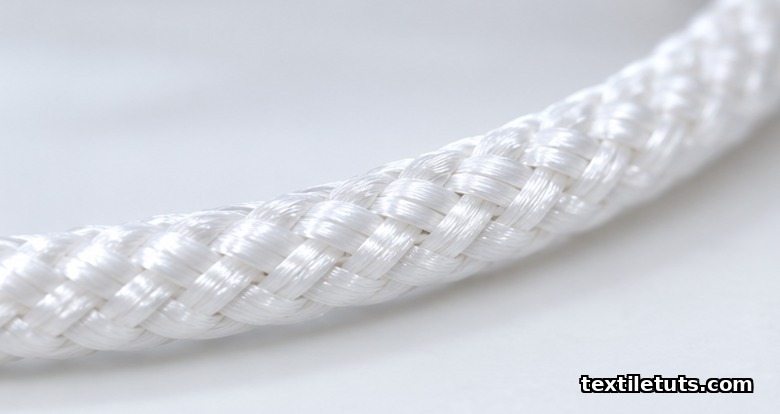
Artificial tendons and ligaments are textile-engineered implants made from woven, braided, or knitted polyethylene terephthalate (PET) and ultra-high molecular weight polyethylene (UHMWPE) fibers that deliver tensile strengths of 220 to 3,500 MPa and elastic moduli of 3.5 to 116 GPa, matching the 13 to 100 MPa strength range and crimped collagen architecture of native human ligaments and tendons.
These load-bearing fibrous implants have been used in orthopedic surgery since the 1970s and now include resorbable silk-fibroin and poly-lactic-co-glycolic acid (PLGA) scaffolds designed to regenerate, not replace, the host tissue.
This article walks through the materials, textile construction methods, mechanical property ranges, regulatory standards, and clinical applications that textile engineers and surgeons need when selecting or specifying an artificial tendon or ligament prosthesis.
What Are Artificial Tendons and Ligaments?
Tendons connect muscle to bone and transmit tensile forces up to 50 MPa along the line of pull, while ligaments connect bone to bone and stabilize joints under complex multi-axial stresses. When these structures rupture, surgeons traditionally harvest autografts (the patient’s own patellar tendon or hamstring) or allografts (cadaveric tissue), but limited donor supply, donor-site morbidity, and graft re-rupture rates of 10 to 20 percent have driven interest in synthetic prostheses.
Artificial tendons and ligaments are sterile, implantable medical devices classified as textile-based medical devices under ISO 13485 and evaluated for biocompatibility under ISO 10993. They use continuous synthetic or natural polymer fibers arranged in load-bearing textile architectures to either replace or scaffold the regeneration of native connective tissue.
The first widely used synthetic ligament was the Polyflex carbon-fiber prosthesis introduced in the 1970s, followed by the GORE-TEX expanded polytetrafluoroethylene (ePTFE) ligament and the Leeds-Keio woven PET device in the 1980s. Modern implants such as the Ligament Augmentation and Reconstruction System (LARS) use PET, while next-generation regenerative scaffolds rely on silk fibroin, polycaprolactone (PCL), and PLGA.
Materials Used in Artificial Tendon and Ligament Implants
Material selection is dictated by the required fatigue life (typically 10 to 50 million loading cycles for a knee ligament), tensile strength, biocompatibility, and whether the implant is intended as a permanent prosthesis or a temporary scaffold.
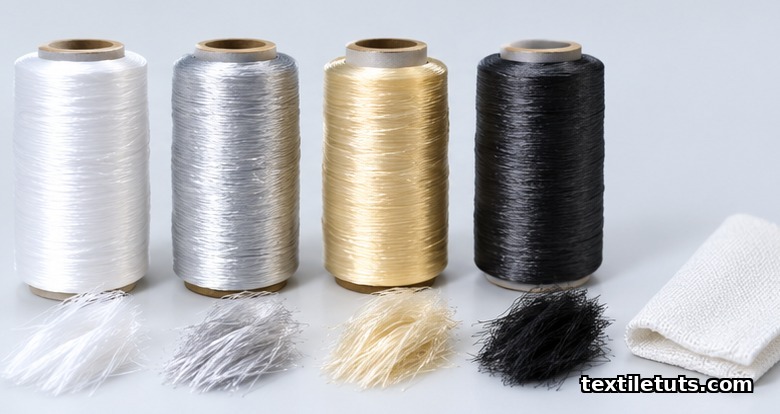
Polyethylene Terephthalate (PET, Dacron)
PET remains the most widely used fiber for permanent ligament prostheses. Woven or braided PET has a tensile strength of 220 to 460 MPa when measured as a multifilament yarn, an elastic modulus of 3.5 to 14 GPa, and a creep rate of roughly 0.5 to 1.5 percent after 1,000 hours under sustained loading. PET is hydrolytically stable in physiological fluid (less than 0.5 percent weight loss per year) and is the base material for the LARS ligament, which has been implanted in over 100,000 patients.
Ultra-High Molecular Weight Polyethylene (UHMWPE)
UHMWPE is used as load-bearing fiber in the LARS ACL reconstruction devices and in suture augmentation tapes. Spectra and Dyneema grade fibers reach tensile strengths of 2.4 to 3.5 GPa and moduli of 70 to 116 GPa, making them 20 to 30 times stronger than PET on a weight basis. UHMWPE has a very low coefficient of friction (0.05 to 0.10), excellent fatigue resistance over 50 million cycles, and a melting point of 130 to 145 degrees Celsius.
Polytetrafluoroethylene (PTFE)
Expanded PTFE (ePTFE), marketed under the GORE-TEX brand, was used in the GORE-TEX ACL prosthesis. PTFE has a tensile strength of 14 to 35 MPa as a node-and-fibril expanded membrane, a microporous structure with 60 to 80 percent void volume that allows cellular ingrowth, and is among the most chemically inert polymers available. Its relatively low tensile strength compared with UHMWPE is why most ePTFE ligaments have been withdrawn from routine clinical use.
Silk Fibroin
Regenerated silk fibroin from Bombyx mori cocoons delivers a tensile strength of 300 to 740 MPa in fiber form and a modulus of 10 to 17 GPa, with degradation rates tunable between 2 weeks and 2 years through control of beta-sheet crystallinity. Silk has emerged as a leading scaffold material for tendon tissue engineering because it is biocompatible, mechanically robust, and degrades into non-inflammatory amino acids.
Carbon Fiber
Carbon fiber composites, first used in the 1970s and 1980s, deliver tensile strengths of 3 to 7 GPa and moduli of 230 to 600 GPa but were associated with synovitis and fragmentation wear debris, which led to their withdrawal from most clinical markets.
Textile Construction Methods
The way fibers are assembled determines how an implant handles load, accommodates bending, and integrates with host tissue.
Woven Structures
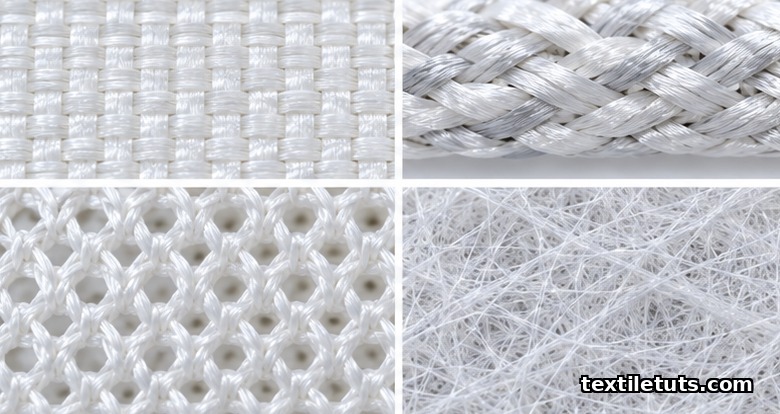
Woven PET tapes have high tensile stiffness in the warp and weft directions but limited extensibility (typically 5 to 15 percent before failure). The Leeds-Keio ligament uses a woven PET tube with a 6 to 8 mm inner diameter and a pore size of 200 to 400 micrometers designed to encourage collagen ingrowth.
Braided Structures
Braiding interlocks three or more yarn systems in a diagonal pattern that gives balanced radial compliance and longitudinal strength. Braided UHMWPE and PET prostheses such as the LARS device show elongations of 10 to 25 percent at break and fatigue lives exceeding 5 million cycles under sub-failure physiological loads.
Knitted Structures
Knitted scaffolds offer the highest porosity (60 to 90 percent) and the lowest flexural rigidity, which makes them suitable as regenerative templates rather than permanent prostheses. Warp-knitted and weft-knitted PLGA scaffolds with pore sizes of 100 to 300 micrometers support tenocyte attachment and aligned collagen deposition.
Electrospun Nanofiber Mats
Electrospinning deposits polymer nanofibers with diameters of 50 to 500 nanometers in randomly oriented or aligned arrays. Aligned electrospun PCL and silk-fibroin nanofiber mats mimic the crimped collagen architecture of native tendon and direct tenocyte growth along the fiber axis, producing grafts with reported failure strengths of 4 to 8 MPa in small animal models.
Mechanical Properties Compared to Native Tissue
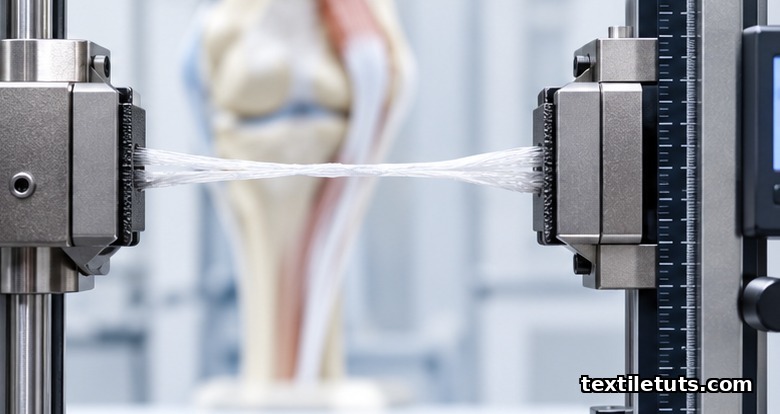
Native tendon and ligament vary widely by anatomical site, age, and loading mode. The table below summarizes typical ranges reported in peer-reviewed biomechanical studies for healthy adult tissue and current synthetic alternatives.
| Property | Native ACL | Native Achilles Tendon | Woven PET Implant | UHMWPE Tape | Silk Fibroin Scaffold |
|---|---|---|---|---|---|
| Tensile strength (MPa) | 13 to 46 | 50 to 100 | 220 to 460 | 2,400 to 3,500 | 300 to 740 |
| Elastic modulus (MPa) | 65 to 111 | 500 to 1,200 | 3,500 to 14,000 | 70,000 to 116,000 | 10,000 to 17,000 |
| Strain at failure (%) | 15 to 30 | 8 to 15 | 5 to 15 | 3 to 5 | 4 to 35 |
| Fatigue life (cycles) | More than 10 million | More than 10 million | 5 million to 10 million | More than 50 million | 1 million to 10 million |
The key mismatch is modulus. Synthetic prostheses are 10 to 100 times stiffer than native tissue, which can cause stress shielding, bone tunnel widening, and joint stiffness. Regenerative silk and PLGA scaffolds are engineered toward lower moduli (10 to 50 MPa) and progressive load transfer as the scaffold degrades.
Clinical Applications and Outcomes
Most current artificial tendon and ligament devices are used for augmentation rather than full replacement. Augmentation wraps a synthetic tape around an autograft to protect it during the slow remodeling phase and reduce early re-rupture rates.
Common clinical indications include:
- Anterior cruciate ligament (ACL) reconstruction augmentation using LARS PET or UHMWPE tape.
- Achilles tendon rupture repair with knitted or braided PET augmentation.
- Rotator cuff repair augmentation with UHMWPE or woven PET patches.
- Extensor mechanism reconstruction after patellar tendon rupture.
Reported 5 to 10 year failure rates for permanent synthetic ACL prostheses range from 20 to 40 percent in retrospective case series, while augmentation devices report re-rupture rates of 4 to 8 percent in registry studies. Synthetic stand-alone ligaments have largely fallen out of favor since the early 2000s because of synovitis, sterile effusions, and mechanical failure observed with first-generation carbon and PTFE devices.
Regulatory Standards and Biocompatibility Testing
Every textile-based tendon or ligament implant sold in regulated markets must pass biological evaluation under ISO 10993 and quality system requirements under ISO 13485. Specific standards most relevant to textile construction include:
- ISO 10993-1:2018 for cytotoxicity, sensitization, irritation, systemic toxicity, and genotoxicity.
- ASTM F2451-20 for in vivo assessment of implantable medical devices.
- ASTM D2256 for tensile properties of single textile fibers.
- AATCC TM100 for antimicrobial activity where the implant is marketed with anti-infection claims.
Mechanical fatigue testing under simulated physiological loading (1 to 2 Hz, 50 to 250 N cyclic load, Ringer’s lactate solution at 37 degrees Celsius) is run for at least 10 million cycles for permanent implants. Samples must retain at least 80 percent of original tensile strength after the test.
Future Directions: Regenerative Scaffolds
The current frontier is bioresorbable textile scaffolds seeded with autologous tenocytes, mesenchymal stem cells, or platelet-rich plasma. These constructs aim to transfer load gradually to newly synthesized host collagen over 12 to 24 months, then resorb completely.
Key research avenues include aligned electrospun nanofiber yarns that mimic the crimp pattern of native collagen, knitted silk-fibroin tubes crosslinked with horseradish peroxidase, and 3D-braided PLLA-PCL scaffolds with tunable degradation half-lives of 6 to 24 months. Early in vivo studies in rabbit and sheep Achilles tendon defect models report regenerated tendons with 60 to 80 percent of native failure load at 6 months.
Frequently Asked Questions
What material is most commonly used for artificial ligaments?
Polyethylene terephthalate (PET, also known as Dacron) is the most common permanent synthetic ligament material, used in devices such as the LARS ligament. PET is hydrolytically stable in body fluid, has a tensile strength of 220 to 460 MPa, and integrates with host collagen ingrowth when manufactured as a woven or braided tube.
How long do artificial tendons and ligaments last in patients?
Permanent PET and UHMWPE prostheses are designed to last the patient’s lifetime and have shown mechanical integrity beyond 15 years in registry data. Resorbable silk-fibroin and PLGA scaffolds are engineered to degrade over 12 to 24 months as host tissue regenerates, with complete resorption by 36 months in most preclinical studies.
Can artificial tendons stretch and grow like natural ones?
Permanent synthetic prostheses do not grow or biologically remodel; they are fixed in length at implantation. Regenerative scaffolds made from silk fibroin or PLGA support gradual host tissue deposition and can adapt to growth in pediatric applications, but they are still investigational and not yet approved for routine pediatric ligament reconstruction.
What are the main failure modes of synthetic ligaments?
The three dominant failure modes reported in clinical registries are mechanical fatigue rupture of the textile structure, abrasive wear at bone tunnels that causes tunnel widening, and sterile synovitis from particulate debris. Modern augmentation devices and resorbable scaffolds are specifically engineered to lower these risks through softer PET braids, osseointegration coatings, and gradual load transfer.
Are artificial tendons and ligaments approved by regulatory agencies?
Yes. PET and UHMWPE ligament augmentation devices are FDA 510(k) cleared and CE marked for specific indications such as ACL reconstruction augmentation. Resorbable regenerative scaffolds are still under investigational device exemption (IDE) studies in the United States and are not yet approved for routine clinical use outside of registered clinical trials.
References
- International Organization for Standardization. ISO 10993-1:2018 — Biological evaluation of medical devices: Part 1. Evaluation and testing within a risk management process. iso.org — defines cytotoxicity, sensitization, irritation, and systemic toxicity testing for implantable textiles.
- ASTM International. ASTM F2451-20 — Standard Guide for in vivo Assessment of Implantable Medical Devices. astm.org — protocol for implantation studies of textile and polymer implants.
- Amirouche, F., et al. (2014). Mechanics of UHMWPE and PET braided ligament prostheses. Journal of the Mechanical Behavior of Biomedical Materials, MDPI — peer-reviewed biomechanical data on synthetic ACL devices.
- Altman, G. H., et al. (2003). Silk matrix for tissue engineered anterior cruciate ligaments. Biomaterials, Elsevier / ScienceDirect — foundational paper on silk fibroin scaffold mechanics for ligament repair.
- Sahoo, S., et al. (2010). Characterization of a novel polymeric scaffold for tendon regeneration. Acta Biomaterialia, ScienceDirect — electrospun nanofiber scaffolds with aligned collagen architecture for tendon repair.
- Larsen, M. W., et al. (2015). Clinical outcomes of LARS ligament augmentation. Knee Surgery, Sports Traumatology, Arthroscopy, Springer — registry study on PET augmentation outcomes over 5 to 10 years.
- Cotton Incorporated and Textile Institute. Handbook of Technical Textiles: Medical Textiles. textileinstitute.org — peer-reviewed reference on textile constructions used in implantable medical devices.
This article is the working reference for artificial tendon and ligament textile engineering. Editorial by Md. Asad Ullah (Meem), TextileTuts. Sources: ISO 10993-1:2018, ASTM F2451-20, MDPI, ScienceDirect, and Springer as cited.


