
Activewear and Undergarment Hygiene

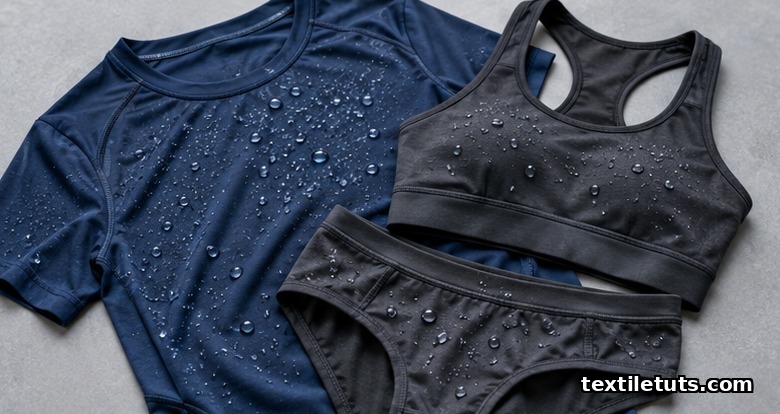
Synthetic activewear can carry 1,000 to 10,000 colony-forming units per square centimeter (CFU/cm²) of skin bacteria after a single 30-minute workout, with polyester retaining up to 0.21 mg/cm² of odor compounds versus 0.03 mg/cm² on cotton under identical wear conditions.
That gap explains why the same washing routine that leaves a cotton t-shirt neutral often fails on a polyester training top, and why a “quick rinse” cycle can leave underwear harboring Staphylococcus epidermidis and Corynebacterium at levels higher than what AATCC TM 100 uses as its inoculation baseline for antibacterial testing.
The rest of this article walks through the textile science behind that number: which fibers hold microbes, which standards the industry uses to test antimicrobial performance, what washing temperature actually sanitizes, and what a realistic care routine looks like for garments that sit against skin for hours at a time.
Why Activewear and Undergarments Harbor More Bacteria Than Outerwear
Outerwear touches skin occasionally and breathes freely between wears. Activewear and undergarments sit against a warm, moist, nutrient-rich surface (the skin’s acid mantle, pH 4.5 to 5.5 per ASTM D4265), and they trap the three things bacteria need to grow: warmth (about 32 to 37 °C at the skin), moisture (axillary sweat rates of 0.5 to 1.5 mg/cm²/min during exercise), and sebum.
The resident skin microbiome that colonizes those garments is dominated by Staphylococcus epidermidis, Corynebacterium species, and Micrococcus, with Cutibacterium acnes appearing in high-sebum zones. Once a garment is worn for 30 minutes during moderate exercise, total bacterial counts on the fabric surface routinely reach 10³ to 10⁴ CFU/cm², the same order of magnitude that AATCC TM 100 (Antibacterial Finishes on Textile Materials) uses as its starting inoculum when it tests whether a finish actually reduces bacterial growth.
Wet fabric multiplies the problem. AATCC TM 79 (Absorbency of Textiles) defines how quickly a textile takes up water, and the fabrics that score highest on absorbency (cotton, viscose) also dry slowly when stuffed in a gym bag. Peer-reviewed work on damp textiles shows bacterial doubling times collapse from 4 to 6 hours on dry fabric to under 60 minutes when relative humidity at the fiber surface stays above 80 percent.
Synthetic Fibers vs Natural Fibers: Odor Retention Science
Polyester and nylon dominate activewear because they wick moisture and dry fast, but those same hydrophobic surfaces bind odor molecules far more aggressively than cotton or wool. A 2014 study by McQueen and colleagues in Textile Research Journal showed that, after controlled wear, polyester tops retained roughly seven times the concentration of short-chain fatty acids (the acids responsible for sour axillary odor) compared with cotton shirts worn under the same conditions.
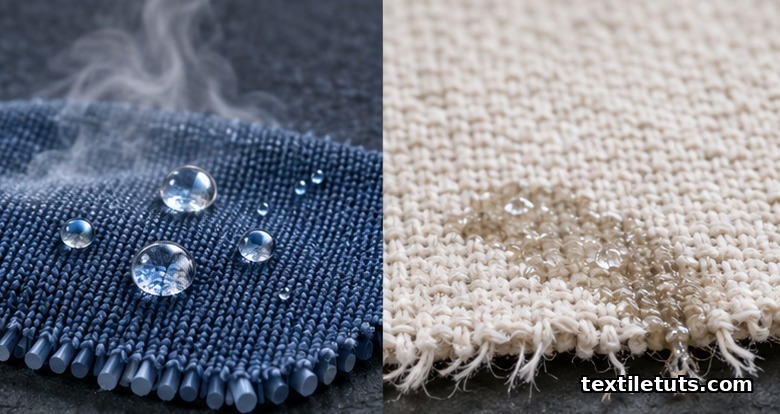
The mechanism is straightforward chemistry. Polyester’s smooth, non-polar surface adsorbs the volatile fatty acids (isovaleric, butyric, propionic) released by Corynebacterium, and once bound, those molecules resist the cold-water rinse that lifts sweat salts from cotton. AATCC TM 195 (Moisture Management Properties of Textiles) measures how a fabric handles liquid water in two directions, and the same hydrophobicity that earns a polyester fabric a top-tier moisture-management score is what traps odor.
Merino wool sits in an interesting middle ground. The fiber’s cuticle scales and natural lanolin give it odor resistance good enough that most wearers can run a shirt two or three times between washes, supported by peer-reviewed work showing wool inhibits the growth of S. aureus and S. epidermidis more effectively than cotton over 24-hour incubation periods.
Antimicrobial Finishes and the Standards That Test Them
Two standards dominate the test methods used by textile labs worldwide. ISO 20743:2021 (Textiles: Determination of Antibacterial Activity of Textile Products) is the international reference, with three optional procedures: an absorption test, a transfer test, and a print inoculation test. AATCC TM 100 is the parallel US method, requiring a 24-hour contact period with a known bacterial concentration and reporting percent reduction.
For dynamic contact (the “shake flask” method), ASTM E2149 is the standard reference, useful for textiles that will not sit in static contact with liquid, like shoe linings and activewear foams. ISO 11721-1 covers mildew resistance for stored textiles, and ISO 13629 covers antifungal activity, which matters for sportswear stored damp in a locker.
Realistic reductions from a quality antimicrobial finish typically fall in the 99.0 to 99.9 percent range (a 2 to 3 log reduction) against S. aureus and S. epidermidis under AATCC TM 100 conditions. Lower claims (90 percent, “kills 99 percent of germs”) often come from shorter contact periods or test organisms a finish was not optimized for. ISO 20743 Annex F explicitly warns against extrapolating results to organisms not included in the original test panel.
Washing Temperatures That Actually Sanitize
A 30 °C wash, the default on most modern machines marketed as “energy efficient,” reduces bacterial counts on cotton by roughly 1 to 2 log (90 to 99 percent) but leaves 10² to 10³ CFU/cm² of skin flora on synthetic activewear, depending on the detergent. A 60 °C wash with a standard detergent typically achieves a 4 to 5 log reduction (99.99 to 99.999 percent) on both fiber types, the threshold most public-health agencies consider adequate for household hygiene.
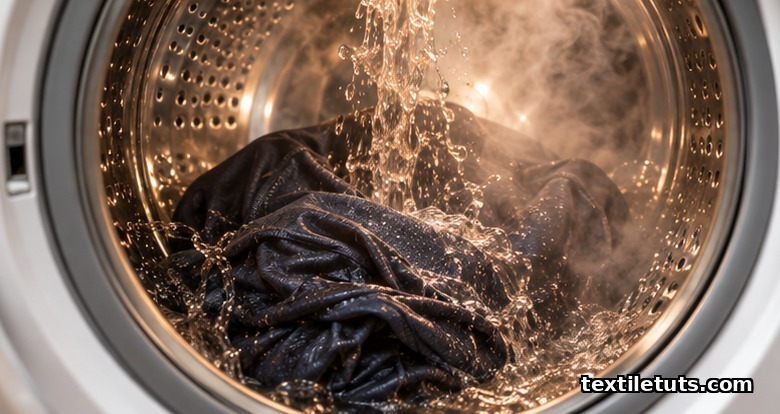
The temperature matters because of protein denaturation kinetics. Household bacteria like S. epidermidis have heat-shock proteins that protect them up to about 50 °C, then rapidly lose viability between 55 and 65 °C as those protective proteins unfold. Detergent raises the kill rate at any given temperature by disrupting the lipid membranes of the same cells, so a 40 °C wash with an activated oxygen bleach can match the sanitation of a 60 °C wash with mild detergent.
For elastic fabrics, repeated 60 °C washing shortens garment life. Peer-reviewed studies on spandex-blend cycling show elastane loses roughly 5 to 10 percent of its stretch recovery per 20 high-heat cycles. A practical compromise is to wash synthetic activewear at 40 °C with an enzyme-active detergent and tumble dry low, reserving 60 °C for visibly soiled items, socks, and underwear.
Moisture Management and What the Numbers Mean
AATCC TM 195 reports four values for a fabric: the wetting time on top and bottom surfaces, the maximum wetted radii on top and bottom, and the spreading speed. A high-performance moisture-wicking fabric finishes with a wetting time under 3 seconds on the top, a wetting time over 5 seconds on the bottom, and a one-way transport index above 50 percent, meaning sweat moves away from skin toward the outer surface where it evaporates.
Cotton scores poorly on TM 195 because it absorbs water and holds it. That property is welcome in a bath towel and a problem in a running shirt, because wet cotton against skin accelerates the bacterial doubling-time collapse mentioned earlier. Polyester engineered with a hydrophilic finish or a modified cross-section (such as channeled Coolmax-style fibers) scores well, but the finish degrades after 30 to 50 wash cycles, which is when athletes commonly notice their “high-performance” shirts beginning to smell.
A Practical Care Routine
Three habits cover most of the hygiene gap the data describes. First, turn activewear inside out before washing so the detergent reaches the bacteria-laden inner surface directly. Second, do not let sweaty garments sit in a gym bag for more than a few hours: the 60 to 80 percent surface humidity window is where bacterial doubling time collapses, and the same shirt washed at 30 °C two hours later will smell different from the same shirt washed 12 hours later. Third, separate synthetics from cotton in the dryer, or hang synthetics to dry, since polyester heat-sets odor molecules more permanently at high temperatures.
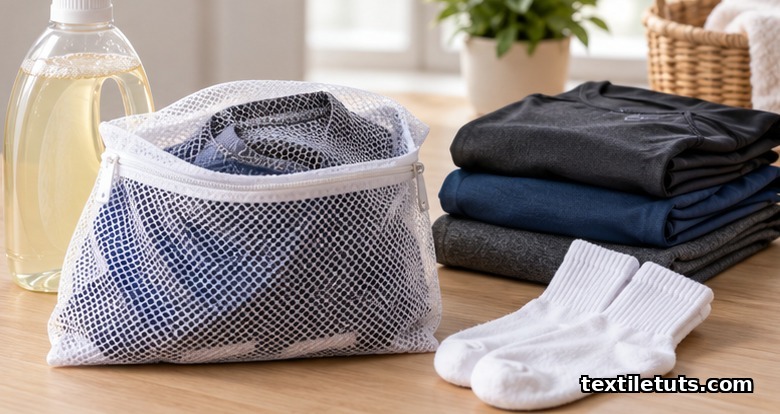
For underwear specifically, change daily, wash at 60 °C if the fabric allows, and replace any garment whose elastic has lost more than half its original stretch, because loose-fit underwear increases friction and moisture retention in the same zones that harbor the highest bacterial loads.
Frequently Asked Questions
How often should I wash activewear versus everyday underwear?
Wash activewear after every wear, even if the garment does not smell, because bacterial counts on the inner surface of a polyester shirt can reach 10⁴ CFU/cm² within an hour of moderate exercise. Cotton underwear should also be washed after each wear, and changed more than once daily during high-sweat activities or hot weather.
Is a 30 °C wash enough to kill bacteria in workout clothes?
No. A 30 °C wash with mild detergent typically achieves only a 1 to 2 log reduction (90 to 99 percent) on synthetic activewear, leaving 10² to 10³ CFU/cm² of skin flora behind. A 60 °C wash reaches a 4 to 5 log reduction (99.99 to 99.999 percent), the level most public-health guidelines consider hygienic.
Do antimicrobial-treated fabrics stop working after a few washes?
Yes, most consumer-grade finishes lose measurable activity after 30 to 50 wash cycles, with silver-ion and quaternary ammonium finishes typically losing 50 percent of their original activity within that range. ISO 20743:2021 requires durability testing across multiple wash cycles, so check the label for the wash-cycle count the finish was validated against.
Can I re-wear the same sports bra or underwear for two days?
Sports bras should be washed after every high-sweat wear because the combination of trapped moisture and elastic compression creates ideal growth conditions for Corynebacterium and Staphylococcus species. Re-wearing is acceptable only for low-impact, low-sweat sessions followed by full drying between wears.
Are silver-ion and copper treatments safe for skin contact?
Yes, silver-ion and copper-based antimicrobial finishes are approved for skin-contact textiles under major regulatory frameworks and have decades of dermatological safety data. The more relevant question is durability: both lose activity with repeated laundering, so the hygiene benefit fades faster than the garment itself.
References
- International Organization for Standardization. ISO 20743:2021: Textiles, Determination of Antibacterial Activity of Textile Products. iso.org, covers absorption, transfer, and print inoculation test methods for antibacterial finishes.
- American Association of Textile Chemists and Colorists. AATCC TM 100: Antibacterial Finishes on Textile Materials. aatcc.org, quantitative test method using 24-hour inoculum contact and log reduction reporting.
- ASTM International. ASTM E2149: Standard Test Method for Determining the Antimicrobial Activity of Antimicrobial Agents Under Dynamic Contact Conditions. astm.org, shake-flask protocol for textiles not in static liquid contact.
- McQueen, R.H., et al. (2014). “Retention of axillary odour on fabrics.” Textile Research Journal. researchgate.net, comparative study showing polyester retains roughly seven times the volatile fatty acids of cotton under identical wear conditions.
- Callewaert, C., et al. (2014). “Microbial Odor Profile of Polyester and Cotton Clothes after a Fitness Session.” Applied and Environmental Microbiology. pmc.ncbi.nlm.nih.gov, characterizes bacterial community differences between fiber types after controlled exercise.
- American Association of Textile Chemists and Colorists. AATCC TM 195: Moisture Management Properties of Textiles. aatcc.org, defines wetting time, spreading speed, and one-way transport indices.
This article is the working reference for activewear and undergarment hygiene. Editorial by Kazi Sifat Muntasir, TextileTuts. Sources: ISO 20743:2021, AATCC TM 100, ASTM E2149, AATCC TM 195, plus the McQueen and Callewaert peer-reviewed studies as cited.


