
Abrasion Resistance: Wyzenbeek (ASTM D4157)

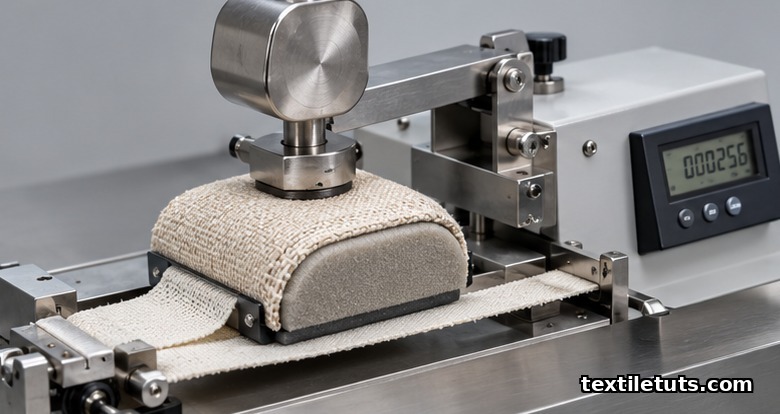
The Wyzenbeek ASTM D4157 test measures a fabric’s abrasion resistance by counting the number of “double rubs” a fabric survives when oscillated against a standard abrasive surface, with light residential upholstery typically rated at 15,000 double rubs and contract-grade textiles rated at 100,000 double rubs or higher.
Published by ASTM International and associated with the work of William Wyzenbeek, ASTM D4157 is the dominant specification for upholstery fabric durability in the North American residential and commercial furniture markets. Most fabric spec sheets in the United States list a Wyzenbeek double-rub number rather than the European Martindale equivalent.
What the Wyzenbeek ASTM D4157 Test Actually Measures
The Wyzenbeek test is a controlled simulation of the wear a fabric experiences when people sit, slide, and rub against it over years of use. The test exposes a fabric specimen to repeated back-and-forth rubbing under a defined load, then counts how many cycles the fabric survives before the first visible signs of wear.
ASTM D4157 is officially titled “Standard Test Method for Abrasion Resistance of Textile Fabrics (Oscillatory Cylinder Method).” The “oscillatory cylinder” part refers to the curved foam-backed specimen holder that moves back and forth against a stationary abrasive surface. The method is commonly called the “double rub” test because each cycle involves one forward and one backward stroke, and both strokes together count as a single “double rub.”
Textile engineers treat abrasion resistance as a proxy for end-use durability. A high double-rub rating does not guarantee that a fabric will survive a specific cleaning chemical, a pet claw, or a sharp buckle, but it does give manufacturers and specifiers a comparable number for ranking candidate fabrics.
How the Test Works: Specimens, Abradants, and Conditions
The test uses standardized specimens and standardized conditions so that two laboratories testing the same fabric should report results within an acceptable tolerance.
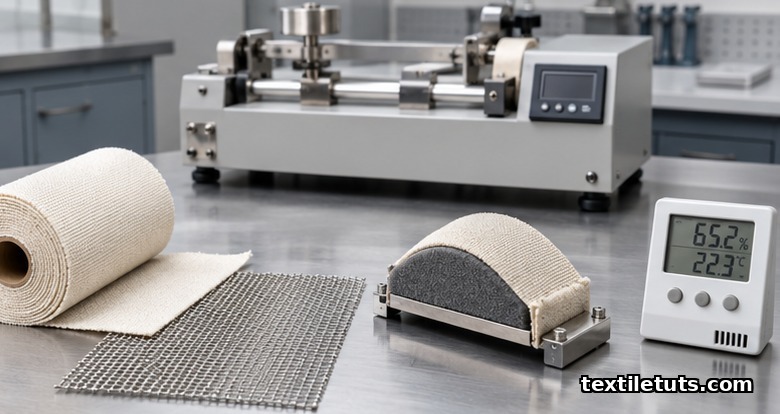
For the standard cotton duck abradant, the configuration most commonly specified in the United States, a strip of woven cotton duck fabric is mounted on the testing machine. The fabric specimen is wrapped over foam rubber on a curved specimen holder, then oscillated against the cotton duck under a defined load. The machine records the number of double rubs until the specimen reaches an end point.
ASTM D4157 also covers a second abradant option, stainless steel wire screen, which produces a more aggressive wear pattern. The wire screen variant is sometimes used when the specifier wants to simulate harsher end-use conditions than the cotton duck configuration produces.
The standard test runs under controlled temperature and humidity, with specimens conditioned to equilibrium before testing. Both controls matter because fiber stiffness and surface friction shift with moisture content, which can change the rub count.
What Counts as a “Double Rub”?
One double rub is one complete back-and-forth cycle: a forward stroke plus a backward stroke. The number printed on a fabric specification sheet, for example “50,000 double rubs,” refers to the total number of these cycles the fabric survived during testing.
The “double” prefix exists because some older Wyzenbeek machines counted only the forward stroke, but the modern ASTM method counts both. Some older industry documents still quote the forward-stroke number, which is why two otherwise identical fabric specifications can appear to disagree by a factor of two. If you are comparing two specifications, confirm whether each is reporting single rubs or double rubs before drawing conclusions.
Interpreting the Number: Light Duty, Medium Duty, Heavy Duty, Contract
The North American furniture industry uses rough categories based on double-rub counts to translate the lab number into a use case. The thresholds below are the most widely cited industry ranges. Specific retailers and contract specifiers may apply stricter minimums.
| Use case | Minimum double rubs (ASTM D4157) | Typical applications |
|---|---|---|
| Decorative / light duty | Under 15,000 | Curtains, accent pillows, bedding trim, occasional-use upholstery |
| Light residential | 15,000 or more | Formal living-room sofas, chairs used in low-traffic rooms |
| Heavy residential | 30,000 or more | Family-room sofas, dining chairs, everyday furniture |
| Light contract | 50,000 or more | Hotel guest rooms, offices with limited daily use |
| Heavy contract | 100,000 or more | Airports, restaurants, healthcare facilities, public seating |
These numbers are guidance, not regulations. Some furniture makers, including many North American contract suppliers, set internal minimums that exceed the categories above. The single number printed on a spec sheet is the lab result, not a warranty.
Failure End Points and What “Passing” Really Means
ASTM D4157 defines several end points, and the chosen end point changes what the reported number means.
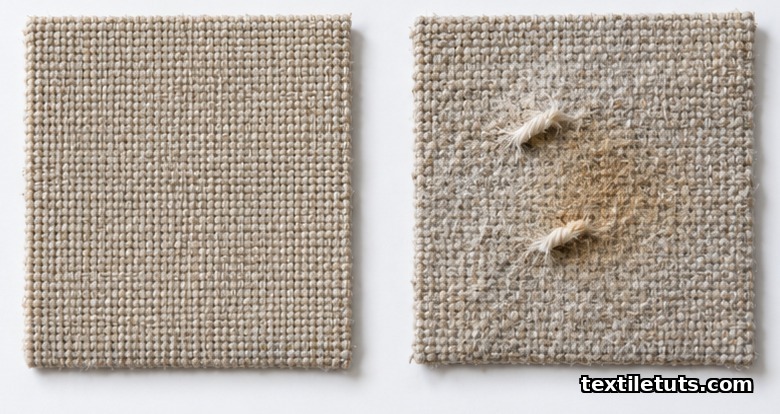
The most common end point is “two yarns broken,” meaning the test stops when two individual yarns in the fabric structure have snapped. A second end point is the appearance of a hole. A third end point is a noticeable shade or surface change, which is more relevant for printed or pile fabrics where the surface appearance degrades before any yarn actually breaks.
The end point matters because a fabric can lose its visual appeal long before any yarn breaks. A printed velvet, for example, may show visible pile flattening at a comparatively low double-rub count even though the underlying yarns remain intact. Specifiers for visible surfaces, such as hospitality seating, often look at appearance-change end points, not just yarn-break counts.
Wyzenbeek vs Martindale: Why the Two Tests Don’t Agree
Europe and most of the Asia-Pacific region use the Martindale test, formalized as ISO 12947 and ASTM D4966, instead of Wyzenbeek. Martindale rubs a fabric specimen against an abrasive in a circular Lissajous motion, and counts cycles to a similar set of failure end points.
The two tests use different motions, different abrasive materials, and different loadings, so a fabric rated at 50,000 Martindale cycles is not the same as a fabric rated at 50,000 Wyzenbeek double rubs. The same fabric tested by both methods will usually produce different numbers, and there is no fixed conversion factor that works across all fabric constructions. Most industry guidance is to compare fabrics tested on the same method.
ASTM publishes both methods, so a North American manufacturer can technically specify either, but Wyzenbeek remains the legacy default for upholstered furniture, while Martindale is the standard for apparel and many technical textiles.
Factors That Move a Wyzenbeek Number Up or Down
Several fabric-design choices shift the double-rub count, sometimes by an order of magnitude.
- Fiber content. Nylon and polyester generally rate higher than cotton or viscose on Wyzenbeek, though fiber blends and yarn structure usually matter more than the fiber alone.
- Yarn count and twist. Finer yarns with low twist abrade faster than coarse, tightly twisted yarns.
- Fabric construction. Tightly woven fabrics usually outlast loose knits on this test. The interlocking loop structure of a knit tends to catch and pill before any yarn actually breaks.
- Finishes. Some back coatings and abrasion-resistant finishes can boost the count, but the gain depends on how well the finish is anchored to the yarn surface.
- Specimen preparation. The same fabric can test differently if the foam rubber under the specimen varies in density or thickness.
None of these factors fully overrides the others. A tightly woven nylon and a tightly woven cotton can rate very differently because the underlying fiber matters, but two cottons with the same yarn but different weave density will also rate differently.
How to Use a Wyzenbeek Number When Specifying Fabric
For most household and small-business upholstery, a 15,000-double-rub minimum is a reasonable starting point. For busy family sofas, dining chairs, or any piece that will see daily contact, look for 30,000 or more. For commercial spaces, the safe choice is to match the rating to the worst-case seat in the room rather than the average seat.
If a fabric specification only quotes a Martindale number, do not assume it is equivalent to a Wyzenbeek number. Either find a Wyzenbeek-rated alternate or read the supplier’s conversion guidance. For visible surfaces where pile crushing or print wear matters more than yarn breakage, ask for appearance-change end-point data, not just the standard yarn-break number.
Finally, treat the printed number as one input among many. Wyzenbeek does not measure pilling, seam slippage, UV degradation, stain resistance, or any cleaning-chemical response. A fabric that passes the Wyzenbeek requirement may still fail in real use if any of those other properties are weak.
Frequently Asked Questions
What is a good Wyzenbeek double-rub rating for a family sofa?
For a family sofa used daily, most furniture-industry guides point to 30,000 double rubs as the minimum for “heavy residential” service, with many specifiers preferring 50,000 or higher. Sofas used by families with small children or pets often warrant 50,000 to 100,000 double rubs to allow for the additional wear.
Is Wyzenbeek the same as Martindale?
No. Wyzenbeek (ASTM D4157) and Martindale (ISO 12947, ASTM D4966) are two separate test methods that use different motions, different abrasive surfaces, and different loading. The two methods do not produce interchangeable numbers, and there is no universal factor for converting between them. When comparing candidate fabrics, compare results from the same test method.
Does a high double-rub rating mean the fabric will last 20 years?
No. The double-rub number is a controlled lab result from one specific test. It does not predict lifespan in years, and it does not measure resistance to stains, sunlight, body oils, or cleaning chemicals. A fabric rated at 100,000 double rubs can still fade, pill, or stain in real use. Use the Wyzenbeek number as one specification, not as a service-life warranty.
Why do some fabrics list “50,000 rubs” and others list “50,000 double rubs”?
The two phrases refer to the same thing under modern ASTM D4157, where each forward-and-back cycle is counted as one double rub. Older Wyzenbeek data and some non-U.S. documents still report single forward strokes only. If you are comparing two specifications, confirm both are using the double-rub convention before comparing numbers.
Can a fabric pass Wyzenbeek and still pill in real use?
Yes. Wyzenbeek measures surface and yarn wear from rubbing, but pilling is a separate property covered by other ASTM methods such as ASTM D3512 and ASTM D4970. A tightly woven fabric can survive many double rubs and still form pills if loose fiber ends migrate to the surface. For visible surfaces, request both Wyzenbeek and pilling data before specifying.
References
- ASTM International. ASTM D4157: Standard Test Method for Abrasion Resistance of Textile Fabrics (Oscillatory Cylinder Method). ASTM International, West Conshohocken, PA. The defining standard for the Wyzenbeek method, including specimen preparation, abradants, and end-point criteria.
- ASTM International. ASTM D4966: Standard Test Method for Abrasion Resistance of Textile Fabrics (Martindale Abrasion Tester Method). ASTM International, West Conshohocken, PA. The ASTM-aligned version of the Martindale method used as the principal alternative to Wyzenbeek.
- International Organization for Standardization. ISO 12947 (all parts): Textiles, Determination of the abrasion resistance of fabrics by the Martindale method. ISO, Geneva. The international standard for the Martindale method used across Europe and most of Asia.
- Saravanan, D., and V. K. Kothari. “A review on abrasion resistance of natural fibre-reinforced composites and textile fabrics.” Textile Research Journal. Peer-reviewed discussion of how fiber type, yarn structure, and fabric geometry drive abrasion-test results.
- Kadolph, Sara J. Textiles. Pearson. Standard textile-engineering reference covering abrasion testing, end-point interpretation, and end-use application.
- ASTM International. ASTM D3512: Standard Test Method for Pilling Resistance and Other Related Surface Changes of Textile Fabrics: Random Tumble Pilling Tester. ASTM International, West Conshohocken, PA. The companion standard covering pilling, the wear mode that Wyzenbeek does not measure.
This article is the working reference for Wyzenbeek ASTM D4157 abrasion testing. Editorial by Iftay Khairul Alam, TextileTuts. Sources: ASTM D4157, ASTM D4966, ISO 12947, ASTM D3512, Textile Research Journal, Kadolph as cited.


