
Abrasion Resistance: Martindale (ISO 12947)

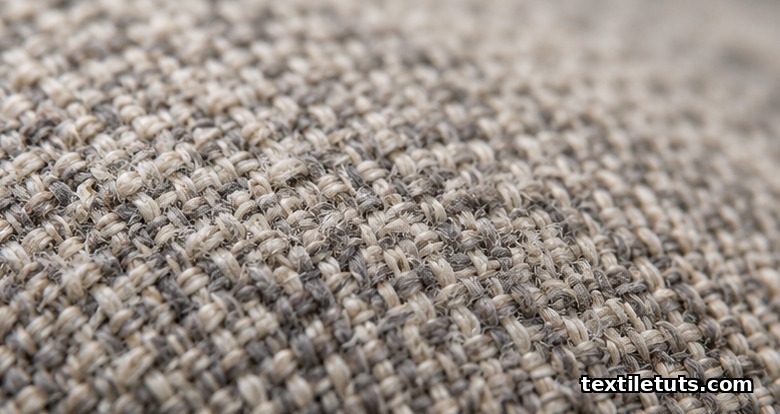
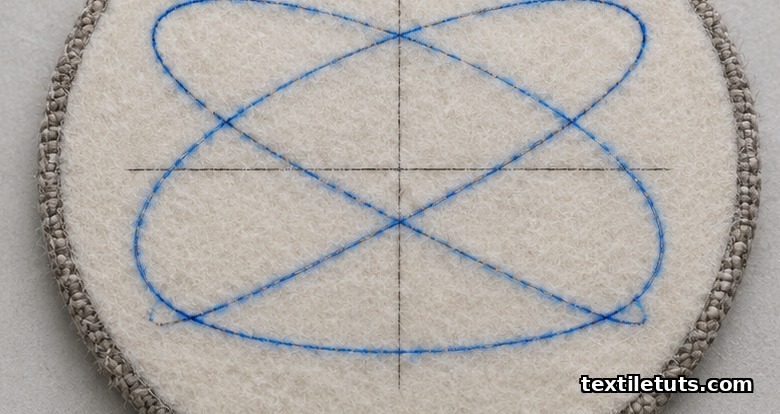
The Martindale abrasion test (ISO 12947) measures how a fabric resists surface wear by rubbing a circular specimen against a standard wool abradant in a Lissajous figure under 9 kPa or 12 kPa pressure, recording the number of cycles until a defined endpoint (mass loss, thread rupture, or visible hole) is reached.
For most woven upholstery textiles the failure threshold sits between 20,000 and 40,000 cycles; for general apparel it falls closer to 5,000 to 20,000. Knowing how to read those numbers is what separates a specification that performs in the field from one that looks strong on paper but pills or holes within a season.
This guide walks through what ISO 12947 actually does, how the four parts of the standard fit together, which endpoints matter for which end-uses, and how Martindale cycles translate into the Wyzenbeek double-rub numbers commonly seen on US specification sheets.
What the Martindale Test Measures
Abrasion resistance is the ability of a textile to withstand the mechanical action of rubbing against another surface. Martindale testing simulates that action in a controlled laboratory setting, isolating surface wear from tensile, tear, or seam-related failure modes. A specimen is mounted in a circular holder and rubbed against a standard abradant (typically a woven wool fabric specified in ISO 12947-1) under a defined load.
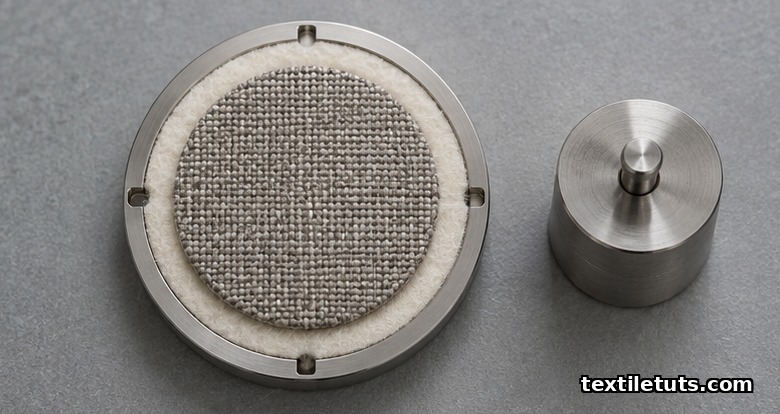
What the test ultimately tells you is how many cycles the fabric survives before a specific, reproducible failure point. Because the failure point is defined inside the standard rather than by visual judgement alone, two laboratories running the same fabric can compare results within tight tolerance bands.
The Four Parts of ISO 12947
ISO 12947 is a multi-part standard. Understanding which part answers which question is the first step toward using the result correctly.
ISO 12947-1 (general principles). Defines the Martindale apparatus, the specimen holders, the abradant fabrics, and the test pressures. This is the part that establishes the language for the rest of the standard.
ISO 12947-2 (specimen breakdown). Counts the number of rubs to the point where one or more yarns break, a hole forms, or an otherwise defined end-point is reached. This is the part most cited on upholstery specifications.
ISO 12947-3 (mass loss). Weighs the specimen before and after a fixed number of cycles (commonly 5,000 or 10,000) and reports the percentage loss in mass. Useful when surface pilling or fibre shedding is the dominant concern.
ISO 12947-4 (appearance change). Evaluates visual change such as pilling, frosting, or colour shift against photographic reference scales. Often run alongside ISO 12947-2 or 12947-3 to give a complete picture of wear.
Standard Test Parameters
Three variables define a Martindale test, and each one has to be reported on the certificate for the result to be meaningful.
Nominal pressure. The standard lists four working pressures: 3 kPa, 6 kPa, 9 kPa, and 12 kPa. For apparel and most upholstery the test is run at 9 kPa (nominal); 12 kPa is reserved for heavier end-uses such as contract seating or technical textiles.
Abradant. For ISO 12947, the abradant is a crossbred woven wool fabric with a specific mass per unit area and abrasion behaviour. Replacement abradants are supplied in batches that have been pre-checked against reference fabrics, so batch-to-batch variation stays within tight limits.
Movement. The specimen traces a Lissajous figure over the abradant. This non-linear motion is what makes Martindale more representative of multi-directional wear than a back-and-forth linear abrasion test.
Specimens are conditioned at 20 °C and 65% relative humidity for 24 hours before testing, then mounted over a layer of felt on the test table so the substrate doesn’t influence the result.
Reading Martindale Results
A Martindale certificate will typically report cycles to one of three endpoints. Choose the endpoint that matches the failure mode your product actually faces.
- Thread rupture. One or more yarns break completely. This is the default endpoint for ISO 12947-2 and the most common figure quoted on commercial upholstery specifications.
- Mass loss. The percentage of weight lost after a fixed cycle count. Common limits in specifications are 3% or 5% mass loss after 5,000 or 10,000 cycles, depending on fabric mass.
- Visual change. Graded against photographic reference scales. Used for appearance-critical end-uses such as automotive interior trim.
For upholstery, the working industry bands are roughly:
| End-use | Minimum Martindale cycles (ISO 12947-2, 12 kPa unless noted) |
|---|---|
| Decorative / light domestic | 10,000 – 15,000 |
| General domestic upholstery | 15,000 – 25,000 |
| Heavy domestic / light contract | 25,000 – 35,000 |
| Severe contract (hotels, offices, transport) | 35,000 – 50,000+ |
| Workwear outerwear / technical textiles | 50,000+ (often mass loss endpoint) |
These bands are not in ISO 12947 itself. They are the thresholds most commonly referenced in European furniture and contract textile specifications and they are useful as a sanity check, but a final specification should always come from the buyer’s own end-use requirements.
Martindale vs Wyzenbeek
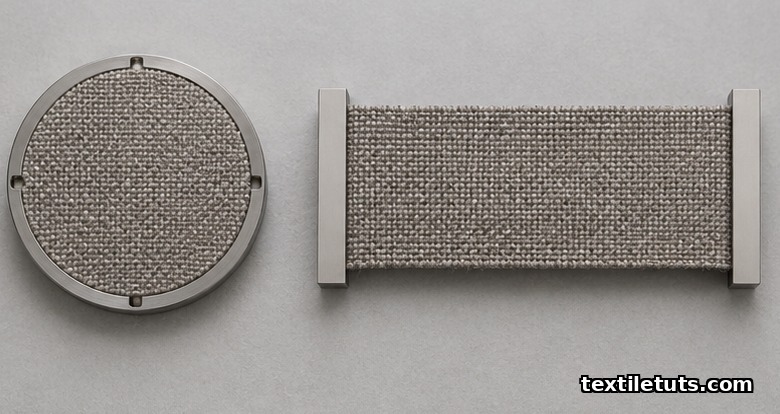
US specifications often quote ASTM D4157 (Wyzenbeek) double rubs. Both tests measure abrasion resistance, but the mechanism, abradant, and result format differ enough that the numbers do not convert directly.
| Feature | Martindale (ISO 12947) | Wyzenbeek (ASTM D4157) |
|---|---|---|
| Movement | Lissajous (multi-directional) | Linear, back-and-forth |
| Abradant | Standard wool fabric | Cotton duck or wire screen |
| Load | 9 kPa or 12 kPa | 1.36 kg or 2.27 kg (sand-filled bag) |
| Result unit | Cycles to endpoint | Double rubs (cycles × 2) |
| Dominant in | EU, UK, Asia, Australia | North America |
As a working rule of thumb, fabrics rated 30,000 Martindale cycles are often quoted as roughly equivalent to 50,000 to 60,000 Wyzenbeek double rubs, but this ratio is fabric-specific. A formal conversion requires running both methods on the same fabric and comparing endpoints. For cross-border sourcing, request the certificate that matches the destination market rather than relying on a conversion factor.
Common Pitfalls When Reading Martindale Results
Three mistakes come up repeatedly in fabric sourcing and quality control.
Quoting cycles without the endpoint. “30,000 cycles” by itself is not informative. Always pair the cycle count with the endpoint (thread rupture, mass loss, or appearance change) and the nominal pressure.
Comparing different pressures. A fabric tested at 9 kPa will report higher cycles than the same fabric tested at 12 kPa. Make sure the comparison set is at the same load.
Treating ISO 12947 and ISO 12947-3 as interchangeable. A mass loss result is not a thread rupture result. A fabric can lose 3% mass well before any yarn breaks, or it can survive 50,000 cycles with little mass loss but heavy surface pilling that only the appearance change grading will catch.
Frequently Asked Questions
What is the difference between ISO 12947 and the older Martindale test methods?
ISO 12947 is the current international standard that replaced the older BS 5690 and IWS TM 112 Martindale methods. The apparatus is the same Martindale machine originally developed at the Shirley Institute in the UK, but ISO 12947 standardised the abradant fabric, specimen preparation, and reporting so results are reproducible between laboratories.
How many Martindale cycles do I need for domestic upholstery?
For typical domestic seating in a living room, 15,000 to 25,000 cycles at 12 kPa (ISO 12947-2, thread rupture endpoint) is the common specification band. Higher-traffic areas such as family-room sofas benefit from 25,000 to 35,000 cycles. Contract specifications for hotels and offices usually start at 35,000 cycles and may go above 50,000.
Is a higher Martindale cycle count always a better fabric?
Not necessarily. A higher cycle count means the fabric resists a specific mechanical action longer, but it tells you nothing about pilling, lightfastness, seam slippage, or comfort. A very tightly woven fabric can score well on abrasion yet feel stiff and trap heat. Martindale cycles are one input to a specification, not a complete quality verdict.
Can Martindale results predict real-world wear?
Martindale is a comparative, reproducible laboratory test, not a lifetime prediction. Real-world wear depends on body oils, cleaning chemicals, UV exposure, and load direction, all of which ISO 12947 does not simulate. Treat the cycle count as a relative ranking between fabrics tested under the same conditions, then validate with wear trials or field experience for critical end-uses.
Why does my sample test lower than the supplier’s certificate?
Differences in abradant batch, specimen mounting, conditioning, or load can all shift the result. Run an independent check at an accredited lab (for example Intertek, SGS, or TÜV) on a fresh sample taken from current production stock, and ask the lab to identify the test parameters used. If the parameters match and the result still differs by more than 10 to 15%, raise a non-conformance with the mill.
References
- International Organization for Standardization. ISO 12947-1:1998 — Textiles — Determination of the abrasion resistance of fabrics by the Martindale method — Part 1: Martindale abrasion testing apparatus. Defines the apparatus, abradant, and general procedure.
- International Organization for Standardization. ISO 12947-2:2016 — Textiles — Determination of the abrasion resistance of fabrics by the Martindale method — Part 2: Determination of specimen breakdown. Specifies the cycle count to thread rupture endpoint.
- International Organization for Standardization. ISO 12947-3:2016 — Textiles — Determination of the abrasion resistance of fabrics by the Martindale method — Part 3: Determination of mass loss. Specifies the mass loss endpoint procedure.
- International Organization for Standardization. ISO 12947-4:1998 — Textiles — Determination of the abrasion resistance of fabrics by the Martindale method — Part 4: Assessment of appearance change. Specifies the visual grading procedure.
- ASTM International. ASTM D4966 — Standard Test Method for Abrasion Resistance of Textile Fabrics (Martindale Abrasion Tester Method). North American equivalent of ISO 12947.
- Akgun, M. Comparison of Martindale and Wyzenbeek abrasion test methods for upholstery fabrics. ResearchGate, peer-reviewed study comparing the two methods on the same fabric set.
This article is the working reference for abrasion resistance and the Martindale (ISO 12947) method. Editorial by Iftay Khairul Alam, TextileTuts. Sources: ISO 12947-1, 12947-2, 12947-3, 12947-4, ASTM D4966, and Akgun (ResearchGate) as cited.


