
What Is Silk Fabric? Types, Production, and Care

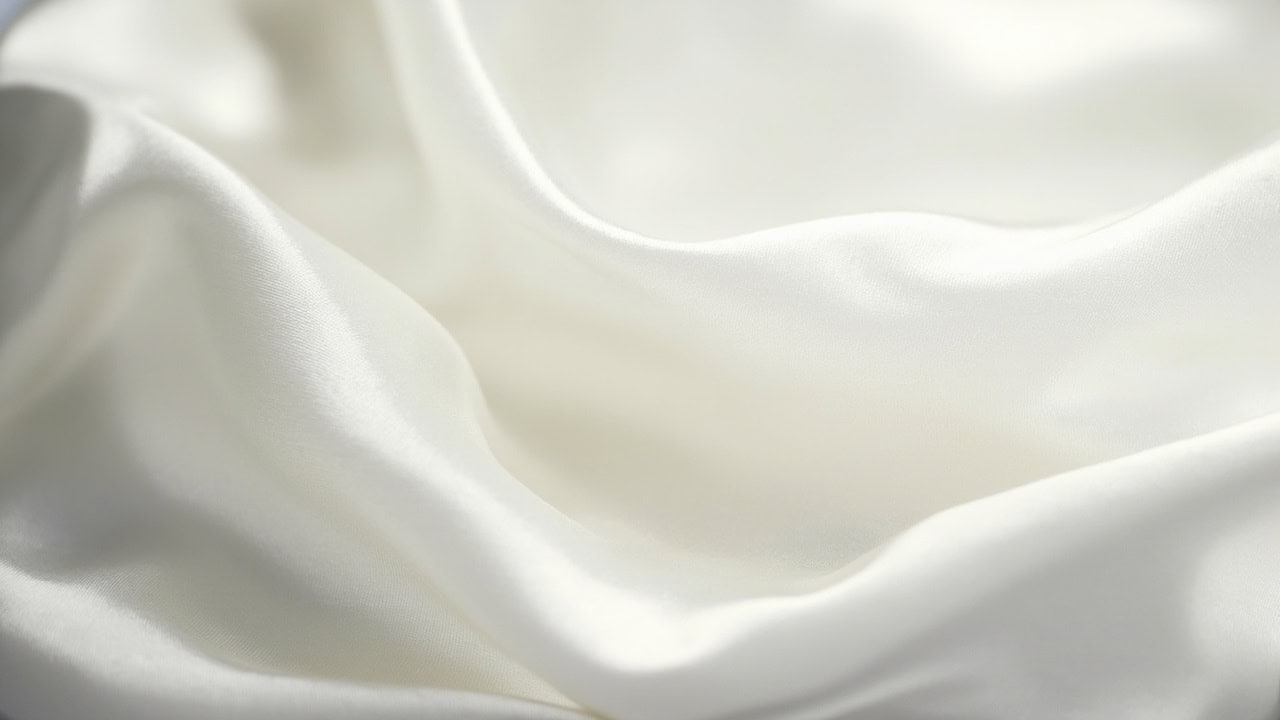
Silk fabric is a natural protein fiber produced by the larvae of the Bombyx mori silkworm, secreted as fibroin protein and bound by sericin gum — the resulting textile weighs only 19–25 GSM for standard charmeuse yet exhibits remarkable tensile strength of 3–5 g/d and a natural moisture-wicking capacity that makes it 30% more breathable than cotton equivalents.
Valued for over five millennia, silk remains one of the world’s most luxurious textiles, commanding prices far above synthetic alternatives and demanding specialized care protocols to preserve its distinctive luster, drape, and structural integrity throughout decades of use.
What Is Silk Fabric? Definition and Origins
Silk is a natural protein fiber composed primarily of fibroin (75–80%), the structural protein that forms the core filament, sealed together by sericin gum (20–25%), a protective coating that holds the twin fibroin strands together in a single silk thread. The fibroin protein’s unique triangular prism cross-section — measuring 5–10 μm wide — refracts incoming light at multiple angles, producing silk’s signature natural luster without any added chemical treatments (CottonWorks, Textile Encyclopedia).
Silk production originated in central China during the Neolithic period, with the earliest archaeological evidence of silk protein dating back approximately 8,500 years at the Jiahu site. The earliest surviving silk fabric fragment dates to roughly 3630 BCE, confirming Chinese mastery of sericulture well before recorded history (Wikipedia — Silk). For over 2,500 years, China maintained an absolute monopoly on silk production, with the secret of sericulture punishable by death under imperial decree — a monopoly that eventually spread to Japan, India, Korea, and Thailand through smuggling and espionage.
A single silkworm larva spins a continuous filament thread ranging from 600–900 meters (approximately 1 mile) in length, using two独生 fibroin filaments bound by sericin, to construct its protective cocoon (CottonWorks). Traditional sericulture remains centered in China, which produces approximately 54% of the world’s raw silk, followed by India at 14%.
How Silk Is Produced: From Cocoon to Fabric
The sericulture process begins when silkworm larvae (Bombyx mori) hatch from eggs and feed exclusively on mulberry leaves for 25–30 days, consuming approximately 104 kg of mulberry leaves to produce just 1 kg of raw silk — requiring roughly 3,000 individual silkworms per kilogram of finished silk fiber (Wikipedia — Silk).
Once the larva has fully grown, it begins spinning its cocoon over 2–3 days, secreting twin filaments of fibroin through spinnerets in its head while simultaneously coating them with sericin gum that hardens upon contact with air. The cocoon is then harvested by plunging it into hot water at 80–90°C — a temperature range that simultaneously kills the pupa inside and softens the sericin binding, allowing skilled workers to locate the filament end and begin the unwinding process (CottonWorks).
The unreeling (or “brushing”) process involves combining filaments from 5–8 individual cocoons and drawing them together through a guide eye to create a single, continuous silk thread of consistent thickness. These raw silk threads are then degummed — the sericin coating is removed through enzymatic or soap-based treatment — before the pure fibroin fiber is woven into fabric. The removed sericin is a valuable by-product used in cosmetics and skin-care formulations (Wikipedia — Silk).
Common silk weave constructions include:
- Charmeuse: Satin-weave silk with a high luster on the face and matte finish on the reverse — prized for evening wear and luxury linings
- Crepe de Chine: Twisted-yarn weave producing a subtle crinkle texture that camouflages wrinkles and creases
- Organza: Plain-weave sheer silk with a crisp hand and open structure — used for formal wear and veils
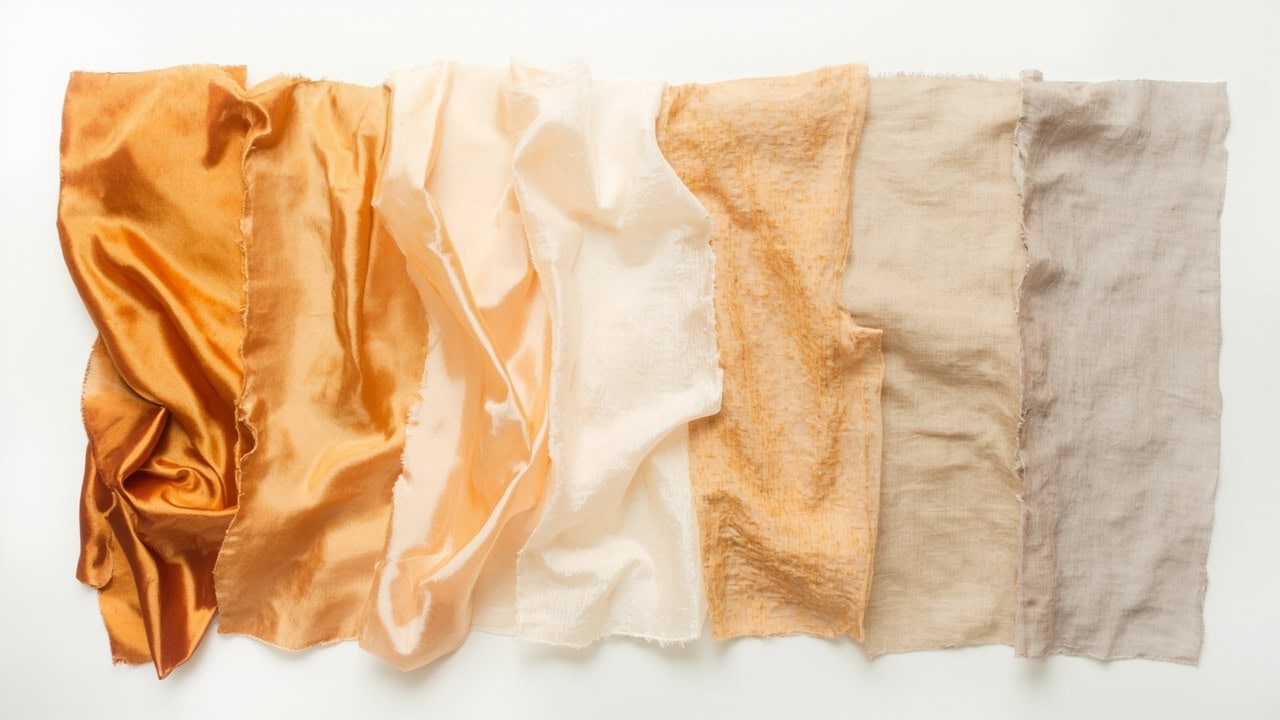
- Tussah: Wild silk from oak-feeding larvae — coarser texture with characteristic tan to amber coloration
- Dupioni: Irregular slubbed silk produced from double cocoons — highly textured and distinctly luxurious
Silk Fabric Properties Table
| Property | Value | Notes |
|---|---|---|
| Weight | 19–25 GSM (lightweight) | Standard charmeuse; organza can be as light as 8–15 GSM |
| Fibroin Content | 75–80% | Structural protein filament |
| Sericin Content | 20–25% | Gum protein binder, removed during degumming |
| Tensile Strength | 4.3–5.2 g/d (Bombyx mori) | Stronger than steel of equivalent diameter; 740 MPa absolute strength (Wikipedia) |
| Moisture Absorption | 11% by weight | Natural moisture-wicking capacity; feels cool to touch |
| Heat Conductivity | Low | High infrared emissivity; feels cool against skin in warm conditions |
| Abrasion Resistance | Moderate (Martindale 20,000 cycles) | Lower than most synthetics; pills with sustained friction |
| Elastic Recovery | 95% | Excellent drapability and shape retention |
| Luster | High (triangular fibroin prism structure) | Natural sheen without chemical treatment |
| Wet Strength Loss | Up to 20% reduction | Silk loses significant strength when wet; handle wet silk with extreme care |
Types of Silk Fabric
The silk market encompasses two broad categories: cultivated silk (from Bombyx mori larvae fed a controlled mulberry diet) and wild silk (from various Antheraea species feeding on oak and other broad-leaf trees). The quality, texture, and properties of each silk type differ substantially based on species, diet, and weave construction.
Mulberry Silk
Mulberry silk, produced by Bombyx mori larvae fed exclusively on mulberry leaves, represents the highest quality and most widely produced silk type globally — accounting for approximately 90% of all raw silk output. The controlled diet produces a uniformly white, fine, and exceptionally regular fiber with diameters consistently between 10–14 μm. Mulberry silk’s twin fibroin filaments are perfectly smooth and cylindrical, producing the characteristic lustrous sheen that defines luxury silk fabric (CottonWorks). Because mulberry leaves contain no tannins or natural dyes, the resulting silk takes dye evenly and vibrantly — producing the saturated, consistent colors associated with high-end silk apparel.
Tussah Silk
Tussah silk (also called wild silk or Antheraea silk) is produced by several wild moth species that feed on oak, persimmon, and castor oil plant leaves rather than mulberry. Because the larvae are not farmed under controlled conditions, tussah fibers are less uniform in diameter — ranging from 25–65 μm — and retain a natural tan, amber, or cream coloration due to the presence of a thin mineral layer (silica) on the fiber surface (Wikipedia — Silk). Tussah fibers exhibit a coarser hand and more irregular texture than mulberry silk, with slightly lower tensile strength of 2.5–4.5 g/d compared to mulberry’s 4.3–5.2 g/d. Tussah cannot be bleached to a pure white without damaging the fiber, making it suitable only for its characteristic warm, natural earth tones.
Charmeuse
Charmeuse is a satin-weave silk fabric characterized by its distinctly different face and reverse: the front surface exhibits an intense, liquid-like luster created by floats of warp fibers over weft, while the reverse presents a dull, matte texture. Standard charmeuse weighs 19–25 GSM, drapes fluidly, and conforms closely to body contours — making it the preferred choice for luxury sleepwear, blouses, and evening gowns. Charmeuse’s floating weave structure, however, also makes it susceptible to snagging and requires careful handling during both production and consumer care.
Organza
Organza is a plain-weave, sheer silk fabric originally developed in Central Asia that achieves its characteristic crispness and transparency through a tight weave structure using very fine threads. Weights typically range from 8–15 GSM, making organza one of the lightest silk constructions available. The plain weave provides greater structural integrity than charmeuse’s float-heavy satin weave, resulting in better resistance to snagging despite the open, sheer appearance. Organza’s stiffness and ability to hold shapes without conforming to the body make it ideal for formal wear, veils, and decorative overlays.
Crepe de Chine
Crepe de Chine (“crape of China”) uses highly twisted silk yarn in both warp and weft directions — typically at 400–600 twists per meter — producing a distinctive surface texture with subtle crinkles and ridges. The twisted yarn construction gives crepe de Chine significantly better wrinkle resistance than charmeuse or plain weaves, as the internal tensions within the twisted fibers resist creasing. This forgiving nature, combined with a weight of 30–40 GSM, makes crepe de Chine one of the most practical silk types for garments subject to frequent wear and movement (Wikipedia — Silk).
Dupioni
Dupioni silk (also spelled dupioni) is produced when two or more silkworms build cocoons in close proximity, causing their filaments to become entangled and interlocked during the unreeling process. This doublecocoon origin creates an irregular, slubbed yarn with visible bumps and variations in thickness running along the fabric’s length — a characteristic that is intentional and prized as a mark of natural luxury rather than a defect. Dupioni typically uses a plain weave at 40–60 GSM, producing a crisp but substantial fabric that holds structured silhouettes well, making it a preferred choice for wedding attire, tailored jackets, and home furnishing applications.
Habotai
Habotai (from the Japanese “haba otai,” meaning “feather-light”) is a soft, lightweight plain-weave silk originally produced in China and Japan for the luxury lining market. Standard habotai weighs 8–20 GSM and features a extremely soft hand and smooth surface that drapes gracefully without the fluid cling of charmeuse. Habotai’s affordability — achieved through the use of shorter, lower-grade silk fibers in an efficient plain weave — and gentle texture have made it the most widely available silk type, commonly used in linings, scarves, sleepwear, and introductory silk products. It is also the silk type most commonly used in printing for silk scarves and accessories.
Common Uses and Applications
Silk’s unique combination of luster, lightweight strength, moisture management, and temperature-regulating properties has secured its position across three primary application domains:
Apparel
Silk’s aesthetic and functional properties make it the preferred fabric for luxury and high-performance apparel. Evening gowns and formal dresses exploit silk’s natural sheen and fluid drape, while blouses and scarves benefit from silk’s excellent moisture-wicking and temperature-regulating properties — the fiber’s 11% moisture absorption capacity allows it to draw perspiration away from skin without feeling damp. Lingerie and robes use habotai and charmeuse for their soft hand against skin, while silk ties and pocket squares derive value from silk’s ability to hold a knot and resist deformation (CottonWorks).
Home Textiles
Mulberry silk pillowcases and bedsheets represent the most significant home textile application, driven by silk’s well-documented moisture-wicking properties and the cosmetic claim that silk’s smooth surface generates less friction against hair and skin during sleep. The fibroin protein structure is naturally hypoallergenic and resistant to dust mites, making silk bedding a preferred choice for allergy sufferers. Draperies and window treatments use dupioni and organza for their light-diffusing properties and distinctive textural interest.
Technical and Historical Applications
Beyond civilian apparel, silk’s exceptional tensile strength-to-weight ratio — 740 MPa absolute strength at only 19–25 GSM — made it the material of choice for parachute canopy fabric in both World Wars, a technical application that exploited silk’s high tensile strength and low heat conductivity. In medicine, silk surgical sutures have been used for centuries due to silk’s high biocompatibility, predictable degradation profile, and excellent handling characteristics — though synthetic alternatives have largely replaced silk in modern surgical practice (Wikipedia — Silk).
Silk Fabric Pros and Cons
| Advantages | Disadvantages |
|---|---|
| Exceptional natural luster and light-refracting sheen | High cost compared to synthetic or cotton equivalents |
| Lightweight (19–25 GSM) with excellent drape | Requires dry cleaning or delicate hand wash |
| 11% moisture absorption with temperature-regulating properties | Wet fibers stick together and lose up to 20% tensile strength |
| Hypoallergenic; naturally resistant to dust mites and mold | UV-sensitive; yellows and degrades with prolonged sun exposure |
| Biodegradable and sustainable when organically produced | Poor abrasion resistance (pills and wears with friction) |
| Feels cool in summer; warm in winter due to low heat conductivity | Water-based stains set permanently if not treated immediately |
| Excellent elastic recovery (95%) and shape retention | Static cling in low-humidity conditions due to poor electrical conductivity |
How to Care for Silk Fabric: Essential Guidelines
Silk’s protein fiber structure is chemically distinct from both cellulose cotton and synthetic petroleum-based fibers, requiring a fundamentally different approach to cleaning, pressing, and storage. The sericin residue in undegummed raw silk and the pure fibroin in finished silk fabric respond differently to water, heat, and mechanical agitation — understanding which type of silk you own determines the appropriate care protocol.
Washing
Machine washing is not recommended for any silk fabric, regardless of construction. The mechanical agitation causes silk fibers to interlock and felt — a phenomenon known as “felting shrinkage” that can reduce fabric dimensions by 8% or more in untreated silk. For washable silk items (habotai, certain crepe de Chine constructions), hand wash in cold water below 30°C using a silk-specific detergent formulated with neutral pH and no enzymes. Gently agitate the water with a soft pressing motion — never wring, twist, or scrub silk fabric, as mechanical stress distorts the fiber structure and causes permanent water marks. For structured garments (dresses, jackets) and delicate weaves (charmeuse, organza), dry cleaning is the recommended care method (CottonWorks).
Drying
Silk fabric must never be tumble-dried, as the heat and mechanical tumbling will damage the fiber structure and cause shrinkage. After washing, lay the garment flat on a clean, dry towel and roll the towel+silk together gently to absorb surface moisture — pressing firmly enough to wick water into the towel without stretching the fabric. Unroll, reshape gently by hand, and lay flat on a fresh dry towel away from direct sunlight and heat sources. Air dry completely before storing or pressing; damp silk stored in enclosed spaces will mildew.
Ironing
Silk must be ironed on the lowest heat setting — specifically the “silk” setting on most consumer irons, which corresponds to approximately 110–130°C — using a pressing cloth (a clean cotton muslin or dedicated pressing cloth) placed between the iron and the silk fabric. The pressing cloth prevents direct contact that can cause scorching (silk scorches at temperatures above 140°C without visible warning, unlike cotton which browns first) and prevents iron shine, a permanent glazing of the fiber surface caused by excessive heat and pressure on the lustrous fibers. Always iron on the reverse (matte) side of the fabric, and never use steam directly on silk — steam can cause water spotting and should instead be applied by hovering the iron 2–3 cm above the fabric while using a spray bottle to mist water onto the cloth.
Storage
Hang silk garments on padded hangers to preserve the drape of dresses, blouses, and robes — wire hangers create visible impressions in the shoulder area that are difficult to remove. Fold structured items (jackets, structured dresses) with acid-free tissue paper inserted between folds to prevent permanent creasing and to absorb ambient moisture. Store silk away from direct sunlight using garment bags made from natural cotton (not plastic, which traps humidity and can cause yellowing). Cedar blocks or lavender sachets provide natural moth deterrence without the chemical residues that can degrade silk fibers — naphthalene and paradichlorobenzene mothballs should never be used near silk.
Stain Removal
Water-based stains on silk — including coffee, tea, juice, and wine — must be treated immediately. Blot (do not rub) the stained area with cold water using a clean white cloth, working from the outside of the stain toward the center to prevent spreading. For oil-based stains (makeup, perfume, body oils), apply a small amount of talc or cornstarch immediately to absorb the oil, then brush off and dry clean — water alone will set oil-based stains on silk’s protein fibers. Never use stain-removal pens, bleach-containing products, or enzyme-based stain removers on silk, as these treatments degrade the fibroin protein structure permanently. For comprehensive guidance on how to remove stains from silk, refer to our stain removal pillar.
Professional Care
Dedicated silk dry cleaners use solvent-based cleaning systems specifically formulated for protein fibers, and employ experienced pressers trained in silk-specific finishing techniques. When selecting a dry cleaner, verify they have specific experience with silk — not simply “delicate fabrics” — and inquire about their pressing method. Silk that is pressed with excessive heat or without a pressing cloth will develop iron shine (a permanent, glassy appearance on the fiber surface) that cannot be reversed.
Frequently Asked Questions
Q: What is silk fabric made of?
A: Silk fabric is made of natural protein fibers called fibroin, produced by silkworm larvae and sealed together by a gum called sericin. The triangular prism structure of fibroin refracts light, creating silk’s characteristic natural luster.
Q: What are the main types of silk fabric?
A: The main types include mulberry silk (highest quality from Bombyx mori), tussah (wild silk), charmeuse (satin-weave), organza (sheer, crisp), crepe de Chine (textured), dupioni (slubbed), and habotai (soft, lightweight).
Q: How is silk fabric produced?
A: Silkworms spin a continuous 600–900 meter filament from fibroin protein secreted through spinnerets. The cocoon is harvested, boiled to kill the pupa and soften sericin, and filaments from multiple cocoons are unreeled and twisted together to create silk yarn for weaving.
Q: How do you care for silk fabric?
A: Silk should be hand washed in cold water below 30°C with silk-specific detergent, never wrung or twisted, and dried flat on a towel. Iron on low heat (110–130°C) with a pressing cloth on the reverse side. Store away from direct sunlight to prevent yellowing.
For more detailed guidance on silk washing techniques, read our complete guide to how to wash silk fabric. To understand the differences between mulberry silk and wild silk varieties, see our comparison article on what is mulberry silk vs tussah. For troubleshooting stain issues, explore our comprehensive stain removal complete guide.
References
- CottonWorks™ Textile Encyclopedia. Silk Fiber Classifications. https://www.cottonworks.com/fiber-classifications/silk/
- Wikipedia — Silk. Silk. https://en.wikipedia.org/wiki/Silk


