
Silk vs. Satin: What’s the Actual Difference?

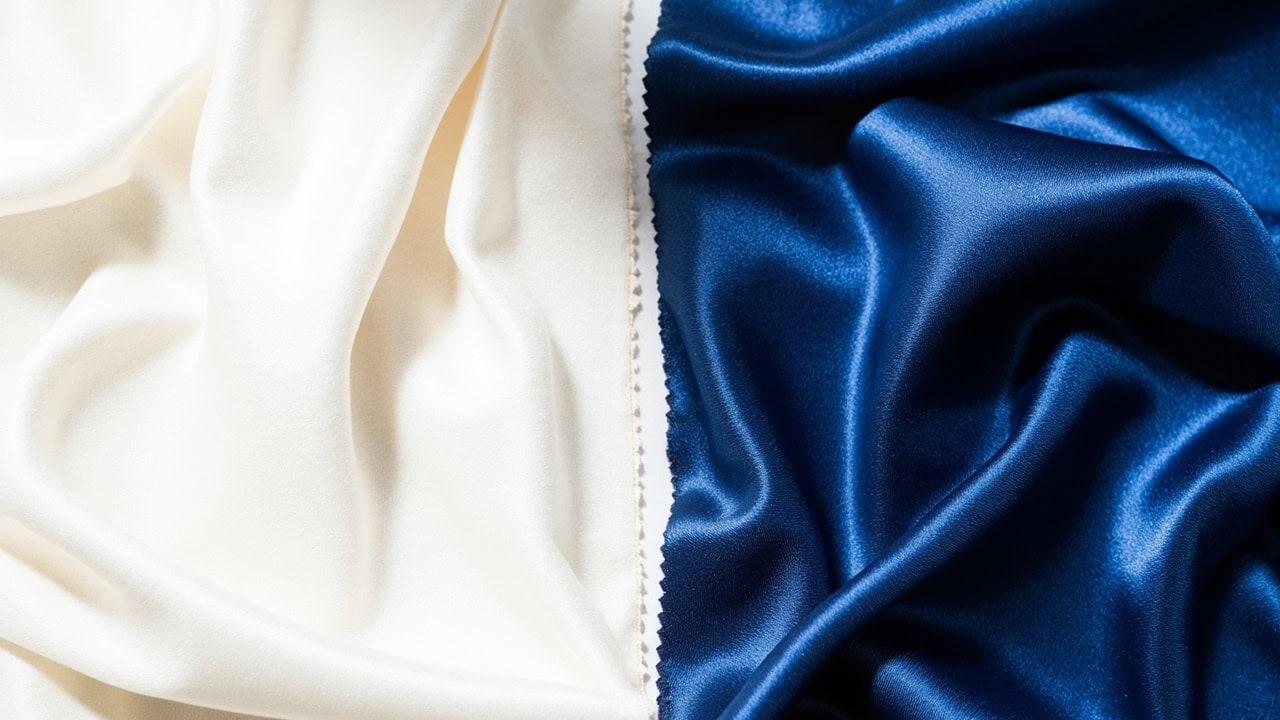
Silk and satin are fundamentally different: silk is a natural protein fiber produced by silkworms (Bombyx mori), while satin is a weave structure characterized by four or more warp threads floating over weft threads, creating its signature smoothness. This means silk describes the material’s origin, and satin describes a textile construction method — they are not interchangeable terms despite both fabrics sharing a lustrous, smooth appearance. Understanding this distinction is essential for making informed purchasing decisions and proper fabric care.
The Core Difference: Fiber vs. Weave Structure
The most common misconception about silk and satin stems from treating them as equivalent fabrics. They are not. Silk is a natural protein fiber — specifically fibroin — harvested from the cocoons of silkworms. The silkworm produces fibroin (75–80% of the fiber composition) coated in sericin (20–25%), creating a triangular cross-section measuring 5–10 micrometers wide. This unique geometry is what creates silk’s characteristic shimmer through light refraction.
Satin, conversely, is a weave construction pattern, not a fiber type. A satin weave features four or more weft yarns floating over each warp yarn (or four warp yarns floating over each weft yarn), creating minimal light scattering at the fiber intersections. This float pattern produces the smooth, glossy surface that defines satin — regardless of what fiber is used to create it.
This distinction has practical consequences: silk can be woven into satin, twill, or plain weave structures. A silk fabric labeled “silk twill” or “silk habotai” uses silk fiber but a different weave than satin. Conversely, satin can be made from silk, polyester, nylon, or acetate fibers. Polyester satin and nylon satin are entirely synthetic and share none of silk’s natural properties.
The rule is straightforward: if the label says only “satin” without specifying fiber content, the material could be any filament fiber — silk, polyester, or otherwise. Authentic silk will always be labeled as silk, silk blend, or by specific silk weave names like charmeuse, habotai, or crepe de chine.
Side-by-Side Comparison Table
| Property | Silk | Satin |
|---|---|---|
| Fiber Origin | Natural protein (Bombyx mori) | Synthetic or natural (weave-dependent) |
| Weave Structure | Often satin weave, but also plain/twill | Always satin weave (4+ float) |
| Breathability | Excellent — natural temperature regulation | Varies (polyester satin = poor; silk satin = excellent) |
| Moisture Absorption | 11% regain; absorbs 30% weight without feeling wet | Low (synthetic) / High (silk satin) |
| Durability | Strong for weight; loses up to 20% strength when wet | Durable when synthetic; delicate when silk |
| Care Complexity | Hand wash cold or dry clean only | Machine washable (synthetic); delicate (silk) |
| Cost | $15–$100+ per yard | $3–$30 per yard (synthetic); $20–$80 (silk) |
| Sustainability | Biodegradable; significant carbon/water footprint | Synthetic = petroleum-based; silk = biodegradable |
| Lifespan | 10–20 years with proper care | 2–5 years (synthetic); 10–15 years (silk satin) |
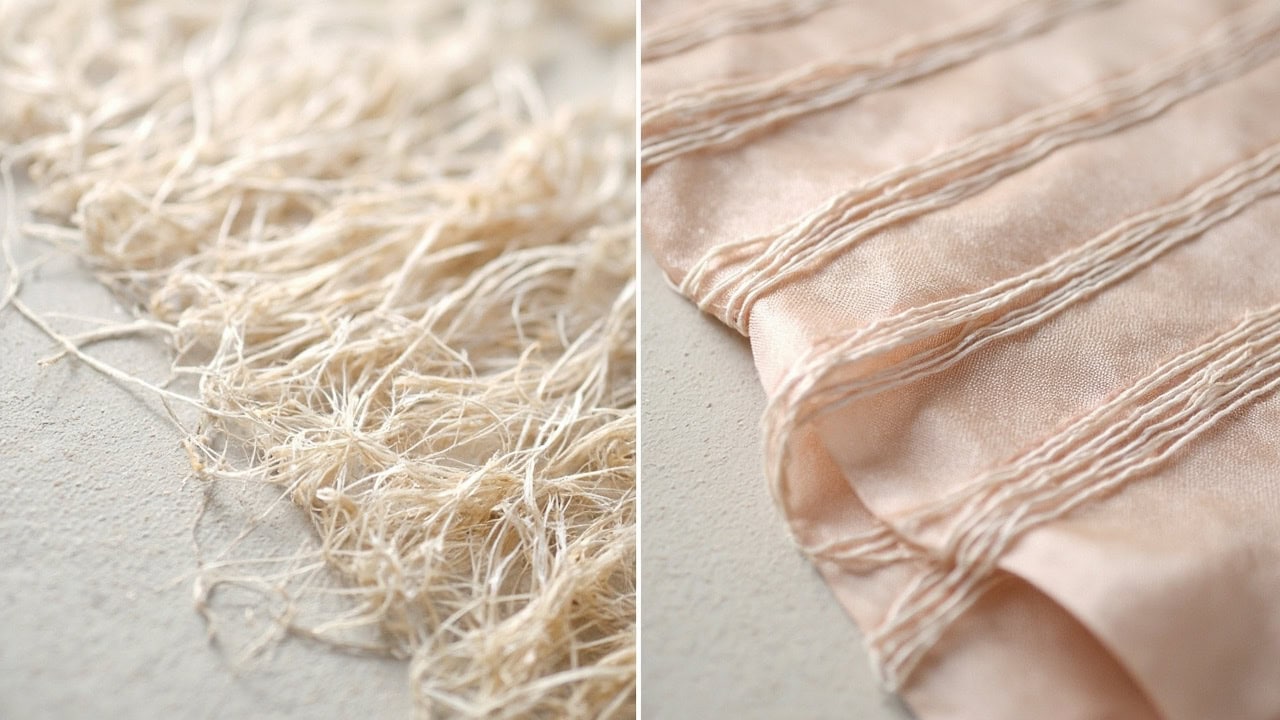
When to Choose Silk
Silk excels in applications where its unique properties cannot be replicated by synthetic alternatives. The fiber’s natural temperature regulation comes from its protein structure: silk is a poor conductor of heat, meaning it keeps wearers cool in summer and warm in winter. This thermoregulatory property is inherent to the fiber itself — not a treatment that washes out over time.
For next-to-skin luxury garments — lingerie, sleepwear, scarves, and fine dresses — silk’s moisture management becomes critical. Silk can absorb up to 30% of its weight in moisture without feeling damp, drawing perspiration away from skin while maintaining fabric temperature. This makes it superior for items worn directly against the body for extended periods.
The long-term investment case for silk is compelling: quality silk fabric, properly cared for, lasts 10–20 years. The momme weight (the standard measurement for silk fabric density, expressed in grams per square meter) determines quality — heavier momme silk contains more fiber and produces a more substantial, durable fabric. Consumer silk fabrics range from 8 to 30 momme, with 16 momme considered standard for general use and 22+ momme representing luxury quality.
Best applications for silk:
- Fine dresses and wedding attire requiring fluid drape and natural sheen
- Premium sleepwear and luxury linens for temperature-regulated comfort
- Scarves and neckties where lightweight warmth and moisture management matter
- Lingerie and intimate apparel where skin compatibility and breathability are essential
When to Choose Satin
Synthetic satin — primarily polyester and nylon — offers advantages where silk’s properties are unnecessary or where budget constraints exist. Polyester satin costs $3–$15 per yard compared to $15–$100+ for silk, making it the practical choice for high-volume applications like costume and performance wear requiring frequent washing and durability over aesthetics.
Machine washability is the primary practical advantage of polyester satin. Unlike silk, which requires hand washing in cold water or professional dry cleaning, polyester satin tolerates standard laundry cycles on gentle settings. It dries quickly, resists wrinkles more effectively than silk, and maintains its smooth appearance through repeated wash cycles — a polyester satin’s lifespan is typically 2–5 years under regular use, compared to silk’s decade-plus longevity.
The trade-off is breathability. Polyester satin has poor moisture absorption and can feel clammy against skin during extended wear or in warm conditions. It does not regulate temperature — polyester melts at 260–280°C and can be damaged by high-heat ironing, whereas silk tolerates temperatures up to 140°C before fiber degradation begins. For summer wear or tropical climates, polyester satin is markedly inferior to silk.
Best applications for satin:
- Prom gowns and bridesmaids dresses where visual impact and budget are both considerations
- Fashion garments requiring high-gloss aesthetic over functional properties
- Costume and theatrical wear requiring frequent laundering between performances
- Fabric linings where the smooth surface reduces friction without requiring silk’s other properties
Price and Availability
Silk pricing reflects the labor-intensive sericulture process: producing 1 kg of silk requires approximately 104 kg of mulberry leaves and around 3,000 silkworms. The cocoon-to-fiber process involves hand-reeling, where cocoons are boiled and individual fibers are unwound — a technique that has seen limited mechanization. This supply constraint keeps silk prices elevated regardless of market conditions.
Consumer silk fabric prices break down as follows:
- 8–12 momme (lightweight): $15–$30 per yard — habotai, China silk; suitable for linings and scarves
- 14–16 momme (standard): $30–$60 per yard — most common for apparel; crepe de chine, charmeuse
- 19–22 momme (heavy): $60–$100+ per yard — dupioni, raw silk; for structured garments and luxury linens
Polyester satin dominates the affordable segment at $3–$15 per yard, with quality varying by fiber denier and weave consistency. Silk satin (silk fiber in a satin weave) occupies the $20–$80 range — comparable to silk in other weaves, since the fiber content drives cost more than the weave structure.
Momme weight serves as the primary quality indicator for silk. Unlike thread count for cotton sheets or denier for synthetic fabrics, momme is silk-specific: 1 momme = 4.305 grams per square meter. Higher momme indicates more silk fiber per area, correlating with durability, weight, and generally quality. A 22 momme charmeuse is noticeably heavier and more substantial than a 16 momme charmeuse of identical dimensions.
Consumer tip: always check fiber content labels. The word “satin” alone indicates only the weave structure. A dress labeled simply “satin” without fiber specifics is almost certainly polyester. Legitimate silk always identifies as such.
Care Comparison
| Care Aspect | Silk | Polyester Satin | Silk Satin |
|---|---|---|---|
| Washing | Hand wash cold or dry clean | Machine wash gentle cycle | Hand wash cold or dry clean |
| Water Temp | Cold only (below 30°C) | Cool to warm | Cold only |
| Detergent | Silk-specific or mild | Standard laundry detergent | Silk-specific |
| Drying | Air dry flat; never wring | Tumble dry low or air dry | Air dry flat |
| Ironing | Cool iron inside out (up to 140°C) | Low-heat synthetic iron | Cool iron inside out |
| Dry Clean | Recommended for fine silk | Not necessary | Recommended |
Silk Care Specifics
Silk’s protein fiber structure makes it vulnerable to alkaline substances, mechanical agitation, and UV degradation. Proper silk care begins with understanding these vulnerabilities:
- Never wring silk — pressing between towels removes excess water without fiber stress. Wringing breaks the triangular fiber structure, causing permanent deformation.
- Air dry away from direct sunlight — UV radiation degrades fibroin proteins, causing fiber brittleness and color fading. Silk stored in sunlight loses up to 50% of tensile strength over time.
- Store folded or on padded hangers — silk’s smooth surface is susceptible to snagging; wire hangers create pressure points that stress the fabric.
- Avoid contact with perfumes and deodorants — the acids and alcohol in personal care products denature silk proteins on contact, causing localized fiber degradation and discoloration.
- Beware of perspiration — human sweat is mildly acidic (pH 4.5–5.5) and causes silk to yellow over time. Barrier cloths protect underarm areas in silk garments.
Unwashed silk fabric (particularly silk chiffon) can shrink up to 8% on first laundering — always pre-wash or plan for dry cleaning if dimensional stability is critical. Steam pressing can reverse minor shrinkage in finished garments.
Satin Care Specifics
Polyester satin and nylon satin are far more forgiving than silk:
- Machine wash on gentle cycle in cool to warm water (30–40°C maximum)
- Standard laundry detergents are safe — polyester is chemical-resistant compared to silk’s protein structure
- Tumble dry on low heat or air dry — high heat can damage synthetic fibers and cause pilling
- Iron on synthetic/low heat setting only — polyester melts at 260–280°C, well below a cotton iron’s typical temperature
Silk satin requires the same care protocol as other silk fabrics — hand wash cold or professional dry clean, never wring, air dry flat. The satin weave structure does not change the fiber’s chemical vulnerabilities.
Always check care labels: many garments marketed as simply “satin” are actually polyester blends and will have care instructions reflecting synthetic care requirements. The distinction matters significantly for longevity.
Frequently Asked Questions
Q: Is satin better than silk?
A: Satin and silk serve different purposes — they cannot be directly compared as one being universally better. Silk is a premium natural fiber with superior breathability and longevity; satin is an affordable weave structure that creates a smooth finish. For luxury and comfort, silk wins. For budget and easy care, polyester satin wins.
Q: Can you tell if something is real silk or satin just by looking?
A: Yes with practice: real silk shows slight irregularities in its luster under light (the “shimmer” effect) and feels slightly warm to the touch. Silk also wrinkles more easily than synthetic satin. Synthetic satin has an unnaturally uniform shine and feels smoother but cooler. A burn test (silk burns like human hair; polyester melts) can confirm.
Q: Why is silk more expensive than satin?
A: Silk costs more due to the labor-intensive sericulture process (silkworm farming, cocoon harvesting, fiber reeling by hand) and limited supply — each silkworm produces only a small amount of fiber. Satin made from polyester is inexpensive because it’s petroleum-based and manufactured at industrial scale. Silk satin costs similar to silk woven in other patterns.
Q: What is charmeuse silk and how does it differ from satin?
A: Charmeuse is a specific type of silk weave (a satin weave variant) that creates a distinctive lightweight drape with one glossy side and one matte side. All charmeuse is silk, but not all silk is charmeuse. The term “charmeuse” describes both the weave structure and that it’s made from silk — making it distinct from polyester satin, which mimics the weave but not the fiber.
References
- Wikipedia. (2025). Silk. Wikipedia.
- Wikipedia. (2025). Satin. Wikipedia.
- Wikipedia. (2025). Charmeuse. Wikipedia.
- CottonWorks. (2025). Silk — Fabric Properties. Cotton Incorporated.


