
What Is Rayon Fabric? Viscose, Modal, and Lyocell Explained

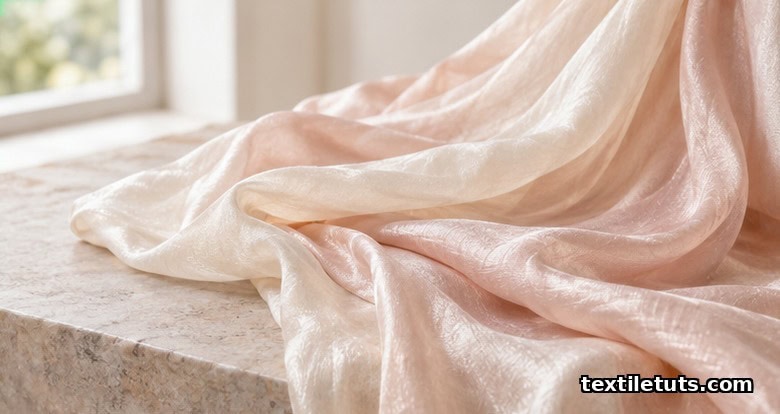
Rayon is a cellulosic fiber produced by dissolving wood pulp (primarily from beech, pine, or eucalyptus trees) in chemical solvents to create a semi-synthetic fabric that drapes like silk but requires more careful care than cotton. Viscose (also called rayon) is the oldest and most common type, produced using carbon disulfide in a polluting process; modal is a higher-quality variant made from beech wood with better dimensional stability; lyocell (brand name Tencel) is the most sustainable option, produced in a closed-loop process that recycles 99% of the solvent.
Definition: What Is Rayon Fabric?
Rayon is a regenerated cellulosic fiber — wood pulp is chemically processed to dissolve and reconstruct cellulose into silk-like filaments. First commercialized in 1884 as “artificial silk” by Hilaire de Chardonnet, it was a groundbreaking achievement in textile engineering that made silk-like fabrics accessible at mass market prices. The fabric is classified as semi-synthetic because it originates from natural wood pulp but requires extensive chemical transformation to become spinnable fiber.
Despite its long history, rayon remains one of the most misunderstood fabrics in the textile industry. Many consumers believe they are purchasing “silk” when they buy rayon, and approximately 85% of all fabrics marketed as “silk” in contemporary retail are actually rayon or other regenerated cellulosic fibers. True silk, produced exclusively by silkworm cocoons, is a protein fiber fundamentally different from rayon’s cellulosic composition.
How Rayon Is Made: From Tree to Fabric
The manufacturing process for viscose rayon involves seven distinct steps, each critical to the final fiber quality:
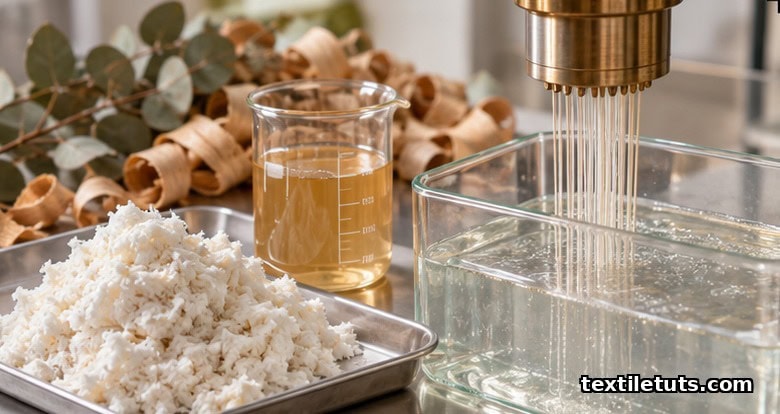
- Wood pulp (usually from beech, pine, eucalyptus, or bamboo) is harvested and cleaned to remove impurities
- Pulp is treated with sodium hydroxide (NaOH) to create “alkali cellulose” — this breaks down lignin and hemicellulose
- Alkali cellulose is pressed into sheets and aged — molecular weight is carefully controlled by aging time, affecting fiber strength
- Carbon disulfide (CS2) is added to create “cellulose xanthate” — this is the viscose process characteristic step that uses neurotoxic chemicals
- Cellulose xanthate is dissolved in dilute NaOH to create the viscous “viscose solution” that gives the process its name
- Viscose is extruded through spinnerets (tiny holes) into a sulfuric acid bath — filaments form instantly upon contact with the acid
- Filaments are drawn, washed, bleached, and wound onto spools for weaving or knitting into fabric
Approximately 250 grams of carbon disulfide is emitted per kilogram of rayon produced, making the viscose process a significant source of industrial pollution and a health hazard for factory workers without proper protective equipment. This environmental burden is why the textile industry developed alternative production methods.
The Lyocell Alternative: NMMO Process
Lyocell represents a fundamentally different manufacturing approach that addresses the viscose process’s environmental shortcomings. Instead of carbon disulfide, lyocell uses N-Methylmorpholine N-oxide (NMMO) as a direct solvent — the entire manufacturing process takes roughly two hours, and 99% of the amine oxide solvent is recovered and reused in a closed-loop system. NMMO biodegrades without producing harmful byproducts, making lyocell significantly more sustainable than viscose. The trade-off is higher production cost, which translates to premium pricing for consumer products.
Rayon, Viscose, Modal, and Lyocell: What’s the Difference?
Understanding the terminology is essential because these terms are often used inconsistently in the marketplace. “Rayon” is the umbrella term for all regenerated cellulosic fibers in the United States, while “viscose” is the European term for the same thing — both refer to fabric made via the carbon disulfide process. Modal and lyocell are specific variants with distinct manufacturing processes and performance characteristics.
| Property | Viscose (Rayon) | Modal | Lyocell (Tencel) |
|---|---|---|---|
| Raw material | Wood pulp (various) | Beech wood exclusively | Wood pulp (usually eucalyptus) |
| Solvent | Carbon disulfide (CS2) | Carbon disulfide | NMMO (closed-loop) |
| Sustainability | Low — CS2 is toxic pollutant; 250g CS2 emitted per kg produced | Moderate | High — 99% solvent recovery, NMMO biodegrades |
| Strength when wet | 30–50% weaker than dry | 50% stronger when wet | Strongest wet strength |
| Shrinkage | High (3–7% on first wash) | Low (dimensional stability) | Minimal shrinkage |
| Softness | Very soft, silky drape | Slightly softer, finer | Soft, smooth texture |
| Moisture absorption | High (13–15% regain) | High (similar to viscose) | Good (8–12% regain) |
| Cost | Lowest | Mid-range | Highest |
Rayon Manufacturing Process Comparison
Viscose (Rayon)
Wood pulp → NaOH treatment → CS2 addition → Extrusion in acid bath → Filament formation
High Environmental ImpactModal
Beech wood pulp → NaOH → CS2 → Stretching during extrusion → Higher molecular alignment
Moderate ImpactLyocell (Tencel)
Wood pulp → NMMO solvent (direct dissolution) → Extrusion → 99% solvent recovery → Closed-loop
Low Environmental ImpactTypes of Rayon Fabric
The textile market offers several distinct variants of rayon, each engineered for specific performance characteristics:
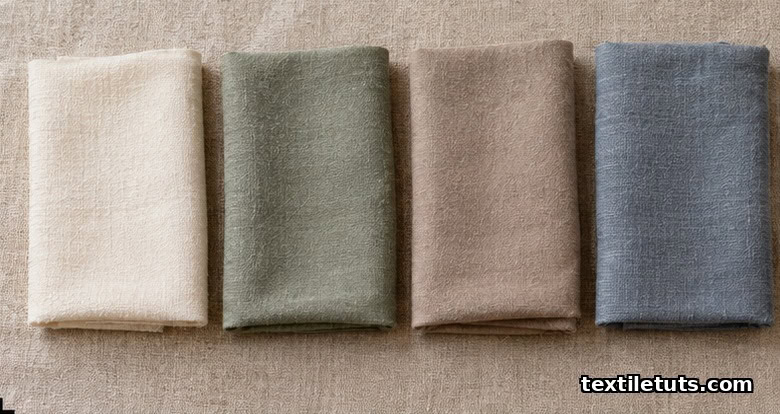
Viscose/Rayon: The standard regenerated cellulose fabric — the most common type, used extensively in clothing linings, dresses, blouses, and budget-friendly fashion. It wrinkles easily, shrinks if washed incorrectly (3–7% on first wash), and loses 30–50% of its dry strength when wet. Most “silk” products sold at retail are actually viscose rayon.
High-Wet-Modulus (HWM) Rayon: An improved version of viscose with significantly stronger wet performance and better dimensional stability. Often labeled as “modal” or “polynosic,” HWM rayon can withstand machine washing better than regular viscose and maintains its shape more reliably over time.
Modal: HWM rayon made exclusively from beech wood — the beech tree’s long cellulose fibers produce a notably softer, finer fabric with 50% greater wet strength than regular viscose. Modal is dimensionally stable, meaning it resists shrinking and stretching through repeated wash cycles. It uses 10–20 times less water than cotton production, making it a relatively sustainable choice among semi-synthetics. Modal pills less than cotton due to lower surface friction, and it can be tumble-dried without damage.
Lyocell: The most advanced rayon type, produced with NMMO solvent technology. Tencel is the primary commercial brand name (trademarked in 1992 by Courtaulds Fibres; Lenzing AG became the largest producer at 130,000 tonnes annually by 2015). Lyocell is fully biodegradable, produces vibrant colors when dyed, drapes exceptionally well, and is 50% more absorbent than cotton with a longer wicking distance than modal. It can be machine washed or dry cleaned.
Bamboo Rayon: Technically viscose made from bamboo pulp — it uses the same carbon disulfide process as regular viscose, contrary to marketing claims of “eco-friendly” bamboo fabric. Bamboo linen (mechanically processed) is different and more sustainable, but most bamboo textile products are bamboo rayon. Only bamboo lyocell (rare) offers the environmental benefits of the NMMO process.
Properties of Rayon: What Makes It Unique
Rayon’s performance characteristics stem from its cellulosic origin, which gives it properties distinct from both natural and synthetic alternatives:
- Drape: Excellent — hangs and flows like silk; heavier than cotton and with better liquid drape than most synthetics
- Breathability: Good — allows air circulation and heat escape; performs well in warm, humid climates
- Moisture absorption: High (13–15% moisture regain) — absorbs sweat efficiently but holds it, making wet rayon heavy and slow to dry
- Heat sensitivity: High — will scorch, brown, or melt under high iron heat; requires synthetic/nylon setting (below 150°C)
- Strength: Moderate when dry, significantly reduced when wet (30–50% loss) — handle wet rayon with the same care as fine silk
- Durability: Lower than cotton or polyester — pills over time, especially with friction; appearance retention is among the lowest of all fibers
- Dyeability: Excellent — takes dye readily and deeply, producing vivid, saturated colors; superior color brightness compared to most synthetics
- Static: Low — does not generate significant static electricity, reducing cling and dust attraction
- Biodegradability: Higher than cotton and significantly higher than polyester — rayon was found to be more biodegradable than cotton under controlled conditions
Common Uses for Rayon Fabric
Rayon’s silk-like aesthetics and affordable price point make it versatile across many textile applications:
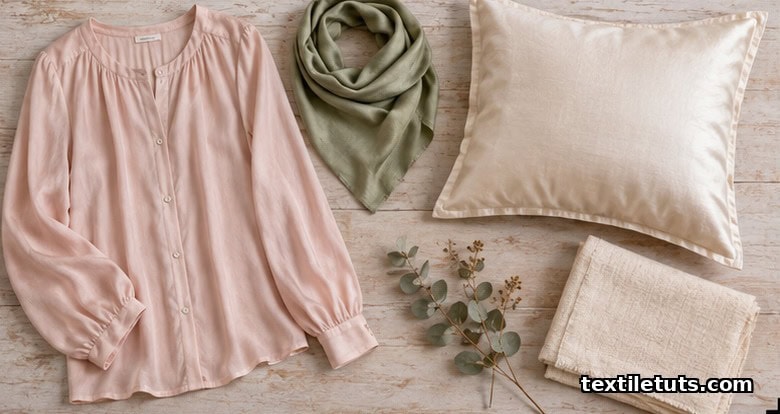
- Women’s dresses and blouses: Excellent drape for flowy silhouettes; vivid dye colors make it popular for prints and patterns
- Linings for jackets and coats: Smooth texture slides easily over other fabrics; low cost makes it economical for full-lining construction
- Activewear and loungewear: Modal blends are particularly popular — moisture-absorbing and soft against skin
- Bedsheets and home textiles: Lyocell increasingly popular for sheets due to temperature regulation and sustainability credentials
- Industrial applications: Tire cords, medical products, composite materials, and specialty papers
- Vintage clothing: 1930s–1960s fashion frequently used rayon — it was marketed as “art silk” and used in everything from stockings to evening gowns
Pros and Cons of Rayon
| Pros | Cons |
|---|---|
| Silk-like softness and drape at lower cost | Wrinkles easily — requires ironing or steaming |
| Excellent dye uptake — vivid, bright colors | Weakens 30–50% when wet — fragile when saturated |
| Breathable and comfortable in warm weather | High shrinkage (3–7%) if not pre-washed before sewing |
| Sustainable options available (lyocell — 99% solvent recovery) | Heat sensitive — scorches and melts at high temperatures |
| Versatile — can mimic cotton, silk, or wool textures | Pills with friction over time, reducing fabric lifespan |
| Good moisture absorption (13–15%) | Requires hand wash or delicate cycle — higher maintenance |
| More biodegradable than synthetic alternatives | Lowest elastic recovery of any fiber — stretches and doesn’t bounce back |
How to Care for Rayon: Washing, Drying, and Ironing
Rayon requires more attentive care than most mainstream fabrics because its wet strength is dramatically lower than its dry strength. The key principle: treat wet rayon with the same caution you would give a fine silk garment.
Washing
Hand wash in cold water with a gentle detergent specifically formulated for delicate fabrics. If machine washing is necessary, use the delicate or hand-wash cycle with cold water and place the garment inside a mesh laundry bag for protection against agitation. Never wring, twist, or scrub wet rayon — the fibers can tear or become permanently distorted. Instead, gently press water out by rolling the garment in a clean towel.
Drying
Lay rayon flat or hang to air dry away from direct sunlight, which can cause fading. Never tumble dry rayon — the combination of heat and mechanical agitation causes significant shrinkage, fiber damage, and distortion. Modal and lyocell are more tolerant of tumble drying (modal can be safely tumble-dried), but standard viscose rayon should never be exposed to mechanical heat drying.
Ironing
Iron on low heat — the “synthetic” or “nylon” setting on your iron (typically below 150°C / 300°F). Iron while the fabric is still slightly damp for best results, and always use a pressing cloth between the iron and the rayon to prevent shiny marks and scorching. Never use steam on rayon — the combination of moisture and heat can cause water spots, distortion, and permanent fabric damage. If no steam setting is available, use a dry iron with a pressing cloth.
Storage and Pre-Washing
Fold rayon garments rather than hanging them — the weight of the fabric causes shoulder stretching over time, particularly in structured tops. If you must hang rayon, use padded hangers. Always pre-wash rayon before sewing a garment: untreated rayon typically shrinks 3–7% on its first wash, which can ruin a DIY project if the fabric hasn’t been pre-washed and dried before cutting.
Rayon behaves like a fragile silk when wet — treat it with the same care you’d give a fine silk garment. The fabric’s beauty and drape are worth the extra attention to washing and drying instructions.
Frequently Asked Questions
Q: Is rayon a natural or synthetic fabric?
A: Rayon is semi-synthetic (regenerated cellulosic fiber). It originates from natural wood pulp (a natural material) but requires extensive chemical processing using solvents like carbon disulfide or NMMO to convert the cellulose into spinnable fibers. It is neither purely natural nor fully synthetic — the semi-synthetic classification reflects this dual origin.
Q: What is the difference between viscose, modal, and lyocell?
A: Viscose (also called rayon) is the original and most common type, produced using carbon disulfide — a toxic solvent that emits 250g of CS2 per kilogram of fiber produced, creating environmental and worker health concerns. Modal is a higher-quality viscose variant made exclusively from beech wood with better wet strength (50% stronger when wet) and dimensional stability, and uses 10–20 times less water than cotton. Lyocell (commonly known by the brand name Tencel) is the most sustainable option, produced using a closed-loop NMMO solvent that recycles 99% of chemicals and biodegrades without harmful byproducts. Lyocell is the strongest, most dimensionally stable, and most environmentally friendly of the three types.
Q: Does rayon shrink when washed?
A: Yes — regular viscose rayon can shrink 3–7% on first wash and may continue shrinking with repeated washing if not handled carefully. Modal has better dimensional stability and resists shrinking significantly better than standard viscose. Lyocell has minimal shrinkage due to its more stable fiber structure. Always hand wash cold or use delicate cycle, and air dry flat to minimize shrinkage. Pre-washing rayon before sewing is essential to prevent unexpected shrinkage in finished garments.
Q: Can you iron rayon fabric?
A: Yes — but only on low heat. Rayon scorches and can melt at high temperatures. Use the synthetic or nylon iron setting (below 150°C / 300°F), iron while slightly damp, and use a pressing cloth to prevent shiny marks and scorching. Never use steam on rayon — the moisture and heat combination can cause water spots, distortion, and permanent fabric damage. For best results, iron on the reverse side of the fabric.
References
- Wikipedia. (2024). Rayon. Wikipedia.
- Wikipedia. (2024). Lyocell. Wikipedia.
- Wikipedia. (2024). Modal (Textile). Wikipedia.
- Lenzing AG. (2024). Sustainability — Lenzing AG. Lenzing AG.
- Textile Exchange. (2024). Knowledge Center. Textile Exchange.


