
Textile Merchandising: Complete Guide to Sourcing and Costing

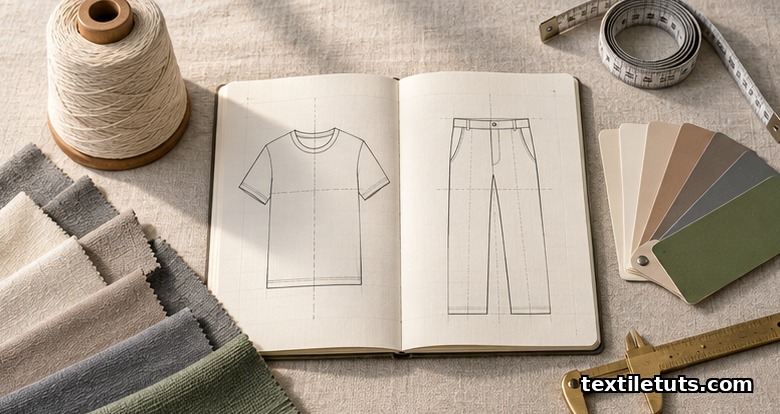
Textile merchandising is the end-to-end process of planning, sourcing, costing, and executing apparel and fabric orders, where the total FOB cost typically breaks down as 55–70% raw materials, 15–25% cut-make-trim labor, 5–10% factory overhead, and 5–15% gross margin, depending on fabric type, order volume, and country of origin.
That split is why a 5% swing in yarn price or a 3% swing in marker efficiency moves a buyer’s landed cost more than any negotiation tactic, and it is also why every merchandiser must be able to defend each cost line with a testable number rather than a quote.
This guide walks through the eight steps a textile merchandiser actually executes on the job, from supplier qualification and yarn sourcing through fabric consumption, cost-sheet build-up, sampling, and shipment, with the formulas, wastage allowances, and reference standards that hold up under audit.
What a Textile Merchandiser Actually Does
A textile merchandiser sits between the buyer (brand, retailer, or buying house) and the factory, translating a tech pack into a producible, profitable order. The role covers four overlapping functions:
- Sourcing: identifying and qualifying yarn suppliers, fabric mills, dye houses, and trim vendors.
- Costing: building the per-piece price from yarn count, GSM, marker efficiency, CMT labor, and overhead.
- Coordination: managing the sample development timeline from first proto through to pre-production sample.
- Execution: tracking production from fabric knit-down through cutting, sewing, finishing, and shipment.
In a composite knit factory (knitting, dyeing, cutting, sewing, finishing under one roof), the merchandiser coordinates four internal departments plus external yarn, trim, and accessories vendors. In a CMT unit, the role is narrower: the merchandiser receives buyer-supplied fabric and trims and only prices the labor portion.
Step 1: Sourcing Yarn and Fabric Suppliers
Sourcing decisions drive 60–70% of the final garment cost, which is why the supplier shortlist is built before any price negotiation begins. A merchandiser typically grades each candidate on four filters:
- Capability match: machine type (e.g., circular knitting vs. warp knit vs. shuttle weaving), gauge, and diameter limits.
- Certification status: ISO 9001:2015 (quality management), ISO 14001:2015 (environmental management), and buyer-specific compliance such as OEKO-TEX Standard 100 or GOTS.
- Capacity and lead time: monthly output in kg or pieces, plus realistic lead time on a 5,000–50,000 piece order.
- Cost competitiveness: yarn price per kg, knitting or weaving charge per kg, dyeing/finishing charge per kg.
For a basic 160 GSM single jersey T-shirt order, the yarn-side decision tree typically starts with ring-spun cotton vs. open-end vs. compact yarn. Ring-spun 30 Ne cotton at a knitting width of 30 inches and a fabric GSM target of 160 produces a finished yield of roughly 2.05–2.20 meters per kg, while open-end 24 Ne at the same GSM produces closer to 2.40–2.55 meters per kg. The price gap between these yarns (often $0.20–$0.50 per kg) is one of the largest single cost levers in the entire order.
Step 2: Costing Methods Used in the Industry
Three costing formats dominate the apparel trade. The right one depends on who supplies what.
| Costing Method | Who Supplies Fabric | What the Buyer Pays For | Typical Use |
|---|---|---|---|
| FOB | Factory | Fabric + CMT + overhead + margin | Bulk orders, brand-direct programs |
| CMT (Cut, Make, Trim) | Buyer | Labor only | Fabric-restricted buyers, MOQ-flexible runs |
| LDP (Landed Duty Paid) | Factory | All-in cost including freight and duty | FOB contracts converted for landed cost comparison |
The full FOB cost build-up for a knit T-shirt typically follows this structure:
- Yarn cost: yarn price per kg × yarn kg per dozen pieces.
- Knitting charge: per kg rate, including wastage allowance of 2–4%.
- Dyeing and finishing charge: per kg or per meter, plus 3–6% process loss on knit fabric and 2–4% on woven.
- Trims and accessories: thread, labels, interlining, buttons, zippers, hang tags, poly bags.
- CMT (cutting, sewing, trimming): per piece rate set against the SAM (standard allowed minutes) for the style.
- Overhead: factory power, rent, supervisory staff, typically loaded as a percentage on direct labor.
- Profit margin: 5–15% depending on volume and relationship.
For woven shirts, the fabric cost calculation uses the same logic but starts from ends per inch (EPI) and picks per inch (PPI) multiplied by yarn count to derive GSM, which then drives fabric consumption in meters per dozen garments.
Step 3: Calculating Fabric Consumption
Fabric consumption is the single most contested number in any cost sheet, because every percentage point of saving or waste goes straight to the bottom line. The formula for a knit garment is straightforward:
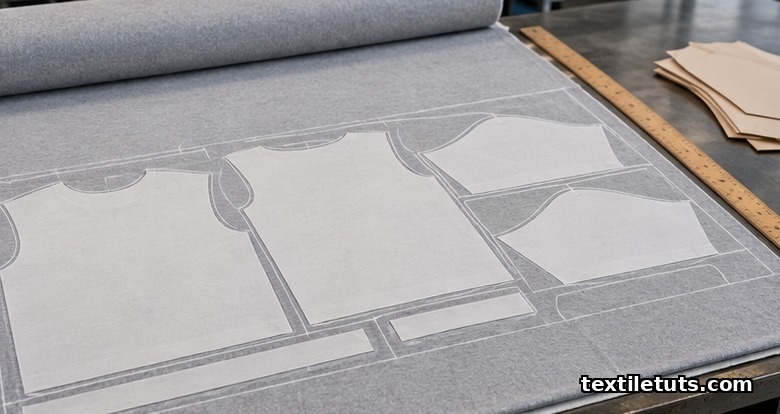
Fabric consumption (m per dozen) = (Body length + Sleeve length + Allowance) × Width of marker × 12 / (Yield in m per kg × 1000) × GSM factor
In practice, the merchandiser builds a marker on CAD software, nests all pattern pieces, and reads off the marker length in meters for a dozen or a gross garments. Marker efficiency for a well-planned knit T-shirt layout runs 85–90%; for a complex woven shirt with checks that need to match across seams, 78–84% is more typical.
Standard process-loss allowances merchandisers apply on top of marker consumption:
- Knitting wastage: 2–4% (yarn breakage at creel, end breaks).
- Dyeing and finishing shrinkage: 5–8% on greige to finished for cotton knit; 3–5% for woven cotton.
- Cutting room wastage: 1–3% depending on marker layout and fabric width.
- Rejection and replacement: 2–3% extra to cover inspection rejects at the sewing line.
For a 200-piece sample run, these allowances are sometimes doubled because process loss on small lots is mechanically higher.
Step 4: Quality Standards and Lab Testing
Before any order ships, the fabric and the finished garment must pass a quality panel. The most commonly referenced standards in cotton knit and woven programs are:

- ASTM D3776/D3776M: Standard Test Methods for Mass Per Unit Area (Weight) of Fabric, the method used to verify fabric GSM.
- ASTM D1907 / D1907M: Standard Test Method for Linear Density of Yarn (Yarn Number by the Skein Method), the basis for verifying Ne, Tex, and denier claims.
- AATCC Test Method 8: Colorfastness to Crocking, the standard rub-fastness test most buyers specify at grade 4 dry and grade 2–3 wet minimum.
- AATCC Test Method 61: Colorfastness to Laundering, the accelerated wash-fastness test that simulates multiple home laundries.
- ISO 9001:2015: Quality management systems requirements, the baseline certification most mills and factories hold.
Bulk fabric is inspected against 4-point or 10-point systems (most buyers specify 4-point for knits and 10-point for woven), with AQL (Acceptable Quality Level) tables from ISO 2859-1 governing the sampling plan. A typical buyer-side cut panel inspection uses AQL 2.5 for major defects and AQL 4.0 for minor.
Step 5: Sampling Cycle and Order Confirmation
Sampling is where most timing slips happen. A standard buyer-supplier sampling cycle has six stages, each with its own lead time:
- Development sample (DS): 7–10 days. Confirms fabric and styling direction.
- Proto sample: 10–14 days. First sewn sample from production fabric.
- Fit sample: 7–10 days. Confirmed fit after any pattern corrections.
- Pre-production sample (PPS): 10–14 days. Made from bulk fabric, in bulk colors, at the bulk factory.
- Size set sample (SSS): 5–7 days. One full size run for buyer approval.
- Top of production (TOP) sample: 3–5 days. Pulled from the first 50–100 pieces off the line.
The merchandiser’s job is to compress this cycle where possible without skipping any stage, because each sample exists to catch a specific class of error. Skipping the size set, for example, often surfaces as a grading problem two weeks after the line is running.
Step 6: Negotiating Price Without Killing Margin
Price negotiation is where a cost sheet meets commercial pressure. The most effective negotiators defend their numbers line by line rather than offering a flat percentage off. Three techniques that consistently work:
- Bundle volume: tying a smaller-margin item to a larger-margin one in exchange for a price concession.
- Lock yarn first: agreeing on yarn price and quantity before negotiating CMT, since yarn is the larger lever.
- Offer payment-term trade-offs: a 10% price concession in exchange for 30% advance payment instead of the standard 30-day terms.
Buyers should avoid asking for a percentage discount without identifying where the saving comes from, because the factory will absorb it across the trims or the labor rate, and the resulting garment often fails inspection.
Step 7: Order Execution and Shipment
After the pre-production sample is approved and the order is confirmed, the merchandiser issues a purchase order that locks fabric, trims, CMT rate, and delivery date. A typical 90-day execution timeline breaks down as:

- Days 1–15: yarn procurement and knitting.
- Days 15–35: dyeing and finishing.
- Days 35–55: cutting and sewing.
- Days 55–75: finishing, inspection, and packing.
- Days 75–90: shipment, including final QA, container loading, and export documentation.
For shorter lead times (30–45 days), the factory typically stocks greige fabric or holds yarn commitments for known buyers. Lead-time compression below 30 days almost always requires air shipment and a premium of 40–80% over sea freight.
Frequently Asked Questions
Q1: What is the difference between textile merchandising and apparel merchandising?
Textile merchandising covers the entire fabric-and-apparel pipeline, from yarn sourcing through finished garment shipment. Apparel merchandising is a narrower role that begins at the fabric stage and focuses on style, fit, and production coordination. In practice, both terms are used interchangeably for knit and woven garment programs, but textile merchandising is the broader discipline.
Q2: How do you calculate fabric consumption for a T-shirt?
Build a CAD marker with all pattern pieces nested, read the total marker length in meters, divide by the number of pieces in the marker, and multiply by 12 to get consumption per dozen. Then add 7–12% process loss for knitting, dyeing, and cutting combined. A 160 GSM single jersey men’s medium T-shirt typically consumes 1.35–1.55 meters per piece before wastage.
Q3: What is a fair profit margin for a garment factory?
Net margins in apparel manufacturing globally average 3–7% on FOB price for established factories and 1–4% for new entrants. A 5–15% gross margin is consistent with a healthy order book, but net margin is lower after overhead, financing costs, and rejection claims. Buyers pushing for margins below 2% net should expect capacity constraints during peak season.
Q4: Which costing method should a new buyer use first?
CMT costing is the right starting point for new buyers, because the supplier quotes labor only and the buyer controls fabric and trims. This lets the buyer build fabric sourcing experience before taking on full FOB responsibility. Once the buyer has stable supplier relationships and predictable volumes, FOB costing typically delivers 8–15% lower landed cost through volume bundling.
Q5: How do you handle a fabric quality rejection after production has started?
Document the defect with photographs, lab test results (GSM, shrinkage, colorfastness), and the inspection report. Issue a formal rejection note within 48 hours, hold production, and negotiate either replacement at supplier cost or a price concession tied to the defect class. For systematic defects (more than 5% of inspected pieces), the supplier typically agrees to a 10–20% price concession or a full replacement lot.
References
- International Organization for Standardization. ISO 9001:2015 Quality management systems — Requirements. iso.org — Baseline quality management certification required by most apparel buyers.
- International Organization for Standardization. ISO 14001:2015 Environmental management systems — Requirements with guidance for use. iso.org — Environmental management certification referenced in vendor qualification.
- ASTM International. ASTM D3776/D3776M Standard Test Methods for Mass Per Unit Area (Weight) of Fabric. astm.org — The reference method for fabric GSM verification.
- ASTM International. ASTM D1907/D1907M Standard Test Method for Linear Density of Yarn (Yarn Number by the Skein Method). astm.org — Standard for verifying yarn count claims on the invoice.
- American Association of Textile Chemists and Colorists. AATCC Technical Manual, Test Method 8 (Colorfastness to Crocking) and Test Method 61 (Colorfastness to Laundering). aatcc.org — The wash and rub fastness standards most buyer QC panels reference.
- Khan, R., & Khan, H. Textile Merchandising: A Practical Guide to Sourcing, Costing and Order Execution. Springer Open — Peer-reviewed treatment of costing methods and supplier management.
- International Organization for Standardization. ISO 2859-1 Sampling procedures for inspection by attributes. iso.org — The AQL table basis for cut-panel and final inspection plans.
This article is the working reference for textile merchandising sourcing and costing. Editorial by Mohammad Yousuf (Anik), TextileTuts. Sources: ISO 9001:2015, ISO 14001:2015, ISO 2859-1, ASTM D3776/D3776M, ASTM D1907/D1907M, AATCC TM 8, AATCC TM 61, and Khan and Khan (Springer Open) as cited.


