
Japanese Denim: Why It’s Premium

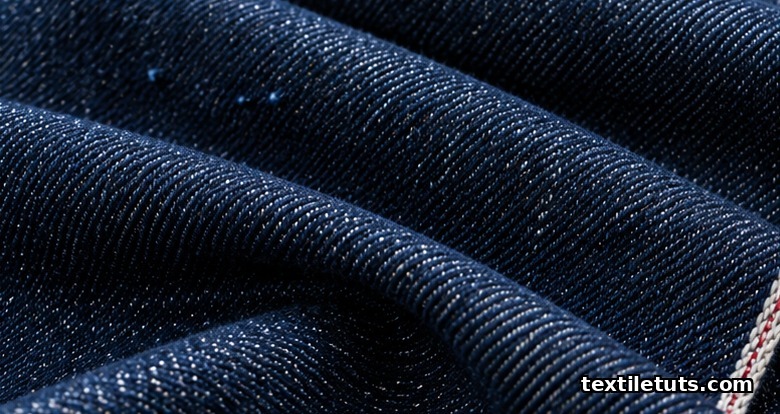
Japanese selvedge denim is woven on vintage shuttle looms at roughly 30 picks per minute (vs. 200+ on modern projectile looms), producing a ~32-inch self-edged fabric that tightens the weave, lifts tear strength, and gives the denim its characteristic high-contrast fade.
That slower pace, combined with rope-dyed indigo and heavier yarn weights (typically 12 to 18 oz/yd²), is the starting point for what makes Japanese denim command 2 to 4 times the price of commodity denim.
Below, we walk through the manufacturing variables, dye chemistry, and loom mechanics that distinguish mills such as Kuroki, Kaihara, and Nihon Menpu, then answer the questions buyers and denim-curious readers ask most.
What “Japanese Denim” Actually Means
The label covers two distinct things. First, it describes denim woven on traditional Toyoda G3 or G4 shuttle looms, the same machines Toyota Industries manufactured starting in the 1950s. These looms were once standard in the US (Levi’s used them until the 1980s) but were abandoned elsewhere in favor of wider, faster projectile and air-jet looms.
Japanese mills kept them running, and the small mills of Okayama Prefecture (the “Japan denim capital”) now produce most of the world’s premium selvedge denim.
Second, “Japanese denim” generally implies raw, unwashed fabric (“rigid” or “dry” denim) with rope-dyed indigo yarns. The two are linked: shuttle weaving leaves a tightly bound selvedge that is tough to dye uniformly after the fact, so mills dye first and wash later.
The Shuttle Loom Advantage
A shuttle loom carries a single weft yarn on a shuttle that travels across the warp, then returns to insert the next pick. This creates the selvedge, a “self-edge” where the weft yarn binds back into the fabric.
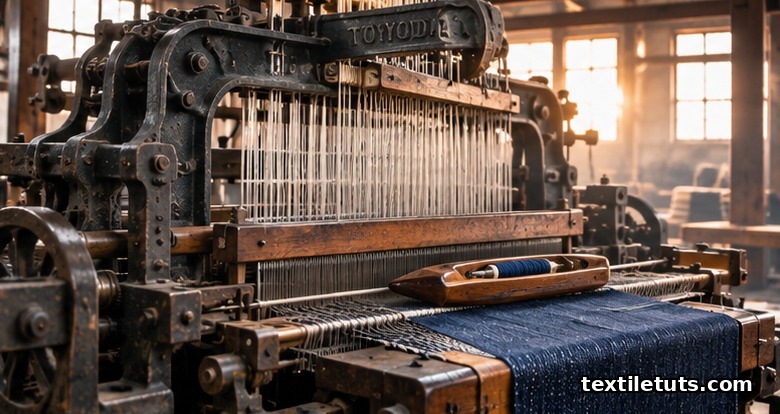
Modern projectile looms, by contrast, fire short weft yarns across the warp at high speed. They are faster and produce wider fabric (60+ inches vs. the shuttle loom’s ~32 inches), but they cannot create a true selvedge.
Why the selvedge matters in practice:
- The selvedge is a dense, mechanically locked edge that resists fraying without an overlock stitch.
- Garments cut from selvedge fabric often keep a visible ID stripe on the outseam, a marker denim enthusiasts use to verify authenticity.
- The narrower 32-inch width forces a denser weave structure, which typically yields higher tear strength (measured by ISO 13937-1, the ballistic pendulum / Elmendorf method) than broad-loom denim of comparable yarn count.
The trade-off is yield: a single 32-inch panel becomes one pant leg, so a pair of selvedge jeans consumes roughly 2× the loom output of a wide-loom equivalent.
Indigo Dyeing: Rope vs. Slasher
Indigo’s blue is a function of how the dye sits on cotton, and indigo’s chemistry is unusual. Unlike reactive dyes that form covalent bonds with cellulose, indigo is a vat dye that sticks to the fiber through hydrogen bonding and weak intermolecular forces after oxidation in air.
That weaker bond means indigo rubs off (you have probably seen blue on white sneakers). It also means denim fades with wear, because each wash removes a small fraction of unbound dye.
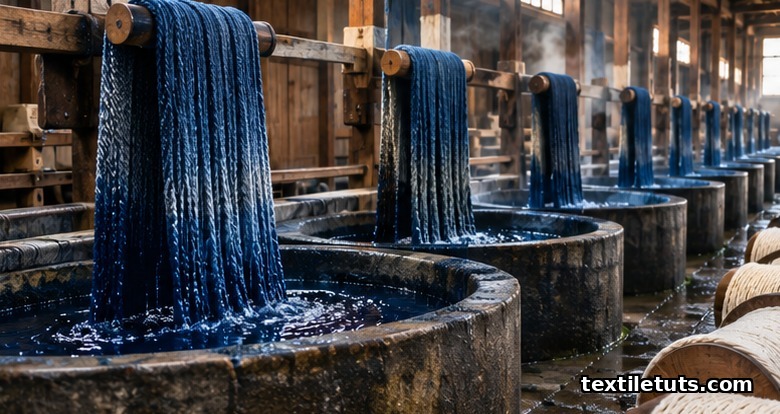
Japanese mills use rope dyeing for premium denim, a process where warp yarns are grouped into ropes, dipped into an indigo vat, exposed to air for re-oxidation, then dipped again. Most mills run 6 to 12 dips; heavy “natural indigo” denim can run 14 to 20 dips to reach the deep black-blue shades dyed with fermented Polygonum tinctorium.
Compare this to the slasher dyeing used on most commodity denim: yarns pass through an indigo bath in sheet form, typically 2 to 4 dips. Slasher dyeing saturates the outer fiber but leaves a paler core, which is why commodity denim fades to a much lighter shade faster.
Rope dyeing penetrates the yarn more evenly, allowing the white core to stay intact and produce a sharper contrast as surface dye wears away over years.
Yarn Count and Weight
Premium Japanese denim typically falls between 12 and 18 oz/yd², measured by ASTM D3776. By comparison, standard US denim from the 1990s ran 10 to 13 oz/yd².
Higher weight means more cotton per unit area and a denser weave, which produces:
- Better shape retention through repeated washes.
- Slower indigo loss on the surface, giving a longer “life” to the dark color.
- Higher tensile strength (ASTM D5034, the grab test) per unit width.
Cotton origin matters as well. Kuroki Mill, the largest in Okayama, blends Texas cotton (longer-staple fibers that produce smoother, stronger yarns) into its premium lines.
Mills disclose fabric weight using English cotton count (Ne), which is the inverse of the yarn’s linear density. A 7 Ne yarn is heavier than a 10 Ne yarn at the same twist level.
The Mill Cluster in Okayama
Most premium selvedge denim is woven in or around Okayama Prefecture, especially the towns of Kojima and Ibara. The table below summarizes the major players and their focus areas.
| Mill | Founded | Known for |
|---|---|---|
| Kaihara | 1893 (Kurashiki) | Rope-dyed indigo, multi-dip shade ranges; supplier for many Japanese and European brands |
| Kuroki | 1950 (Nihon) | Heavyweight slub, Texas-cotton blends, natural indigo lines |
| Nihon Menpu | 1919 (Ibara) | Selvedge denim and technical finishes (stretch, coated variants) |
| Collect | 1980 (Kojima) | Specialty weights and color-blended wefts |
| Ishikawa | 1954 | Cone-dyed indigo and vintage shirting denims |
What is often missed in the marketing copy: these mills contract for global brands. Kaihara, for example, supplies both Japanese heritage labels and a substantial share of the European selvedge market.
Why the Price Is Higher
A breakdown of the cost drivers, not the mystique:
- Throughput. Shuttle looms run at roughly 30 picks per minute; modern looms exceed 200. Output per worker-hour drops sharply on shuttle equipment.
- Width. 32 inches per panel means more loom time per finished garment.
- Dye cycles. 6 to 12 indigo dips take time, water, and chemicals that scale roughly linearly with dip count.
- Labor and inspection. Japanese mills typically inspect fabric on both sides, often manually, before shipping.
- Low lot sizes. Premium Japanese denim runs in lots measured in thousands of meters per color, not tens of thousands.
These costs land in the $40 to $80 / meter range for premium selvedge denim, vs. $5 to $15 / meter for commodity denim.
How to Identify Authentic Japanese Selvedge
Three quick checks before you buy:
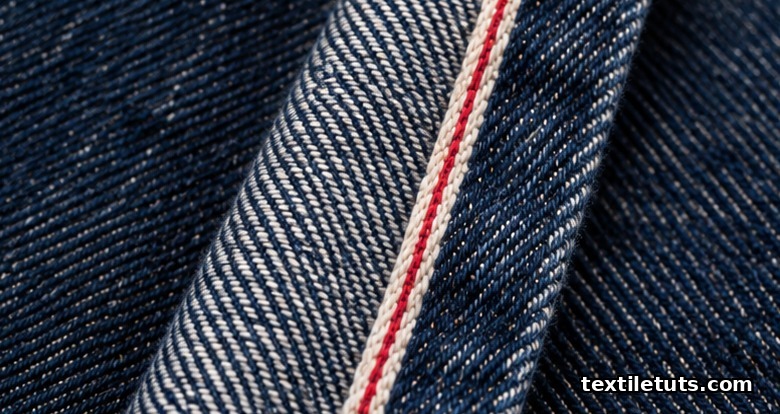
- Inspect the outseam. A real selvedge has a tight, woven edge that may carry a colored stripe (often red, yellow, or green) flush with the seam. A folded-and-stitched edge on commodity denim does not show the same weave structure when unfolded.
- Check the back pocket and arcuate. Many Japanese mills include a printed pocket bag or interior selvedge ID that matches the outseam color, a mill signature consumers can verify on the maker’s reference page.
- Verify the weight and dye. Anything under 12 oz/yd² marketed as “premium selvedge” is unusual. Weight should appear on the mill tag or product page; crock fastness should be at least grade 3 to 4 on AATCC TM8.
Counterfeits exist, especially online. Buyers who source selvedge by brand name alone are more vulnerable to false claims than those who verify fabric specs first.
Frequently Asked Questions
Is Japanese denim actually better than US denim?
Not in absolute terms. Japanese denim excels on slow-loom selvedge, rope-dyed indigo, and heavyweight yarns. US denim covers a wider range of weight, finishes, and price points. A side-by-side wear test on two pairs at the same weight typically shows comparable tensile strength, but the Japanese pair fades with higher contrast because the rope-dyed indigo retains a paler core longer.
What is “selvedge” actually?
Selvedge (or “self-edge”) is the tightly woven edge of fabric produced when a shuttle loom binds the weft back into the warp at the end of each pick. It resists fraying and creates the visible ID stripe that denim enthusiasts look for on the outseam.
Why is Japanese denim so expensive?
Cost drivers are throughput (shuttle looms run ~30 picks/min vs. 200+ on modern looms), fabric width (~32 inches vs. 60+), dye-cycle count (often 8 to 14 dips vs. 2 to 4), and low lot sizes. Combined, premium Japanese selvedge denim lands in the $40 to $80/meter range, vs. $5 to $15/meter for commodity denim.
How long do Japanese denim jeans last?
With daily wear and bi-monthly washing, a well-made Japanese selvedge pair typically shows controlled fading for 4 to 6 years before crotch blowout or knee failure. The number varies with weight (heavier denim lasts longer) and with care (frequent hot-wash cycles shorten life).
Does raw Japanese denim shrink?
Yes. Unsanforized Japanese selvedge typically shrinks 3 to 5% in the warp and 2 to 4% in the weft after the first warm soak. Buyers commonly size up by one to two inches in the waist and soak the jeans before the first wear to lock in the fit.
References
- ISO. ISO 13937-1: Tear properties of fabrics — Part 1: Ballistic pendulum method (Elmendorf). iso.org — international tear-strength test method used to compare selvedge and broad-loom denim.
- ASTM International. ASTM D3776 / D3776M-20: Standard Test Methods for Mass Per Unit Area (Weight) of Fabric. astm.org — basis weight test method applied to denim weight claims.
- ASTM International. ASTM D5034-21: Standard Test Method for Breaking Strength and Elongation of Textile Fabrics (Grab Test). astm.org — tensile-strength test method commonly cited in denim specification sheets.
- AATCC. AATCC Test Method 8: Colorfastness to Crocking. aatcc.org — rubbing fastness test used to grade indigo crocking on denim.
- Paul, R. (Ed.). Denim: Manufacture, Finishing and Applications. Woodhead Publishing (Elsevier), 2015. sciencedirect.com — peer-reviewed chapter collection covering shuttle weaving, indigo chemistry, and finishing.
- Bechtold, T. and Mahmud-Ali, A. “Indigo Dyeing on Cotton: Vat Chemistry and Wash-Fast Behavior.” researchgate.net — peer-reviewed summary of vat-dye reactivity and wash-fast behavior on cotton.
- Cook, J. G. (revised editor). Natural and Synthetic Indigo: Comparative Dye Chemistry. Springer Nature, in Handbook of Natural Colorants. springer.com — historical and chemical background on natural and synthetic indigo dyeing routes.
Editorial by Shahrukh Islam, TextileTuts. Sources: ISO 13937-1, ASTM D3776, ASTM D5034, AATCC TM8, Woodhead (Elsevier) denim chapters, ResearchGate indigo review, Springer Handbook of Natural Colorants as cited.


