
Drape Construction: Cowl, Waterfall

A cowl drape is constructed by attaching a fabric panel that measures 1.5 to 2.5 times the bodice neckline circumference to the neckline seam, allowing the surplus length to fall in vertical folds whose depth is governed by the fabric’s bending length, typically 15 to 25 mm for rayon challis and 35 to 45 mm for midweight wool crepe when measured under ASTM D1388.
This surplus length relative to the anchor seam produces the characteristic cascading folds at the front or back of a garment. A waterfall drape layers successive fabric tiers offset from each other to mimic falling water, requiring 2 to 4 panels of graduated length stitched along a curved seam. Both constructions depend on fabric drape coefficient (measured per Cusick’s 1968 method) and bending rigidity, so fiber content, yarn twist, and fabric weight determine the final silhouette on the body.
Below you will find the engineering behind each drape type, the measurable fabric properties that predict fold behavior, and the pattern and sewing steps that turn a flat panel into a controlled fold pattern.
What Is a Cowl Drape?
A cowl is a draped neckline in which a length of fabric hangs from a single seam at the shoulders or back, gathering into soft vertical folds below the anchor point. The construction has been documented in patternmaking manuals since the early 20th century and appears in eveningwear, knit tops, and bias-cut dresses. Two configurations dominate: the symmetric center-front cowl, where folds fall evenly left and right of a central axis, and the asymmetric cowl, where the drape pulls to one side or shoulder for an off-center effect.
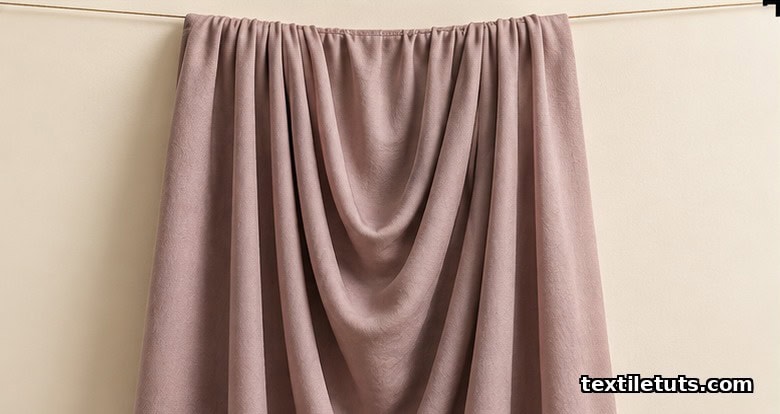
The fold depth in a cowl depends on three measurable variables: the ratio of fabric length to neckline circumference, the fabric’s bending length (the length of fabric that bends under its own weight to a defined angle on a horizontal plane), and the fabric’s drape coefficient, which is the percentage of a circular fabric sample that hangs below a horizontal pedestal in the Cusick drape test. Lower drape coefficients, in the 30 to 60% range, correspond to softer folds that collapse into a fluid line. Higher values above 70% correspond to stiffer folds that hold their shape rather than collapsing.
What Is a Waterfall Drape?
A waterfall drape, also called a cascade or tiered ruffle drape, constructs the appearance of falling water by layering fabric panels of graduated length along a curved or diagonal seam. Each successive tier extends below the previous one by 5 to 15 cm, and the seam curve can run vertically down the bodice, across the shoulder, or diagonally from neckline to hem. The effect resembles the stepped flow of a waterfall because each layer reveals the next beneath it, with the lowest tier typically extending 50 to 60 cm below the upper anchor point.
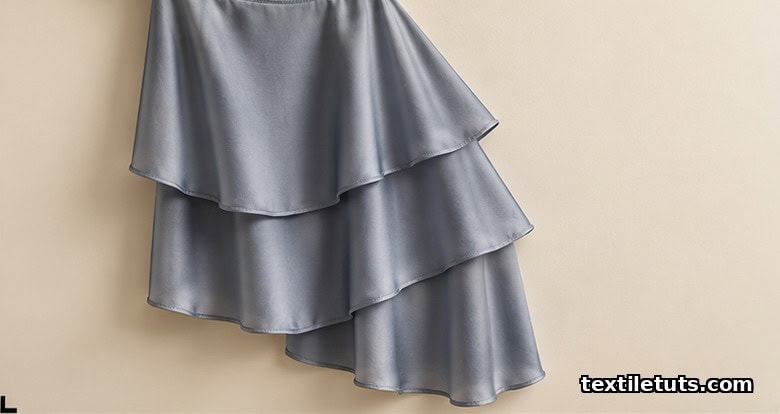
Waterfall construction is common on cardigans, wrap dresses, and bolero jackets. Unlike a cowl, the waterfall does not depend on a single high-tension anchor seam. Instead, each tier is sewn flat to the garment, and the cascading effect emerges from the offset of layered hems. The technique works on fabrics with bending lengths between 15 and 30 mm, a range that includes viscose jersey, silk habotai, and lightweight wool crepe. Heavier fabrics with bending lengths above 40 mm produce tiered hems that stand away from the body rather than cascading.
Fabric Selection for Drape Construction
Fabric selection determines whether a cowl falls in slinky folds or stands in sculptural pleats. The most relevant measurable properties are drape coefficient, bending length, and areal density (fabric weight in grams per square meter).
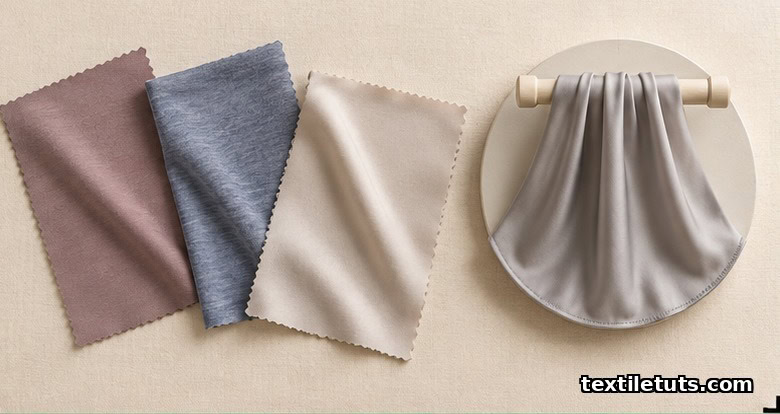
For drapey cowls and fluid waterfalls, textile engineers typically select fabrics in the following range:
- Drape coefficient: 30 to 60% on the Cusick test using a 30 cm sample diameter
- Bending length: 10 to 30 mm per ASTM D1388 cantilever method
- Fabric weight: 80 to 180 g/m²
- Bias stretch: at least 15% elongation at a 30 N load
Fabrics outside these ranges produce different effects. A wool gabardine with a bending length above 50 mm produces a stiff cowl that holds a sculptural shape rather than collapsing into soft folds. A 30 g/m² silk chiffon produces a fluid drape that clings to the body and reveals the underlayer, often requiring a separate lining or undergarment. Knit jerseys with 50 to 80% elongation across the grain produce the deepest cowls because the fabric recovers elastically and collapses into many small folds rather than fewer large ones.
Yarn twist also influences drape. High-twist yarns (above 30 twists per inch in cotton equivalents) produce fabrics with higher bending rigidity and lower drape coefficients at any given weight, so loose-twist filament yarns such as those used in rayon challis produce more fluid folds than ring-spun staple yarns of the same weight.
Pattern Drafting and Cutting
A standard cowl front pattern is drafted by adding 15 to 25 cm to the center-front length of the bodice at the neckline, then drawing a smooth curve from the shoulder seam to the center-front waist that intersects the neckline at the desired fold depth. The fold depth, in cm, is approximately equal to one-fifth of the added length on lightweight rayon challis and one-third of the added length on midweight crepe, because stiffer fabrics hold their folds with less surplus length.
For a waterfall drape, the pattern is drafted as a series of curved tiers. Each tier is cut as a separate piece, with each lower tier 5 to 15 cm longer than the one above it. The seam curve determines whether the waterfall runs vertically, diagonally, or across the shoulder. A common draft uses a 60 cm vertical seam with three tiers at 20 cm, 35 cm, and 50 cm finished lengths, producing a 50 cm cascade below the upper anchor point.
Cutting on the bias grain at 45 degrees to the warp and weft increases drape and fold depth by 20 to 40% compared with cutting on the straight grain, because the bias direction has the lowest bending rigidity in most woven fabrics. Bias-cut cowls require a separate lining cut on the same bias to prevent the outer layer from stretching out of shape during wear and washing.
Sewing Techniques
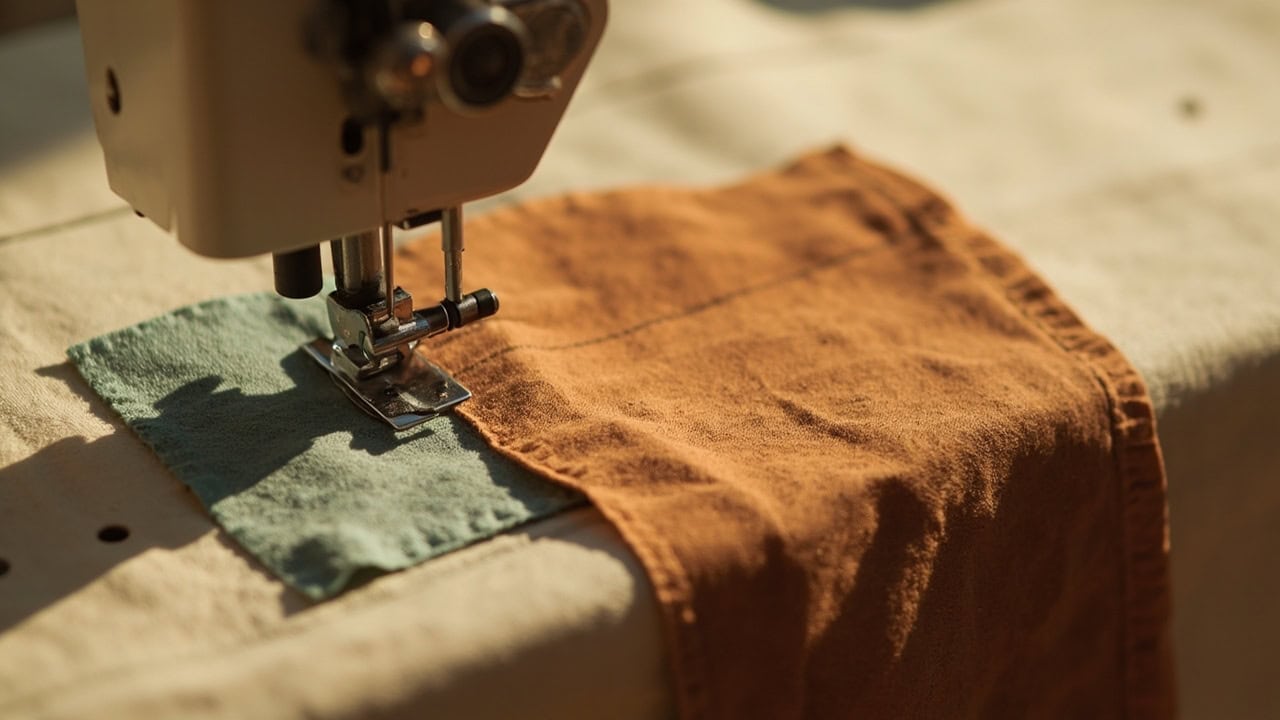
Cowl construction begins by finishing the neckline seam with a narrow rolled hem or bias binding to prevent the fold from catching on the seam allowance. The cowl panel is then pinned to the bodice neckline with the right sides together, distributing the excess length evenly along the seam. The seam is sewn at 1 cm, or 1.5 cm for heavier fabrics, with a stretch stitch on knits or a straight stitch at 2.5 mm stitch length on wovens. A walking foot is recommended for slippery fabrics such as silk crepe de chine to prevent layer shifting.
After the cowl seam is sewn, the seam allowance is graded and pressed toward the bodice. The hem of the cowl is finished with a narrow rolled hem on lightweight fabrics or a 2 cm double-turned hem on midweight fabrics. Some designers topstitch the cowl fold line 2 mm from the seam to keep the fold in place during wear, using a 3.5 mm straight stitch with matching thread.
Waterfall construction stitches each tier to the bodice along a curved seam, with the seam allowance clipped at 2 cm intervals on convex curves and notched on concave curves to allow the seam to lie flat. Tier hems are rolled or serged depending on fabric weight, and the lowest tier is usually finished with a 2.5 cm double-turned hem for added weight and stability. Pressing each tier with a damp cloth and moderate heat sets the fold direction before the next tier is attached.
Cowl vs. Waterfall: Side-by-Side Properties
| Property | Cowl Drape | Waterfall Drape |
|---|---|---|
| Anchor construction | Single neckline seam with excess fabric | Multiple curved tier seams |
| Fabric ratio to anchor | 1.5× to 2.5× neckline circumference | 2 to 4 tiers of graduated length |
| Typical fabric weight | 80 to 180 g/m² | 70 to 160 g/m² |
| Bending length (ASTM D1388) | 15 to 30 mm | 15 to 30 mm |
| Drape coefficient (Cusick) | 30 to 60% | 40 to 65% |
| Best fabric types | Rayon challis, silk crepe, knit jersey | Silk habotai, viscose jersey, lightweight wool crepe |
| Fold direction | Vertical, anchored at neckline | Cascading, anchored along curved seam |
| Lining required (bias cut) | Yes, on bias-cut versions | Sometimes, for transparency |
| Pattern complexity | Low (one panel) | Moderate (2 to 4 tier panels) |
Frequently Asked Questions
What is the best fabric for a cowl neck drape?
Rayon challis, viscose jersey, and silk crepe de chine produce the deepest, softest cowls because their bending lengths fall between 15 and 25 mm and their drape coefficients range from 35% to 55% on the Cusick test. Avoid stiff fabrics with bending lengths above 40 mm, such as heavy linen or wool gabardine, because they hold their shape rather than collapsing into slinky folds.
How much extra fabric does a cowl need?
A standard cowl uses 1.5 to 2.5 times the neckline circumference in fabric length to produce visible folds. A 50 cm neckline therefore requires 75 to 125 cm of cowl panel length measured along the fold axis. The exact ratio depends on fabric stiffness, with lighter fabrics needing more excess to fold and stiffer fabrics needing less.
Can a waterfall drape be sewn on a knit fabric?
Yes. Lightweight knit fabrics with at least 50% cross-grain elongation, such as viscose jersey or modal knit, work well for waterfall construction because they conform to the curved seam without distortion. Use a stretch or narrow zigzag stitch at 0.5 mm width and 2.5 mm length on the seam and finish the tier hems with a coverstitch or serged rolled hem to prevent curling.
How do I prevent a cowl from sagging during wear?
Interface the neckline seam with a 2 cm strip of fusible stay tape or lightweight weft insertion to distribute the weight of the drape across the shoulders. On bias-cut cowls, attach the cowl to a lining at the neckline seam only, leaving the body of the cowl unattached so the lining carries the weight without restricting the drape movement.
What is the difference between a cowl and a surplice?
A cowl is a single piece of fabric gathered or pleated at the neckline that falls in folds below the anchor seam. A surplice is a wrap-style closure where two fabric panels cross over each other at the front and are secured at the waist or side seam. The two constructions can be combined, with a surplice top with a cowl neckline producing a draped V at the front bodice.
References
- Cusick, G.E. (1968). The Measurement of Fabric Drape. Journal of the Textile Institute, 59(6), 253–260. — Original paper introducing the drape coefficient method using a circular fabric sample on a horizontal pedestal.
- ASTM D1388-18. Standard Test Method for Stiffness of Fabrics. ASTM International. — Cantilever test procedure for bending length and flexural rigidity in woven and knitted fabrics.
- ISO 9073-9:2008. Textiles — Test Methods for Nonwovens — Part 9: Determination of Drape Coefficient. International Organization for Standardization. — Drape coefficient procedure adapted from the Cusick method for nonwoven substrates.
- AATCC Test Method 66-2014. Wrinkle Recovery of Fabrics: Recovery Angle Method. American Association of Textile Chemists and Colorists. — Recovery angle test relevant to predicting how draped folds recover after compression.
- Hu, J. (2004). Structure and Mechanics of Woven Fabrics. Woodhead Publishing. — Chapter 5 covers fabric drape, bending behavior, and the relationship between yarn interlacing and fold formation.
- Shyr, T.W., Wang, P.N., & Lin, J.Y. (2007). Subjective and Objective Evaluation Methods to Determine the Peak Trimming Force of Fabrics. Textile Research Journal, 77(11), 858–867. — Image-based drape measurement and visual judgment correlation.
This article is the working reference for drape construction in cowl and waterfall garments. Editorial by Kazi Sifat Muntasir, TextileTuts. Sources: Cusick (1968), ASTM D1388-18, ISO 9073-9:2008, AATCC TM66-2014, Hu (2004), and Shyr et al. (2007) as cited.


