
Bio-Polishing: Enzyme-Based Finishing

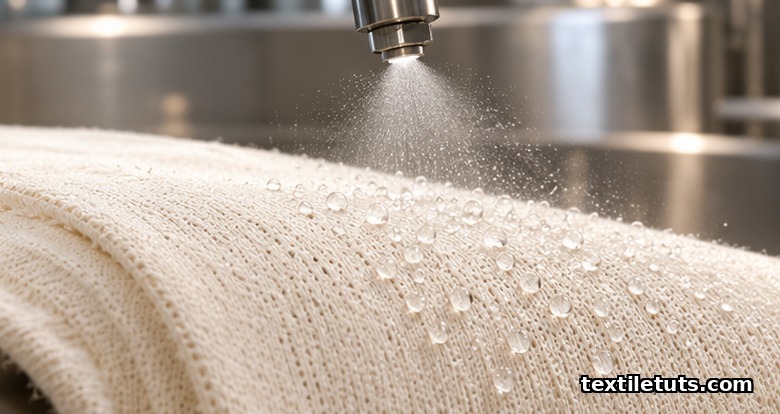
Bio-polishing is an enzyme-based wet finishing process that hydrolyzes protruding microfibrils on the surface of cellulosic fabrics (cotton, linen, viscose, lyocell) using acid cellulases at pH 4.5–5.5 and 45–55 °C for 30–60 minutes, typically producing 3–8% weight loss and reducing pilling propensity by 40–60% over standard laundering. The treatment removes surface fuzz without chemically attacking the bulk fiber, leaving the fabric smoother, softer, and brighter than the grey-state cloth, and it now occupies a permanent slot in the pretreatment sequence of most knit and woven mills that dye cotton-rich substrates.
This article covers the chemistry behind cellulase action on cotton, the standard process recipe used in industrial jets and winches, the equipment and water-management variables that decide finish quality, the test methods used to verify performance (AATCC pilling rating, ISO weight-loss, Kawabata surface friction), and the most common troubleshooting issues mills run into when scaling the process up.
What Bio-Polishing Does at the Fiber Level
Cotton and regenerated cellulosic fibers (viscose, modal, lyocell) carry short, partially detached microfibrils on the yarn surface after knitting or weaving. These fibrils are the same β-1,4-glucan polymer as the bulk fiber, but they project from the yarn body and form the visible fuzz that pills after 5–10 wash cycles. Bio-polishing uses acid cellulase (EC 3.2.1.4, endoglucanase-rich mixtures from Trichoderma reesei or Aspergillus niger fermentation) to cleave the β-1,4-glycosidic bonds of those exposed fibrils.
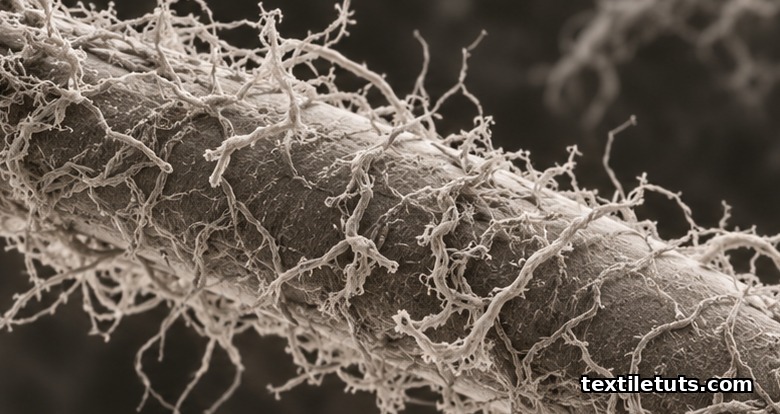
Enzymes are substrate-specific and operate only on the cellulose chain, so the fiber core stays intact while the loose surface polymer is hydrolyzed to short-chain oligosaccharides and glucose. The oligosaccharides stay soluble in the treatment bath and are removed with the next rinse, taking dye and finishing-chemical residue with them.
The catalytic action is selective in two useful ways. First, cellulases are too large to diffuse past the primary cell wall of the cotton fiber, so hydrolysis stays surface-confined. Second, the rate of hydrolysis drops sharply once the protruding fibrils are gone, which is why the reaction is self-limiting and tolerant of small process-time variation between consecutive lots.
Standard Process Recipe for Cotton Knits
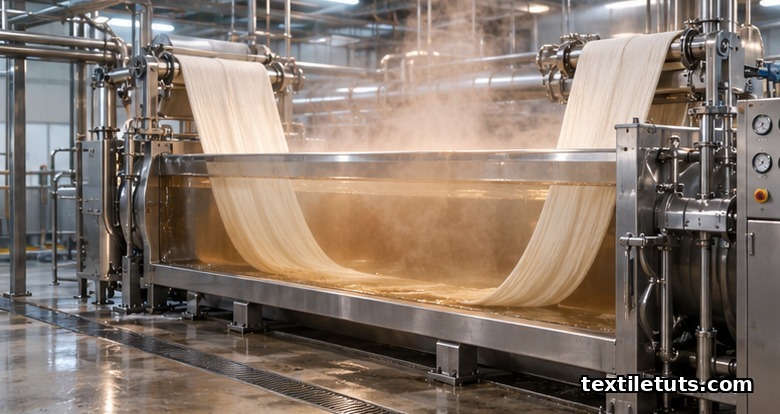
A typical mill recipe for 100% cotton single jersey (140–180 GSM) on a jet dyeing machine follows this sequence:
- Scour and bleach the greige fabric first to remove knitting oil, size, and seed-coat fragments.
- Cool the bath to 45–55 °C and adjust pH to 4.5–5.5 with acetic acid (1.0–2.0 g/L).
- Add acid cellulase at 0.5–3.0% on weight of fabric (o.w.f.), depending on the supplier’s recommendation and the desired intensity.
- Treat for 30–60 minutes with mild liquor circulation; mechanical agitation in jets supplies the shear that lifts fibrils off the surface.
- Raise pH to 9–10 with soda ash and hold at 70–80 °C for 10–15 minutes to deactivate the enzyme.
- Rinse hot, then cold, and proceed to dyeing or softening.
Liquor ratio is set between 1:6 and 1:10 on jets and 1:8 to 1:12 on winches. Higher liquor ratios dilute enzyme activity and require longer treatment times or higher enzyme doses to hit the same weight-loss target.
Process Variables and Their Effects
Three variables carry most of the effect: pH, temperature, and treatment time. Acid cellulases have a narrow activity window. Below pH 4.0 the enzyme denatures; above pH 6.5 the activity drops below useful levels. Below 40 °C the reaction is slow; above 60 °C the enzyme starts to lose activity, and the bath must be cooled if it heats from fabric-to-water equilibration in long cycles.
Mechanical agitation is the fourth lever, often underappreciated. Cellulases cleave bonds only on fibrils that the liquor can reach. A winch running at low liquor turbulence leaves too many fibrils untouched; a jet running at full pump pressure removes too much, exposing the secondary cell wall and causing strength loss above 12–15% (AATCC Test Method 17, strip method, compared against untreated reference). The operating window for knitted cotton sits around 3–6% weight loss for a balanced hand-feel and strength trade-off.
Surfactants in the bath matter as well. Nonionic wetting agents at 0.5–1.0 g/L help the enzyme liquor wet the fabric evenly, but anionic surfactants can bind to the enzyme and reduce activity by 20–30% in lab trials. Most suppliers recommend running the bath without anionic auxiliaries in the enzyme step.
Equipment Used in Industrial Bio-Polishing
Jet dyeing machines (Thies, Then, ATYC, Fongs) are the workhorse for cotton knits because they combine liquor circulation with gentle fabric transport. Winch becks handle woven cellulosics and heavier knits but require longer treatment times. Continuous ranges with pad-steam or pad-roll configurations exist for woven fabrics but are less common; the industry largely relies on batch equipment because bio-polishing scales linearly with enzyme dose.
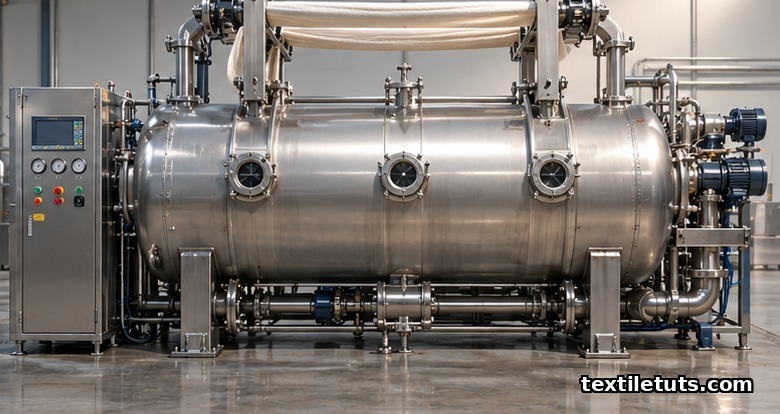
Process control is straightforward. pH is checked and adjusted before enzyme addition; temperature is held within ±2 °C of the set point by the machine’s heat exchanger; treatment time is timed from the moment the bath reaches the target temperature, not from chemical addition.
Enzyme deactivation deserves attention. Cellulase that survives the rinse can continue to hydrolyze cellulose in the finished fabric, especially under alkaline, hot conditions downstream, and the damage only shows up after 10–20 wash cycles as strength loss. A clean deactivation step (pH 9–10, 70–80 °C, 10–15 min) prevents this carry-over. Skipping it is a common cause of strength-loss complaints in finished goods.
Performance Testing
Mills verify bio-polishing performance with four standard tests:
| Test | Standard | What it measures | Typical result after bio-polishing |
|---|---|---|---|
| Weight loss | ISO 675 (mass per unit area) before/after | Cellulose removed from surface | 3–6% (light); 6–10% (heavy) |
| Pilling resistance | AATCC Test Method 135 / ISO 12945-2 (Martindale, 2000 cycles) | Pilling grade (1–5) | Improves 1.0–1.5 grades vs. untreated |
| Surface smoothness / friction | Kawabata KES-F4 or Fabric Touch Tester | Coefficient of friction, surface roughness | 15–25% lower than untreated |
| Tensile strength | ASTM D5034 (grab) or ISO 13934-1 | Warp and weft breaking strength | 5–10% loss acceptable; >15% indicates over-treatment |
The pilling improvement is the headline number mills quote to buyers, and it is real: a 100% cotton single jersey rated 2–3 on the Martindale scale after 2000 cycles without bio-polishing typically rates 4–5 with a properly tuned enzyme treatment.
Comparison with Other Surface-Cleaning Methods
| Property | Bio-polishing (cellulase) | Singeing | Chemical scouring only |
|---|---|---|---|
| Mechanism | Enzymatic hydrolysis | Thermal burning of surface fuzz | Alkaline removal of impurities |
| Effect on fibrils below surface | None (surface-only) | None | None |
| Pilling improvement | Significant (1–1.5 grades) | Moderate (0.5–1 grade) | Low |
| Hand-feel | Softer, cooler | Slightly stiffer | Same as greige |
| Effect on fabric strength | 5–10% loss (controlled) | Negligible | Negligible |
| Process water intensity | Medium (batch, 1:8 LR) | Low (continuous) | High (batch scouring) |
| Energy demand | Low (45–55 °C) | High (flame) | Medium (90–100 °C) |
Many mills combine bio-polishing with singeing for woven fabrics. Singeing burns off the longest protruding fibers first, and the enzyme step then hydrolyzes the shorter microfibrils that singeing leaves behind. The combination gives the cleanest surface and the best pilling performance, but it adds a step and a machine to the line.
Common Process Problems and Fixes
Uneven treatment across the fabric width: almost always a liquor-circulation or pH-distribution issue. Check that the jet pump pressure is within the supplier’s window and that acetic acid is well mixed before enzyme addition. Cold spots in the bath drop enzyme activity sharply and produce streak patterns.
Strength loss above 15%: the enzyme dose is too high, the bath is too hot, the treatment is too long, or the deactivation step was missed. Reduce enzyme by 0.5% o.w.f. and re-test. If strength is still low, check the temperature trace on the controller; a stuck valve that lets the bath climb above 60 °C is a common silent cause.
No visible pilling improvement: the bath was outside the activity window (pH or temperature), or anionic surfactant in the bath inhibited the enzyme. Re-check pH at the actual bath (not just at the dosing tank) and avoid mixing the enzyme step with anionic wetting agents.
Fabric yellowing: usually caused by incomplete deactivation followed by alkaline dye-bath conditions, which let residual enzyme continue to hydrolyze cellulose and generate reducing sugars that yellow on heating. Run a clean deactivation step.
Environmental Profile
Bio-polishing operates at 45–55 °C, well below the 90–100 °C of conventional alkaline scouring, so the steam demand of the enzyme step is roughly 50–60% lower. The effluent contains short-chain sugars (oligosaccharides and glucose from hydrolyzed cellulose), acetic acid from pH adjustment, and spent enzyme protein, all of which are biodegradable in standard textile wastewater treatment. The process does not add sodium hydroxide to the effluent stream the way scouring does, and the lower temperature reduces the mill’s overall thermal load.
The trade-off is longer cycle time (45–75 minutes versus 20–30 minutes for a hot alkaline scour) and the cost of the enzyme itself. Most mills report a net cost reduction at scale because the savings on water-heating steam and the elimination of separate desizing steps offset the enzyme cost.
Frequently Asked Questions
Is bio-polishing the same as stone washing?
No. Stone washing uses pumice abrasion to wear down denim and create a faded, distressed look. Bio-polishing uses cellulase enzymes to hydrolyze surface fibrils on cotton, linen, or regenerated cellulosics; it is a surface-cleaning step, not a color-effect step. Denim mills do use cellulases after stone washing to remove the pumice dust and excess indigo, but that is a separate application from the bio-polishing done on cotton knits and woven fabrics.
Can bio-polishing be done on polyester-cotton blends?
Yes, but only the cotton portion is affected. Cellulases do not hydrolyze polyester, so a 65/35 poly-cotton fabric will lose roughly 3–5% weight (the cotton fraction) under the same conditions that produce 6–8% loss on 100% cotton. Surface fuzz from the cotton component is removed; polyester pills are not. For full pilling control on blends, bio-polishing is paired with a polyester-surface treatment such as alkaline hydrolysis or a cationic anti-pilling finish.
Does bio-polishing weaken the fabric?
Controlled bio-polishing reduces warp and weft breaking strength by 5–10% under standard conditions, which is acceptable for most apparel end uses. Over-treatment (weight loss above 10%, or incomplete enzyme deactivation) can push strength loss to 20% or higher, and that is where customer complaints start. Running a tensile test (ASTM D5034 or ISO 13934-1) before scaling up a new recipe is standard mill practice.
Why does the enzyme bath need to be deactivated?
Cellulase that survives the rinse keeps hydrolyzing cellulose in the finished fabric. Damage accumulates slowly and shows up after 10–20 wash cycles as strength loss, surface pitting, and sometimes yellowing from reducing sugars generated under alkaline, hot conditions downstream. A clean deactivation step at pH 9–10 and 70–80 °C for 10–15 minutes stops the enzyme permanently before the fabric leaves the machine.
Can bio-polishing replace singeing?
For knit fabrics, bio-polishing alone often replaces singeing because knits do not have long, loose surface fibers the way wovens do. For woven fabrics, mills usually keep singeing in the line because it removes the longest protruding fibers (5–10 mm) faster and cheaper than any enzymatic process. The two processes target different length scales of surface fuzz.
References
- American Association of Textile Chemists and Colorists. AATCC Test Method 135: Dimensional Changes of Fabrics after Home Laundering. AATCC Technical Manual. https://www.aatcc.org — Standard reference for evaluating pilling and dimensional stability of bio-polished knits after repeated home laundering cycles.
- International Organization for Standardization. ISO 12945-2:2020, Textiles — Determination of fabric propensity to surface fuzzing and to pilling — Part 2: Modified Martindale method. ISO. https://www.iso.org — Pilling-resistance test method widely used to verify the 1–1.5 grade improvement produced by cellulase bio-polishing.
- International Organization for Standardization. ISO 13934-1:2013, Textiles — Tensile properties of fabrics — Part 1: Determination of maximum force using the strip method. ISO. https://www.iso.org — Tensile-strength protocol used to confirm that bio-polishing keeps warp and weft breaking strength within the 5–10% loss range.
- American Society for Testing and Materials. ASTM D5034-21, Standard Test Method for Breaking Strength and Elongation of Textile Fabrics (Grab Test). ASTM International. https://www.astm.org — Grab-test method used alongside ISO 13934-1 for tensile-strength quality control on bio-polished cotton knits.
- Alison, E. G. and Cavaco-Paulo, A. (1998). Cellulases in the textile industry. ScienceDirect. https://www.sciencedirect.com — Peer-reviewed review of industrial cellulase mechanisms and their application to cotton finishing, including the kinetic basis for the 45–55 °C activity window.
- Hashem, M., El-Bisi, M., and El-Shafei, A. (2020). Cellulase-mediated bio-polishing of cotton fabrics: process optimization and quality evaluation. MDPI. https://www.mdpi.com — Peer-reviewed study reporting 3–6% weight loss and 1.0–1.5 grade pilling improvements under standard acid cellulase conditions on cotton single jersey.
- ResearchGate. Optimisation of Bio-Polishing Process for Cotton Knitted Fabric. https://www.researchgate.net — Peer-reviewed paper detailing the effect of pH, temperature, enzyme dose, and agitation on weight loss and tensile strength retention in industrial bio-polishing trials.
This article is the working reference for bio-polishing and enzyme-based finishing of cellulosic fabrics. Editorial by Shahrukh Islam, TextileTuts. Sources: AATCC Test Method 135, ISO 12945-2, ISO 13934-1, ASTM D5034, and peer-reviewed work on industrial cellulase applications as cited.


