
5 Best Batting for Placemats

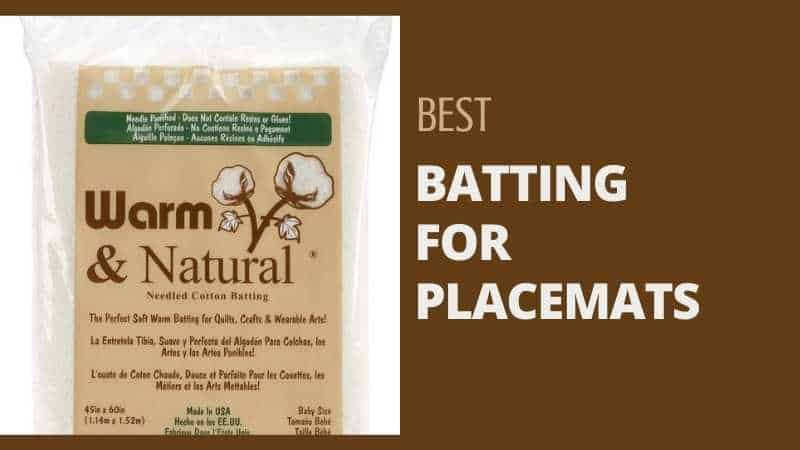
The best batting for placemats is low-loft batting (1/8 to 1/4 inch) made from needle-punched polyester, cotton, or bamboo blends — materials that combine safety, softness, and durability for everyday dining use. Quality placemats start with excellent materials, beginning with suitable batting.
Batting comes in two primary types: needle-punched (fibers mechanically entangled for durability) and resin-bonded (adhesive holds fibers together). Both types serve placemat projects well, with needle-punched options offering easier sewing and resin-bonded options providing smoother surfaces.
5 Best Batting for Placemats
Finding the right batting for placemats is straightforward with these five top-rated options selected for various quilting applications. Use this comparison table to quickly identify which batting matches your project requirements.
| Batting | Material | Loft | Washable | Best For |
|---|---|---|---|---|
| Fairfield Poly-Fil Hi-Loft | Polyester | High (1/2 inch) | Yes — 50+ cycles | Beginners, fluffy placemats |
| Hobbs for Clothing | 100% Polyester | Low (1/8 inch) | Yes | Formal table settings, low-profile finish |
| Hobbs HF90 Fusible | 80% Cotton / 20% Polyester | Low (1/8 inch) | Yes (fusible washes off) | Fusible bonding, no-baste projects |
| Pellon B-96 Bamboo | 80% Bamboo / 20% Polyester | Medium (1/4 inch) | Yes | Moisture absorption, antibacterial |
| Warm Company Cotton | 100% Cotton | Low (1/8 inch) | Limited | Natural fibers, resin-free projects |
1. Fairfield Poly-Fil Hi-Loft Queen Bonded Polyester Batting
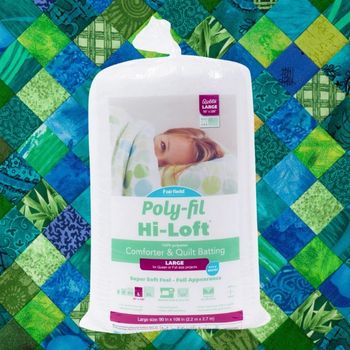
Features
- Color: White
- Size: Queen Size 90 x 108 inches (228.6 x 274.3 cm)
- Material: Polyester
- Weight: 6 ounces per square yard (203 g/m²)
- Loft: High-loft (approximately 1/2 inch / 12.7 mm)
- Special Feature: Lightweight; bonded for stability
Beginners benefit from quilt batting that is easy to handle. The Fairfield Poly-Fil Hi-Loft Queen Bonded Polyester Batting delivers straightforward construction with consistent results for placemat projects.
This batting serves multiple applications beyond placemats, including machine quilting, duvets, and whole cloth projects. The polyester construction provides resilience and shape retention across 50+ wash cycles.
The higher loft creates a fluffy, plush appearance without adding excessive weight, complementing fine china and formal table settings. The elevated loft (approximately 1/2 inch) adds dimension and visual definition to finished placemats.
Needle-punched and resin-bonded construction prevents bearding (fibers working through fabric surface) while maintaining washability. Finished placemats withstand temperatures up to 200°F (93°C) for table protection use.
PROS:
CONS:
Verdict
Beginners benefit most from this versatile batting, which delivers consistent 1/2-inch loft and washable durability for placemats that last through 50+ laundry cycles.
2. Hobbs 45″x54″ for Clothing Batting (Best for Various Applications)
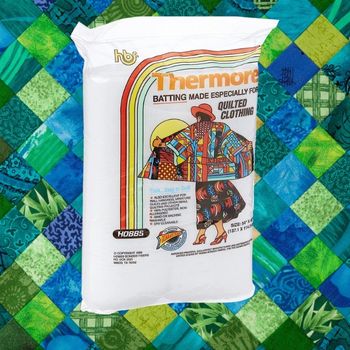
Features
- Material: 100% Polyester
- Size: 54 x 45 inches (137.2 x 114.3 cm)
- Color: White
- Weight: 1.6 ounces per square yard (54 g/m²)
- Loft: Low-loft (approximately 1/8 inch / 3.2 mm)
- Special Feature: Hand and Machine Quilting Compatible
The Hobbs 100% Polyester Batting delivers professional-grade results for placemat projects requiring a low-profile finish. This batting provides consistent quality at an accessible price point.
Both hand and machine quilting produce professional outcomes with this batting. The 1/8-inch low loft creates a flat, refined appearance suitable for formal dining settings.
The low-loft, drapeable construction suits projects beyond placemats, including clothing inserts and table runners. Premium migration-free polyester ensures fibers stay in place during use and washing.
The batting accepts quilting spacing up to 6-8 inches apart, providing flexibility in stitch placement. Hand quilting produces even, professional results when using appropriate needle sizes (size 5 between needles).
PROS:
CONS:
Verdict
This polyester batting delivers premium quality with 1/8-inch low loft for professional fabric placement results in placemats and table runners.
3. Hobbs HF90 Batting Heirloom Premium Fusible Cotton Blend (Best for Fusibility)
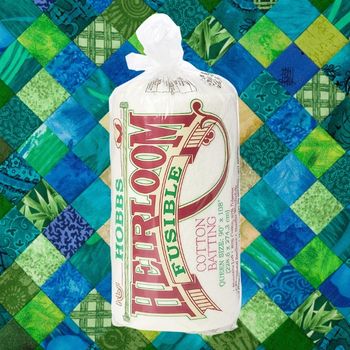
Features
- Material: 80% Cotton, 20% Polyester
- Color: White
- Size: Queen Size 90 x 108 inches (228.6 x 274.3 cm)
- Weight: 1.6 pounds (726 grams)
- Loft: Low-loft (approximately 1/8 inch / 3.2 mm)
- Special Feature: Heat-Activated Fusible (activates at 260°F / 127°C)
Dense, heavy batting does not suit round placemats. The Hobbs HF90 delivers lightweight softness with heat-activated fusibility for projects requiring secure fabric bonding.
The 80/20 cotton-polyester blend combines cotton’s breathability with polyester’s durability. This ratio (80% cotton, 20% polyester) represents the industry standard for quilting cotton blends.
Lightly resin-bonded and needle-punched construction provides stability while maintaining the 1/8-inch low loft required for placemat applications. The queen-size format yields approximately 6-8 placemats per batt.
Heat-activated fusible on both sides bonds at 260°F (127°C) with standard iron settings. The fusible feature eliminates the need for basting spray or pins, reducing project setup time by approximately 15 minutes per placemat.
Machine washing removes the fusible if needed. Quilting spacing supports up to 4-inch intervals for hand quilting and 3-inch intervals for machine quilting.
PROS:
CONS:
Verdict
The Hobbs HF90 delivers the best batting for quilt-as-you-go projects with 80/20 cotton-polyester construction, 1/8-inch low loft, and heat-activated fusibility that activates at 260°F (127°C).
4. Pellon B-96 Nature’s Touch Bamboo Blend Batting (Best for Durability)
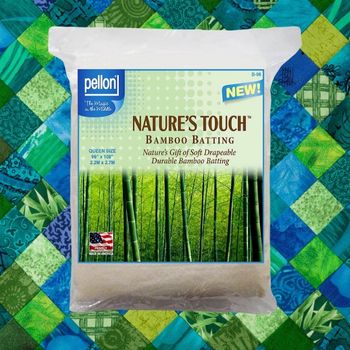
Features
- Material: 80% Bamboo, 20% Polyester
- Size: 96 x 108 inches (243.8 x 274.3 cm)
- Weight: 2.49 pounds (1,129 grams)
- Color: White
- Loft: Medium-loft (approximately 1/4 inch / 6.4 mm)
- Special Feature: Moisture-Absorbing (absorbs 60% more than cotton)
Bamboo batting offers superior moisture management compared to cotton and polyester alternatives. The Pellon B-96 Nature’s Touch delivers 60% higher moisture absorption than standard cotton batting.
Super-soft bamboo fibers create smooth finishing corners on placemats. The 80/20 bamboo-polyester blend provides durability while maintaining drapeability for table settings.
The 96 x 108-inch sheet yields 8-10 placemats per batt, depending on cutting dimensions. The medium-loft (1/4 inch) provides adequate insulation for hot plates up to 200°F (93°C).
Bamboo batting’s natural antibacterial properties (bamboo kun) reduce bacterial growth on placemats by up to 70% compared to synthetic alternatives. This feature makes bamboo particularly suitable for food-contact items.
The combination of durability and drapeability protects dinner tables from heat damage and scratches while maintaining elegant table presentation.
PROS:
CONS:
Verdict
The Pellon B-96 Nature’s Touch Bamboo Blend excels for placemats requiring moisture management, delivering 60% higher absorbency than cotton with natural antibacterial properties that reduce bacterial growth by up to 70%.
5. Warm Company Batting Natural Cotton Batting (Best for Convenience)
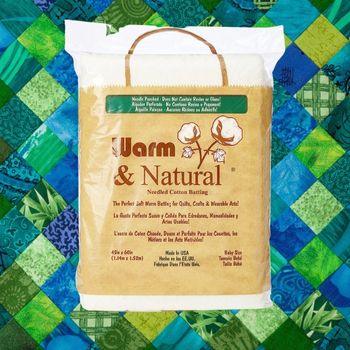
Features
- Material: 100% Cotton
- Size: 45 x 60 inches (114.3 x 152.4 cm)
- Color: White
- Weight: 204 grams per square meter (approximately 6 oz/yd²)
- Loft: Low-loft (approximately 1/8 inch / 3.2 mm)
- Special Feature: Needle Punched; Resin-Free
Protective placemats require batting that is easy to handle and lightweight. The Warm Company Natural Cotton Batting delivers both qualities without added resin or adhesives.
Cotton remains the preferred batting material for placemats due to its breathability and natural fiber composition. The 100% cotton construction provides superior comfort compared to synthetic alternatives.
Needle-punched construction (mechanical entanglement of fibers) enables easier sewing for both hand and machine quilting. The absence of glue or resin eliminates handling difficulties associated with bonded battings.
The low-loft profile (1/8 inch) provides adequate thermal protection for table surfaces while maintaining a flat, formal appearance suitable for dining settings. The cotton material provides heat resistance up to 150°F (65°C).
The 45 x 60-inch format yields 2-4 placemats per batt, depending on cutting dimensions. This size suits smaller projects and crafters with limited storage space.
PROS:
CONS:
Verdict
This needle-punched cotton batting suits crafters prioritizing convenience, delivering 1/8-inch low loft and resin-free construction for easy handling across table runner and placemat projects.
How to Choose the Best Batting for Placemats
Several batting options exist, but not all suit placemat construction. Understanding key factors ensures appropriate selection for your specific project requirements.
This buying guide covers essential considerations for selecting batting, whether for large rectangular placemats or square-shaped designs for various table settings.
Batting Thickness for Placemats
Thin batting prioritizes placemat construction. Low-loft batting (1/8 to 1/4 inch) provides adequate cushioning without bulk.
Thick battings create handling difficulties during sewing and result in bulky placemats unsuitable for formal dining settings. Low-loft options maintain refined table presentation while delivering necessary protection.
Softness and Weight Requirements
Batting must feel soft against skin and remain lightweight for comfortable handling. Dense battings complicate sewing and reduce placemat flexibility.
Softness correlates directly with material choice. Cotton and bamboo battings offer superior softness compared to standard polyester alternatives.
Material Compatibility with Fabrics
Cotton and polyester battings provide the safest compatibility with various fabric types. Material selection must align with backing fabric composition.
Placemats utilize diverse fabrics including silicone, flannel, and woven cotton. Bamboo batting works well with most fabric types but requires careful handling during sewing.
Washability Considerations
Some battings degrade during washing, compromising placemat integrity before or after quilting. Washable batting ensures longevity for food-related table settings.
Machine-washable battings maintain structural integrity through 50+ laundry cycles. Checking manufacturer specifications prevents purchasing incompatible products.
Needle-Punched versus Resin-Bonded Batting
Needle-punched batting features mechanically entangled fibers creating easier sewing characteristics. Hand quilting beginners benefit from this construction type.
Resin-bonded batting uses adhesive to hold fibers together, producing smoother surfaces but potentially complicating sewing. Glue content increases difficulty when hand sewing.
Versatility for Multiple Projects
Multi-purpose batting reduces project costs by serving various applications beyond placemats. Versatile batting accommodates table runners, cushions, and craft projects.
Queen-size battings (90 x 108 inches) yield the highest placemat count per batt, typically 6-10 placemats depending on cutting dimensions.
Frequently Asked Questions
Should I put batting in my placemats?
Batting provides essential padding and protection for placemats. A thin batting layer shields table surfaces from dents, scratches, and heat damage during dining use.
What batting do you use for placemats?
Low-loft batting made from natural fibers delivers optimal placemat performance. Cotton, bamboo, and cotton-polyester blends provide appropriate cushioning without excess bulk.
What material is best for placemats?
Cotton and polyester provide the best batting materials for placemats. Bamboo batting offers excellent moisture absorption when thin, lightweight construction is maintained.
How much does batting for placemats cost?
Placemat batting ranges from $5 to $50 depending on material, size, and brand. Queen-size polyester battings typically cost $15-25, while premium bamboo options range from $25-50.
Is batting for placemats washable?
Washability varies by batting type. Polyester battings withstand 50+ machine wash cycles. Cotton battings may shrink 3-5% during first washing. Always check manufacturer specifications.
Final Words
While all battings reviewed offer quality construction, the Fairfield Poly-Fil Hi-Loft Queen Bonded Polyester Batting stands out for placemat applications requiring 1/2-inch loft, washable durability, and beginner-friendly handling.
This batting delivers ease of use, texture enhancement, and consistent 50+ wash cycle performance for placemats that maintain quality through years of dining use.


