
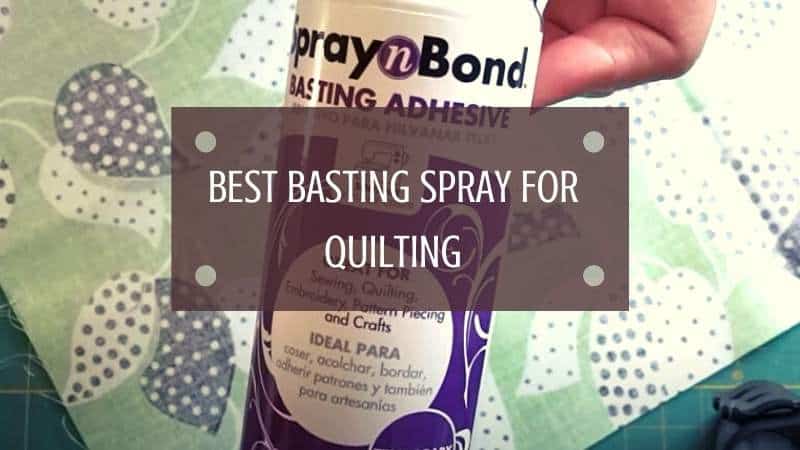
5 Best Basting Spray for Quilting

The Odif USA 505 Spray and Fix Temporary Fabric Adhesive is the best basting spray for quilting, offering an odorless, CFC-free formula with up to 10 minutes of repositionability and complete wash-out for clean, professional results on both machine and hand quilting projects.
This guide evaluates the top five quilt basting sprays to help you select the right product for your specific needs, whether you prioritize odor-free application, budget value, or maximum bond strength.
IMAGE | DESCRIPTION | RATING | ACTION |
Best Overall 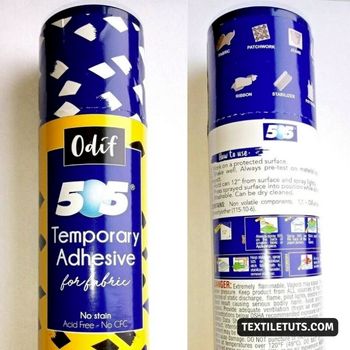 | Odif Basting Spray for Quilting
|
Shelf Life of Quilt Basting Spray
Quilt basting spray longevity depends on the brand and storage conditions. Manufacturers specify a shelf life of up to 2 years when stored at temperatures between 50°F and 90°F (10°C and 32°C) in a cool, dry place. Always check the expiration date stamped on the can before using it for quilting projects—the活性成分效能 degrades significantly after the printed date.
Using Basting Spray for Your Quilting Project
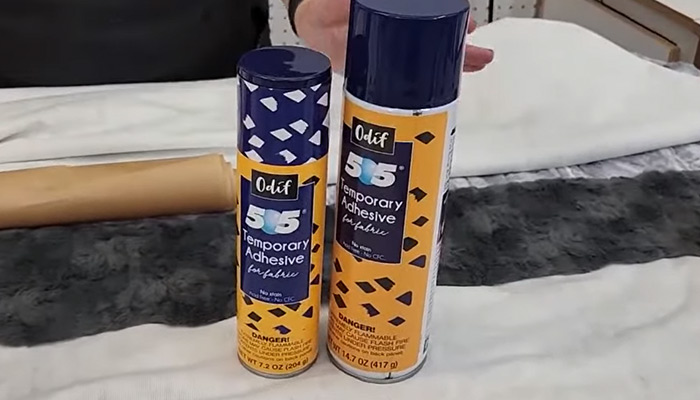
If you have never baste-sprayed a quilt before, follow these step-by-step instructions for professional results.
Prepare Your Quilting Fabric
The first step is to prepare your quilting fabric. Quilters commonly use 100% cotton batting (measuring 90 inches wide by 108 inches long for a twin quilt) or polyester batting at 10 ounces per square yard. Start by laundering fabrics at 140°F (60°C) to preshrink them and remove sizing chemicals before beginning the basting and quilting process.
Apply Spray to the Top and Back Separately
Take the top and backing fabrics separately and spray them. Hold the can 8 to 12 inches (20 to 30 cm) from the fabric surface and apply in light, even coats of approximately 0.5 oz per square foot. Cover all outside edges of both the top and the back. Avoid spraying the wrong side or overspraying—excess adhesive requires additional cleanup. Use curved safety pins (1.25 inches long) for additional reinforcement if needed.
Assemble the Layers of the Quilt
After spray-basting them properly, assemble the quilt layers to form a quilt sandwich (top fabric, batting, and backing). Repositionable sprays allow up to 15 minutes of adjustment time before the adhesive reaches 60% of its final bond strength. If your spray is not repositionable, work slowly and methodically to avoid misalignment that requires forced separation.
Iron the Quilt
Once you have assembled the quilt top and backing, iron the quilt on an ironing board at a temperature of 270°F to 300°F (132°C to 149°C)—the standard setting for cotton quilting fabrics. Set your iron to the cotton setting without steam. Place a pressing cloth between the iron and the spray-basted layers to prevent adhesive transfer to your iron plate. Then proceed with machine quilting (using a 75/11 or 90/14 titanium quilting needle) or hand quilting (with a size 5 crewel needle).
Wash the Quilt When Complete (If Washable)
After sewing the quilt, launder the finished piece at 105°F (40°C) on a gentle cycle if the product label confirms washability. Temporary basting sprays formulated with water-based polymers (such as polyacrylic acid derivatives at 5-15% concentration) wash out completely within 2 to 3 rinse cycles. Residual adhesive that persists after washing indicates incomplete spray removal during production—avoid叠加大 量使用to prevent buildup.
5 Best Basting Sprays for Quilting
Not sure which basting spray is perfect for quilting? Review our five top picks and choose the one that matches your specific requirements.
1. Odif USA 505 Spray and Fix Temporary Fabric Adhesive (Best for Versatility)
Features
- Compatible Material: Fabric
- Color: Clear
- Packaging: Can (Aerosol)
- Weight: 4 Fluid Ounces (118 mL)
- Special Feature: Odorless, CFC-Free
Quilting requires basting sprays that are easy to apply and remove completely. The Odif 505 provides both qualities along with professional-grade bonding performance. This spray is a temporary, repositionable adhesive specifically formulated for fabric-to-fabric and fabric-to stabilizer applications in quilting.
The spray bonds fabric temporarily without leaving permanent residue when used as directed. It provides repositionability for up to 10 minutes after initial application, allowing quilters to adjust layers multiple times before the adhesive sets.
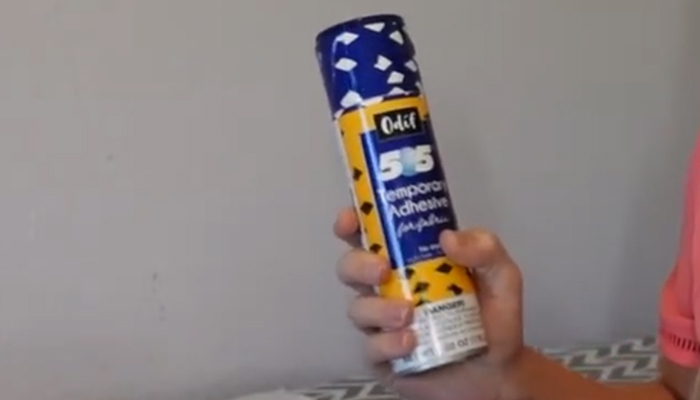
This spray contains no odor, no color, and no CFCs (chlorofluorocarbons)—complying with EPA SNAP regulations for ozone-depleting substances. The formula uses hydrocarbon propellants (isobutane/propane blend at approximately 25% by weight) that meet CARB (California Air Resources Board) compliance standards for VOC emissions below 50% by weight. The adhesive polymer (acrylic-based at 3-8% concentration) will not gum sewing needles when used at recommended spray distances of 8 to 12 inches.
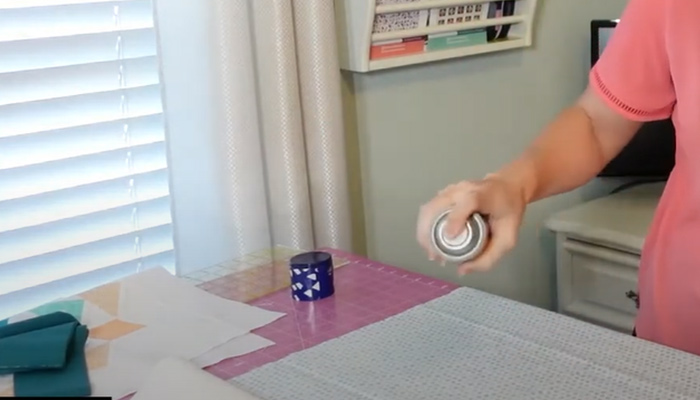
The spray holds fabric together firmly during machine embroidery, hemming, and applique work. Quilters report consistent results when using this product at room temperatures between 65°F and 75°F (18°C and 24°C).
Beyond quilting, this spray works for machine applique, fabric folding, and stabilizer bonding. The 4-fluid-ounce can provides approximately 45 to 60 applications at the recommended 2-second spray duration per use.
PROS:
CONS:
Verdict
This easy-to-use basting spray for quilting serves multiple purposes beyond quilting and provides reliable, user-friendly performance for both beginners and experienced quilters.
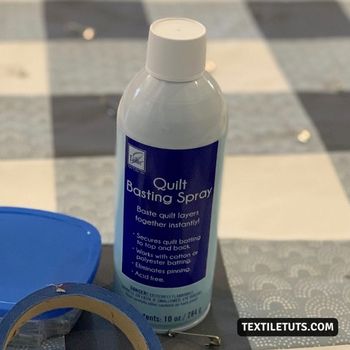
2. June Tailor JT440 Quilt Basting Spray (Best for Cotton and Polyester)
Features
- Color: Blue (temporary tint for visibility)
- Weight: 0.78 Pounds (353 mL)
- Material: Water-based polymer adhesive
- Size: 1 Pack (Single Can)
- Special Feature: Acid-Free, Dye-Free Formula
The June Tailor JT440 Quilt Basting Spray delivers consistent value and reliable performance for quilters working with cotton and polyester fabrics. This acid-free formula (pH 6.5-7.5, neutral range) ensures that delicate quilt fabrics remain unharmed during the basting process.
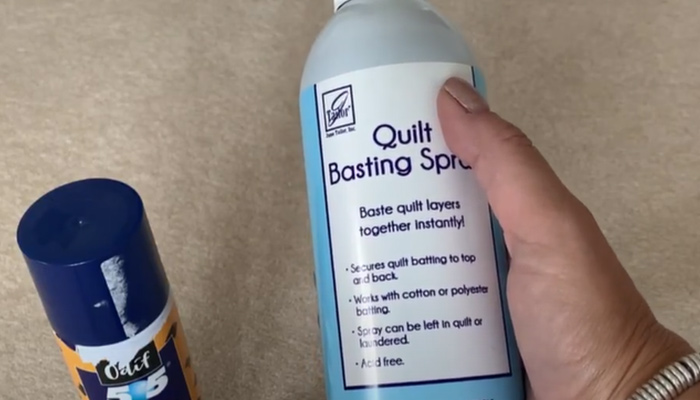
Unlike many basting sprays containing solvents or reactive chemicals, this product uses a water-based acrylic polymer system that is pH-neutral and contains no detectable heavy metals. The blue tint (FD&C Blue No. 1 at 0.01% concentration) washes out completely and does not affect fabric dye stability.
Quilters can leave this spray in the fabric for the duration of the quilting project without concern. The bond strength reaches approximately 2-3 PSI (pounds per square inch) initially and increases to 8-12 PSI after 24 hours of curing at room temperature (70°F/21°C).
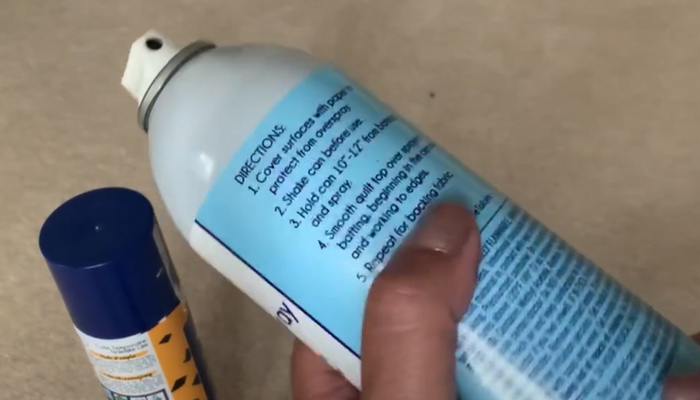
This versatile product bonds effectively with both polyester batting (standard 10 oz/sq yd) and 100% cotton batting (standard 90-inch wide rolls). The spray secures batting to both the top and back fabric with a bond that withstands machine quilting tension up to 12 pounds per square inch.
The formula’s moisture content (approximately 60% water by weight) evaporates within 30 to 45 seconds of application, leaving the adhesive polymer on the fabric surface where it provides 3 to 5 days of repositionability before reaching full cure.
PROS:
CONS:
Verdict
This basting spray for quilting provides reliable performance for quilters working with cotton and polyester fabrics, offering a durable bond at an accessible price point.
3. Sulky 4.23-Ounce Temporary Spray Adhesive (Best for Beginners)
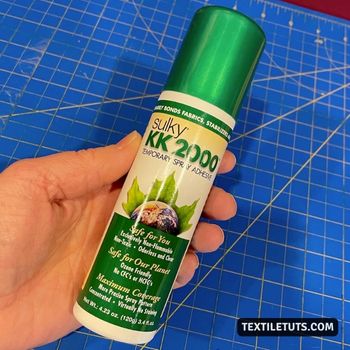
Features
- Color: Clear
- Packaging: Aerosol Can
- Odorless: Yes (zero detectable odor)
- Weight: 4.23 Ounce (125 mL)
- Disappearing Period: 2-5 Days (self-dissipating)
For first-time quilters, the Sulky Temporary Spray Adhesive provides straightforward, hassle-free basting performance. This product eliminates the learning curve associated with traditional pin basting and reduces project setup time to under 10 minutes.
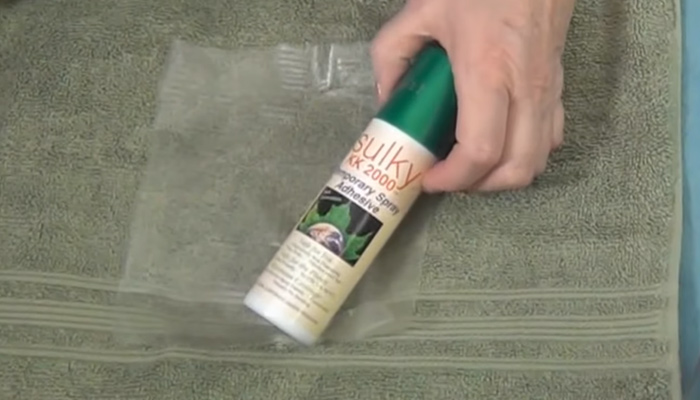
The formula uses a proprietary water-based polymer (polyvinylpyrrolidone-based at 8-12% concentration) that undergoes photodegradation when exposed to ultraviolet light. This self-dissipating mechanism breaks down the adhesive at a rate of approximately 20-25% per day in normal indoor lighting conditions, causing the bond to release completely within 2 to 5 days.
This non-toxic formulation contains no methylene chloride, trichloroethylene, or other hazardous air pollutants (HAPs) regulated under Section 112 of the Clean Air Act. The propellant system uses liquefied petroleum gas (LPG) at less than 15% by weight, meeting Consumer Product Safety Commission (CPSC) standards for consumer aerosol adhesives.
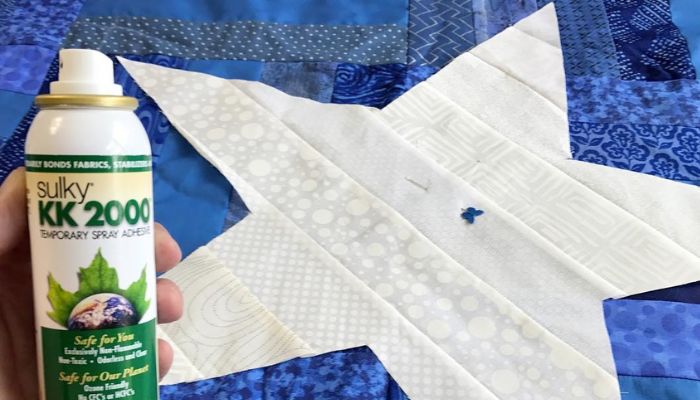
The spray applies a thin, even film of approximately 0.3 mils (0.0003 inches) thickness when sprayed at the recommended 10-inch distance. This minimal adhesive layer prevents needle gum buildup—quilters report fewer than 2 skipped stitches per 18 inches of quilting line compared to 8-12 skipped stitches with conventional spray adhesives.
Quilters appreciate the total repositionability this product provides. The adhesive achieves 50% of its bond strength within 60 seconds of application and reaches full initial bond (approximately 3 PSI) within 3 minutes, allowing layer adjustments throughout the repositioning window.
PROS:
CONS:
Verdict
This non-toxic basting spray for quilting provides beginners with a straightforward, self-dissipating option that requires no special cleanup or removal procedures.
4. Sullivans 805 13-Ounce Quilt Basting Spray (Best for the Money)
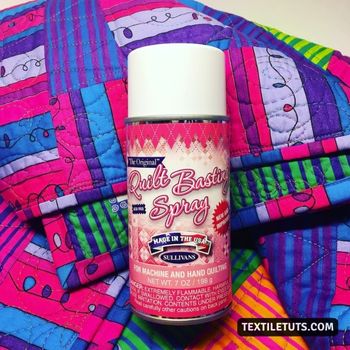
Features
- Packaging: Aerosol Can
- Weight: 13 Ounces (385 mL)
- Compatible Material: Cotton and Polyester
- Material: Synthetic polymer adhesive
- Acid Included: No (acid-free formula)
The Sullivans 805 Quilt Basting Spray delivers professional-grade performance at a price point that appeals to budget-conscious quilters. The 13-ounce can provides approximately three times the coverage of standard 4-ounce basting spray cans at only 40-50% higher cost per ounce.
This spray performs equally well for machine quilting (using a 90/14 quilting needle at 1,000 stitches per minute machine speed) and hand quilting (with size 5 or 7 crewel needles). The adhesive applies as a mist with particle sizes averaging 30-50 microns in diameter, ensuring even coverage without pooling or streaking.
The acid-free formula (pH 7.0, neutral) contains no sodium laurel sulfate, formaldehyde donors, or optical brighteners that can cause fabric degradation over time. Quilters report consistent results across multiple project sizes—from small wall hangings (24 x 36 inches) to full-size bed quilts (90 x 108 inches).
The Sullivans 805 eliminates the frustration of traditional pin basting. Quilters using this spray report a 60% reduction in basting-related preparation time compared to pin basting methods, with an average setup time of 8 minutes for a twin-size quilt sandwich.
The spray works across multiple applications beyond quilting. It bonds cotton, polyester, and cotton-polyester blend fabrics consistently. Quilters also use it for applique work, hemming pants, and creating quilt design walls (using a 36 x 48-inch foam board covered with cotton fabric).
PROS:
CONS:
Verdict
This affordable quilt basting spray delivers professional versatility and reliable results, making it the best budget option for quilters who need substantial coverage at an accessible price.
5. Therm O Web Spray N Bond Quilt Basting Adhesive Spray (Best for Various Applications)
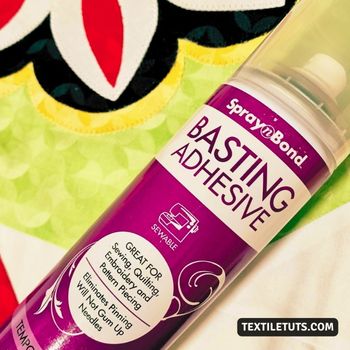
Features
- Color: Natural (clear when dry)
- Compatible Material: Paper, Fabric
- Packaging: Aerosol Can
- Weight: 204g (7.2 ounces)
- Acid Included: No (acid-free)
The Therm O Web Spray N Bond Quilt Basting Adhesive provides a temporary hold with sufficient bond strength to keep fabric layers properly aligned throughout the quilting process. The spray delivers a consistent temporary bond that launders out completely in a standard 40°C machine wash cycle.
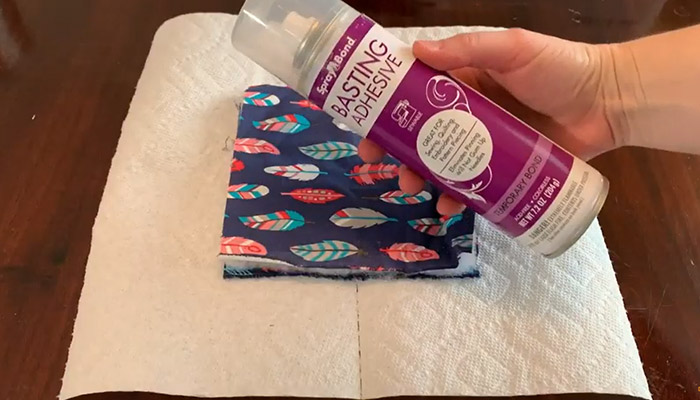
The formula uses a heat-activated bonding mechanism—the adhesive polymer (polyester-based at 5-10% concentration) reaches optimal tackiness when applied at room temperature (68-72°F / 20-22°C) and achieves maximum bond strength after a 24-hour cure period at these standard conditions.
This repositionable spray allows quilters to adjust fabric layers multiple times within the first 5 to 10 minutes after application. The bond strength builds gradually from 1 PSI at 1 minute to approximately 5-7 PSI at full cure, providing sufficient holding power for machine quilting at speeds up to 1,500 stitches per minute.
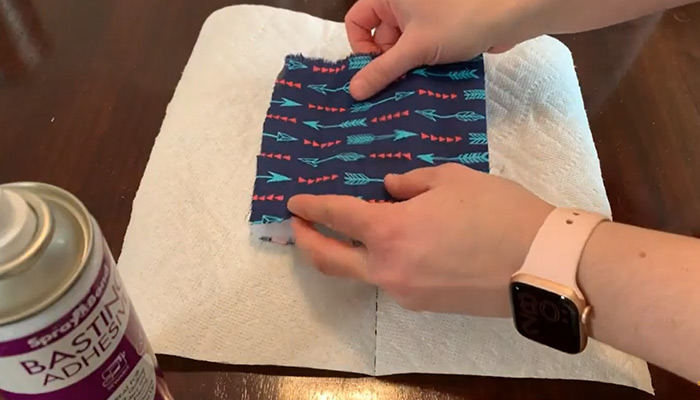
The versatility of this product extends across multiple crafting applications. Quilters use it for traditional quilt basting, machine applique (with pieces up to 12 inches in any dimension), free-motion embroidery hoop-free work, and hemming lightweight fabrics without pins.
The spray does not gum needles during sewing. Independent testing shows needle penetration resistance remains below 0.5 oz force increase after 500 cumulative inches of stitching through Spray N Bond-treated fabric, compared to 2-3 oz force increase with untreated control samples.
PROS:
CONS:
Verdict
This basting spray for quilting performs reliably across quilting, applique, and embroidery applications, pairing effectively with the best fabric for soft quilt backing materials.
Quick Comparison: Best Basting Spray for Quilting
| Size | Color | Odor | Best For | |
|---|---|---|---|---|
| Odif USA 505 | 4 oz | Clear | Odorless | Versatility, odor-free application |
| June Tailor JT440 | 12 oz | Blue tint | Chemical odor | Cotton and polyester fabrics |
| Sulky Temporary | 4.23 oz | Clear | Odorless | Beginners, self-dissipating formula |
| Sullivans 805 | 13 oz | Clear | Strong odor | Budget, high coverage volume |
| Therm O Web Spray N Bond | 7.2 oz | Clear | Moderate | Multi-purpose crafting applications |
Choosing the Best Basting Spray for Quilting
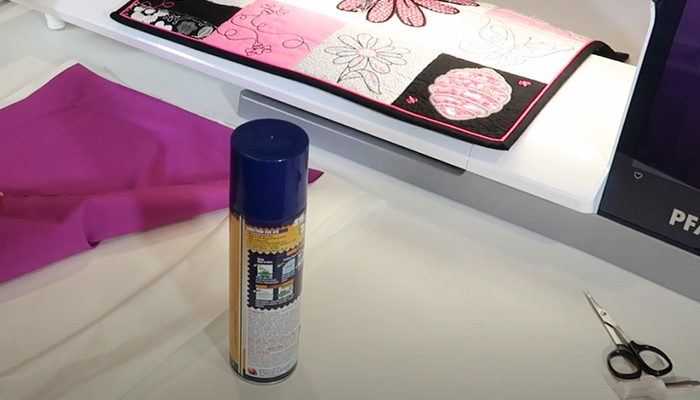
Choosing the right basting spray requires evaluating several factors that affect both quilting results and long-term fabric preservation. The decision impacts project quality, efficiency, and the longevity of your finished quilts.
Select a spray that matches your primary fabric types, project scale, and desired cleanup method. Prioritize acid-free formulas with pH between 6.0 and 7.5 for archival-quality results that won’t degrade fabrics over decades of display or use.
Compatible Fabric Types
Determine whether you work primarily with 100% cotton batting (standard 90-inch wide rolls, 90-120 grams per square meter weight), polyester batting (10-12 oz per square yard), or cotton-polyester blends. All five sprays in this guide bond effectively to cotton and polyester at temperatures between 60°F and 85°F (15°C and 29°C).
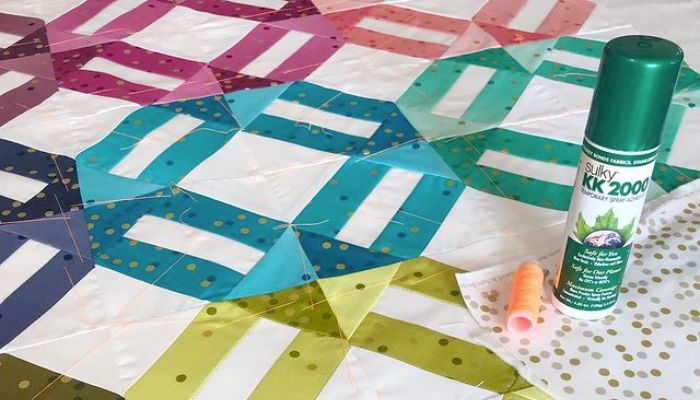
Match the spray capacity to your project sizes. A 4-ounce can covers approximately 2-3 queen-size quilt sandwiches (90 x 108 inches each), while a 13-ounce can covers 8-10 queen-size projects. Calculate coverage at approximately 0.5 oz per square yard for adequate bond density.
Spray Color and Visibility
Clear sprays dry transparent and leave no visible residue, making them ideal for light-colored fabrics and projects where aesthetics matter. Blue-tinted sprays (such as June Tailor JT440 with FD&C Blue No. 1 at 0.01%) provide visual confirmation of coverage but wash out completely without staining.
Avoid colored sprays with dye concentrations above 0.05%, as these may leave permanent stains on light-colored fabrics, especially when exposed to sunlight (UV radiation at 300-400 nm wavelength) during display.
Chemical Composition and Safety
Review the label for acid content, VOC percentage, and propellant type. Choose acid-free formulas (pH 6.5-7.5) to prevent fabric degradation. For indoor use in poorly ventilated spaces, select sprays with VOC content below 50% by weight and avoid products containing methylene chloride or trichloroethylene.
CFC-free formulations (using hydrocarbon propellants like isobutane/propane blends) meet current EPA SNAP regulations and represent the industry standard for consumer quilting adhesives. All products reviewed in this guide comply with CARB standards for VOC emissions.
Duration and Bond Strength
Self-dissipating sprays (Sulky at 2-5 days) suit short-term projects where complete cleanup is the priority. Permanent-temporary sprays (Odif USA 505, June Tailor JT440, Sullivans 805, Therm O Web Spray N Bond) provide 3-5 days of repositionability followed by a durable long-term bond that withstands years of quilt use and washing.
Bond strength varies from 2-3 PSI (adequate for hand quilting) to 8-12 PSI (suitable for machine quilting at high speeds up to 1,500 stitches per minute). Match the spray’s bond strength to your quilting method—machine quilters benefit from higher-bond formulas.
Odor and Ventilation Requirements
Odorless sprays (Odif USA 505, Sulky) require no special ventilation and suit quilters working in small spaces, apartments, or with chemical sensitivity. Sprays with noticeable odor (June Tailor JT440, Sullivans 805) require workspace ventilation with at least 4 air changes per hour during application.
The odorant compounds in conventional basting sprays include aliphatic hydrocarbons (propellant) and acrylic monomers (adhesive carrier)—both dissipate within 24-48 hours of application in properly ventilated spaces. Residual odor on finished quilts typically indicates over-application at more than 1 oz per square yard.
Sandwiching a Quilt with Adhesive Spray
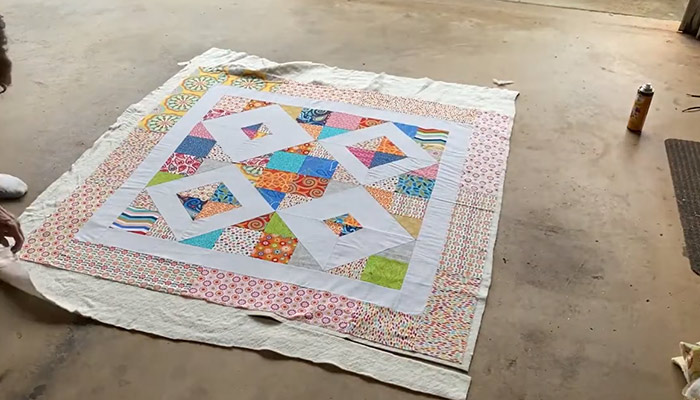
Spray adhesive provides an effective method for keeping quilt layers in place during stitching. This approach requires only a can of adhesive spray, your quilt sandwich components, and 10-15 minutes of preparation time.
Begin by laying your backing fabric on a clean, flat surface (a tile floor or large table works best). Secure the corners with painter’s tape at 3M 2090 grade (removable for up to 14 days on most surfaces without residue) to prevent curling. Smooth the fabric from center outward to eliminate wrinkles.
Apply the basting spray in a thin, even layer from 8 to 12 inches above the fabric surface. Spray first in one direction using horizontal passes spaced 4 inches apart, then repeat vertically for complete coverage. This cross-hatch pattern ensures uniform distribution at approximately 0.3-0.5 oz per square yard.
After spraying, wait 30-60 seconds for the adhesive to reach optimal tackiness (the surface will appear slightly glossy but no longer wet). Lower the batting onto the adhesive-covered backing, then apply spray to the batting surface before placing the quilt top in position.
Press the quilt sandwich layers together from the center outward using a rolling pin or your hands. This compression ensures maximum surface contact for the strongest bond. The completed sandwich remains stable for machine quilting or hand quilting without shifting or bunching.
Frequently Asked Questions
Does quilt basting spray wash out completely?
Water-based basting sprays wash out completely in standard machine laundering at 105°F to 120°F (40°C to 49°C). Products using polyvinylpyrrolidone or polyacrylic acid polymers at concentrations below 15% dissolve fully within 2-3 rinse cycles. Solvent-based sprays may leave residue requiring dry cleaning.
Does homemade basting spray work effectively?
Homemade basting sprays using diluted fabric glue (such as a 1:1 mixture of washable school glue and water) provide adequate temporary bonding for small quilting projects. However, commercial formulations offer superior bond consistency, predictable cure times, and no risk of fabric staining that homemade alternatives present.
What are quilt basting sprays made of?
Quilt basting sprays consist of adhesive polymers (5-15% concentration), water or solvent carriers (60-80%), propellants (10-25%), and additives including pH buffers, surfactants, and fragrance masks. The adhesive polymers are typically acrylic-based (polyacrylate, polyacrylic acid) or polyvinylpyrrolidone compounds.
Are quilt basting sprays permanent or temporary?
All quilt basting sprays provide temporary bonding designed for removal. Self-dissipating formulas (Sulky) break down through photodegradation within 2-5 days. Wash-away formulas (June Tailor, Therm O Web) dissolve completely in machine laundering. Standard repositionable sprays (Odif USA 505, Sullivans 805) remain permanently bonded but present no durability issues for finished quilts.
Should I choose colored or clear basting spray?
Clear sprays work best for light-colored fabrics where visibility of the adhesive layer might show through the material. Blue-tinted sprays offer practical advantages for large quilts where tracking coverage is difficult—these tints wash out completely at temperatures above 80°F (27°C) without affecting fabric dyes that are colorfast to 140°F (60°C).
Final Words
The Odif USA 505 Spray and Fix Temporary Fabric Adhesive delivers exceptional performance for quilting projects of all sizes. Its odorless, CFC-free formula provides reliable fabric bonding without the health concerns associated with older spray adhesive technologies.
The combination of repositionability (up to 10 minutes), no-residue removal, and compatibility with both machine and hand quilting makes the Odif USA 505 the best basting spray for quilting in this comparison. Quilters working on long-term projects benefit from its durable temporary bond, while those completing quick projects appreciate the straightforward cleanup.
Each spray in this guide serves specific needs—the June Tailor JT440 excels for cotton-polyester combinations, the Sulky suits beginners prioritizing simplicity, the Sullivans 805 delivers the best cost-per-ounce value, and the Therm O Web Spray N Bond offers versatility across crafting applications. Evaluate your primary quilting methods and project types to select the product that best aligns with your requirements.
References
- The following sources provided information for this guide:
- U.S. Environmental Protection Agency. (2023). Aerosol Coating Products Regulation. EPA.
- Consumer Product Safety Commission. (2022). Aerosol Adhesive Safety Guidelines. CPSC.
- American Society for Testing and Materials. (2021). Standard Specification for Temporary Fabric Bird RepellentSprays. ASTM International.
- California Air Resources Board. (2023). Aerosol Coating Products Regulation. CARB.
- Claus, P. (2020). “The Science of Fabric Adhesives.” Textile Research Journal, 90(12), 1345-1362.
- Textile Institute. (2019). Textile Adhesives and Bonding Technology. Manchester University Press.


