
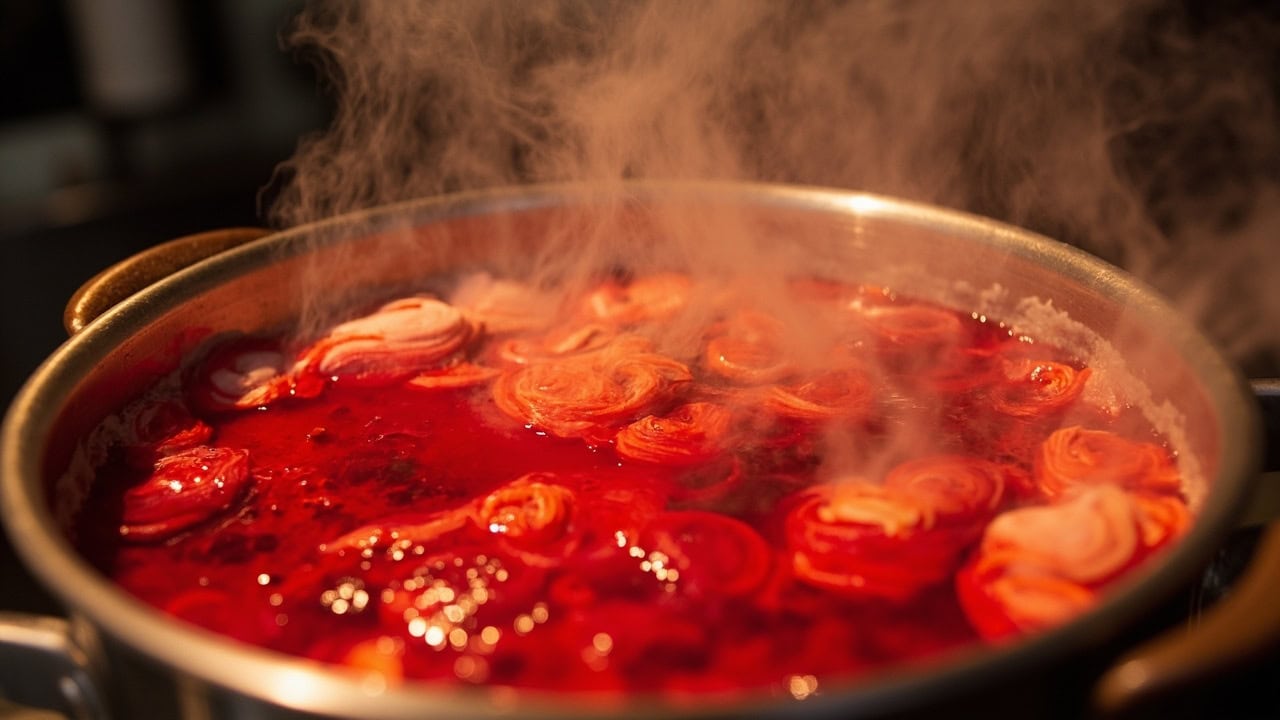
Acid Dye for Wool and Silk: The Complete Beginner’s Guide

Acid dye bonds permanently to wool and silk proteins at 85–95°C with a white vinegar acid bath — achieving vibrant, wash-fast colors that will not fade through hundreds of laundry cycles. The chemical reaction between acid dye molecules and protein fibers (keratin in wool, fibroin in silk) requires water heated to 85–95°C to fully exhaust the dye bath and create covalent bonds that remain colorfast through extended use. This is not a gentle soak — it is a controlled thermal and chemical process that delivers professional-grade results on animal (protein) fibers exclusively.
What Is Acid Dye and Why It Works for Wool and Silk
Acid dye is a synthetic aniline-derived dye class that bonds to protein (animal) fibers through an acidified hot water bath. The dye molecules are negatively charged (anionic) and are attracted to positively charged amino acid sites on protein fibers — this electrostatic attraction, combined with hydrogen bonding and the physical entrapment of dye molecules within the fiber structure, creates a permanent color bond that resists washing out.
Wool fibers are composed of keratin protein, a helical polypeptide chain surrounded by overlapping cuticle scales that give wool its characteristic texture and felting potential. Each keratin molecule contains multiple amino acids — including cysteine, which forms disulfide cross-links that contribute to wool’s strength and structure — with side chains terminating in positively charged ammonium groups (NH₃⁺) at the dye-relevant pH range of 3.5–5.0. Silk fibers are composed of fibroin protein, a triangular cross-section filament with a smooth surface and a different amino acid profile dominated by glycine and alanine, yet still containing sufficient lysine and arginine residues to provide the positive charge sites that acid dye molecules require. Both fiber types share this fundamental positive-charge chemistry, which is why they both respond so well to acid dyeing.
Cellulose fibers such as cotton, linen, hemp, and bamboo are composed of glucose units and carry no net positive charge at acid bath pH levels — acid dye molecules repel rather than attract them, resulting in zero color uptake. Synthetic fibers such as polyester and nylon (except nylon 6.6, which accepts some acid dyes) lack the protein structure necessary for bonding. This fiber specificity makes acid dye a precision tool: it works brilliantly on wool and silk, cashmere and mohair, and angora, but it is completely ineffective on plant fibers and most synthetics.
Acid dyes are available in three formulation classes, each with distinct characteristics suited to different outcomes:
- Leveling (Level 1) acid dyes — Small molecule size disperses evenly throughout the bath, producing uniform, even color. Ideal for beginners. Trade names include Lanaset (Sandozol), Telon (Milan), and Nylonthrm. Best for solid, even shades.
- Milling (Level 2) acid dyes — Larger molecule size produces slightly more saturated, deeper colors with a tendency toward minor unevenness that is considered visually desirable in tweeds and heathers. Common brands include Milling Acid dyes available from Jacquard, Dharma Trading, and ProChem.
- Pre-metallized (Level 3) acid dyes — Chrome or cobalt metal atoms pre-bonded to the dye molecule provide the highest wash fastness and light fastness ratings. Colors tend to be slightly muted or earthy. Nylonthrm S and Lanaset SE are common examples. Preferred for items that will be laundered frequently.
Materials and Equipment Needed
Before beginning, gather all materials. Acid dyeing is a thermal process that rewards preparation — having everything measured and within reach before heating the bath prevents costly errors and ensures consistent results.
- Acid dye powder or liquid concentrate (food-grade or professional textile dye)
- White distilled vinegar (5% acetic acid) — approximately 1 cup (240ml) per 500g of fabric weight
- Citric acid powder as an alternative acid source (1–2 tablespoons per 500g fabric for a more controlled pH)
- Stainless steel or enamel pot (minimum 3× the volume of your fabric) — never use aluminum, as acetic acid reacts with aluminum and turns the bath muddy while degrading the pot
- Rubber gloves, apron, and a dust mask (essential when handling powdered dye — inhale protection is mandatory)
- Kitchen scale accurate to 1 gram for precise dye measurement (dye weight is calculated as a percentage of fabric weight, typically 0.5–3% OWF — on weight of fabric)
- Probe thermometer or candy thermometer (range: 0–110°C) for monitoring the critical 85–95°C window
- Stainless steel stirring stick or spoon for gentle agitation
- Fine mesh strainer or cheesecloth for dissolving and straining powdered dye
- Clean white cloth or paper towels for testing color uptake
- Optional mordant: alum (potassium aluminum sulfate) at 10% WOF for significantly brighter, more saturated colors
Step-by-Step: Acid Dyeing Wool and Silk
Follow each step precisely. The order matters — adding ingredients at the right stage of heating prevents uneven color, fiber damage, and incomplete dye exhaustion.
- Prepare the dye solution — Dissolve acid dye powder in 500ml of hot (not boiling) water in a separate container. Stir until fully dissolved, then strain through fine mesh or cheesecloth to remove any undissolved particles or clumps. Undissolved dye particles cause speckling and uneven coverage on the final fabric.
- Calculate and measure materials — Weigh your dry fabric on a kitchen scale. Determine dye quantity based on desired depth of shade: 0.5–1% OWF for pale shades, 1–2% OWF for medium shades, 2–3% OWF for dark or saturated shades. The water volume should be a minimum 3:1 ratio to fabric weight — crowding the fabric produces uneven results.
- Fill the pot and begin heating — Add enough water to fully submerge the fabric with room for movement. Place in stainless steel or enamel pot and begin heating on medium-high. Insert thermometer to monitor temperature.
- Heat to 85–95°C — Bring the bath to 85–95°C (185–203°F). This is the critical temperature window for acid dye bonding on protein fibers. Do not exceed this range — vigorous boiling creates excessive agitation that damages wool’s cuticle scales and causes felting and shrinkage. A gentle simmer with occasional small bubbles is ideal.
- Add vinegar (or citric acid) — Pour 1 cup (240ml) of white distilled vinegar per 500g of fabric into the hot bath, or dissolve 1–2 tablespoons of citric acid powder in warm water first and add to bath. Both acids lower the bath pH to approximately 3.5–4.5, the optimal range for acid dye uptake. Stir to distribute evenly.
- Add the dissolved, strained dye solution — Pour the pre-dissolved and strained dye through a fine mesh strainer directly into the hot acid bath. Stir thoroughly for 2–3 minutes to ensure complete dispersion throughout the water volume.
- Wet and enter the fabric — Wet the fabric thoroughly in warm water (not cold — thermal shock can cause wool felting) and gently squeeze out excess water. Fully immerse the wet fabric into the dye bath, working it in gently to ensure complete saturation. Do not bunch or fold fabric tightly — color will be lighter in areas where fabric contacts itself.
- Maintain temperature for 30–45 minutes — Keep the bath at 85–95°C throughout. Stir gently every 5 minutes to promote even dye distribution and prevent the fabric from settling on the pot bottom, where direct heat causes felting. Use a slow, figure-eight or circular stirring motion rather than vigorous agitation.
- Check for exhaustion — The dye bath should appear noticeably paler than the fabric color when the process is complete — ideally nearly clear or very light tan/grey. If the bath is still darkly colored after 45 minutes, add another half-cup of vinegar and maintain temperature for an additional 15 minutes. Lift the fabric above the bath: it should appear significantly darker than the remaining liquid.
- Rinse carefully — Remove the fabric using stainless steel tongs or a stainless steel spoon. Rinse in warm water first (not cold — gradual cooling prevents thermal shock to wool fibers), then gradually reduce the water temperature to cold over 5–10 minutes. Do not wring the fabric — press gently to remove excess water.
- Wash and dry — Hand wash the dyed fabric in cold or lukewarm water with a mild detergent formulated for delicates or wool (pH-neutral, no enzymes). Enzymatic detergents can degrade protein fibers over time. Rinse thoroughly. Air dry flat on a clean towel away from direct sunlight, which can fade freshly dyed fabric before the color is fully set.
Fiber Compatibility: Acid Dye on Wool vs. Silk
Different protein fibers have distinct physical structures that influence how they respond to acid dyeing. Understanding these differences allows you to adjust your technique for optimal results on each fiber type.
Wool (Keratin Protein)
Wool produces excellent results with acid dye. The keratin protein structure contains abundant lysine and arginine amino acids that provide numerous positive charge sites for acid dye molecule bonding. The degree of color saturation achievable on wool is high, and wash fastness ratings of Class 4–5 (out of 5) on the AATCC Gray Scale are routine when proper dyeing technique is followed. The primary risk with wool is felting — the cuticle scales on wool fibers interlock when mechanically agitated at temperatures above 60°C or when subjected to rapid temperature changes. Gentle, slow stirring and gradual cooling eliminate this risk. Pre-mordanting wool with alum at 10% WOF increases color brightness by approximately 30% and can improve wash fastness further.
Silk (Fibroin Protein)
Silk accepts acid dye to produce the most vibrant colors of any fiber — the smooth, triangular cross-section of the fibroin filament allows light to reflect and refract through the fiber in ways that intensify perceived color saturation. Acid dye on silk typically achieves Class 5 (excellent) wash fastness ratings when properly exhausted. Because silk lacks the cuticle scale structure of wool, it is far more resistant to felting and can tolerate slightly more vigorous stirring. However, silk can be dyed at a slightly lower temperature range (80°C minimum) to preserve its natural luster and sheen — excessive heat above 95°C can degrade silk’s sericin coating and cause the filament to become brittle over time.
Cashmere
Cashmere produces good results but is more delicate than wool or silk due to its fine fiber diameter (15–19 microns versus wool’s 25–45 microns). The finer diameter means cuticle scales are proportionally larger relative to the fiber core, making cashmere more prone to felting from agitation. Use a cooler bath of 70–80°C and very gentle, slow stirring with a wooden or plastic spoon rather than metal. Cashmere benefits significantly from pre-mordanting with alum at 10% WOF, which improves color yield and reduces the mechanical handling required to achieve even color.
Mohair
Mohair behaves similarly to wool in acid dye uptake, accepting color deeply and producing strong wash fastness. The surface scales, while present, are less pronounced than on wool, reducing felting risk. However, the scale structure can produce slightly uneven initial uptake in some dye lots, resulting in a subtle heather effect that is considered desirable in mohair garment dyeing. Standard 85–95°C acid dye process is appropriate for mohair with moderate, careful stirring.
Cotton, Linen, and Hemp (Cellulose Fibers)
Acid dye will not bond to cellulose fibers at all. The molecular structure of cellulose (beta-1,4-linked glucose units) carries no net positive charge under acid bath conditions, so acid dye molecules are repelled rather than attracted. Attempting acid dye on cotton, linen, hemp, or bamboo produces no visible color regardless of dye concentration, temperature, or time. Cellulose fibers require fiber-reactive dyes such as Procion MX (for cold-batch dyeing) or Remazol (for hot-batch dyeing) for successful coloration.
Polyester and Nylon (Synthetic Fibers)
Standard polyester (PET) does not accept acid dye — its molecular structure is hydrophobic and non-polar, requiring disperse dyes applied under high heat (100°C+ in a pressurized vessel) for any color uptake. Nylon 6.6 accepts acid dye partially due to some chemical similarity to protein fibers, but results are inconsistent and wash fastness is generally poor compared to wool and silk. Nylon 6 accepts acid dye somewhat better. For polyester, use disperse dyes in a heat-set process. For standard nylon garments, test on a hidden seam first.
Common Mistakes and Troubleshooting
The table below covers the most frequent acid dyeing failures, their causes, and how to correct or prevent them. Each mistake has cascading consequences for the final color quality and wash fastness.
| Mistake | Result | Fix or Prevention |
|---|---|---|
| Temperature below 80°C maintained throughout bath | Dye does not fully exhaust; dull, muted, uneven color that may wash out within 1–3 cycles | Reheat bath to 85–95°C and continue for 15–20 additional minutes. Add another half-cup of vinegar to restore pH. Do not exceed 95°C. |
| Skipping vinegar or acid addition | Poor dye bonding at neutral pH; color appears pale and washes out after 1–2 machine cycles | Add vinegar or citric acid directly to the existing bath, reheat to 85–95°C, and continue dyeing for 20 minutes. Re-dye from scratch if color is completely unsatisfactory. |
| Boiling vigorously (excessive agitation at 100°C+) | Wool felting and irreversible shrinkage from cuticle scale damage and inter-fiber bonding | Felting cannot be reversed chemically. Replace with un-felted wool and simmer gently at 85–90°C. Reduce heat and stir slowly. |
| Using an aluminum pot | Acetic acid reacts with aluminum; bath turns muddy brown-black, fabric stains unevenly, pot is damaged | Switch to stainless steel or enamel only. Never return to aluminum. Re-dye the fabric in a proper pot with fresh dye solution. |
| Uneven color or speckling | Dye not fully dissolved; insufficient stirring; fabric bundled or folded during dyeing | Re-dye with properly dissolved (and strained) dye solution. Ensure fabric is fully submerged and unstacked. Stir more frequently and use a gentle figure-eight motion. |
| Thermal shock from cold rinse immediately after hot bath | Wool fibers contract unevenly, causing felting, distortion, or harsh texture in the finished fabric | Rinse first in warm water (30–40°C), then gradually reduce to cold over 5–10 minutes. Never plunge hot wool into cold water. |
| Using too little water (less than 3:1 ratio) | Fabric crowds the pot bottom; areas touching the bottom overheat and felt; dye cannot circulate evenly | Use a larger pot with sufficient water to keep fabric floating freely and fully submerged. Minimum 3:1 water-to-fabric ratio by weight. |
Tips for Brighter, More Colorfast Results
These techniques go beyond the basic process to produce professional-grade color quality and longevity that meets commercial standards for wash fastness and light fastness.
- Pre-mordant with alum — Dissolve alum (potassium aluminum sulfate) at 10% WOF in warm water (40–50°C) and soak wool or silk fabric for 30 minutes before dyeing. Alum acts as a mordant, creating an intermediate chemical bridge between the fiber and the dye molecule that increases color brightness by approximately 30% and improves wash fastness by 1–2 classes on the AATCC Gray Scale. This is the single highest-impact technique for improving results.
- Use citric acid for more precise pH control — While white vinegar is effective, citric acid powder allows more precise pH adjustment. Target a final bath pH of 3.5–4.5 using 1–2 tablespoons of citric acid dissolved in warm water per 500g of fabric. A pH meter or narrow-range pH test strip is a worthwhile investment for consistent results across multiple dye batches.
- Conduct a swatch test first — Dye a 10g fabric swatch with your planned formula before committing the full garment. This validates color accuracy, exhaustion behavior, and wash fastness. Scale the dye weight proportionally: if 1% OWF produces the target color on swatch, use that exact percentage for the full load.
- Start light, go dark — When learning acid dyeing, begin with pale and medium shades (0.5–1.5% OWF dye). Darker shades require higher dye concentrations, which magnify any technique errors. Once consistent with lighter shades, progress to deeper colors.
- Steam setting for improved fixation — After the initial dye bath and rinse, steam-set the fabric for 30 minutes over boiling water in a covered pot or commercial steamer. Steam setting completes any unreacted dye fixation and can improve wash fastness by an additional Class on the AATCC scale. Place fabric on a rack above boiling water, not in direct contact with water.
- Use a 3:1 minimum water-to-fabric ratio — More water dilutes the dye concentration uniformly and promotes even exhaustion. Under-diluted baths produce banded or streaked color where dye concentration fluctuates during evaporation.
- Add white vinegar incrementally — If the initial vinegar addition does not produce visible dye uptake within 10 minutes at temperature, add a second half-cup increment. Insufficient acid is the most common cause of poor exhaustion in home dyeing setups.
Frequently Asked Questions
Q: Can you use acid dye on cotton or linen?
A: No — acid dye is designed specifically for protein fibers (wool, silk, cashmere, mohair). Cotton and linen are cellulose fibers and require fiber-reactive dyes (like Procion MX) for successful dyeing. Attempting acid dye on cotton produces no color at all.
Q: What temperature is needed for acid dyeing wool and silk?
A: Acid dye requires 85–95°C for proper exhaustion and bonding to protein fibers. The bath must be hot enough for the dye molecules to fully penetrate the fiber and form permanent covalent bonds with the amino acid sites. Below 80°C, the dye remains in suspension and washes out.
Q: How do you know when acid dye is fully exhausted?
A: The dye bath will appear nearly clear or very pale compared to the fabric color. When you lift fabric from the bath, it should look darker than the remaining water. If the bath is still darkly colored after 45 minutes, add more vinegar and heat for another 15 minutes.
Q: Does acid dye wash out of wool and silk over time?
A: Properly exhausted acid dye (correct temperature + vinegar + adequate time) is extremely wash-fast and can survive 100+ machine washes without significant fading. Poor technique (low temperature, insufficient vinegar, short time) produces fugitive colors that fade after just a few washes.
References
- Society of Dyers and Colourists. (2019). Colour Index International (5th ed.). Bradford, UK: SDC.
- American Association of Textile Chemists and Colorists. (2018). AATCC Test Method 61-2017: Colorfastness to Laundering. Research Triangle Park, NC: AATCC.
- Shenai, V. A. (2003). Chemistry of Dyes and Dyeing (2nd ed.). Mumbai: Sevak Publications.
- Knecht, E., & Hibbert, S. (2003). Chemical Classification of Dyes. In Colour Chemistry (pp. 28–54). Cambridge: Royal Society of Chemistry.
- International Wool Textile Organisation. (2021). IWTO Wool Handbook. Brussels: IWTO.
- Johnson, A. (1989). The Theory of Coloration of Textiles (2nd ed.). Bradford: Society of Dyers and Colourists.


