
What are medical textiles?

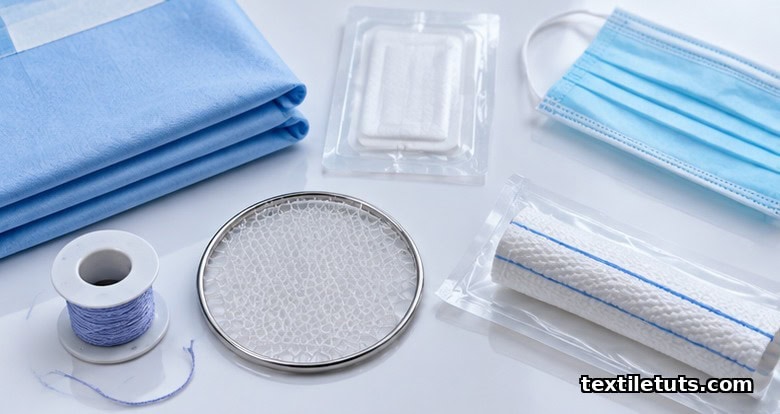
Medical textiles (also called healthcare textiles or medtech textiles) are fabrics and fiber-based products specifically designed and manufactured for use in medical and hygiene applications. The category includes implantable products (surgical sutures, vascular grafts, hernia meshes), non-implantable products (wound dressings, bandages, surgical drapes and gowns), extracorporeal devices (dialysis membranes, blood filters), and hygiene products (face masks, surgical caps, absorbent layers in diapers and feminine hygiene products). The global market is roughly USD 12-15 billion and growing at 5-7% annually, driven by aging populations, increased healthcare access in developing markets, and the post-pandemic focus on infection prevention.
Medical textiles must meet stringent requirements for biocompatibility, sterility, absorbency, barrier properties, and mechanical strength. The standards and regulations are more demanding than for conventional textiles, and the approval processes for new medical textile products are typically 2-5 years and cost USD 5-50 million, similar to other medical devices.
Categories of medical textiles
Medical textiles are classified into four main categories based on the level of contact with the body.
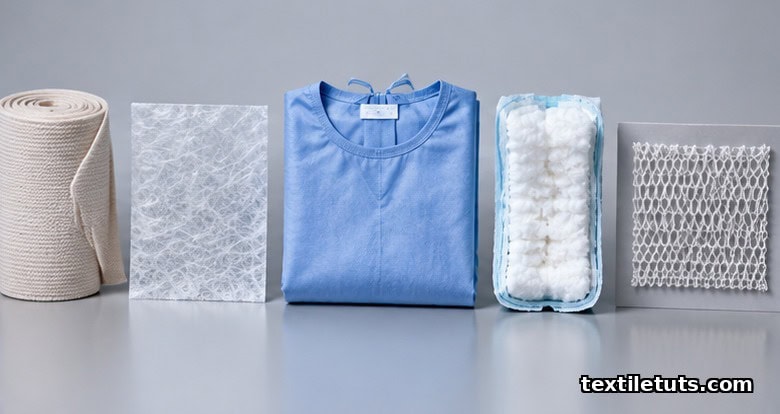
1. Implantable textiles
Implantable textiles are placed inside the body, either temporarily or permanently, to support, replace, or augment biological tissue. The most common implantable textiles are:
- Surgical sutures, traditional sutures are made from silk, catgut, or synthetic absorbable polymers (polyglycolide, polylactide, polydioxanone). Textile sutures (braided or woven from polyester or polypropylene) are used for high-tension closures (orthopedic, cardiovascular). Absorbable sutures degrade in the body over weeks to months, depending on the polymer.
- Vascular grafts, synthetic textile tubes (typically woven or knit from PET or ePTFE) used to replace or bypass damaged blood vessels. The graft must have appropriate porosity for tissue ingrowth and appropriate compliance (elasticity) to match the native vessel.
- Hernia meshes, textile sheets (typically knit from polypropylene or polyester) used to reinforce hernia repairs. The mesh provides mechanical support while allowing tissue integration. Lightweight, large-pore meshes have better biocompatibility and lower infection rates than heavyweight, small-pore meshes.
- Orthopedic implants, textile components (ligament grafts, tendon repairs, surgical tapes) for orthopedic surgery. Most modern ligament reconstructions use autografts (patient’s own tissue) but textile allografts (cadaver tissue) and synthetic grafts (polyester, polyethylene) are also used.
2. Non-implantable textiles
Non-implantable textiles are used outside the body but in contact with skin, wounds, or bodily fluids. The most common non-implantable medical textiles are:
- Wound dressings, the largest non-implantable category. Modern wound dressings are designed to maintain a moist wound environment (which accelerates healing), manage exudate (wound fluid), and provide a barrier against infection. Common types include hydrocolloids, hydrogels, alginates, foams, films, and antimicrobial dressings (silver, PHMB, honey-impregnated). Textile wound dressings are typically nonwoven (spunbond, meltblown, or spunlace) for softness and absorbency.
- Surgical drapes and gowns, sterile textiles that create a barrier between the surgical site and non-sterile areas. Modern surgical drapes and gowns are typically nonwoven (spunbond-meltblown-spunbond composite) with a fluid-repellent finish. Reusable (woven) surgical gowns are still in use but have been largely replaced by disposables for infection control.
- Bandages and compression bandages, woven, knit, or nonwoven elastic bandages for wound care, sprain management, and venous insufficiency treatment. Compression bandages are classified by the pressure they apply (Class 1: light, Class 3a/3b: high compression) and are color-coded by class.
- Casting tapes, textile tapes impregnated with plaster (traditional) or synthetic resins (fiberglass, polyester) used to immobilize fractures during healing. Modern synthetic casting tapes are lighter, stronger, and water-resistant compared to plaster.
3. Extracorporeal textiles
Extracorporeal textiles are used in medical devices that contact blood outside the body. The most important extracorporeal textile is the dialysis membrane, which is typically a hollow fiber membrane (not strictly a textile in the conventional sense, but a related fiber-based product) made from cellulose, polysulfone, or polyethersulfone. Other extracorporeal textiles include blood filters (for cardiopulmonary bypass), oxygenator membranes (for heart-lung machines), and apheresis membranes (for blood component separation).
These products are highly specialized, manufactured under strict quality control, and tested for biocompatibility, hemocompatibility (compatibility with blood), and performance under flow conditions. The membrane pore size, surface chemistry, and mechanical strength are engineered to specific clinical requirements.
4. Hygiene textiles
Hygiene textiles are used in disposable hygiene products that absorb and contain bodily fluids. The main products are baby diapers, adult incontinence products, feminine hygiene products, and surgical pads. The absorbent core of these products is a nonwoven or airlaid fabric containing superabsorbent polymer (SAP), a sodium polyacrylate that can absorb 30-50 times its weight in water.
Hygiene textiles are produced at very high volumes (billions of units per year globally) and require specialized nonwoven manufacturing. The top layer (in contact with skin) is typically a soft hydrophilic nonwoven (spunbond polypropylene or spunlace polyester). The acquisition/distribution layer moves fluid away from the skin. The absorbent core contains the SAP and fluff pulp. The back sheet is a fluid-impermeable film (polyethylene or breathable microporous film).
Material requirements
Medical textiles must meet stringent material requirements that go beyond conventional textile performance. The main requirements are:
- Biocompatibility, the textile must not cause adverse biological reactions (irritation, sensitization, cytotoxicity, systemic toxicity). Biocompatibility is tested per ISO 10993 (Biological evaluation of medical devices), which specifies the test panel for each type of contact (skin, mucosal, blood, implant).
- Sterilization compatibility, the textile must withstand the sterilization method used by the healthcare facility (steam autoclaving, ethylene oxide gas, gamma irradiation, hydrogen peroxide plasma). Some materials degrade under specific sterilization methods; the textile must be selected and tested for compatibility with the intended sterilization route.
- Barrier properties, for surgical drapes, gowns, and face masks, the textile must provide a barrier against microorganisms and body fluids. The barrier is tested per ASTM F1670 (synthetic blood penetration) and ASTM F1671 (viral penetration).
- Absorbency, for wound dressings and hygiene products, the absorbency is tested per ISO 9073-6 (absorbency) and reported as absorbency capacity (g/g) and absorbency rate (s).
- Mechanical strength, the textile must have sufficient tensile, tear, and burst strength for the intended use. The strength requirements vary widely by application (surgical sutures need high tensile strength, hygiene products need moderate wet strength, wound dressings need to maintain integrity when wet).
Testing and standards
Medical textiles are tested for biocompatibility, performance, and safety per a range of standards. The most important are:
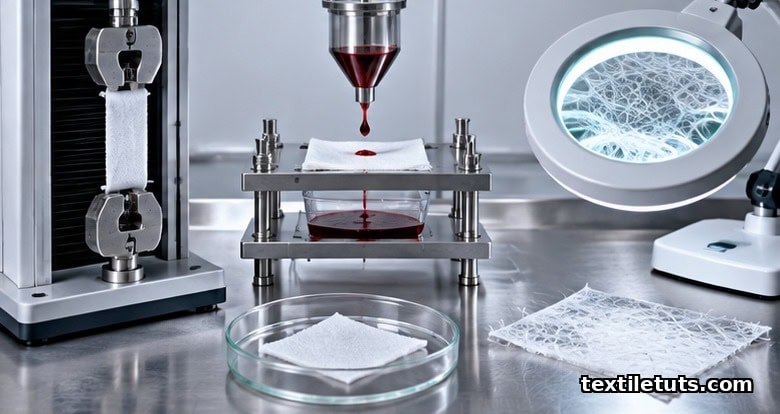
- ISO 10993, Biological evaluation of medical devices. The master standard for biocompatibility testing.
- ISO 11137, Sterilization of health care products by radiation. For gamma-irradiated products.
- ISO 11135, Sterilization of health care products by ethylene oxide. For EtO-sterilized products.
- ISO 11138, Sterilization of health care products by steam. For steam-sterilized products.
- ASTM F1670 / F1671, Resistance of materials to synthetic blood and viral penetration. For barrier fabrics.
- EN 13795, Surgical drapes, gowns, and clean air suits. The European standard for surgical textiles.
- AAMI ST79, Comprehensive guide to steam sterilization in healthcare facilities. The US reference for sterilization.
- USP Class VI, United States Pharmacopeia biological reactivity test for plastics. Often required for medical-grade polymers.
Compliance with these standards is required for FDA (US) and CE (EU) market approval. The approval process is similar to other medical devices and can take 2-5 years.
Manufacturing environment
Medical textile manufacturing must be done in a controlled environment to prevent contamination. The standard is ISO 14644 (Cleanrooms and associated controlled environments), which specifies the maximum particle count per cubic meter for each cleanliness class. Medical textile manufacturing typically requires ISO Class 7 or 8 (10,000 or 100,000 particles per cubic meter), with the final packaging often in ISO Class 5 or 6.
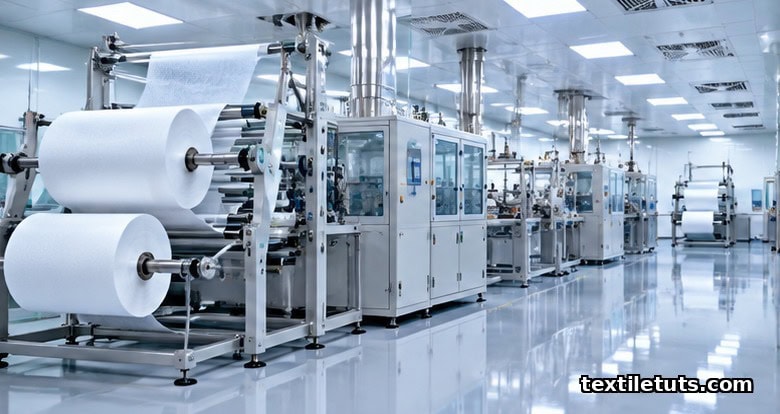
Beyond cleanroom conditions, medical textile manufacturing requires validated processes (each process step is qualified and documented), traceability (each lot can be traced back to its raw materials and process conditions), and quality control testing at multiple stages. The result is a higher manufacturing cost compared to conventional textiles, which is reflected in the end-product price.
Frequently Asked Questions
What is the difference between medical textiles and hygiene textiles?
Medical textiles are designed and regulated for medical applications, surgical use, wound care, implantable products, extracorporeal devices. They must meet stringent biocompatibility and sterility requirements and are typically regulated as medical devices. Hygiene textiles are designed for personal hygiene, baby diapers, adult incontinence, feminine hygiene. They are typically regulated as consumer products, with less stringent requirements. The boundary is blurred for some products (e.g., surgical face masks are medical textiles; consumer face masks are hygiene textiles).
How long do implantable medical textiles last in the body?
Depends on the type. Non-absorbable implants (polyester vascular grafts, polypropylene hernia meshes) are designed to last the patient’s lifetime, with degradation rates so low that they persist for decades. Absorbable implants (polyglycolide sutures, polylactide meshes) degrade over weeks to months, depending on the polymer composition and the implantation site. The absorption rate is engineered to match the healing time of the tissue.
Are medical textiles safe for sensitive skin?
Medical textiles that contact intact skin (surgical gowns, drapes, face masks) are tested for skin sensitization and irritation per ISO 10993. Properly manufactured medical textiles should not cause skin reactions in normal use. For patients with severe skin conditions or known allergies, specific hypoallergenic medical textiles are available (e.g., silk sutures for silk allergy, latex-free products for latex allergy).
What is the future of medical textiles?
The future is in three areas: (1) bioactive textiles that release drugs or growth factors to promote healing; (2) tissue engineering scaffolds that support the regeneration of damaged tissue (e.g., skin substitutes, blood vessels, bone); (3) smart medical textiles that monitor patient health continuously (e.g., ECG-monitoring undergarments, wound dressings that change color when infection sets in). These advanced products are mostly in research and early clinical stages, but they are expected to be commercially significant within 10-20 years.
Can medical textiles be sterilized at home?
No. Medical textiles are sterilized in industrial facilities using validated sterilization equipment (steam autoclaves, ethylene oxide chambers, gamma irradiation facilities). Home sterilization methods (boiling, microwaving, chemical disinfectants) are not validated for medical textile sterilization and may damage the textile or leave harmful residues. Sterile medical textiles are supplied in single-use packaging, and the user does not need to re-sterilize them.
References
- ScienceDirect (peer-reviewed). Handbook of Medical Textiles. https://www.sciencedirect.com/book/edited-volume/9781845696917/handbook-of-medical-textiles, comprehensive reference on medical textile materials, manufacturing, and applications.
- ISO 10993-1:2018, Biological evaluation of medical devices, Part 1: Evaluation and testing within a risk management process. https://www.iso.org/standard/68936.html, master standard for medical device biocompatibility.
- ISO 11137-1:2006, Sterilization of health care products, Radiation, Part 1: Requirements for development, validation and routine control of a sterilization process for medical devices. https://www.iso.org/standard/33917.html
- EN 13795:2019, Surgical drapes, gowns and clean air suits, used as medical devices for patients, clinical staff and equipment. https://www.en-standard.eu/
This article is the working reference for medical textiles. Editorial by Asad Ullah Meem, TextileTuts. Sources: ScienceDirect Handbook of Medical Textiles, ISO 10993, ISO 11137, EN 13795 as cited.


