
Does the Gildan Heavy Cotton Shrink?

Yes—Gildan heavy cotton shirts do shrink, but only by 1%–3% on first wash. Thanks to Gildan’s pre-shrunk treatment during manufacturing, these 100% cotton shirts experience minimal dimensional change compared to untreated cotton fabrics, which typically shrink 3%–5%. Under correct care conditions (30°C wash, low-heat dry), your shirt will maintain its intended fit through dozens of wash cycles.
Gildan heavy cotton shirts are made from 100% ring-spun cotton with a fabric weight of approximately 5.3 oz/yd² (180 gsm)—heavier and more durable than standard cotton tees. The pre-shrunk treatment meets industry standards (AATCC Test Method 135, ISO 6330), limiting shrinkage to less than 3%. Following the correct wash and dry cycles preserves original dimensions and extends the garment’s lifespan.
This guide covers how Gildan’s pre-shrunk process works, how your shirt will behave through multiple wash cycles, and exactly how to care for your garment to maintain the right fit over time.
Gildan Heavy Cotton Shrinkage Comparison
| Product | Fabric Composition | Fabric Weight | Expected Shrinkage (First Wash) | Stability Rating |
|---|---|---|---|---|
| Gildan Heavy Cotton T-Shirt | 100% Ring-Spun Cotton | 5.3 oz/yd² (180 gsm) | 1%–3% | High (pre-shrunk) |
| Gildan 50-50 Shirt | 50% Cotton / 50% Polyester | 5.0 oz/yd² (170 gsm) | Less than 1.5% | Very High |
| Gildan Heavy Blend Hoodie | 50% Cotton / 50% Polyester Fleece | 7.8 oz/yd² (264 gsm) | Less than 1% | Very High |
| Generic 100% Cotton (Untreated) | 100% Cotton (Carded) | Varies | 3%–5% | Low |
What is Gildan Heavy Cotton?
Gildan is a multinational apparel manufacturer headquartered in Montreal, Canada, producing over 1 billion garments annually across its range of branded products. Gildan Heavy Cotton refers to the company’s line of 100% cotton T-shirts constructed from a dense, tightly knitted jersey fabric. The “heavy” designation indicates a midweight construction—approximately 5.3 oz per square yard—that offers superior durability compared to lighterweight alternatives. This fabric weight falls in the 180–200 gsm range, classifying it as a heavyweight cotton tee.
Gildan heavy cotton shirts are made from 100% ring-spun cotton. This manufacturing process aligns the cotton fibers in a consistent, twisted pattern, producing a smoother, stronger yarn than open-end spinning. The result is a fabric that resists pilling and holds its shape better through repeated laundering compared to standard carded cotton.
Are Gildan Shirts Preshrunk?
Yes—Gildan applies a pre-shrunk treatment to its heavy cotton shirts. Pre-shrunk cotton fabric undergoes controlled washing and drying during manufacturing to limit shrinkage to less than 3% in either direction, meeting the industry standard defined by AATCC Test Method 135 and ISO 6330. This means a size-large shirt that measures 22 inches across the chest before washing will shrink to no less than 21.34 inches after the first wash—a difference of two-thirds of an inch, which most wearers consider negligible.
No garment is permanently shrink-proof. Over time, repeated exposure to high heat accelerates fiber relaxation. Gildan’s official care guidelines specify a maximum wash temperature of 30°C (86°F) and a maximum tumble-dry temperature of 60°C (140°F). Exceeding these parameters progressively breaks down the cellulose fibers, eventually causing measurable shrinkage even in pre-shrunk fabric.
Do Gildan Sweatshirts Shrink?
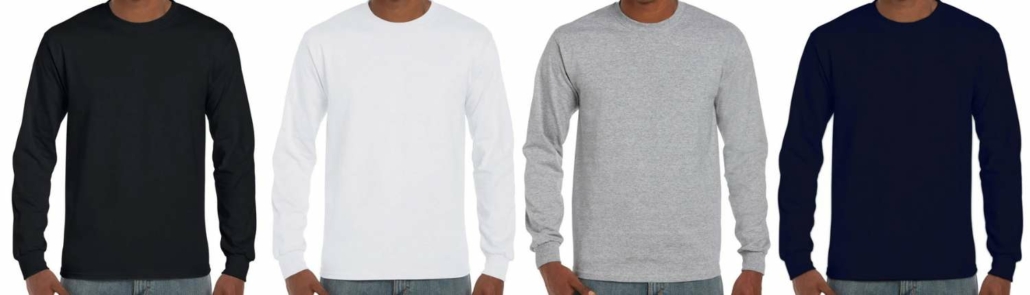
Gildan sweatshirts and hoodies are made from a 50/50 cotton-polyester blend, combining the comfort of cotton with the dimensional stability of polyester. Polyester fibers are thermoplastic and highly resistant to shrinkage—they do not absorb moisture or relax under heat the way cotton fibers do. This blend construction makes Gildan sweatshirts significantly more dimensionally stable than the 100% cotton heavy cotton shirts. In standard wash and dry cycles at recommended temperatures, a Gildan 50/50 blend garment typically shrinks less than 1%.
Do Gildan Shirts Shrink After Washing?
Gildan heavy cotton shirts experience measurable shrinkage during the first wash-and-dry cycle. Industry data shows that 100% cotton fabrics typically shrink between 2% and 5% on first wash when washed in warm or hot water (40°C–60°C / 104°F–140°F) and tumble dried at high heat. The fiber swelling and subsequent drying causes the cotton cellulose chains to reposition, reducing the fabric’s overall dimensions.
Gildan’s pre-shrunk treatment shifts the typical outcome toward the lower end of that range. Research published on shrinkage behavior of cotton fabrics confirms that the first wash accounts for the majority of dimensional change—subsequent wash cycles produce minimal additional shrinkage when care instructions are followed. After the first wash, Gildan heavy cotton shirts generally stabilize at a shrinkage of 1%–3% in width and 2%–4% in length.
Do Gildan Sweatshirts Run Small?
Gildan products are cut with a generous fit that aligns with the brand’s design philosophy for durable, affordable everyday wear. Ordering your true measured size produces a standard fit for most body types. If you prefer a more fitted or athletic silhouette, sizing down by one size is a reliable strategy—the pre-shrunk fabric holds its shape well and the 100% cotton construction adapts to your body during wear without excessive stretching.
Do Gildan Shirts Run Big or Small?
All 100% cotton garments—including Gildan heavy cotton shirts—shrink in both width and length when washed at temperatures above 30°C (86°F) and tumble dried at heat above 60°C (140°F). The amount of shrinkage varies by cycle conditions: a warm wash (40°C / 104°F) with high-heat tumble dry typically produces 2%–4% shrinkage, while a cold wash (20°C / 68°F) with line drying may produce less than 1% shrinkage. Ordering your true size and following the care label preserves the intended fit across dozens of wash cycles.
What is Gildan Heavy Blend Hoodie?
The Gildan Heavy Blend hoodie is a crewneck sweatshirt constructed from a 50/50 cotton-polyester blended fleece fabric. The outer face is a smooth jersey knit, while the inner face is brushed to a soft nap for warmth and comfort. This hoodie weighs approximately 7.8 oz/yd² (264 gsm), placing it in the mid-to-heavyweight category for fleece garments. The fabric is preshrunk during manufacturing to minimize dimensional change after the first laundering.
The 50/50 cotton-polyester construction provides structural advantages over 100% cotton fleece: polyester threads resist stretching and help the garment retain its original cut even after repeated washing. The fabric’s moisture-wicking properties make it suitable for light physical activity, while the brushed interior provides insulation in cooler conditions.
How to Wash Gildan Heavy Blend Hoodie
Two washing methods are recommended for Gildan heavy blend hoodies: machine washing and hand washing. Both achieve effective cleaning when performed correctly, with machine washing offering convenience and hand washing providing gentler fabric treatment.
Machine Washing in Cold Water
- Set your washing machine to the delicate or gentle cycle using cold water (maximum 30°C / 86°F).
- Add a mild, neutral-pH detergent formulated for colored garments—do not use chlorine bleach, fabric softener, or dryer sheets.
- Turn the hoodie inside out before loading to protect the outer fabric surface from abrasion against the drum.
- Remove the garment immediately after the cycle ends and reshape while damp to prevent permanent wrinkles.
Hand Washing
- Fill a sink or basin with cool water (20°C–25°C / 68°F–77°F) and dilute a small amount of mild detergent.
- Submerge the hoodie and soak for 15–30 minutes, gently agitating the fabric to release sweat and body oils.
- Rinse thoroughly with cool water until all detergent residue is removed.
- Press gently to expel water—never wring or twist the fabric, which distorts the garment’s shape. Lay flat on a clean towel to air dry.
How to Shrink a Gildan Shirt
If a Gildan shirt fits too loosely after washing, targeted heat application offers a controlled method for reducing its dimensions. These methods work by exploiting cotton’s tendency to relax and contract when exposed to moisture and high temperature. The most effective approach combines hot water immersion with high-heat tumble drying.
Hot Water Immersion Method
- Bring a pot of water to a rolling boil (100°C / 212°F at sea level).
- Remove the pot from heat and fully submerge the shirt for 10–15 minutes.
- Wearing protective gloves, wring out excess water and transfer the shirt directly to a tumble dryer set to high heat (maximum temperature).
- Run a full 45- to 60-minute dry cycle. The combination of heat and tumbling causes maximum fiber contraction. Check the fit after drying and repeat if further shrinkage is needed.
This method is effective for cotton because the hot water swells the cellulose fibers, and the subsequent high-heat drying causes them to contract. Expect 3%–5% shrinkage in both directions from a single treatment. This method is most effective for 100% cotton—polyester blends resist the effect.
Tumble Dryer Method
- Wash the shirt in the hottest water available (40°C–60°C / 104°F–140°F) using a normal cycle.
- Transfer directly to a tumble dryer set to the highest heat setting and run a full 30- to 45-minute cycle.
- Inspect the garment after drying and assess the shrinkage. If the desired reduction is not achieved, repeat the wash-and-dry cycle—this produces cumulative shrinkage up to approximately 5% total.
This method is less aggressive than boiling water but still produces consistent results on 100% cotton. Each wash-and-dry cycle at high heat adds approximately 1%–2% additional shrinkage until the fabric stabilizes.
Damp Heat Pressing Method
- Dampen the shirt evenly with a spray bottle set to fine mist—do not saturate it.
- Set a household iron to its highest cotton setting (approximately 200°C / 392°F) without steam.
- Press firmly with steady downward pressure across each section of the fabric for 30–45 seconds before moving to the next area.
- The combination of moisture and sustained high heat causes localized fiber contraction. This method produces 1%–2% shrinkage and allows for targeted treatment of specific areas such as sleeves or the torso.
This method offers the most control over the degree and location of shrinkage. It is gentler on garment construction than boiling but requires patience and consistent heat application to achieve uniform results.
Frequently Asked Questions
Do Gildan 50-50 Shirts Shrink?
Yes—Gildan 50-50 shirts (50% cotton, 50% polyester) shrink, but at a significantly reduced rate compared to 100% cotton. Polyester fibers are thermoplastic and do not absorb moisture, so they maintain their original dimensions through washing and drying. The cotton portion of the blend shrinks approximately 1%–2% on first wash when exposed to warm water and high heat, but the polyester fibers anchor the fabric structure and prevent further dimensional change. The net result is typically less than 1.5% overall width shrinkage and 1%–2% length shrinkage.
How Much Will a Heavy Cotton Shirt Shrink?
Standard heavy cotton fabric (non-pre-shrunk) shrinks 3%–5% in both width and length on first wash when laundered in warm or hot water with high-heat drying. Pre-shrunk heavy cotton—like Gildan heavy cotton—shrinks 1%–3% on first wash, with approximately 1 inch of reduction per finished garment dimension. The fabric may also lose 5%–10% of its original weight after the first few wash cycles due to fiber loss during agitation. Subsequent wash cycles at recommended temperatures produce less than 0.5% additional shrinkage per cycle.
Does Cotton Shrink Every Time You Dry It?
Cotton does not shrink significantly with every drying cycle. The first wash-and-dry cycle accounts for the majority of dimensional change—typically 70%–80% of total potential shrinkage occurs during this initial exposure. Subsequent wash-and-dry cycles at manufacturer-recommended temperatures (cold wash, low-heat dry) produce minimal additional shrinkage—generally less than 0.3% per cycle. High-heat drying accelerates residual shrinkage, so sticking to low-heat or air-dry settings after the first cycle preserves the garment’s stabilized dimensions.
How to Dry 100% Cotton Without Shrinking It
To prevent shrinkage in 100% cotton garments, air-dry by laying the garment flat on a clean surface or hanging it on a padded hanger in a well-ventilated area. If using a tumble dryer, select the lowest heat setting available (below 60°C / 140°F) and remove the garment while it is still slightly damp, then lay flat to finish drying. Gildan specifies a maximum dryer temperature of 60°C (140°F)—staying below this threshold virtually eliminates dimensional change in pre-shrunk cotton after the first wash cycle.
Will 100% Cotton Shrink in Cold Water?
Cotton can shrink in cold water, but the extent is significantly lower than with hot water washing. At temperatures below 30°C (86°F), cotton fibers absorb less moisture and experience minimal swelling, resulting in less than 0.5% shrinkage per wash cycle. Mechanical agitation contributes more to dimensional change than temperature alone at these lower ranges—excessive agitation in a high-speed spin cycle can cause 0.5%–1% shrinkage through fiber tangling even in cold water. For practical purposes, a cold wash combined with line drying produces negligible shrinkage in pre-shrunk cotton garments.
Will Gildan Heavy Cotton Shrink If Combined with Pima Cotton?
Pima cotton and Gildan heavy cotton are both forms of cotton fiber, and both respond to heat and moisture in the same way—their cellulose molecular structure is fundamentally identical. When combined in a blended garment, they shrink proportionally to their individual fiber content. If the fabric is 100% Pima cotton or 100% Gildan heavy cotton, both are prone to the same 1%–3% first-wash shrinkage in pre-shrunk form. The belief that Pima cotton prevents shrinkage is incorrect—it is a higher-quality, longer-staple fiber that produces a softer, more lustrous fabric, but it does not inherently resist dimensional change.
Conclusion
Gildan heavy cotton shirts are designed for durability and affordability, and their pre-shrunk treatment ensures minimal dimensional change under normal care conditions. By washing at 30°C (86°F) or below and tumble drying at low heat, you can expect shrinkage of 1%–3% on first wash with virtually no further change over the garment’s lifespan. Understanding these numbers lets you make informed purchasing and care decisions. Follow the care label instructions, and your Gildan heavy cotton shirt will maintain its fit and quality through dozens of wash cycles.
References
- Wikipedia. (2011). Shrinkage (fabric). Wikimedia Foundation.
- AATCC. (2020). AATCC Test Method 135: Dimensional Change of Fabrics After Home Laundering. American Association of Textile Chemists and Colorists.
- ISO. (2021). ISO 6330: Textiles — Domestic washing and drying procedures for textile testing. International Organization for Standardization.


