
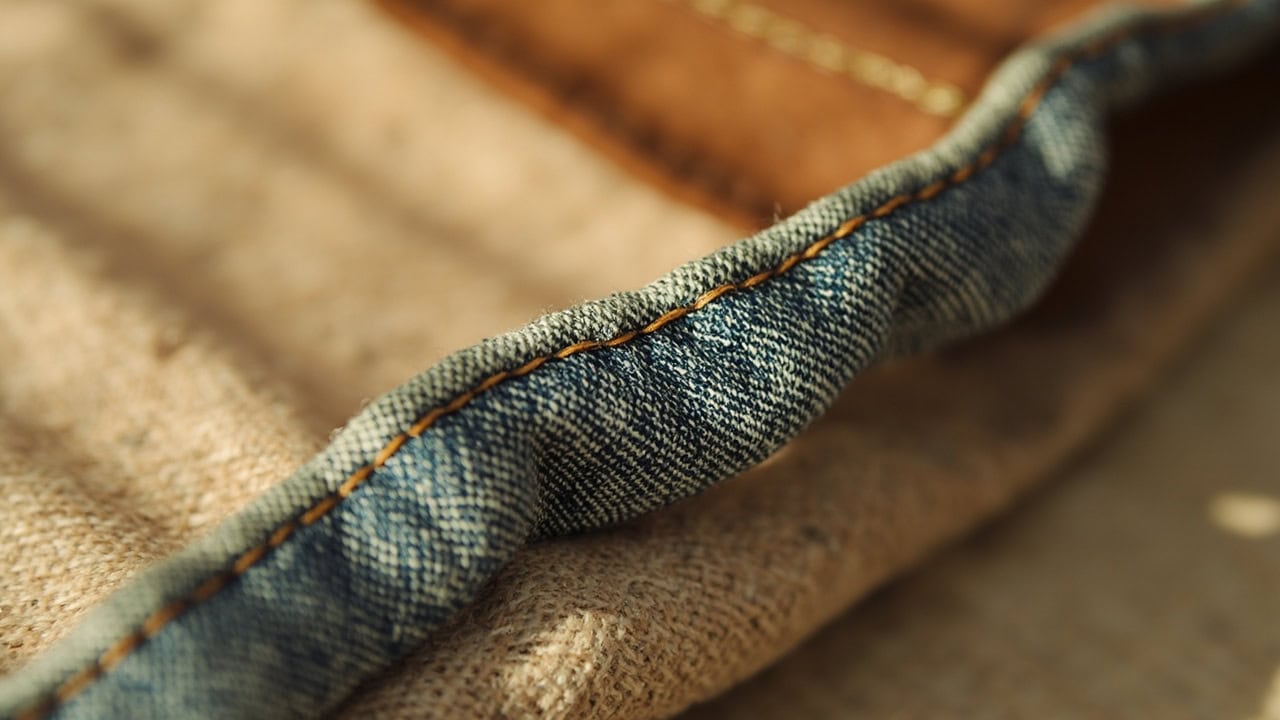
Denim Wash Effects: Stone, Acid, Bleach, Enzyme

Why denim is washed
Raw denim, straight off the loom, is stiff, dark, and unfinished. The indigo dye sits on the surface of the yarn and would rub off on anything it touches. Before denim becomes the garment in a store, it is washed, dried, and finished. The wash does three things: it removes the loose surface dye (so the denim doesn’t crock onto the wearer), it softens the fabric (so it drapes and feels comfortable), and it sets the visual character of the denim (the contrast between dyed warp and undyed weft becomes visible, the fabric develops its hand and surface texture).
The wash effect, stone wash, acid wash, bleach wash, enzyme wash, determines the look of the finished garment as much as the denim itself does. A pristine dark raw denim and a heavily acid-washed vintage denim are the same fabric at the yarn level; the difference is the wash.
Stone wash
Stone washing is the original and most common denim wash. Pumice stones (typically 1–3 inches in diameter) are loaded into the industrial washing machine along with the dry denim garments. The machine runs for 30–90 minutes, with the stones physically abrading the fabric surface and knocking off the surface indigo dye.
The effect is a softened, faded look with high-contrast fades as the stones randomly abrade different parts of the fabric. The fading pattern is irregular and natural-looking, with characteristic “stone wash” highlights where the stones have done the most work. Stone washing is more aggressive on the fabric than other methods, it can reduce fabric strength by 5–15% depending on the duration and stone-to-fabric ratio, and the pumice stones can leave small mineral deposits in the fabric that show up as faint white specks.
Modern stone washing often uses synthetic stones (porcelain, rubber, or composite materials) that are more uniform and reusable than natural pumice. Synthetic stones reduce the mineral-deposit issue and can be used for many cycles before disposal.
Acid wash
Acid washing (also called “stone acid wash” or “pumice + pH wash”) is a more aggressive version of stone washing that uses chemicals (typically potassium permanganate) to accelerate the dye removal. Pumice stones are soaked in a permanganate solution and added to the washing machine along with the dry garments.
The permanganate bleaches the indigo dye, and the stones (now carrying the chemical) abrade the bleached areas. The result is a high-contrast, marbleized look with characteristic white patterns against the dark ground. The pattern is irregular and depends on how the stones tumble through the machine, garments can have unique patterns after acid wash, which was the height of 1980s fashion denim and has had periodic resurgences since.
Acid wash must be followed by a thorough neutralization (sodium bisulfite or hydrogen peroxide) to remove residual permanganate, which would continue to damage the fabric and pose a worker safety issue if not neutralized. Improperly neutralized acid-washed denim can develop holes and tears during normal use.
Enzyme wash
Enzyme washing uses cellulase enzymes (typically derived from Trichoderma or Aspergillus fungi) to selectively remove the surface fibers of the cotton denim. The enzyme breaks down the cellulose chains, releasing the indigo dye that was trapped in those surface fibers.
The effect is similar to stone washing (soft hand, faded appearance) but without the physical damage to the fabric. Enzyme-washed denim retains more of its strength than stone-washed (typically only 1–3% strength loss versus 5–15% for stone). The fading is more uniform than stone wash, without the characteristic stone-wash highlights, which is considered either a benefit (more consistent appearance) or a drawback (less visual interest) depending on the brand’s aesthetic.
Enzyme washing also removes some of the surface fuzz (loose fibers) from the fabric, reducing pilling in wear. The combined effect, soft hand, faded appearance, intact strength, reduced pilling, has made enzyme wash the dominant denim finish for mid-market and premium denim brands that want the look of stone wash without the fabric damage.
Bleach wash
Bleach washing uses sodium hypochlorite (household bleach) or hydrogen peroxide to aggressively bleach the indigo dye, producing a much lighter shade than stone or enzyme wash. The effect ranges from a slight lightening of the dark ground to a near-white fabric, depending on bleach concentration and treatment time.
Bleach wash is the workhorse finish for the high-volume mid-market denim segment, where the desired look is a uniform medium-blue rather than a high-contrast vintage wash. The process is simple (a single bleach bath followed by a neutralizing rinse), fast, and inexpensive compared to the labor-intensive stone wash.
Over-bleaching is a common defect. Sodium hypochlorite in particular can damage cotton fibers if the concentration is too high or the treatment time is too long, leading to strength loss and pilling in wear. Hydrogen peroxide is gentler but more expensive.
Ozone wash
Ozone washing is the most sustainable of the major denim finishes. The garments are treated with ozone gas (O₃) in a sealed chamber, which oxidizes the indigo dye and lightens the fabric. No water, no pumice, no enzymes, no bleach chemicals, just ozone and the fabric.
The environmental advantage is significant: ozone washing uses 50–70% less water than conventional washing, no chemicals other than the ozone (which is generated on-site from air and decomposes back to oxygen), and produces no effluent. The energy use is also lower because the process is faster and doesn’t require heating large volumes of water.
The disadvantage is a more limited effect range. Ozone can lighten denim by 1-2 shades but cannot produce the deep, high-contrast fades of stone or acid wash. For brands that want a light-to-medium fade, ozone is ideal. For high-contrast vintage looks, ozone alone is insufficient and may need to be combined with a light enzyme wash.
Combined wash effects
Modern denim washing rarely uses a single technique. Most production washes are combinations: enzyme + ozone for a clean light-blue look, stone + enzyme for a vintage look with fabric integrity, bleach + enzyme for a mid-market uniform light blue. The combination is engineered to balance the desired visual effect (color, contrast, hand), the fabric’s mechanical properties (strength, abrasion resistance), and the production cost (time, water, energy, chemicals).
The choice of combination is partly regional and partly brand-specific. European denim mills tend to favor enzyme and ozone washes for their sustainability and consistency. Turkish and Tunisian mills (which produce much of the mid-market denim for European brands) often combine enzyme and light bleach. Chinese and Indian mills lean toward bleach wash for cost. Japanese and US heritage brands use traditional stone wash for the authentic vintage look.
Environmental considerations
Conventional denim washing is one of the most water- and energy-intensive textile processes. A traditional stone wash with full rinse cycle uses 50–100 L of water per kg of fabric, plus the energy to heat the wash water and the disposal of pumice-laden effluent. The wastewater contains indigo dye (which colors the water blue-grey and is hard to treat), pumice particles, and any chemicals from the wash.
Modern alternatives reduce this footprint: enzyme wash uses less water and no pumice; ozone wash uses no water at all for the main treatment; closed-loop water systems recycle the wash water for multiple cycles; and laser- or ozone-based pattern application can create fades without wet processing at all. The most sustainable denim mills (e.g., Saitex in Vietnam, Tonello in Italy) operate at the lower end of the water-use range and recover heat from the wash water for reuse.
Frequently Asked Questions
Which wash is the most sustainable?
Ozone wash is the most sustainable, followed by enzyme wash. Both use less water and fewer chemicals than stone or bleach wash. Stone wash has the highest environmental footprint due to water, energy, pumice, and effluent. Acid wash is similar to stone wash in footprint but adds the chemical burden of permanganate.
Which wash gives the most authentic vintage look?
Stone wash, particularly with natural pumice, gives the most authentic vintage look. The random abrasion pattern is hard to replicate with other techniques. Acid wash gives a more dramatic, marbleized look that’s associated with the 1980s aesthetic. Enzyme and ozone washes give a more uniform, modern look.
Does washing denim reduce its lifespan?
Aggressive washing (stone, acid, high-concentration bleach) does reduce the fabric’s mechanical strength and can shorten garment lifespan. A heavily stone-washed garment may last 2–3 years of regular wear, while a lightly enzyme-washed or raw denim garment may last 5–10 years. The trade-off is that aggressive washing also removes loose surface dye, so the garment doesn’t crock onto other clothes.
What is the difference between raw denim and pre-washed denim?
Raw denim (also called dry denim) is denim that has been dyed and woven but not washed. It is stiff, dark, and has excess surface dye that will rub off. The wearer is expected to wash it themselves, often delaying the first wash for months to allow natural fading. Pre-washed denim has been washed at the mill to remove the surface dye, soften the fabric, and (optionally) apply a wash effect. Pre-washed denim is the standard for most commercial apparel; raw denim is the niche heritage segment.
Can denim be re-washed at home to change the look?
Yes, denim can be re-washed and the look can change with each wash. Raw denim develops fades as it is worn and washed; the more it’s washed, the more the indigo fades. Conversely, a heavily washed denim can be re-dyed with indigo to darken it. Home denim care is a separate sub-culture with its own enthusiast community.
References
- ResearchGate (peer-reviewed). Impact of Stone Enzyme Wash and Acid Wash Based on Denim Garments. https://www.researchgate.net/publication/358502937_Impact_of_Stone_Enzyme_Wash_and_Acid_Wash_Based_on_Denim_Garments, peer-reviewed comparison of wash effects on denim fabric properties.
- ISO 3758:2012, Textiles, Care labelling code using symbols. https://www.iso.org/standard/60334.html, international standard for textile care labels, including denim care instructions.
- AATCC TM 88C, Appearance of Seams in Durable-Press Items after Repeated Home Laundering. – test method for denim appearance after multiple wash cycles, applicable to evaluating wash effects.
This article is the working reference for denim wash effects. Editorial by Shahrukh Islam, TextileTuts. Sources: peer-reviewed ResearchGate study on wash effects, ISO 3758, AATCC TM 88C as cited.


