
How to Remove Dye Transfer Stains from Clothes

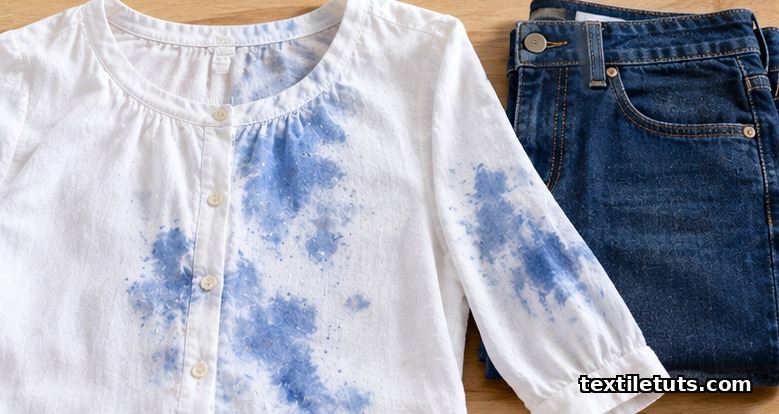
Dye transfer — when color from one garment bleeds onto another in the wash — must be treated before the item is dried. The transferred dye is still loosely bonded when wet; heat from drying sets it permanently into the fabric. The most effective treatment is an immediate rewash with an oxygen bleach product (OxiClean) and a color-catcher sheet to absorb the free dye.
When a dark pair of jeans meets a white blouse in the washing machine, the consequences can be devastating. Dye transfer staining is one of the most common laundry disasters, and understanding why it happens — and how to reverse it — is essential for anyone who wants their clothes to last.
Why Dye Transfer Happens
Not all fabric dyes are created equal. The likelihood of dye transfer depends directly on the type of dye used and how strongly it bonds to the fiber.
Direct dyes — commonly used in fast-fashion cotton garments — attach to cellulose fibers through weak Van der Waals forces alone. These physical adsorption forces are easily overcome during washing, allowing dye molecules to desorb (detach) from the fabric and enter the wash water. A single AATCC test method for wash fastness measures exactly this desorption rate, and direct dyes consistently perform poorly on that metric.
Reactive dyes — the industry standard for cotton denim — form covalent chemical bonds with fiber molecules, which is significantly stronger. However, hydrolysis during the dyeing process means a portion of the dye never fully reacts with the fiber. This unfixed fraction remains loosely attached and can readily dissolve in wash water, especially at elevated temperatures. Industry sources estimate that 5–15% of the total dye applied in a reactive dyeing process may remain unfixed after standard manufacturing.
Vat dyes and sulfur dyes provide excellent wash fastness and are less prone to bleeding, but they are expensive and require complex processing. This is why budget-friendly dark denim and brightly colored cotton garments — the most common culprits in dye transfer — typically rely on direct or insufficiently fixed reactive dyes. For more on fabric-specific care, see this polyester care guide.
Risk factors that accelerate dye bleeding include:
- Water temperature above 40°C (104°F): heat increases dye molecule solubility and weakens the already-limited bond between direct dye and fiber
- Extended wash cycles: prolonged agitation and water exposure create more opportunity for desorption
- New dark garments: dark denim and bold-colored cotton are typically washed 3–5 times before excess dye is fully removed during manufacturing
- High pH wash conditions: alkaline detergent solutions promote dye solubility and accelerate desorption from cellulose fibers
First Response: Do NOT Put It in the Dryer
If you discover a dye transfer stain after removing clothes from the washing machine, the single most important action is this: do not put the affected item in the dryer.
Heat is the enemy of dye transfer reversal. When a transferred dye molecule is sitting on a fabric surface, it has not yet bonded permanently — it is held there by weak physical adsorption. The moment heat is applied through a tumble dryer, the dye undergoes a thermal fixation process. The fibers and dye molecules essentially “weld” together, converting what was a surface stain into a permanent chemical alteration of the fabric. Once this happens, no consumer-grade treatment can reliably remove it. For guidelines on tumble drying linen safely, consult the dedicated care guide.
Instead, immediately return the stained item to the washing machine while it is still wet. If the garment has already dried partially, run it under cold water to remoisten it before any treatment. Speed is the critical variable — dye transfer that is minutes old responds to treatment far better than dye transfer that has sat for hours.
Method 1: OxiClean Rewash (Most Effective — Before Drying)
Oxygen bleach — the active ingredient in products like OxiClean — works through a fundamentally different mechanism than chlorine bleach. Sodium percarbonate, the primary component of OxiClean, releases hydrogen peroxide when dissolved in warm water. This activated oxygen attacks the chemical bonds holding the transferred dye to the fabric surface, while simultaneously oxidizing the dye molecules themselves, breaking them into smaller, colorless fragments that rinse away.
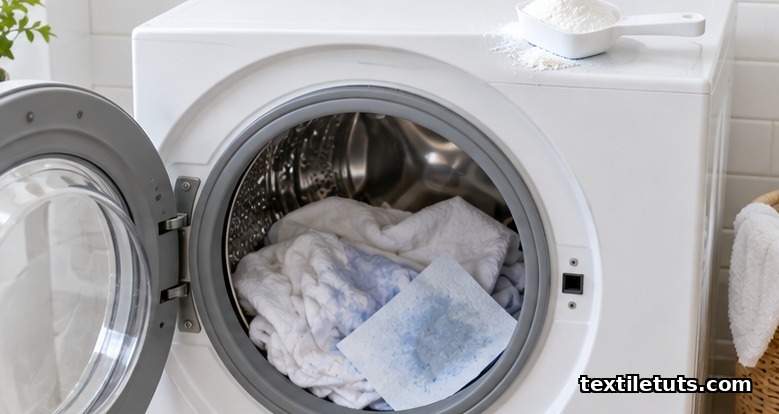
OxiClean is particularly effective on dye transfer because it does not degrade the underlying fabric. Chlorine bleach, by contrast, can damage or discolor natural fibers. For cotton, linen, and blended fabrics, oxygen bleach is the safest and most effective choice.
- Fill your washing machine with warm water (30–40°C / 86–104°F — warm, not hot)
- Add a full dose of OxiClean powder (refer to product label for your load size)
- Add the dye-stained garment while it is still wet — do not allow it to dry first
- Add one color-catcher sheet to the drum — it will absorb free dye molecules released during the wash cycle
- Run a full wash cycle on the normal or heavy setting
- Before transferring to the dryer, inspect the fabric under good lighting — repeat the treatment if any trace of dye remains
The color-catcher sheet is a non-negotiable companion to this method. Without it, freed dye molecules from the stained item can simply redeposit on the same garment or transfer to another item in the same wash. A single color-catcher sheet can absorb enough free dye to protect an entire load.
Also Read:
- How to Remove Bleach Stains from Clothes (Restoration Guide)
- Why Do Clothes Stain in the Washing Machine? (And How to Stop It)
- Can You Wash Light Gray With White?
Method 2: Oxygen Bleach Hand Soak
For delicate garments, hand soaking in an oxygen bleach solution allows for longer contact time without the mechanical stress of a washing machine. This method is appropriate for silk, wool blends, and items labeled “hand wash only.” For wool dryer guidelines, always check the garment label first.
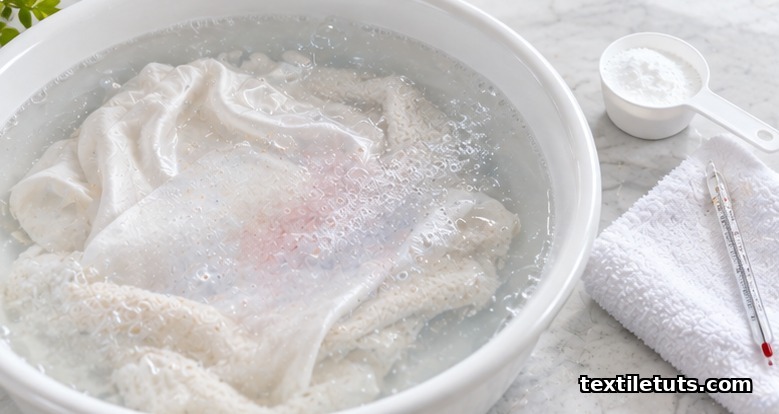
- Fill a basin or sink with warm water (30–40°C / 86–104°F)
- Dissolve 1–2 scoops of OxiClean powder (or a comparable oxygen bleach product such as Vanish) completely in the water
- Submerge the stained garment completely, ensuring the stained area is fully immersed
- Soak for 1–4 hours. For light staining, 1 hour is often sufficient. For moderate dye transfer on white or light fabrics, extend to 4 hours
- Rinse thoroughly with cool water
- Inspect the stain — if any dye remains, repeat the soak or proceed to a gentle machine wash cycle with OxiClean
For white cotton fabrics that have absorbed dye transfer, a 4–8 hour overnight soak in a stronger OxiClean solution achieves near-complete removal in most cases. Test on an inconspicuous area first if the fabric is not white, as oxygen bleach can cause slight lightening of colored fabrics over multiple treatments.
Method 3: Commercial Dye Transfer Remover
When home remedies do not achieve full removal, specialized commercial products formulated specifically for dye stains offer a higher concentration of active ingredients.
Carbona Stain Devils #9 (Dye Stain) is explicitly formulated for dye transfer on washable fabrics. The product uses a targeted dye-dissolving agent that breaks down the specific chemical structure of transferred direct and reactive dyes. Application involves pretreating the stain, allowing a short dwell time, and then laundering per package instructions.
Rit Color Remover is a reducing agent that strips dye from fabric at the molecular level. It is suitable for white or pastel fabrics only — on colored garments, it will remove the original dye along with the transferred stain, resulting in uneven color loss. For white items with severe dye transfer that has survived oxygen bleach treatment, Rit Color Remover used as a soaking agent can eliminate residual staining that would otherwise be permanent.
For white synthetic fabrics, soaking in a solution of oxygen bleach and cool water for up to 24 hours can draw out deeply penetrated dye molecules. Always rinse thoroughly and launder normally after any specialized soaking treatment. For guidance on how to wash synthetic fabrics properly, consult the detailed care instructions.
Preventing Dye Transfer
Prevention is categorically more effective than treatment. Dye transfer that has been heat-set cannot be reversed — it can only be covered (with fabric dye) or concealed (with embellishment). Preventing the transfer in the first place requires understanding and controlling the conditions that cause dyes to bleed. For related laundry guidance, see this article on fabric softener staining prevention.
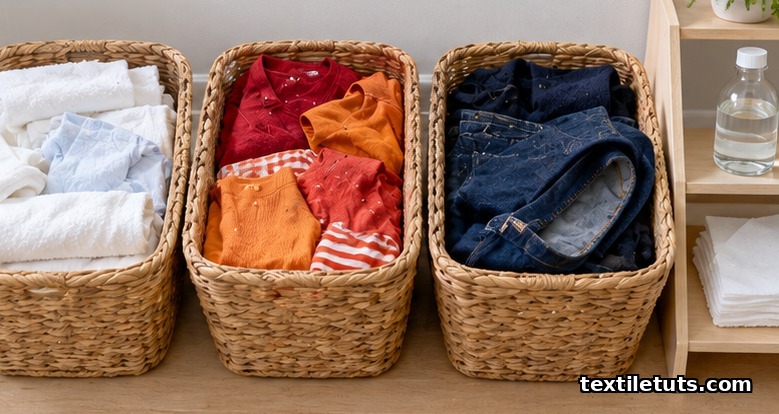
- Sort laundry by color: Wash darks with darks and lights with lights. This eliminates the possibility of cross-contamination in the wash drum. A general rule: if the garment’s color would show on a white cotton handkerchief, it can bleed
- Use a color-catcher sheet in every wash that mixes colors. Products such as Carbona Color Catcher or Shout Color Catcher trap free dye molecules in their fibrous matrix, preventing redeposition on other fabrics. They are single-use — replace with each load
- Wash new dark garments separately for the first 3–5 washes. This is the period of highest dye bleeding, as the manufacturing process rarely removes all excess dye. After 3–5 washes, the garment’s dye loss rate typically falls to a safe level for mixed washing
- Use cold water for all mixed-color loads. The solubility of unfixed direct dye molecules decreases sharply below 30°C (86°F). A cold wash reduces dye desorption by up to 80% compared to a warm (40°C / 104°F) wash for most direct dyes on cotton. Learning to wash synthetic fabrics properly with cold water is especially important for colorful athletic wear
- Add 1 cup of white distilled vinegar to the washing machine drum during the first wash of a new dark garment. The mild acidity (pH ~2.5–3) helps neutralize alkaline wash conditions and can accelerate the removal of loosely held unfixed dye molecules before they have a chance to redeposit on other fabrics
- Turn garments inside out before washing. This reduces mechanical abrasion of the fabric surface where most of the dye resides, lowering the rate of dye release during agitation
For households that regularly wash mixed-color loads, a dedicated front-loading machine used exclusively for darks — or scheduling a separate cold-water cycle for dark-only items — eliminates the root cause of most dye transfer incidents.
Frequently Asked Questions
Can you remove dye transfer after it has dried?
Dried dye transfer is significantly harder to remove. An OxiClean soak (4–8 hours) may partially remove it. Color that has been through multiple hot drying cycles may be permanent.
Does vinegar remove dye transfer stains?
White vinegar has limited effectiveness on dye transfer. It works better as a prevention measure (removing unfixed dye from new garments before washing with others) than as a treatment for existing transfer.
Why does red clothing bleed onto other clothes?
Red fabric dyes (particularly direct dyes used in fast fashion) often have low fixation rates — a significant percentage of the dye is not chemically bonded to the fiber and easily dissolves in wash water. Washing red items separately until they stop bleeding prevents transfer.
References
- American Association of Textile Chemists and Colorists (AATCC). AATCC Test Method 61 — Wash Fastness Testing. https://www.aatcc.org/standards/
- International Organization for Standardization (ISO). ISO 105 Textiles — Tests for Colour Fastness. https://www.iso.org/standard/62514.html
- CottonWorks™ by Cotton Incorporated. Dyeing Basics — Dye Types and Properties. https://cottonworks.com/learning-hub/dyeing/dyeing-basics/


