
How to Remove Mold and Mildew Stains from Fabric

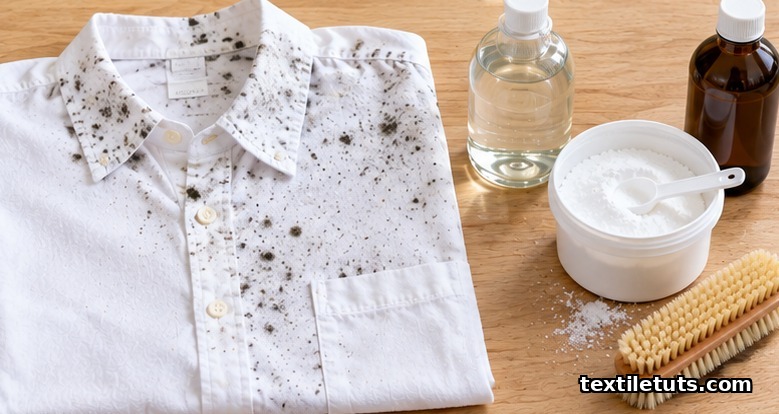
Kill mold spores with a white vinegar or OxiClean soak before washing — washing without spore elimination spreads mold to your machine and other garments while failing to fully decontaminate the fabric. Mold and mildew on fabric require a two-step approach: first kill the mold spores, then wash to remove the staining and residual organic matter.
Mold and Mildew: Key Differences in Appearance and Fabric Impact
Mildew is surface-level fungal growth that appears white or grey with a powdery texture. Mildew does not penetrate fabric deeply and responds readily to standard treatments. Mold penetrates fabric fibers and presents as green, black, or dark grey fuzzy patches. Severe mold infestations cause permanent staining that may be impossible to fully reverse.
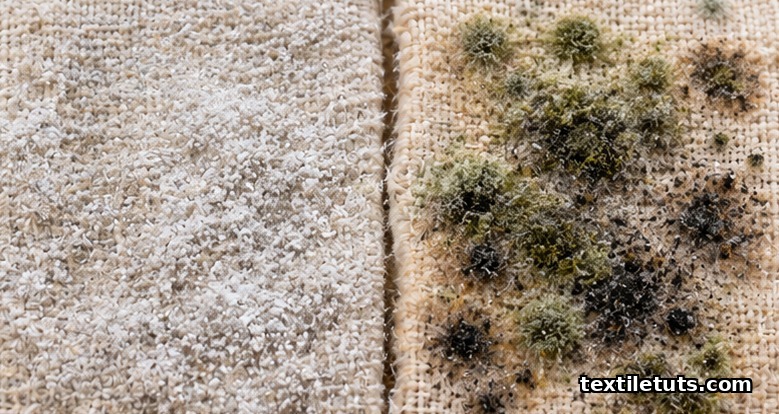
Both mildew and mold are fungi that thrive in identical conditions: fabric stored while damp, high humidity environments, or inadequate drying after washing. When you encounter either on your garments, the treatment approach is the same — kill the spores first, then remove the staining. Understanding which you are dealing with helps you assess urgency and expected outcomes.
The root cause matters for prevention. If mold appears repeatedly despite treatment, inspect your storage areas for excess moisture and poor ventilation. A dehumidifier in storage spaces with relative humidity above 60% prevents both mold and mildew from establishing themselves on fabric.
Safety First: Work Outdoors or in Ventilated Space
Mold spores become airborne when fabric is disturbed during handling. Before beginning treatment, move the affected item outside or to a well-ventilated area with open windows. This prevents spore accumulation in living spaces and reduces exposure risk.
Protective gear is essential for anyone sensitive to mold spores or with respiratory conditions — wear a protective mask during the entire treatment process. Never handle mold-contaminated fabric near food preparation areas or children’s play spaces. Seal the item in a plastic bag during transport to avoid releasing spores en route to your treatment area.
Additionally, clean your washing machine after processing moldy items. Mold colonizes the machine drum, rubber gasket, and detergent drawers, creating a reservoir that contaminates subsequent loads. Run a hot empty cycle with two cups of white vinegar monthly to sanitize the machine.
Step 1: Kill the Mold Spores (Before Washing)
The critical first step is spore elimination. Washing alone — even at high temperatures — does not guarantee spore death and risks redistributing viable spores throughout your machine. Choose one of these three treatment options based on fabric type and product availability.
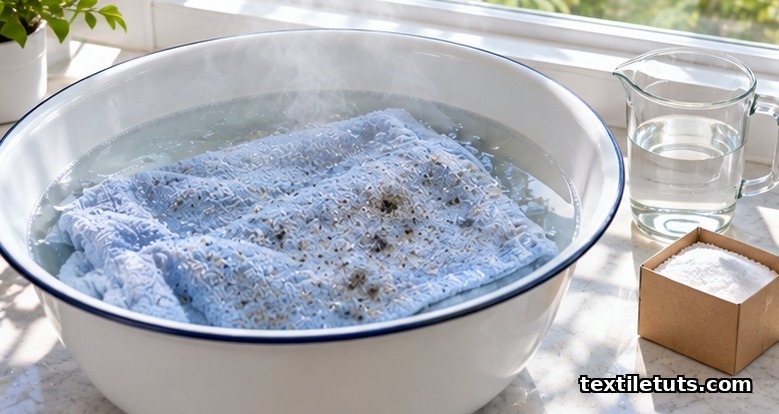
Option A — White Vinegar Soak
Mix equal parts white vinegar (5% acetic acid) and warm water in a basin. White vinegar at this concentration disrupts the cellular structure of most common mold species — including Aspergillus (common surface mold), Penicillium (often found on stored items), and Cladosporium (a widespread fabric colonizer) — killing them within one hour of submersion. The acetic acid penetrates fungal cell walls and lowers pH to levels incompatible with mold survival.
Submerge the fabric completely and soak for one hour. Heavily infested items require a second treatment. After soaking, wring out excess liquid and proceed immediately to Step 2 without rinsing — rinsing removes the treatment before the staining removal phase.
Option B — OxiClean Soak
OxiClean (sodium percarbonate) releases oxygen bleach when dissolved in warm water, creating an oxidative environment that destroys mold spores and breaks down organic staining matter simultaneously. Mix OxiClean with warm water following package instructions — use one level scoop (approximately 1.5 oz) per gallon of warm water.
Soak for one to four hours. Lighter infestations require one hour; severe or older mold growth requires the full four-hour soak. OxiClean is color-safe for cotton, polyester, and nylon blends, making it preferable when you cannot use chlorine bleach on dyed materials. The oxygen bubbles physically lift loosened spores and organic debris from fabric fibers.
Option C — Borax Solution (Most Effective Mold Killer)
Borax (sodium borate) is the most effective mold killer among common household treatments. Mix one cup of borax per gallon of hot water and stir until fully dissolved. Borax is a natural antifungal that kills existing mold and inhibits future regrowth on treated surfaces.
Soak the fabric for one hour. Borax is particularly valuable for items stored long-term since it creates a residual antifungal effect. Borax is safe for cotton, linen, and synthetic fabrics — test on an inconspicuous area before using on silk or wool to check for colorfastness.
Step 2: Remove Mold Staining
Targeted stain treatment addresses the visible discoloration left behind by fungal growth after spore elimination. The appropriate method depends on your fabric’s color.
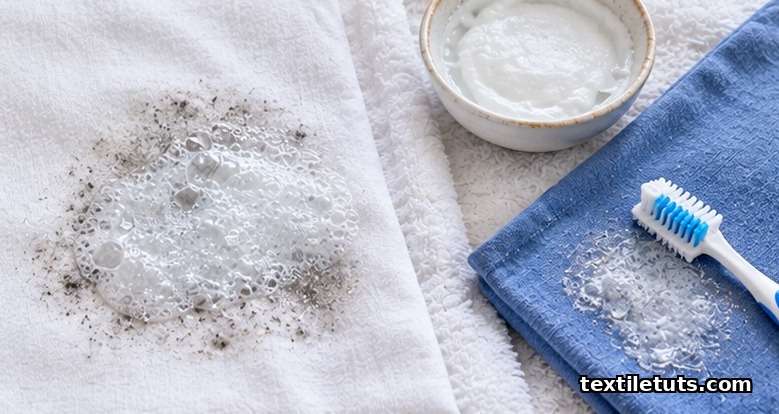
White and light-colored fabrics: Apply hydrogen peroxide (3% concentration) directly to each visible stain. Allow it to sit for 15 minutes. Hydrogen peroxide is a mild bleaching agent that oxidizes the pigment in mold stains without the aggressive damage of chlorine bleach. Rinse thoroughly after the dwell time.
Colored fabrics: Make a paste from OxiClean and warm water, apply directly to stained areas, and let it sit for 30 minutes. The longer dwell time allows the oxygen bleach to work without aggressively attacking fabric dyes. Gently scrub with a soft-bristled brush — a toothbrush works well for spot treatment.
If stains persist after the initial treatment, repeat the targeted application before proceeding to the wash cycle. Stubborn staining requires two or three applications, but each repetition improves results.
Step 3: Wash Hot
Wash the treated fabric at the highest temperature safe for the garment type. A minimum wash temperature of 60°C (140°F) kills any remaining viable mold spores. Check the care label: cotton, linen, and polyester blends typically tolerate 60°C (140°F) or higher, while delicate fabrics may require a gentler approach.
Add one cup of white vinegar to the rinse cycle. Vinegar neutralizes residual mold odors and provides additional antifungal protection. Do not use fabric softener — it feeds residual fungi and creates conditions for regrowth.
Drying is as important as washing. Air drying in damp conditions invites immediate recontamination. Dry the item completely in direct sunlight — UV radiation provides additional mold-killing benefit — or in a hot dryer set to the highest appropriate temperature. Ensure the item is fully dry before storing or wearing.
Preventing Mold on Fabric
Prevention eliminates the need for treatment. Mold requires three conditions to grow: warmth, moisture, and organic material (all fabric qualifies). Remove the moisture component and mold cannot establish itself.
- Always dry clothes completely before storing — never fold or store damp fabric, even slightly damp
- Clean your washing machine monthly to prevent mold colonization of the drum, gasket, and dispensers; run a hot empty cycle with two cups of vinegar or use a washing machine cleaner product
- Store seasonal items in breathable cotton bags rather than sealed plastic bags or airtight containers — plastic traps residual moisture and creates ideal growth conditions
- Use a dehumidifier in storage areas; maintain relative humidity below 60% to prevent all fungal growth
- Avoid leaving damp items in the washing machine overnight; transfer laundry to the dryer immediately after the wash cycle completes
- Ensure proper ventilation in closets and dressers; allow air circulation around stored items
If you are investigating why clothes develop stains that appear after washing, the answer may be mold growing inside your machine rather than on the fabric itself. The rubber gasket on front-loading machines is a common mold habitat that transfers spores to every load.
Frequently Asked Questions
Can mold stains be removed from clothes?
Yes — mold stains can usually be removed with the vinegar soak + OxiClean treatment + hot washing method. Old, severe mold staining (especially black mold that has penetrated deeply) may leave permanent discoloration.
Is it safe to wash moldy clothes in the washing machine?
Only after killing the spores with a vinegar or OxiClean pre-soak. Washing without killing spores first risks spreading mold to the machine drum and other garments.
Does bleach kill mold on clothes?
Chlorine bleach kills mold on white cotton but damages colored fabrics and destroys natural fibers (wool, silk). Oxygen bleach (OxiClean) kills mold and is safe for most colored fabrics.
References
- American Association of Textile Chemists and Colorists (AATCC). (n.d.). AATCC Test Method 100: Antibacterial Finishes on Textile Materials. https://www.aatcc.org
- U.S. Environmental Protection Agency. (n.d.). Mold Cleanup in Your Home. https://www.epa.gov/mold/mold-cleanup-your-home
- Cotton Works. (2021). How to Remove Mold from Fabric. https://www.cottonworks.com
- Mayo Clinic. (2022). Mold Allergy — Symptoms and Causes. https://www.mayoclinic.org/diseases-conditions/mold-allergy
- Science Focus. (2021). How to Remove Mould and Mildew. https://www.sciencefocus.com
- Van Buyten, T. (2013). Mold and Mildew: Prevention and Removal on Historic Textiles. National Park Service. https://www.nps.gov


